
Mathematical understanding Worksheets for Ages 7-8
3 filtered results
Difficulty Level
Grade
Age
-
From - To
Subject
Activity
Standards
Enhance your child's mathematical understanding with our engaging worksheets designed for ages 7-8. These carefully crafted activities promote essential math skills, including addition, subtraction, multiplication, and problem-solving. Each worksheet encourages critical thinking and helps children apply concepts to real-world situations. Our resources are aligned with educational standards, ensuring a fun and beneficial learning experience. Whether in the classroom or at home, these worksheets will nourish your child’s confidence and comprehension in mathematics. Explore our extensive collection to find the perfect practice materials to support your child's mathematical journey. Enjoy rewarding learning moments together with Kids Academy’s versatile resources!
Favorites
With answer key
Interactive
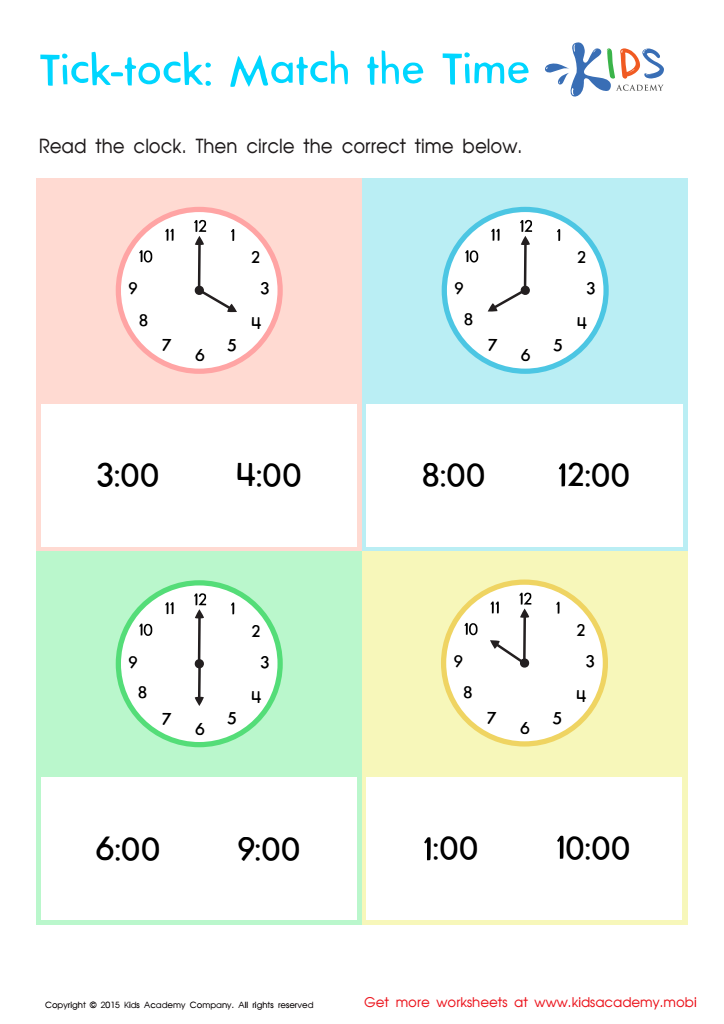
Telling The Time Worksheet: Part 4
Test your skills in telling the time! Circle the right time on 4 analog clock faces.
 Assign to My Students
Telling The Time Worksheet: Part 4
Worksheet
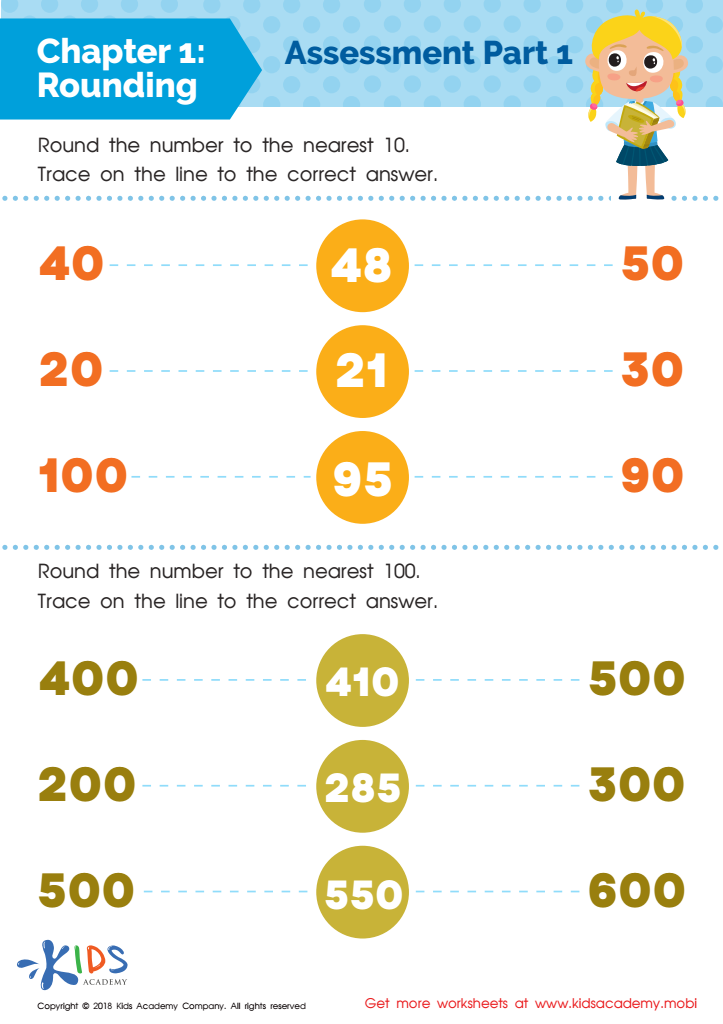
Rounding Worksheet 3rd Grade
Practice and refresh your child's 3rd grade rounding skills with this quick worksheet! Have them round each set of numbers to the nearest 10s or 100s. This simple exercise will help maintain math fluency.
Rounding Worksheet 3rd Grade
Worksheet
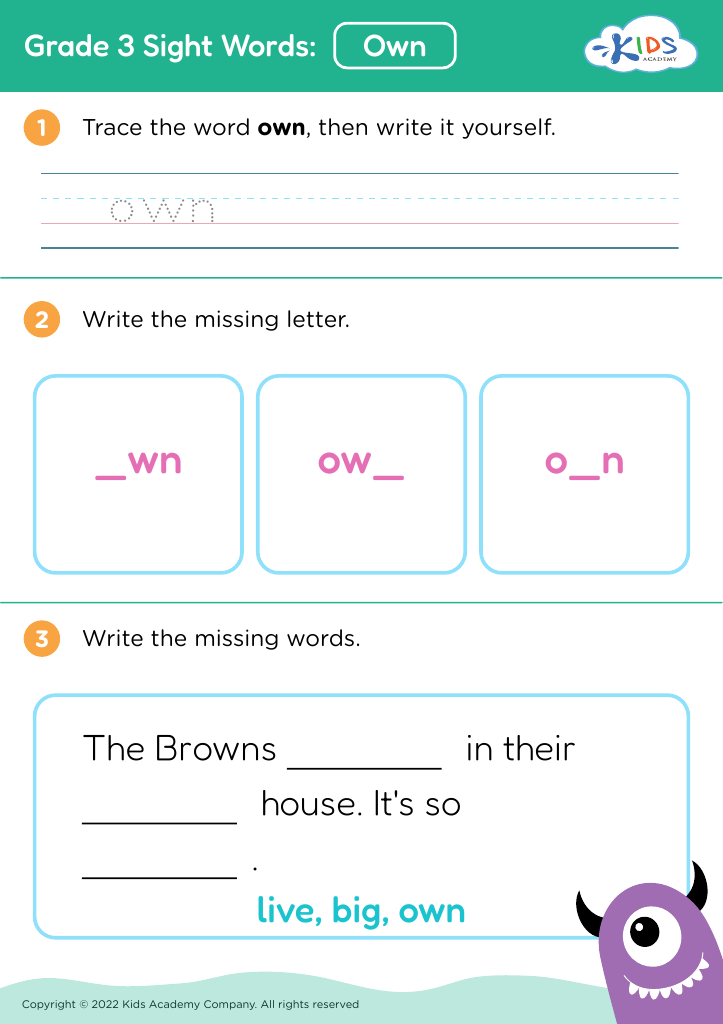
Join Kids Academy for Free
Who is primarily going to use this learning content?


.jpg)



.jpg)

Mathematical understanding for children ages 7-8 is crucial for several reasons. Firstly, this age marks a pivotal stage in cognitive development where children transition from concrete to more abstract thinking. Building a solid foundation in math during this time helps them grasp basic concepts such as addition, subtraction, multiplication, and division, which are essential for problem-solving skills they will encounter in everyday life.
Secondly, a strong grasp of math promotes critical thinking and logical reasoning. At this age, kids are not just learning to calculate; they're also learning to analyze situations, identify patterns, and make comparisons. These skills are transferable and beneficial across subjects, fostering overall academic success.
Furthermore, a child's early mathematical understanding closely links to their self-confidence and attitude toward learning. Children who feel competent in math are more likely to embrace challenges and develop a growth mindset.
Lastly, as math is a core subject in education, parents and teachers play a vital role in supporting students through interactive and engaging practices. Establishing a positive relationship with mathematics early on nurtures a lifelong appreciation and can lead to better opportunities in future academic and career pursuits. Supporting children in this essential learning phase sets the stage for their long-term success.








