Practice counting Worksheets for Ages 7-8
6 filtered results
-
From - To
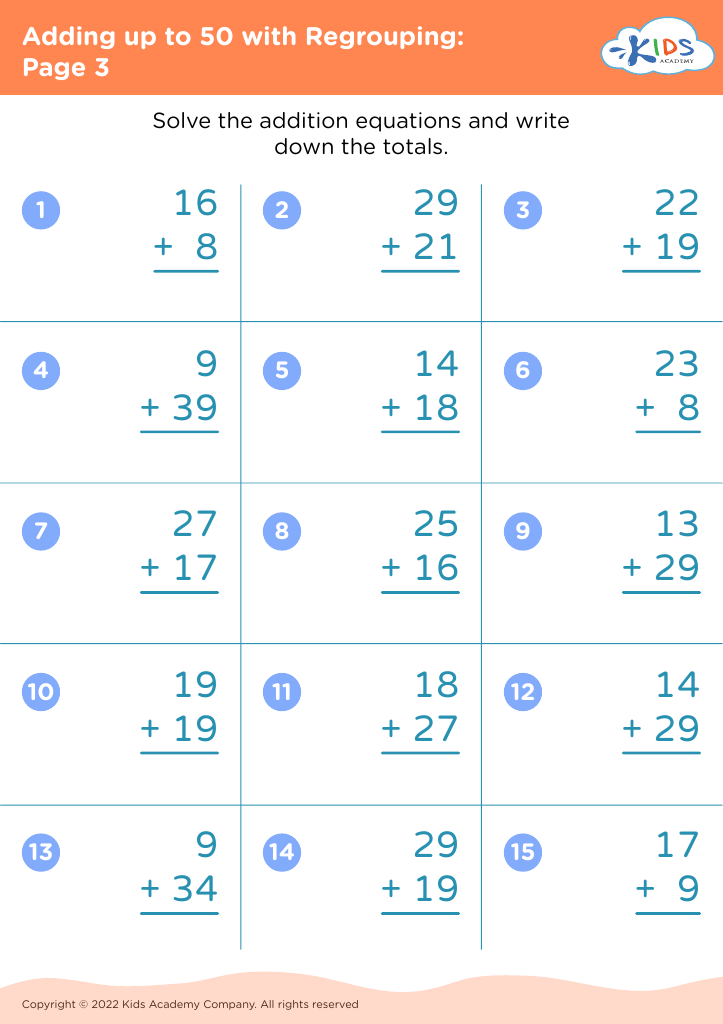
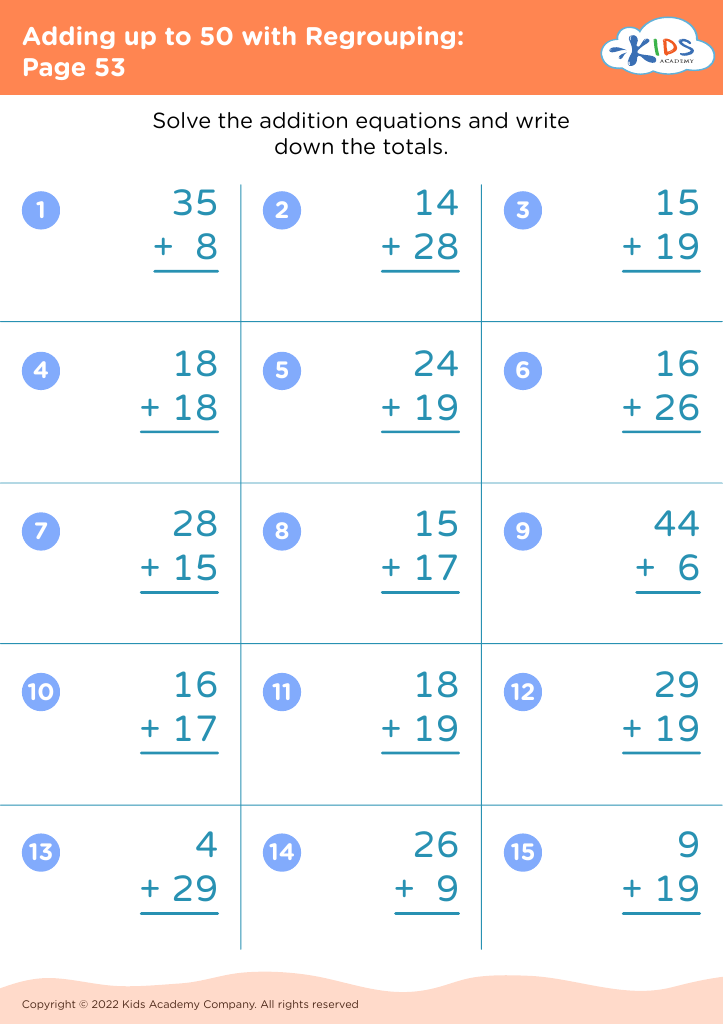
Welcome to our Practice Counting Worksheets for Ages 7-8, designed to enhance your child’s numeracy skills through engaging and interactive activities. These worksheets provide a fun way for young learners to practice counting, recognize numbers, and understand the concept of amounts. With colorful illustrations and varied exercises, children will enjoy mastering essential counting techniques while building confidence in their math abilities. Our resources are perfect for home learning or classroom use, helping to create a solid foundation in mathematics. Download the worksheets easily and watch your child grow in their counting skills today! Perfect for students in grades 2 to 3!
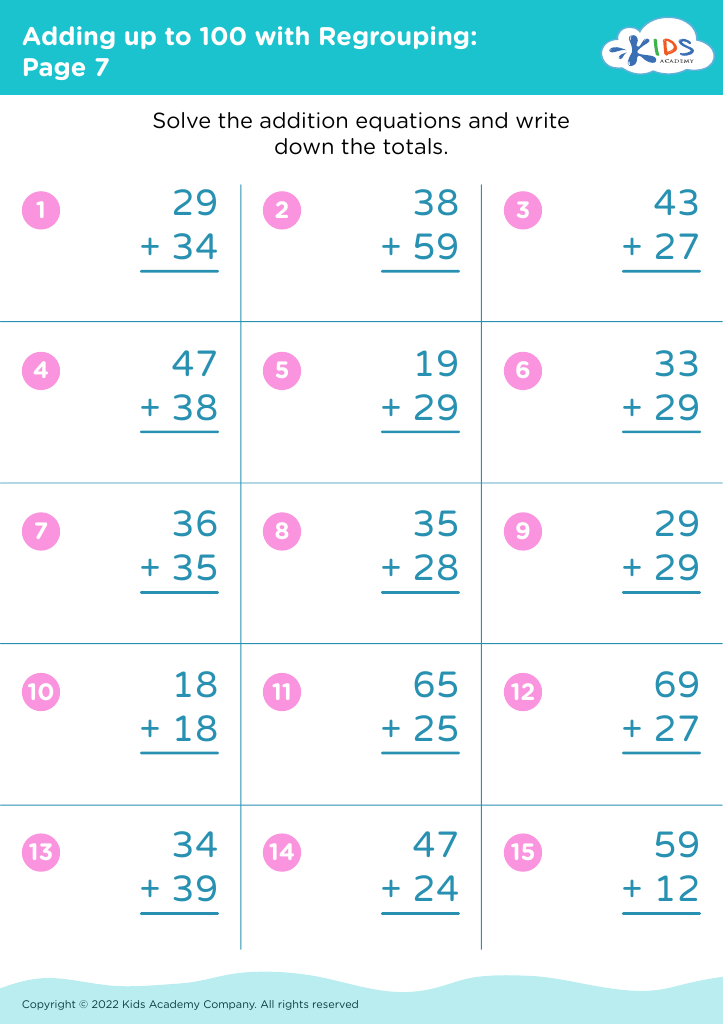
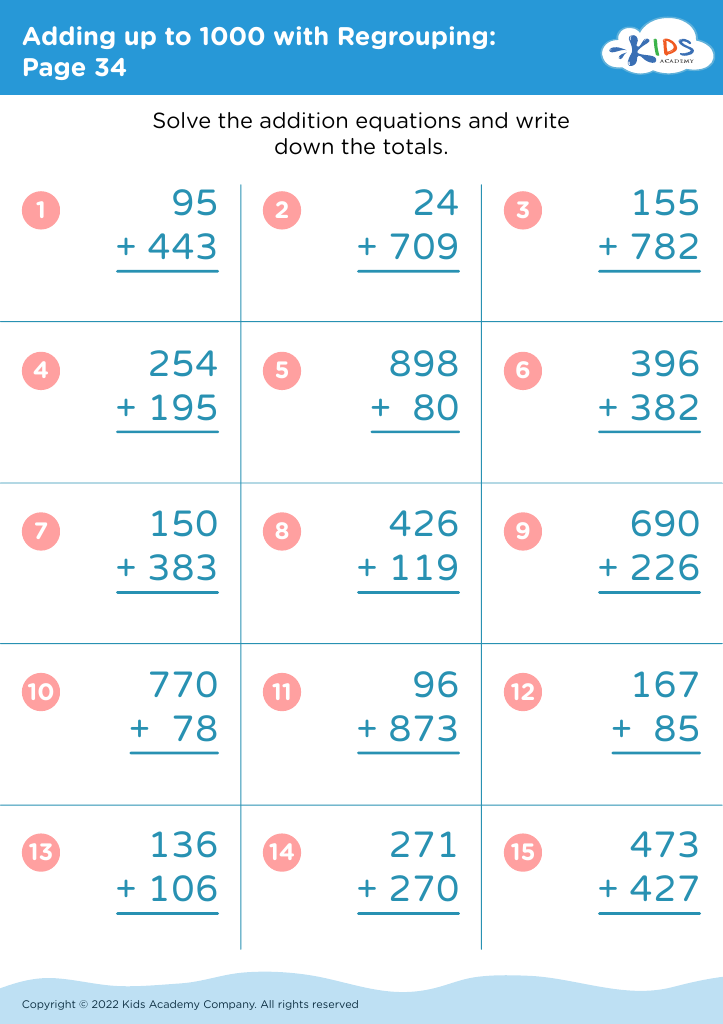
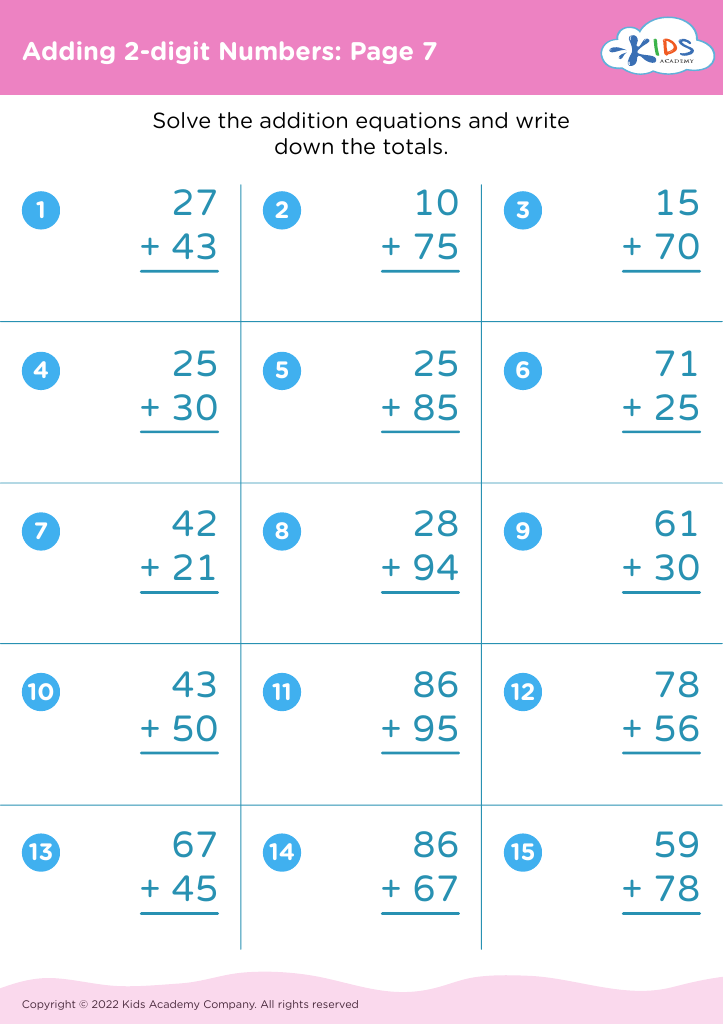
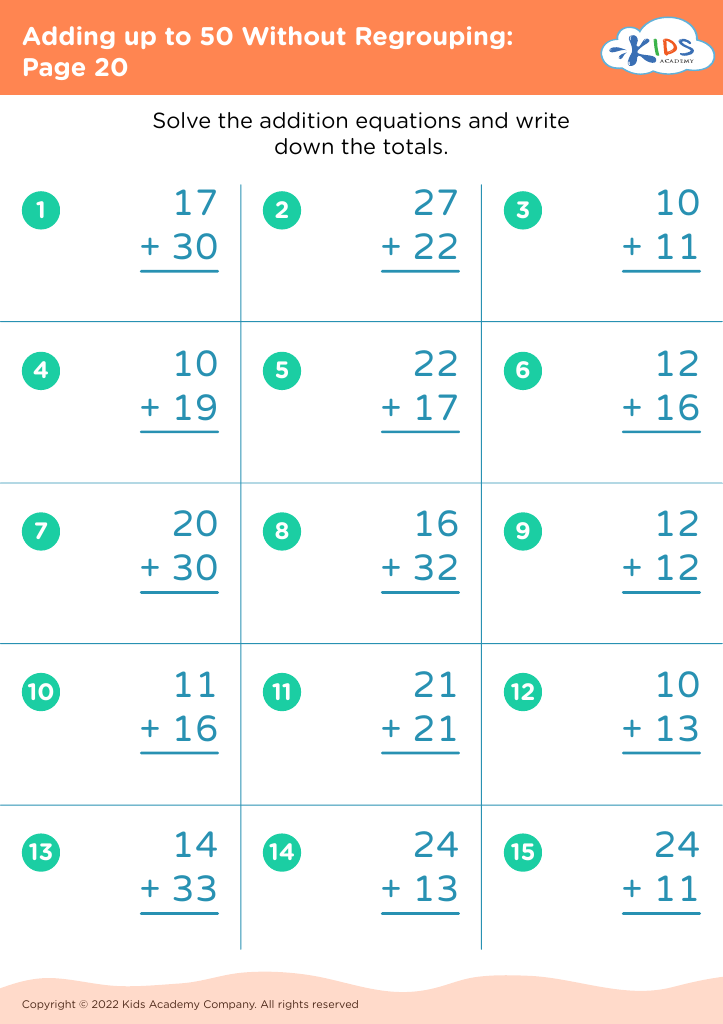








Practicing counting for ages 7-8 is crucial for several reasons. At this developmental stage, children are building a foundational understanding of mathematics that shapes their future academic success. Mastery in counting enhances their ability to perform basic arithmetic operations such as addition and subtraction, which are pivotal as they encounter more complex mathematical concepts in later grades.
Moreover, counting helps strengthen cognitive skills, including memory and concentration. Engaging in counting activities can also promote a deeper understanding of number relationships, such as even and odd numbers, and sets. These are essential for critical thinking and problem-solving skills that extend beyond mathematics to real-life situations.
Counting practice encourages the development of fine motor skills, particularly when employing manipulatives or writing numbers. By integrating counting into everyday activities—like counting snacks, steps, or objects—teachers and parents create a practical learning environment that reinforces children's numerical fluency.
Moreover, consistent counting practice can build confidence and reduce math anxiety, setting a positive tone for their overall attitude towards learning. In essence, fostering counting skills plays a vital role in equipping children not just for academic achievement, but for practical life competencies as they grow.








