
Understanding compound words Worksheets for Ages 7-8
3 filtered results
Difficulty Level
Grade
Age
-
From - To
Subject
Activity
Standards
Welcome to our "Understanding Compound Words Worksheets" for children aged 7-8! These engaging worksheets are designed to help young learners discover the fun and excitement of compound words. Through a variety of activities, kids will learn to combine two individual words to form new meanings, boosting their vocabulary and enhancing their reading skills. Our resources include matching exercises, fill-in-the-blank challenges, and creative tasks that make learning enjoyable. Ideal for both home and classroom use, these worksheets provide essential practice that fosters a deeper understanding of language. Get started today and watch your child’s confidence in language grow!
Favorites
With answer key
Interactive
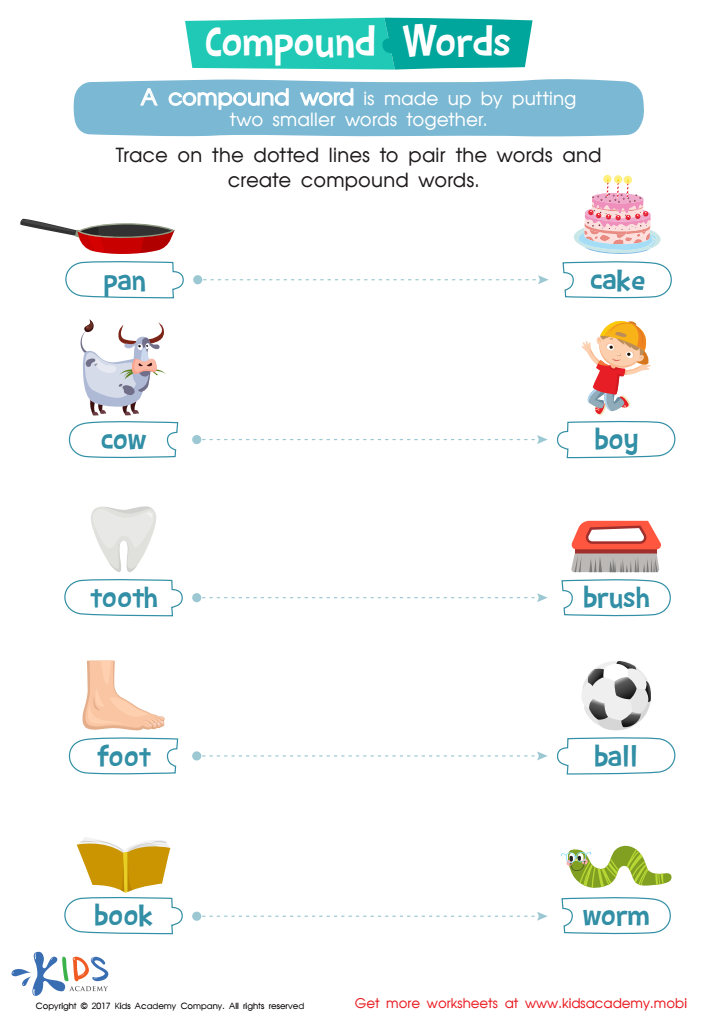
Compound Words Word Structure Worksheet
Studying compound words is a great way to improve reading and writing skills! Try this fun worksheet: Compound Words – trace the lines to make new words! It's an easy and enjoyable way to get better at English.
 Assign to My Students
Compound Words Word Structure Worksheet
Worksheet
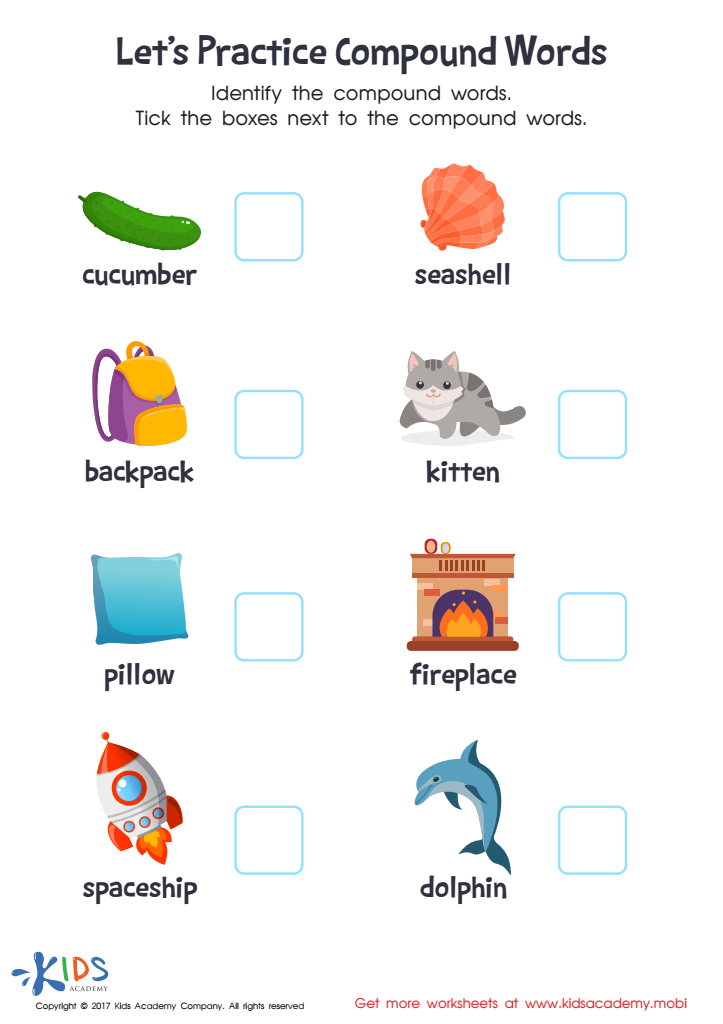
Let's Practice Compound Words Word Structure Worksheet
Test their knowledge of compound words with this fun worksheet and help them build their vocabulary. Have them say the words out loud as they work!
Let's Practice Compound Words Word Structure Worksheet
Worksheet
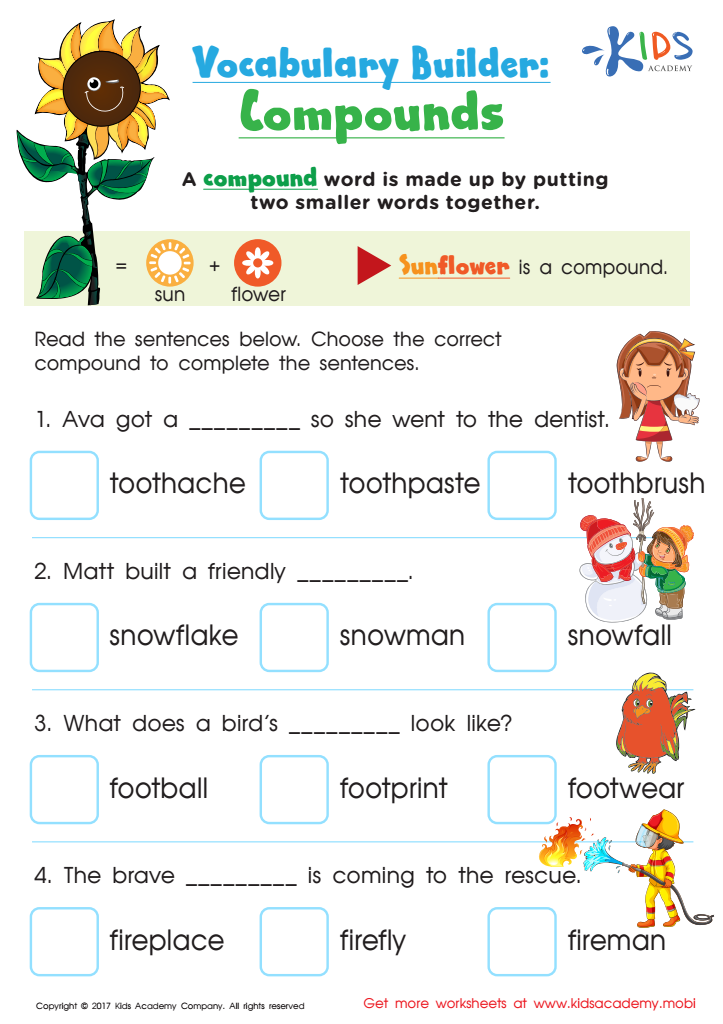
Compound Words Worksheet
Help your child get to grips with compound words! From sunflowers to snowflakes, firemen to fireflies, some words are made up of two. Introduce them to the world of compound words with this grade 2 PDF worksheet, packed with fun activities!
Compound Words Worksheet
Worksheet
Join Kids Academy for Free
Who is primarily going to use this learning content?








Understanding compound words is crucial for children aged 7-8 as it significantly enhances their reading and language skills. At this developmental stage, children are transitioning from learning to read to reading to learn. Recognizing and forming compound words—two smaller words joined together to create one new meaning (like "sunlight" or "basketball")—can help them decode more complex texts, expanding their vocabulary and comprehension.
Moreover, grasping compound words facilitates reasoning and cognitive skills. It encourages children to think analytically about language, understanding how words can morph to convey new meanings. This understanding boosts their creativity in both writing and speaking, allowing them to express ideas more fluidly.
Teachers and parents also play a vital role in this learning process. They can introduce engaging activities, such as word games, storytelling, or visual aids, which make learning compound words fun and interactive. This engagement not only reinforces the learning of compound words but also fosters a positive attitude toward language and literacy.
In summary, by emphasizing compound word comprehension, parents and teachers equip children with essential skills that lay a solid foundation for lifelong literacy and communication. Fostering this understanding prepares children for more advanced language concepts in the future.








