Understanding regrouping Worksheets for Ages 7-8
4 filtered results
-
From - To
Welcome to our "Understanding Regrouping Worksheets for Ages 7-8" page! Here, you will find a variety of engaging and educational worksheets designed to make the concept of regrouping in addition and subtraction easy to grasp for young learners. With clear explanations and fun exercises, these worksheets nurture critical thinking and problem-solving skills. They are perfect for reinforcing classroom learning or providing extra practice at home. The activities are age-appropriate and aligned with educational standards, ensuring that your child gains confidence and mastery in their math abilities. Explore our resources today and help your child excel in understanding regrouping!
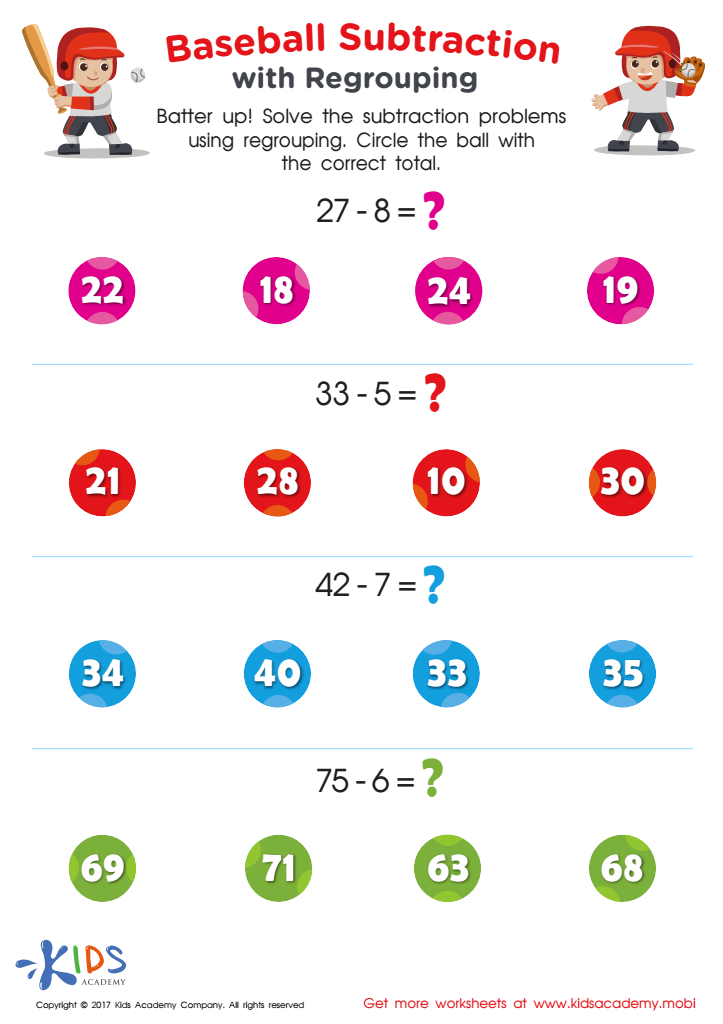
Subtraction With Regrouping for 2nd Grade Worksheet
 Assign to My Students
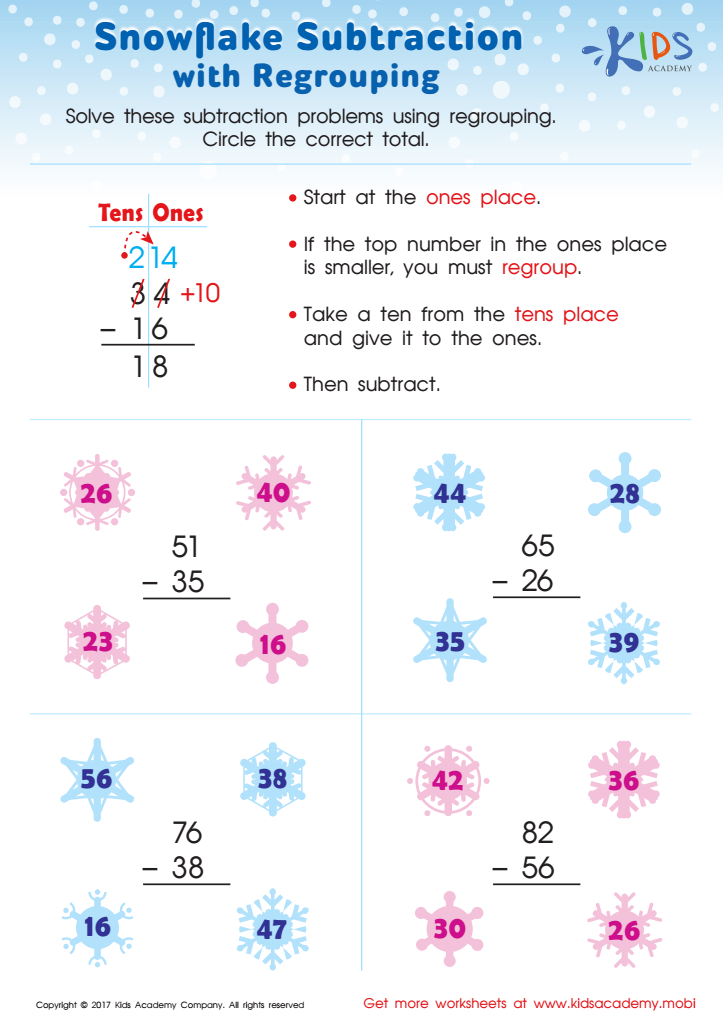
Subtraction With Regrouping Worksheet: Snowflake
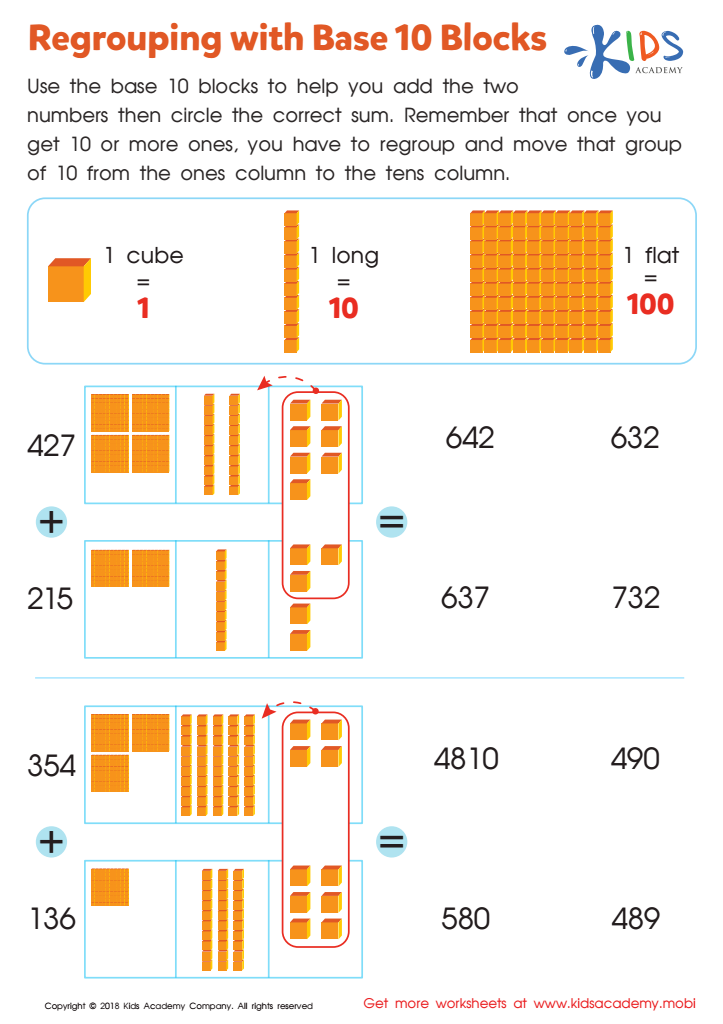
Regrouping with Base 10 Blocks Worksheet
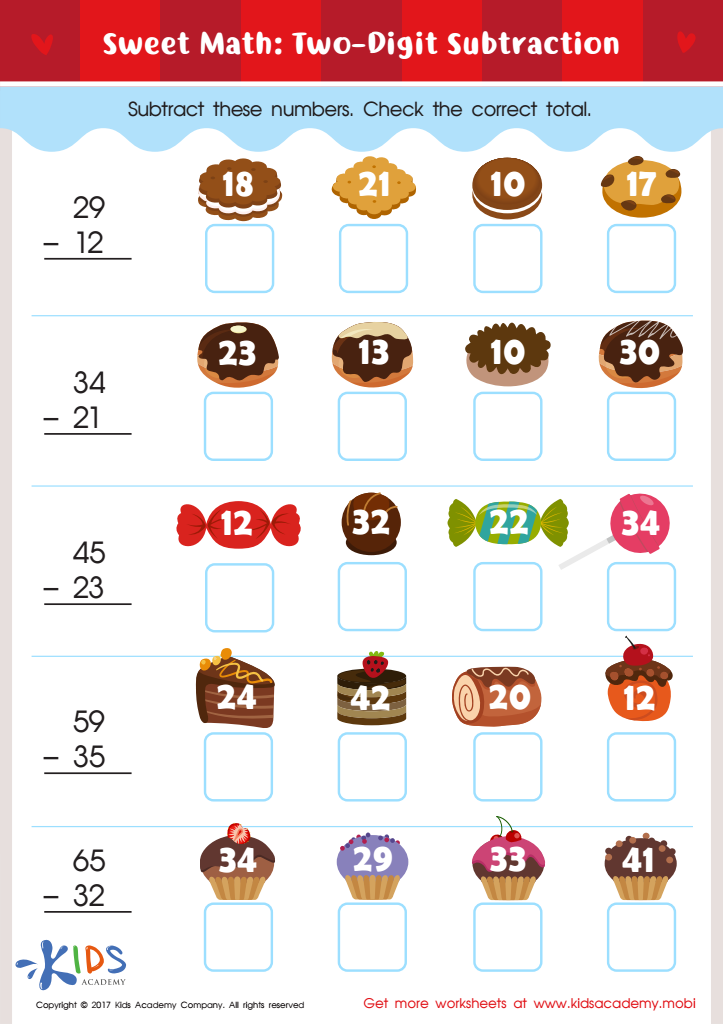
Two Digit Subtraction Worksheet


.jpg)





Understanding regrouping is crucial for 7- to 8-year-olds as it forms the foundation for more advanced arithmetic concepts, particularly in addition and subtraction. At this age, children transition from basic counting to more complex problem-solving, and regrouping helps them grasp the concept of carrying over numbers when the sum exceeds ten or borrowing when the minuend is smaller than the subtrahend.
Parents and teachers should care because mastering regrouping enhances a child's number sense, promoting confidence in their mathematical abilities. It encourages logical thinking and cultivates perseverance as students learn to tackle challenging problems methodically. Regrouping also aids in developing their understanding of place value, which is essential for future math skills such as multiplication and division.
Furthermore, a solid grasp of regrouping can reduce anxiety around math, allowing children to enjoy learning rather than fearing it. Engaging parents in the learning process fosters a supportive environment, showing children that mathematics is a valuable skill. Ultimately, helping kids master regrouping lays the groundwork for their academic success, boosts their self-esteem, and prepares them for more advanced mathematical concepts in the coming years. Overall, understanding regrouping is vital for fostering lifelong learning and critical thinking skills.








