Basic Math Skills Adding 2-digit Numbers Worksheets for Ages 7-8
3 filtered results
-
From - To
Enhance your child's math skills with our engaging 2-digit addition worksheets designed for ages 7-8. These printable resources focus on building foundational math abilities through fun and interactive exercises. Each worksheet encourages students to practice adding 2-digit numbers while improving their problem-solving skills. The versatile activities help reinforce understanding of place value and addition techniques, supporting a strong mathematical foundation. Perfect for classroom use or at-home practice, our worksheets make learning enjoyable and effective. Equip your young learners with essential math skills that will set the stage for future success. Explore our collection and watch their confidence soar!
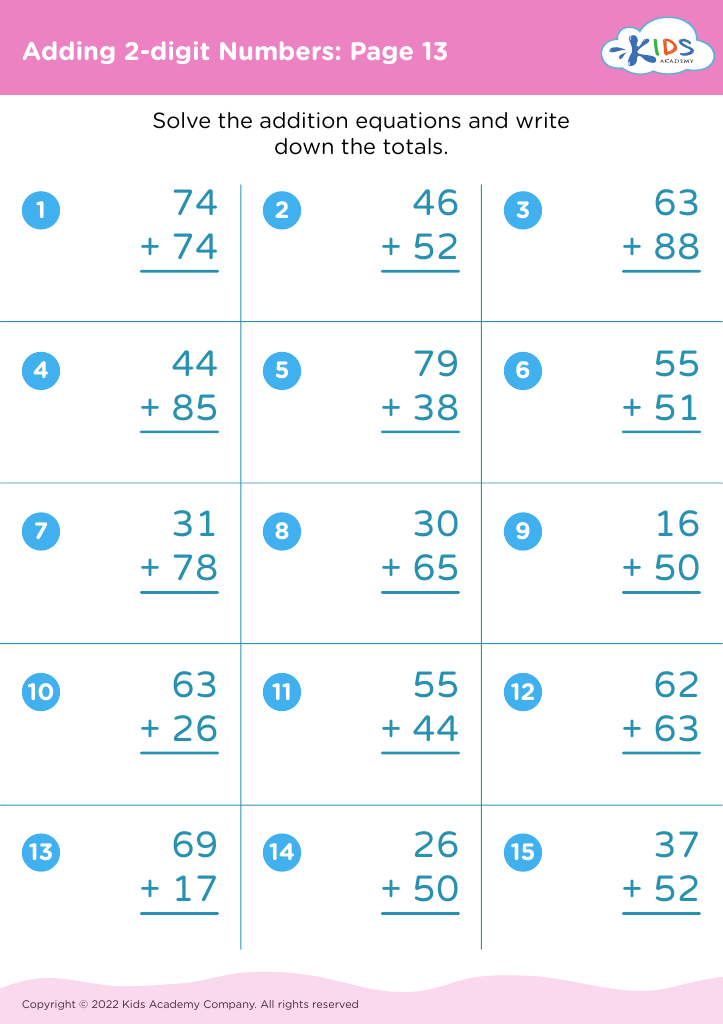
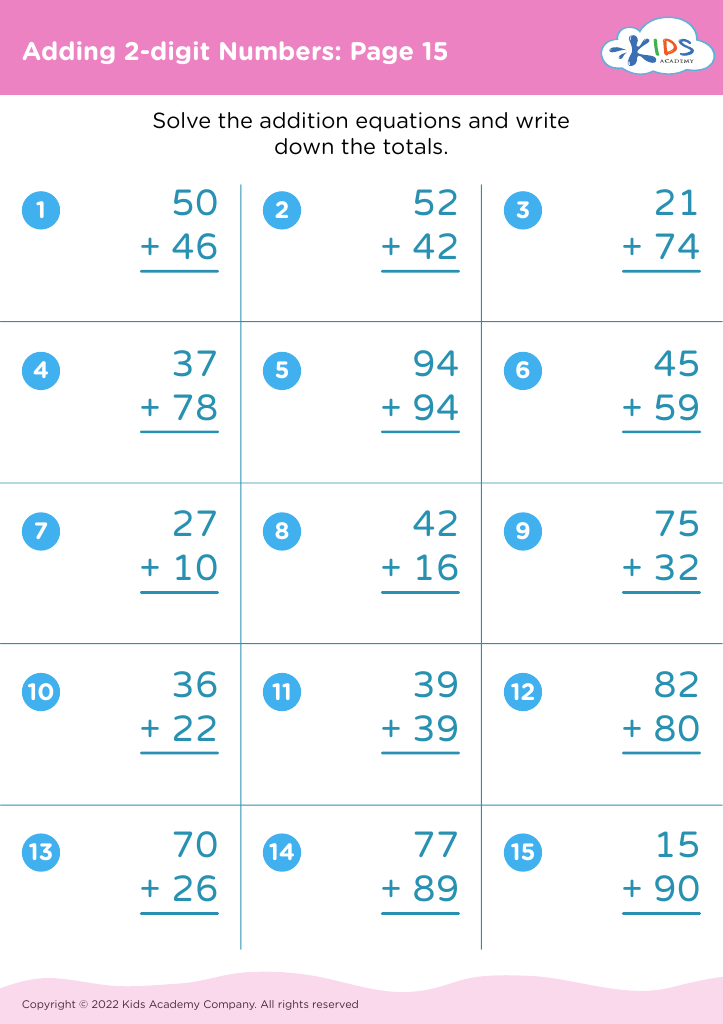
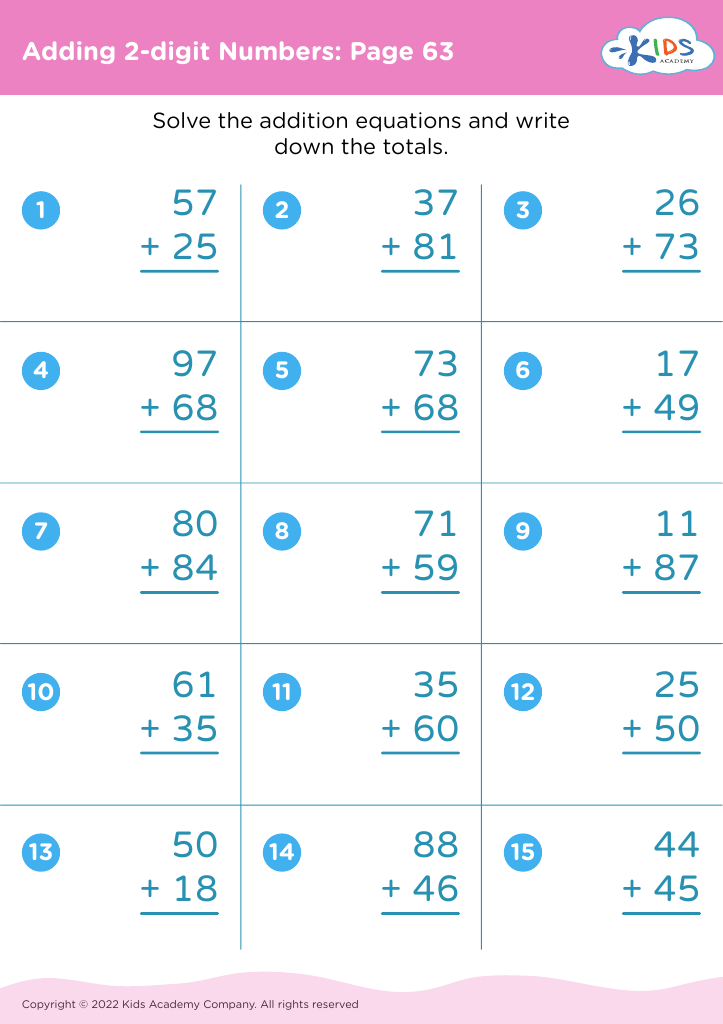








Parents and teachers should care about basic math skills, particularly the ability to add 2-digit numbers, for children aged 7-8 due to its foundational role in their overall academic development. Mastery of addition not only enhances a child’s numeracy skills but also fosters critical thinking, problem-solving, and analytical abilities. Proficient addition skills aid in future mathematical concepts such as subtraction, multiplication, and division.
At this age, children develop cognitive abilities to understand abstract math concepts, making it an ideal time to build their confidence through practice and mastery of simple tasks. Furthermore, these skills are applicable in everyday situations, empowering children to independently manage money, understand time, and make measurements.
Additionally, strong arithmetic skills can bolster self-esteem. When children succeed in math, they develop a positive attitude toward learning. Thus, caregiver involvement through supportive instruction, real-life applications, and interactive learning can significantly enhance children's acquisition of these essential skills. By encouraging children to practice adding 2-digit numbers, parents and teachers can help set a strong academic foundation, leading to better performance as they progress through grades and encounter more complex mathematical challenges.








