Fraction simplification Adding up to 100 Misc Worksheets for Ages 7-8
6 filtered results
-
From - To
Enhance your child's math skills with our Fraction Simplification Adding up to 100 Misc Worksheets, specifically designed for ages 7-8. These engaging worksheets help students master the fundamentals of fractions by teaching them how to simplify numeric values effectively. Through a series of fun and challenging exercises, your child will develop essential skills that will set a strong foundation for future math success. Perfect for classroom use or additional at-home practice, these carefully crafted materials make learning fractions enjoyable and easy. Boost your child's confidence in math with our comprehensive and interactive fraction simplification worksheets today!
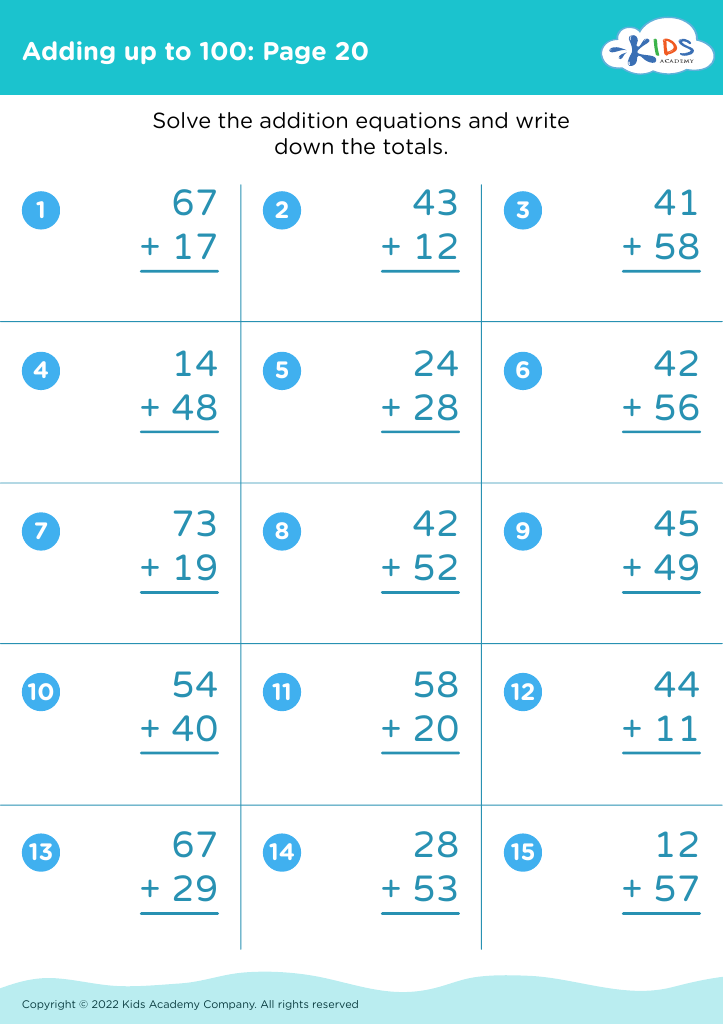
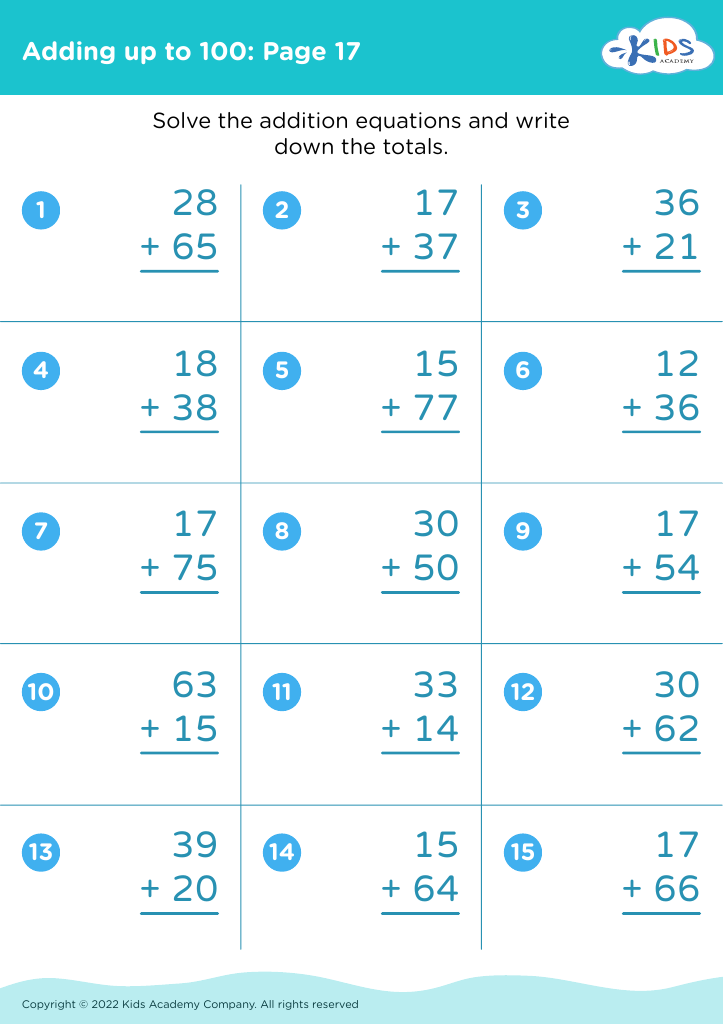
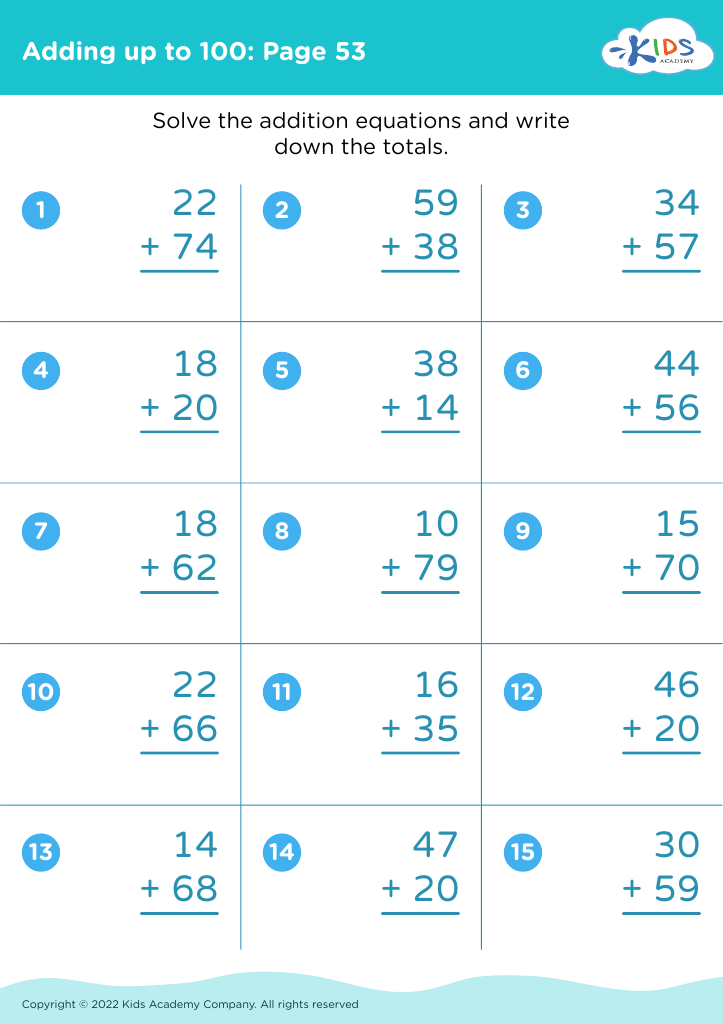
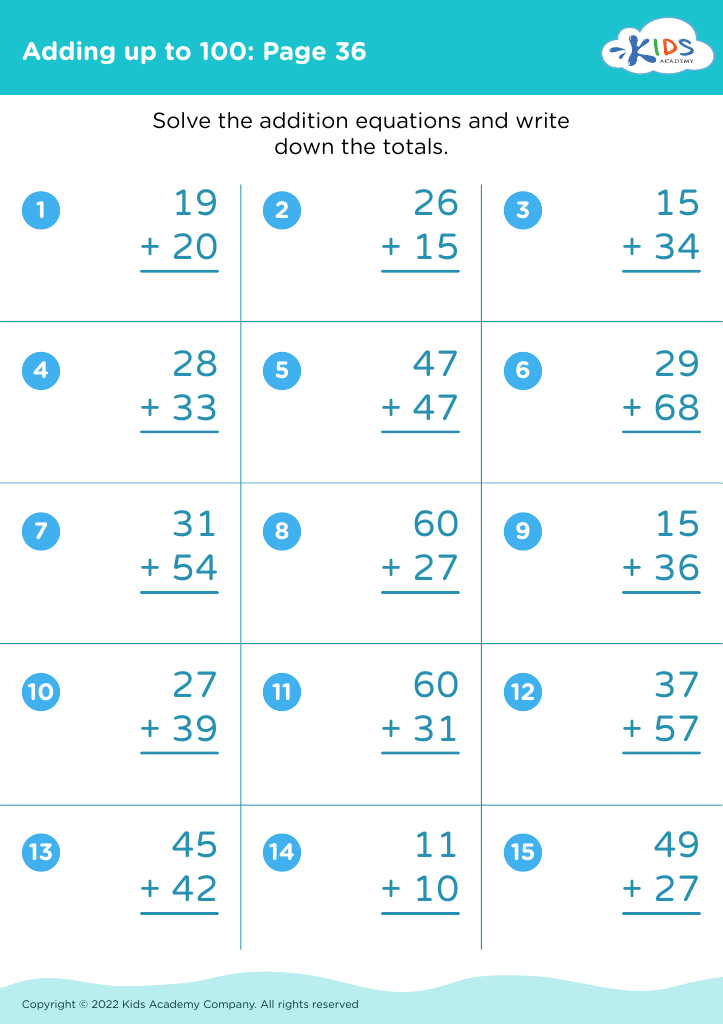


Fraction simplification, adding up to 100, and miscellaneous math skills are foundational for children ages 7-8, and both parents and teachers should care deeply about these topics for several reasons. Firstly, understanding fraction simplification helps children grasp the concept of equivalent fractions, making math less intimidating and more approachable. It's essential for higher-level math concepts they'll encounter in later grades, such as algebra and geometry, where fractions are a fundamental part.
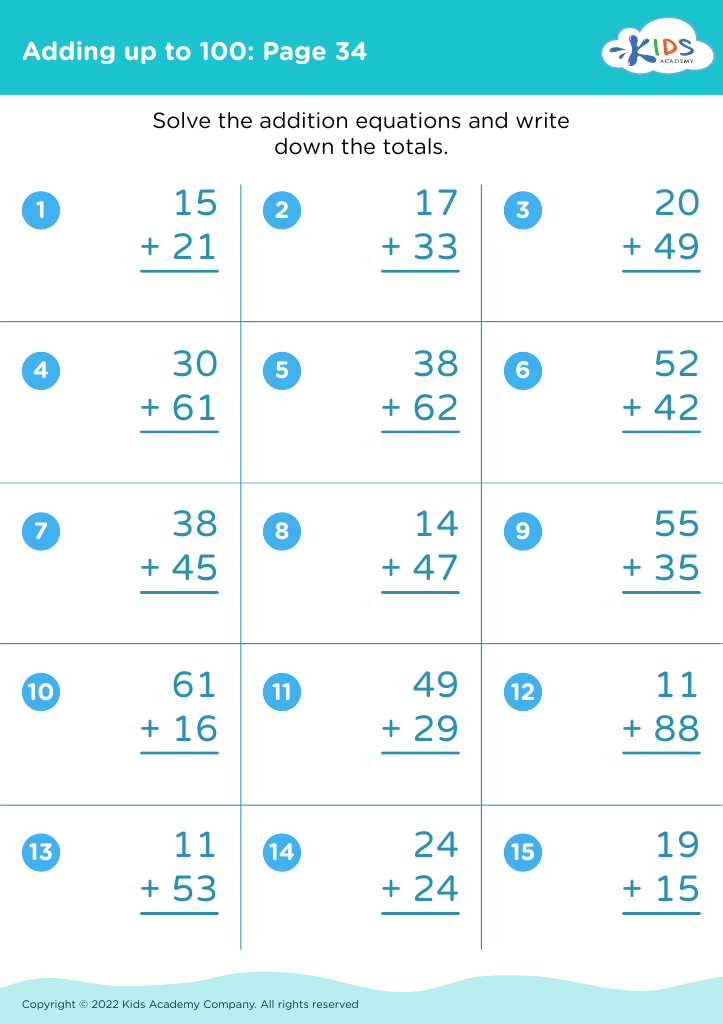
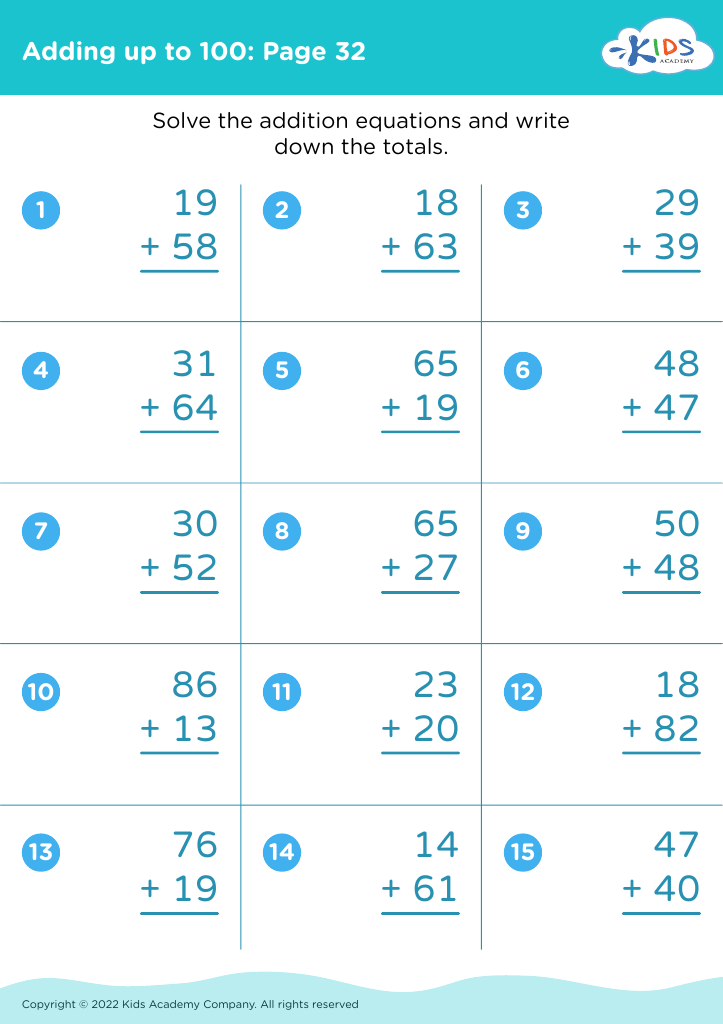
Adding up to 100 is a vital skill because it builds arithmetic fluency. When students confidently handle numbers within 100, they develop number sense – an intuitive understanding of how numbers work. This skill is critical in everyday activities, such as handling money and measuring ingredients in cooking or crafting.
Additionally, miscellaneous math skills, including basic geometry, number patterns, and simple word problems, enrich a child's problem-solving toolkit. These skills help children think analytically and flexibly, which is advantageous in all academic areas and real-life situations.
By supporting these early math skills, parents and teachers lay a robust foundation for successful learning in the future. Engaging with these concepts ensures that children develop confidence and a positive attitude towards math, fostering a lifelong appreciation for the subject.