Problem-Solving Skills Adding up to 100 Misc Worksheets for Ages 7-8
7 filtered results
-
From - To
Enhance your child's mathematical abilities with our "Problem-Solving Skills Adding up to 100 Misc Worksheets for Ages 7-8." Designed for young learners, these engaging worksheets focus on essential addition skills to help children confidently add numbers up to 100. Through fun and interactive exercises, kids will develop critical problem-solving abilities, improve their understanding of basic math concepts, and boost their confidence. Perfect for both classroom use and at-home practice, our worksheets create a solid foundation for future math success. Empower your child with skills that last a lifetime and make learning math an enjoyable adventure!
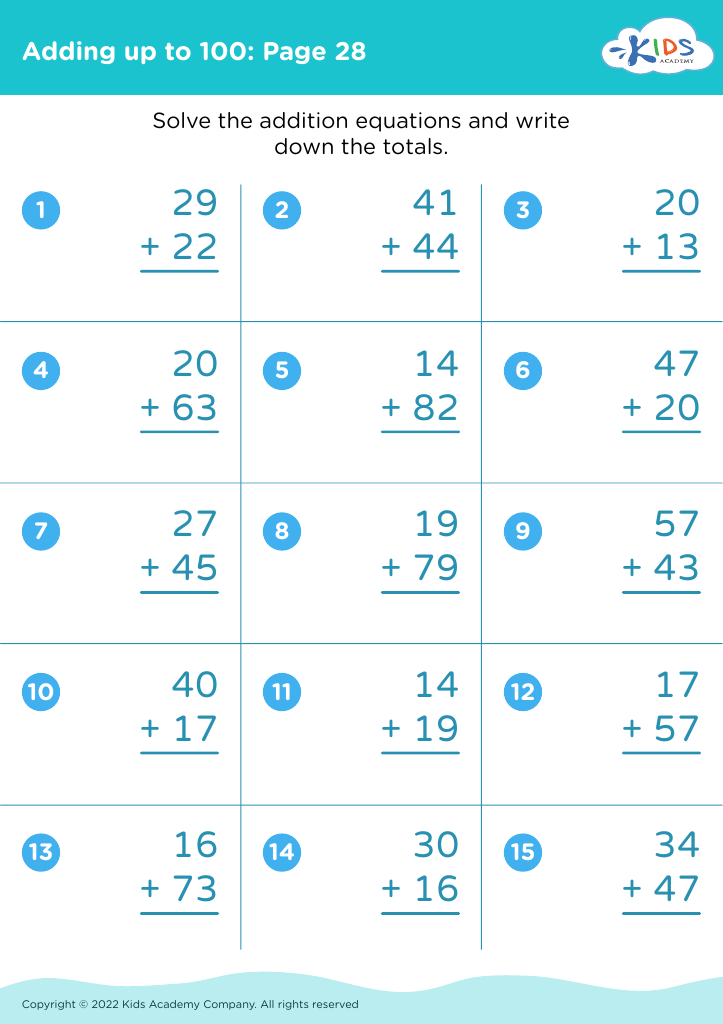
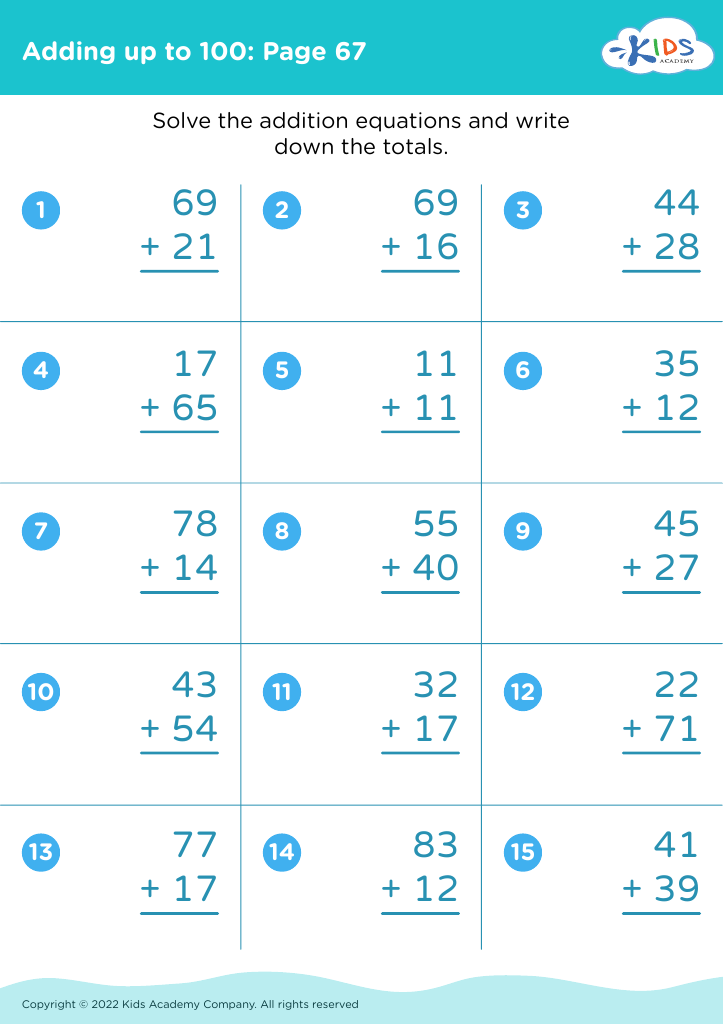
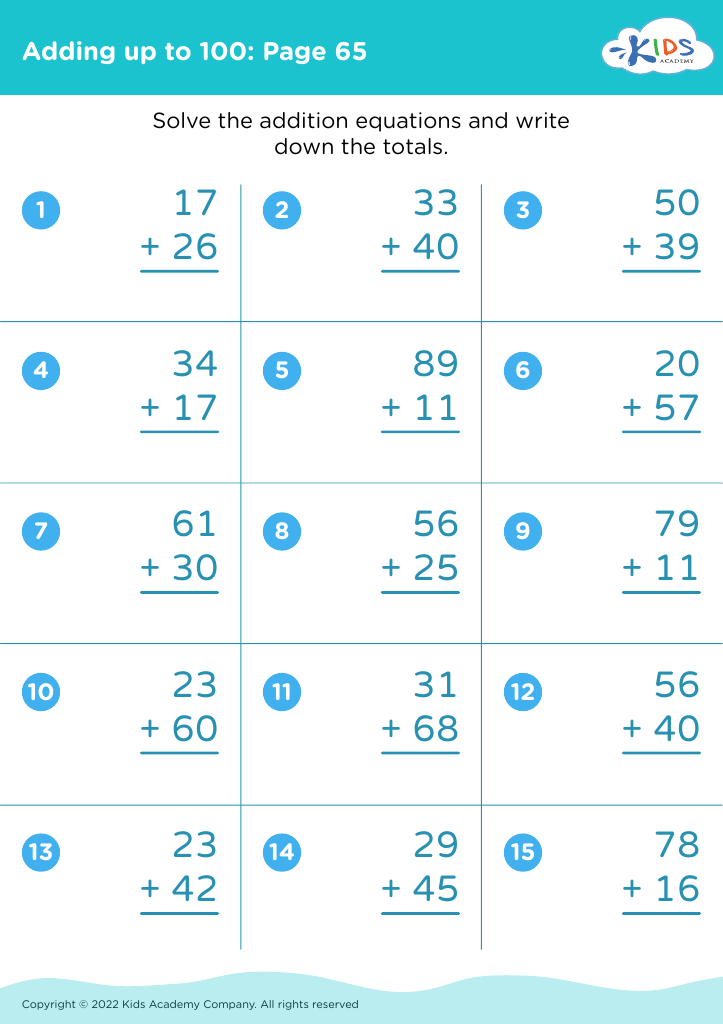
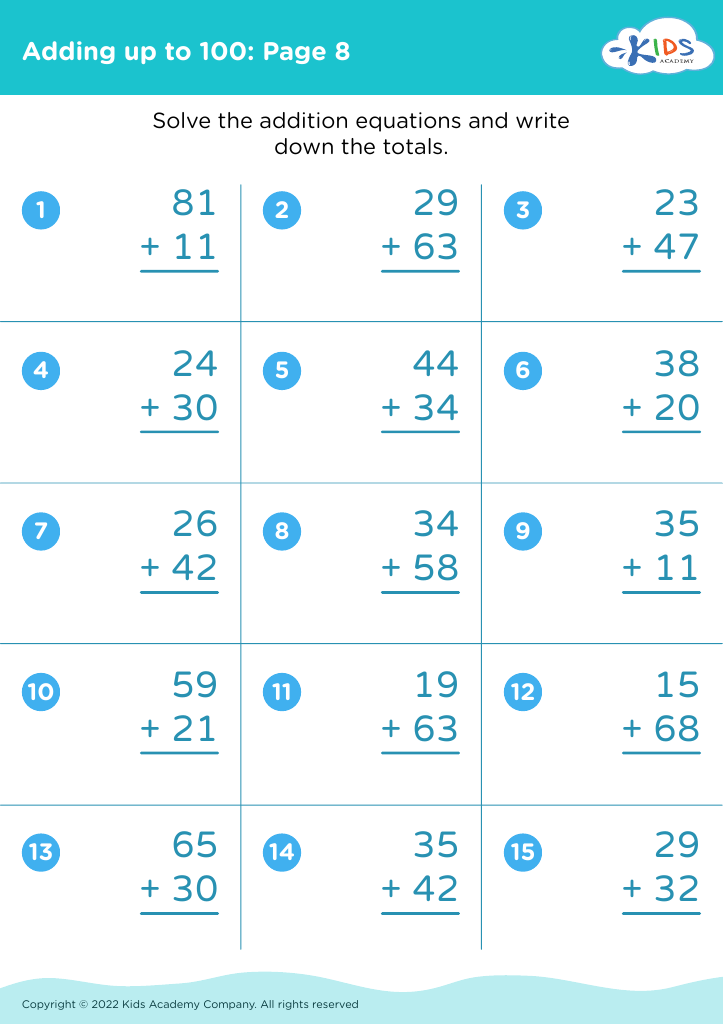
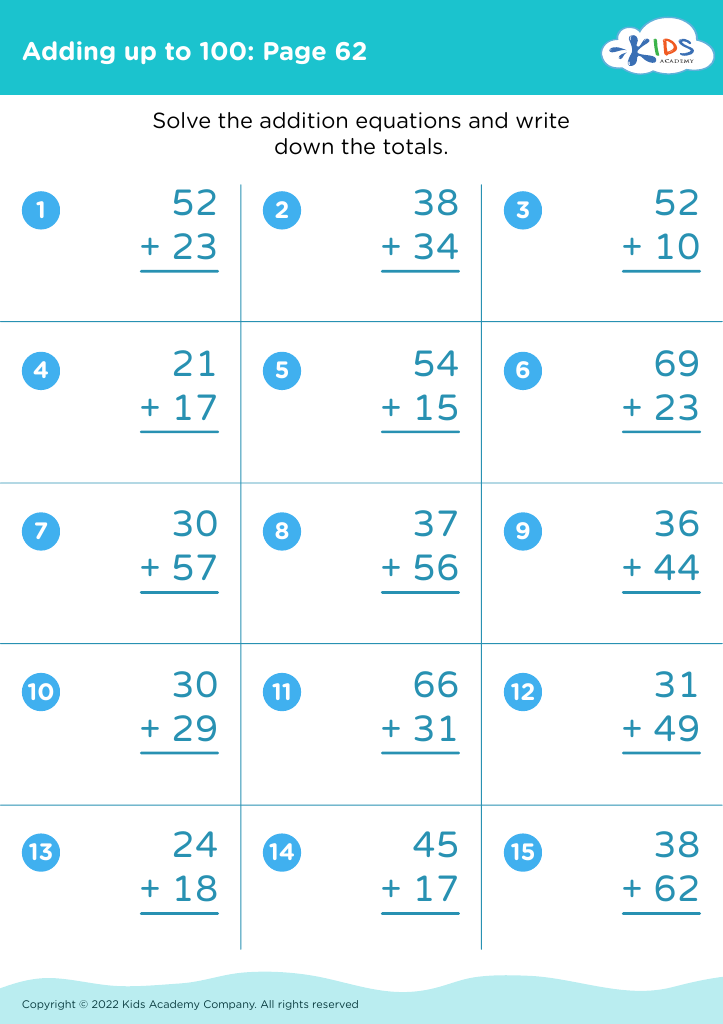
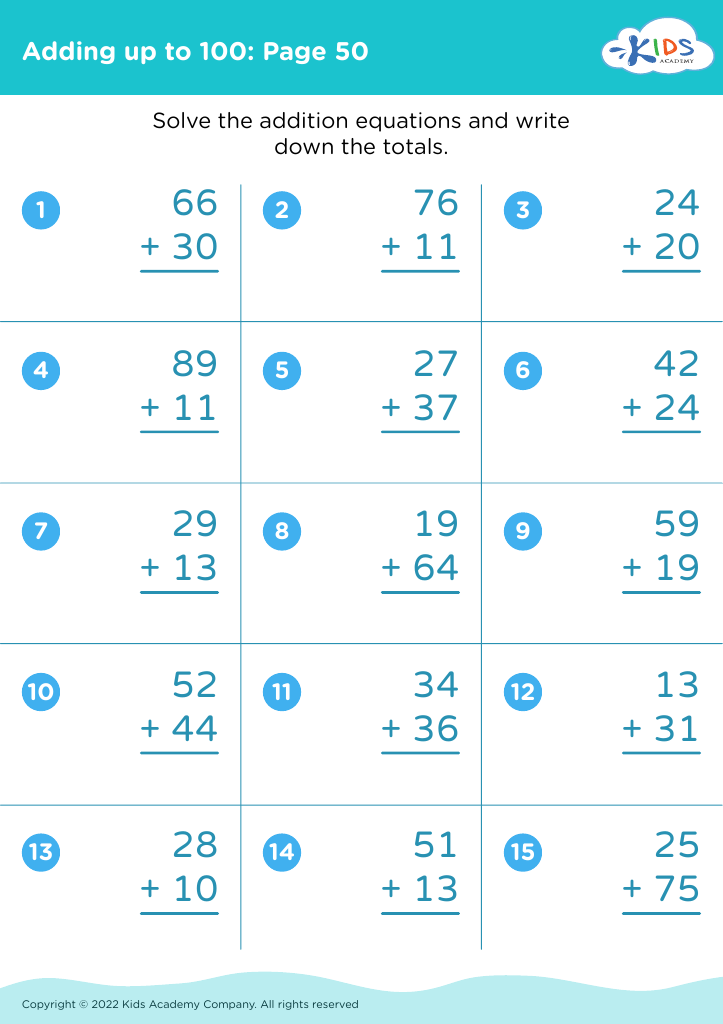
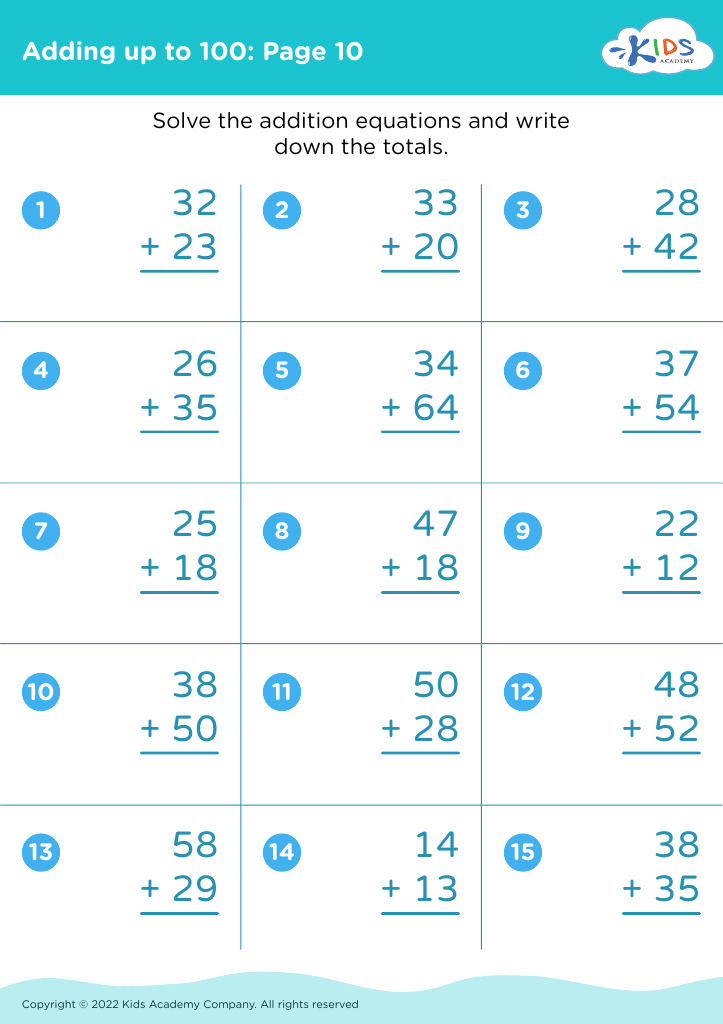


Parents and teachers should prioritize problem-solving skills for children aged 7-8, particularly focusing on tasks like adding up to 100, because these skills lay the foundation for essential cognitive and mathematical abilities. At this developmental stage, children are transitioning from basic arithmetic to more complex concepts. Mastering sums up to 100 isn't just about learning to add numbers; it supports memory, enhances logical thinking, and instills a methodical approach to problem-solving.
Engaging in tasks like adding up to 100 helps children develop number sense, a critical component for future proficiency in mathematics. It teaches them to recognize patterns, enhances their ability to make estimations, and fosters mental arithmetic capabilities. This foundational knowledge paves the way for more advanced math concepts they will encounter later in their education.
Moreover, problem-solving activities encourage persistence, attention to detail, and strategic thinking. These skills are transferrable and beneficial across all areas of learning and daily life. Fostering a child's confidence and competence in math through intriguing and age-appropriate challenges also cultivates a positive attitude towards the subject, reducing math anxiety in later years. Therefore, emphasizing problem-solving skills like adding up to 100 benefit not just their academic performance but their overall cognitive development and emotional resilience.