Recognizing shapes Adding up to 100 Misc Worksheets for Ages 7-8
4 filtered results
-
From - To
Explore our engaging "Recognizing Shapes: Adding Up to 100" miscellaneous worksheets designed specifically for children ages 7-8. These educational resources enhance math skills while introducing geometric concepts. Students will enjoy identifying different shapes and learning how to combine numbers to reach totals up to 100. Each worksheet is carefully crafted to encourage problem-solving and critical thinking, ensuring that learning remains fun and interactive. Perfect for classroom use or home practice, these worksheets provide a comprehensive learning experience that prepares young learners for more complex mathematical challenges. Enhance your child's learning journey today with our diverse and imaginative worksheets!
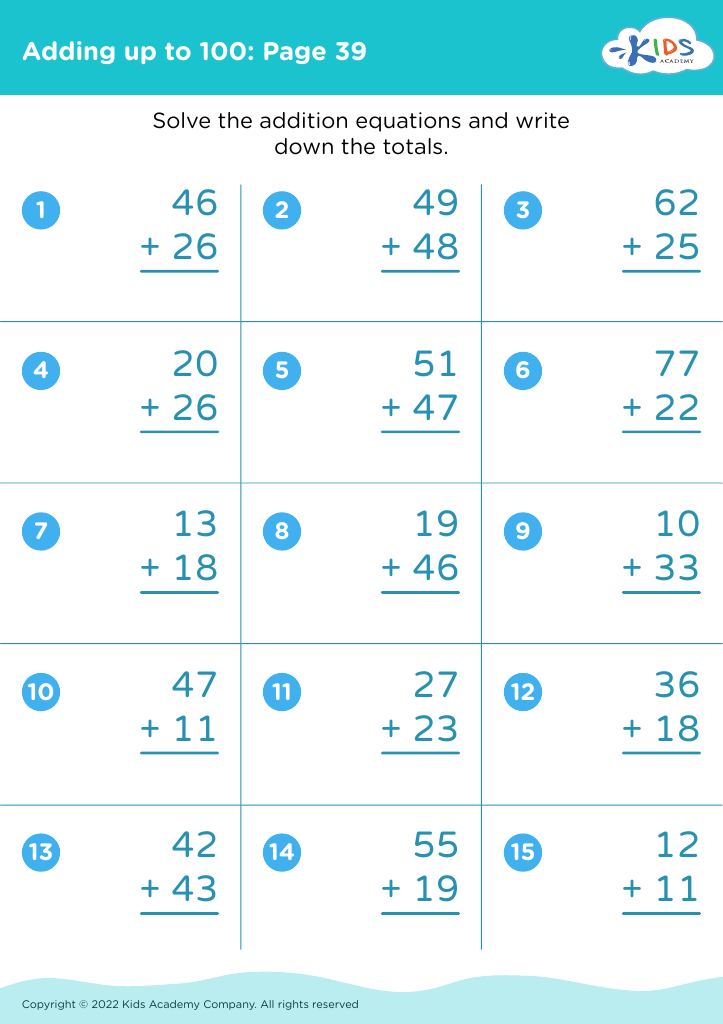
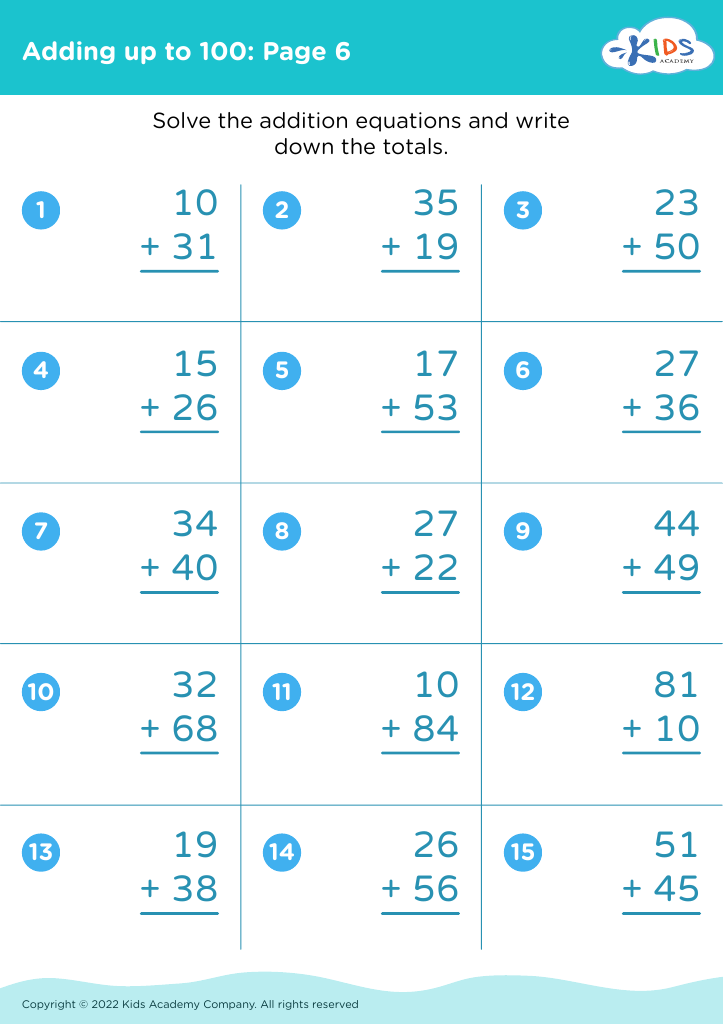
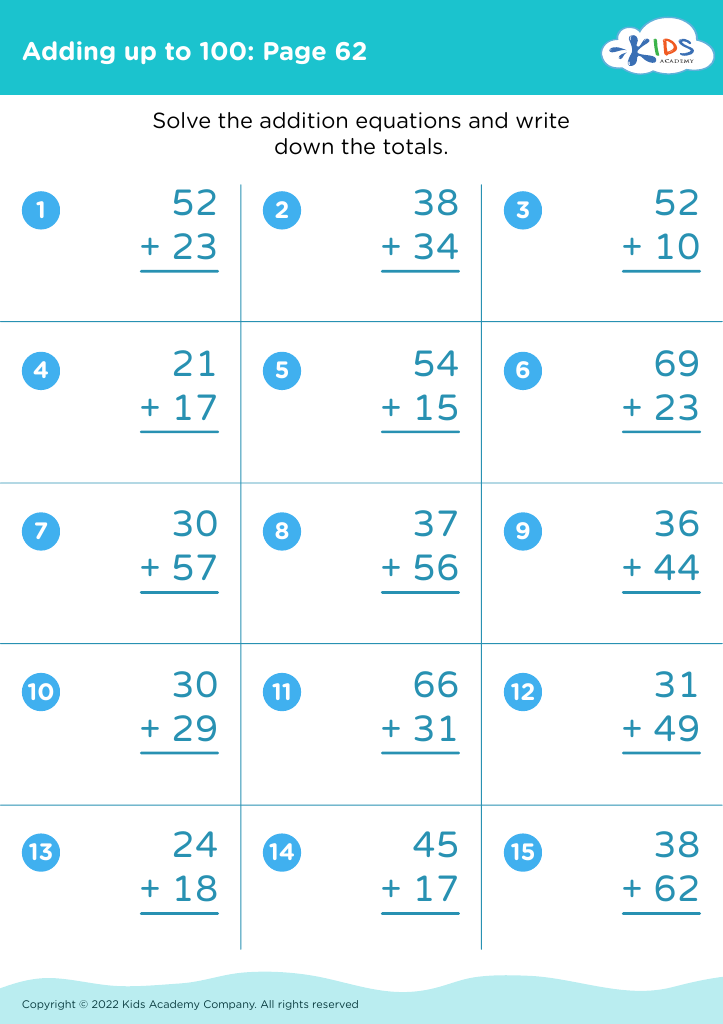
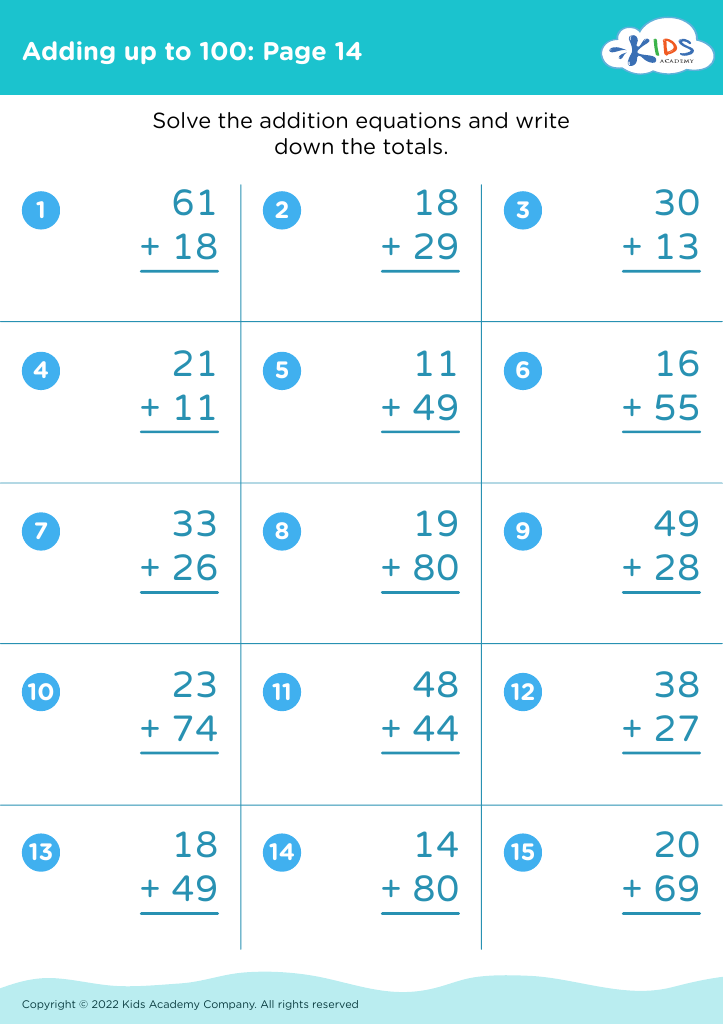


Recognizing shapes and understanding how to combine numbers to reach a total of 100 are fundamental skills for children aged 7-8. For parents and teachers, these skills form the foundation for broader mathematical understanding and cognitive development. Recognizing geometric shapes not only enhances spatial awareness but also enriches critical thinking. Children learn to identify shapes in real-world contexts, contributing to their ability to solve problems creatively.
Adding up to 100 is a vital mathematical concept that introduces students to the principles of addition, place value, and number relationships. Mastering this skill prepares children for more advanced arithmetic tasks and builds their confidence with numbers. It encourages them to explore different strategies for reaching a sum, promoting analytical thinking.
Moreover, these activities can be fun and engaging, often involving games or practical activities that make learning enjoyable. Involving parents in this learning process reinforces the connection between home and school, emphasizing the importance of these foundational skills. Ultimately, nurturing these abilities at an early age cultivates a solid academic foundation, equipping children with the tools necessary for lifelong learning and problem-solving in everyday life.