Understand fractions Adding up to 100 Misc Worksheets for Ages 7-8
3 filtered results
-
From - To
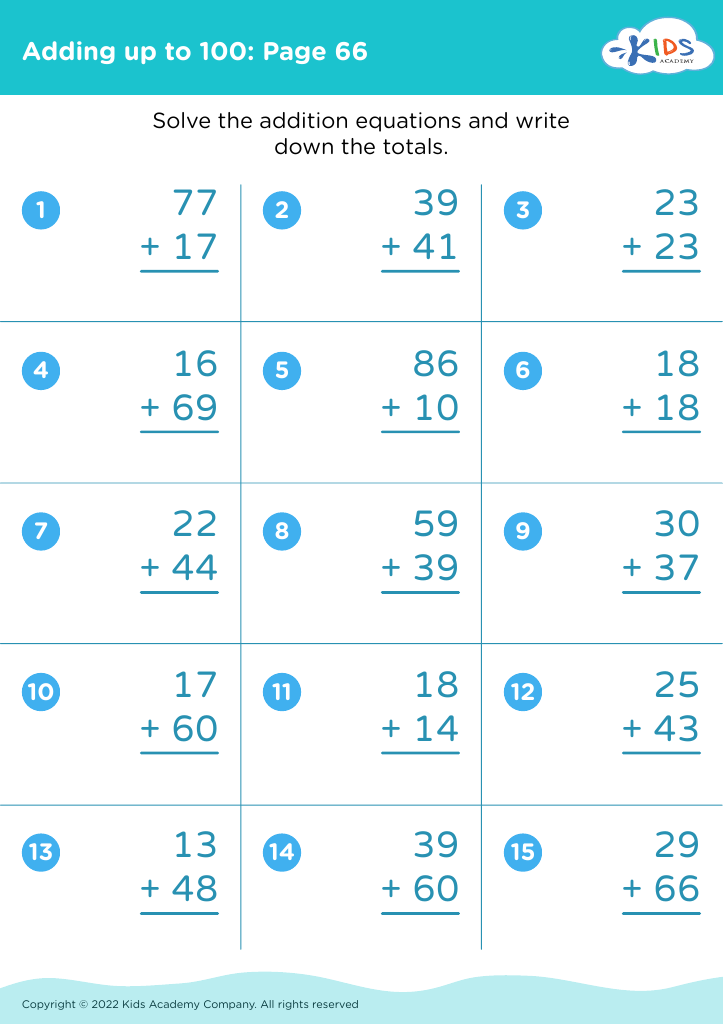
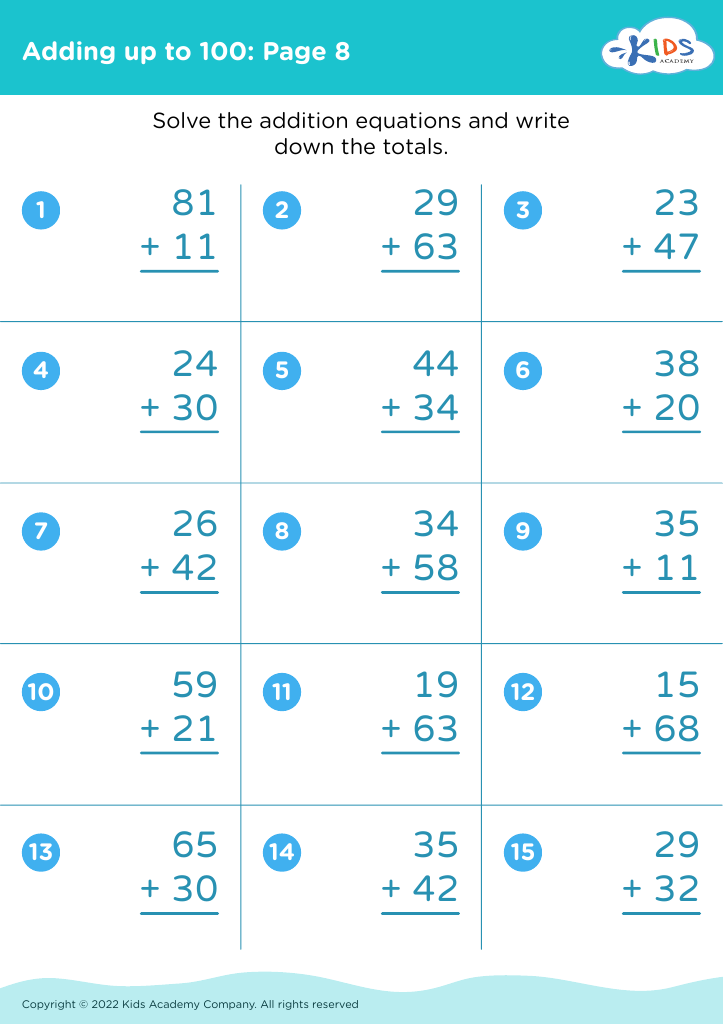
Discover a collection of engaging worksheets designed to help 7-8-year-olds grasp the concept of fractions and enhance their math skills, specifically adding up to 100. These varied exercises offer a mix of fun and educational activities, ensuring young learners stay motivated. Each worksheet is crafted to simplify complex ideas, promote critical thinking, and build confidence in solving fraction problems. By practicing with these printable resources from Kids Academy, children can strengthen their understanding of fractions and improve their mathematical proficiency in an enjoyable, methodical manner. Perfect for both classroom and at-home learning!
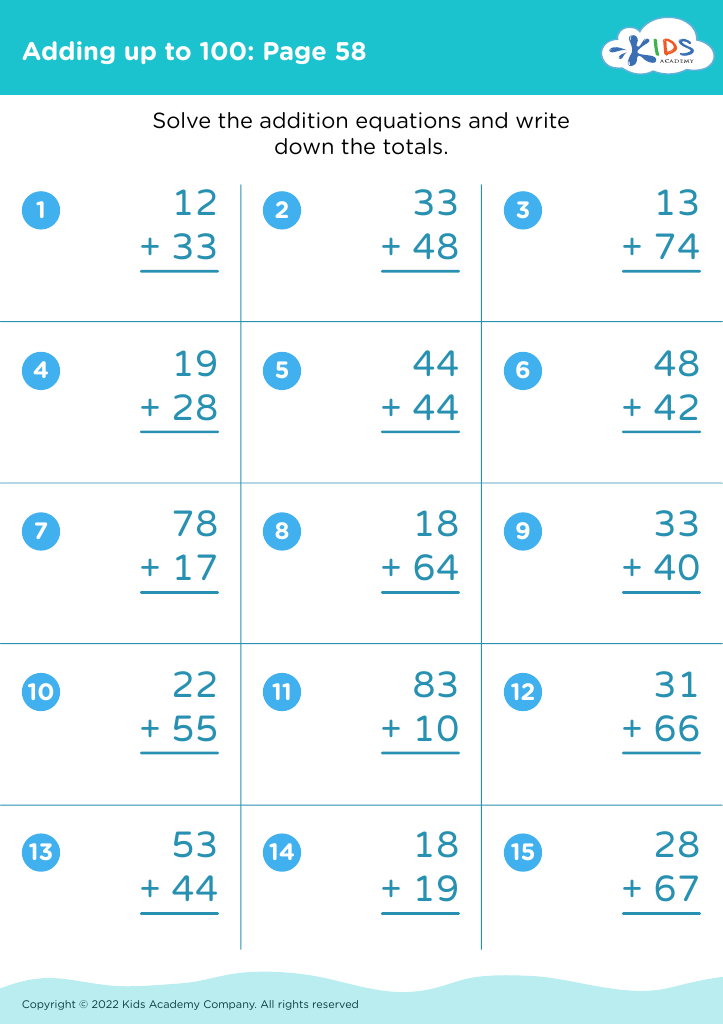


Parents and teachers should prioritize helping children understand fractions and learning them in the overall context of math skills like adding up to 100, especially for the ages of 7-8, as it forms a crucial foundation for future mathematical success and everyday problem-solving. At this age, children's cognitive abilities are highly receptive to grasping basic fractions such as 1/2, 1/3, and 1/4. Understanding fractions at this level aids children in recognizing parts of a whole, which is essential for more sophisticated math concepts later, such as ratios, percentages, and algebra.
In addition, managing numbers up to 100 strengthens a child’s addition, subtraction, and number sense skills. This indicates proficiency in basic arithmetic, which is fundamental for handling more advanced operations and aids in developing logical thinking and confidence around numbers.
Moreover, fostering competency in these areas early on will benefit children beyond just academic realms; for instance, it can help them understand concepts like fairness, sharing, and time management in everyday scenarios.
Ensuring children grasp these concepts through supportive, engaging learning environments encourages long-term math comprehension and a positive attitude toward the subject. Catching these critical mathematical concepts early sets up young learners for sustained scholastic achievement and cultivates essential life skills.