Understanding patterns Adding up to 100 Misc Worksheets for Ages 7-8
6 filtered results
-
From - To
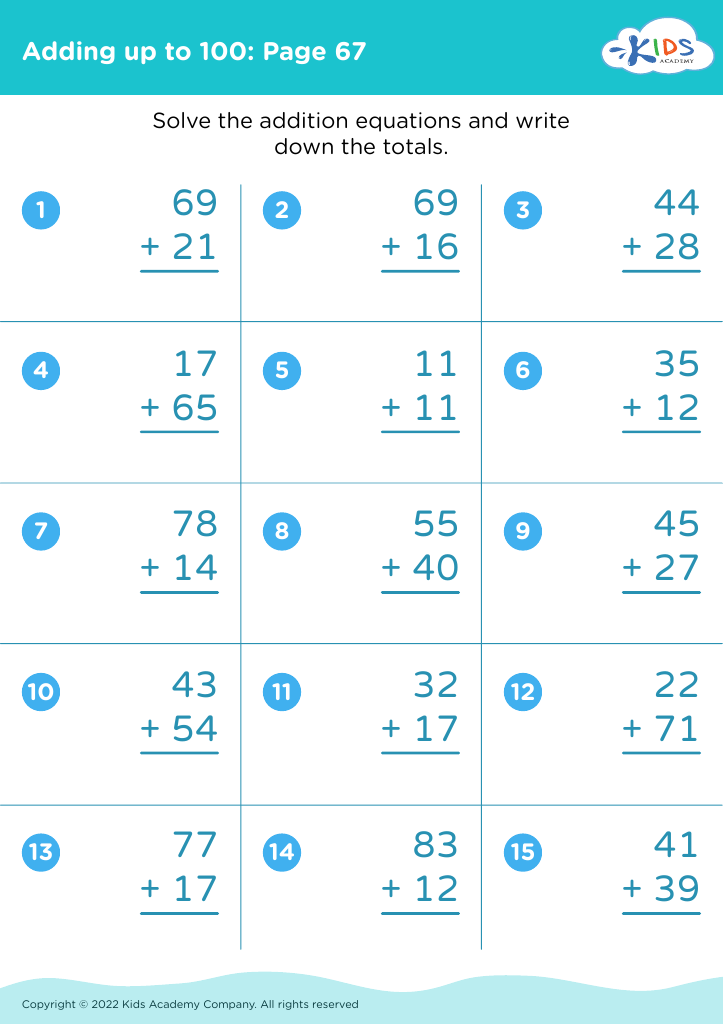
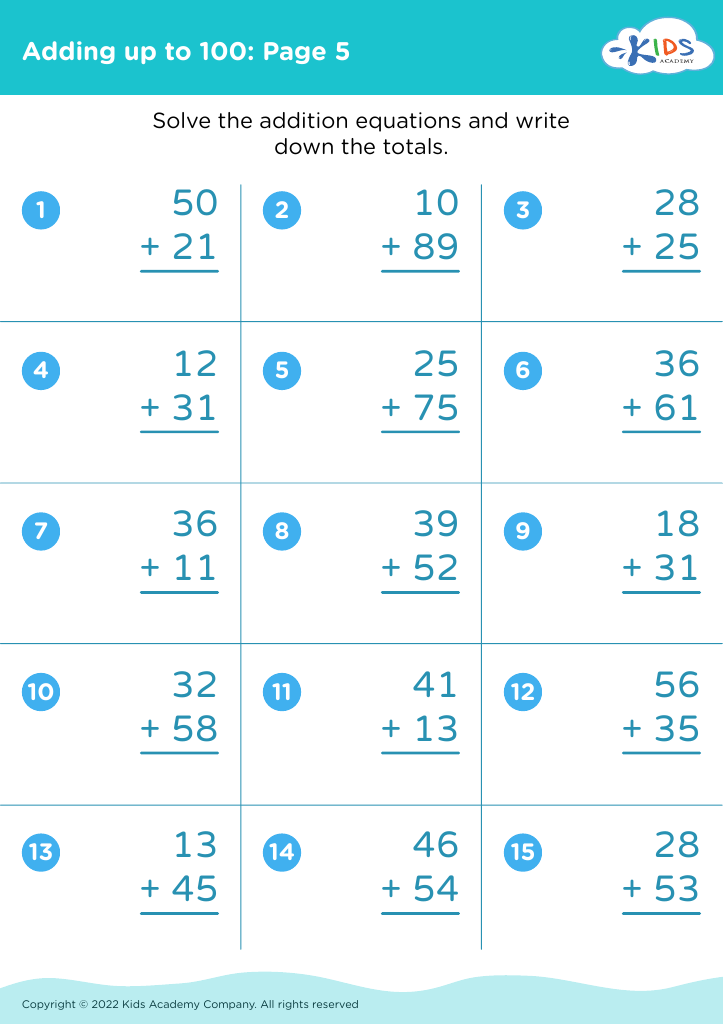
Enhance your child’s math skills with our "Understanding Patterns Adding up to 100 Misc Worksheets" for ages 7-8. Our carefully designed worksheets help kids master essential math concepts through engaging activities that focus on recognizing and creating numerical patterns. These printable worksheets make learning fun and interactive, enabling children to effectively grasp addition up to 100. Perfect for both classroom and at-home practice, our resource aims to build strong mathematical foundations and boost confidence in young learners. Unlock your child's potential today by exploring the wide range of hands-on learning tools available, specifically tailored for growing minds.
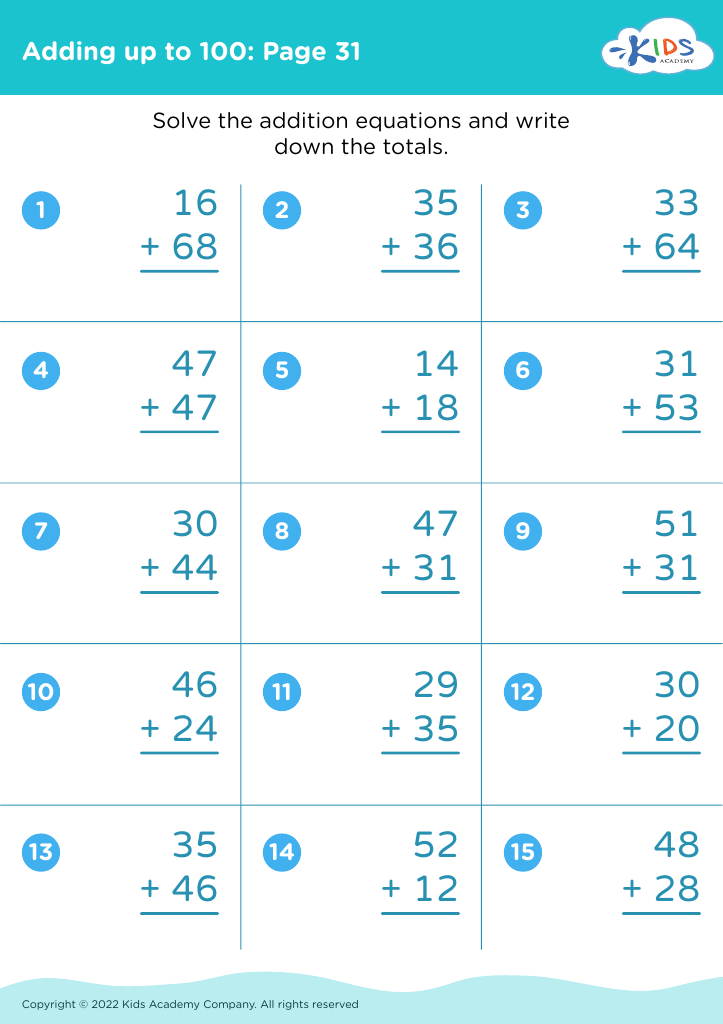
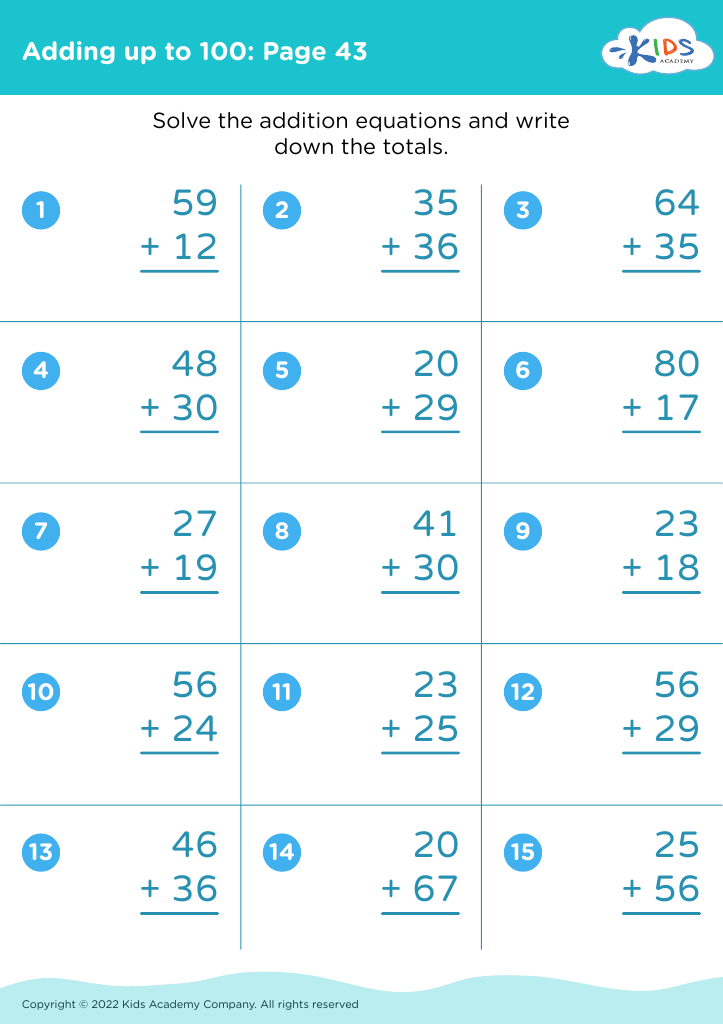
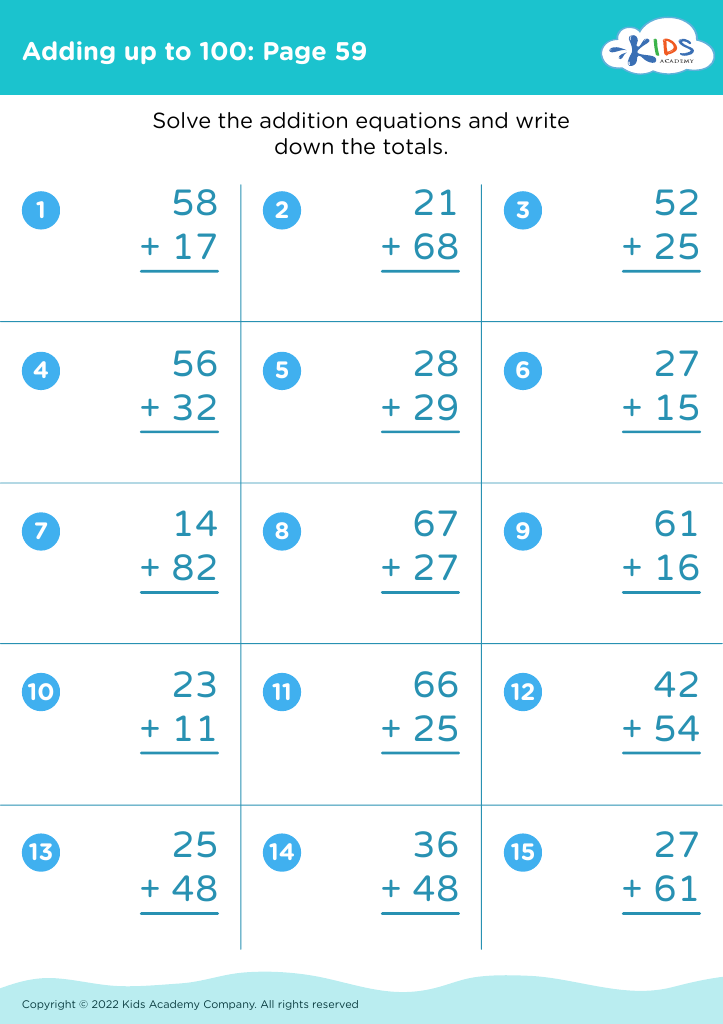
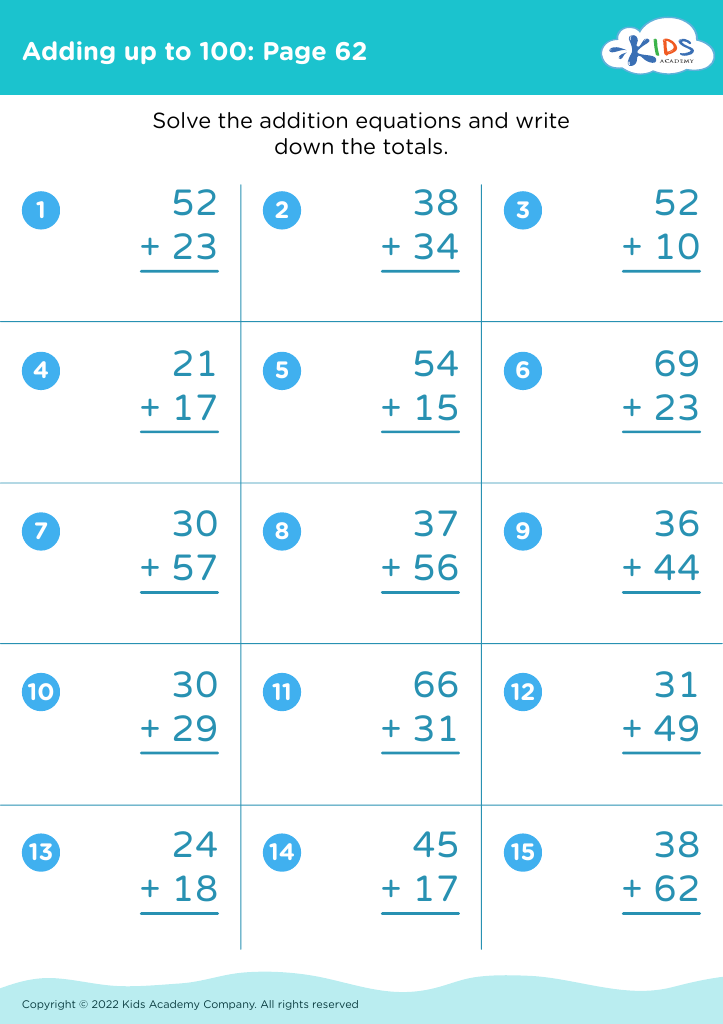


Understanding patterns and learning to add up to 100 are foundational mathematical skills that are crucial for children aged 7-8. These skills are essential because they foster cognitive development and logical thinking, which are critical in both academic and real-life problem-solving scenarios.
Firstly, recognizing and understanding patterns helps children develop important prediction and analytical skills. These skills underpin more complex math concepts, such as algebra, that they will encounter in later years. For example, when children identify and extend patterns, they learn the basics of sequences and functions, which is a step towards abstract mathematical thinking.
Secondly, learning to add numbers up to 100 is a vital arithmetic skill that plays a significant role in a child's numerical fluency and confidence. Mastering this skill is not only essential for everyday calculations but also serves as a building block for more advanced arithmetic operations like multiplication, division, and fractions.
Moreover, achieving these milestones promotes a positive attitude towards math, reducing math anxiety by building a strong foundation. Interactive activities such as games, manipulatives, and real-world examples make learning these concepts enjoyable and relatable, further helping students grasp and retain the information.
Therefore, parents and educators should prioritize understanding patterns and basic arithmetic as these aptitudes set the stage for future academic success and everyday functionality, helping children become competent and confident individuals.