Understanding Sequences Adding up to 100 Misc Worksheets for Ages 7-8
4 filtered results
-
From - To
Discover the exciting world of numbers with our "Understanding Sequences Adding up to 100" worksheets, designed for ages 7-8! These engaging worksheets help children grasp the concept of sequences through fun, interactive exercises. Each worksheet provides a step-by-step approach to understanding sequences, fostering critical thinking and problem-solving skills. Perfect for both classroom and home learning, these resources support mastering addition up to 100. Boost your child's confidence and sequential understanding with activities tailored to suit their curious minds. Turn learning into an enjoyable adventure and watch your child’s math skills flourish!
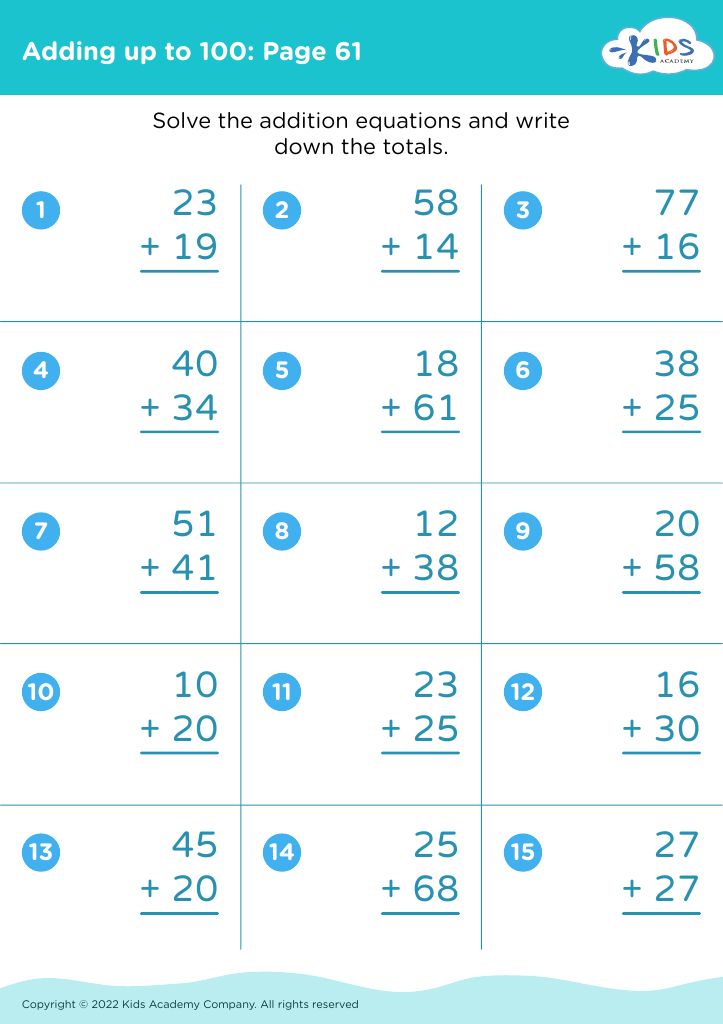
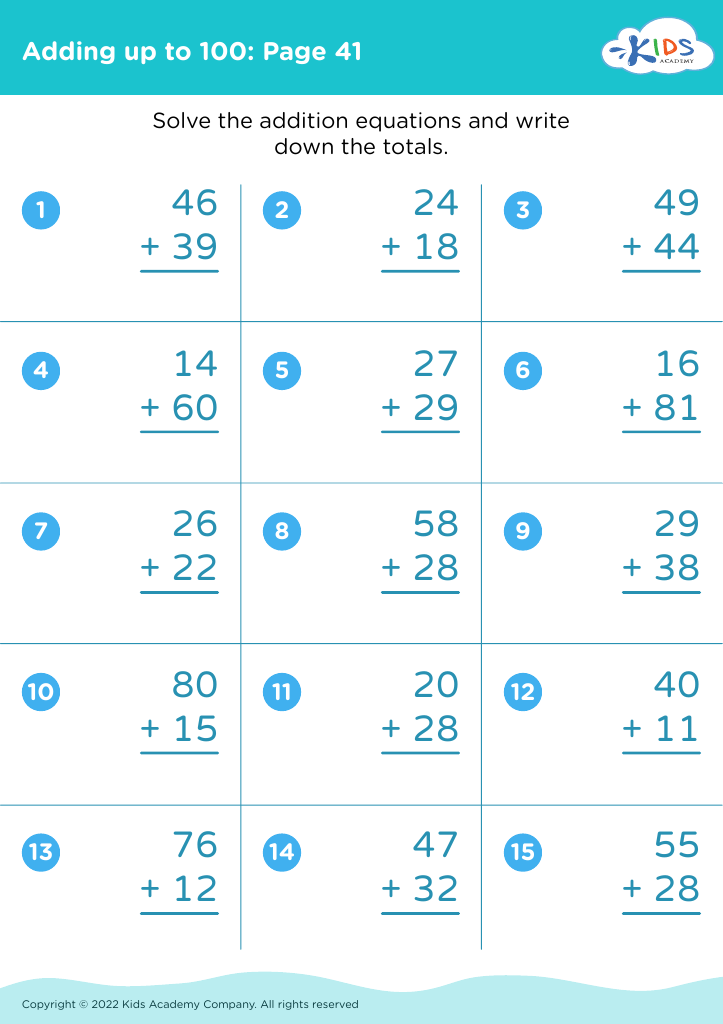


Understanding sequences that add up to 100 can have immense benefits for children aged 7-8 and warrants parents' and teachers' attention. Firstly, practicing sequences enhances mathematical thinking and fluency, skills crucial for grasping more complex math concepts later on. Sequences also strengthen addition and subtraction abilities, providing a solid foundation for arithmetic operations.
Beyond skill acquisition, sequences that add up to a specific number like 100 help children develop problem-solving and logical reasoning capabilities. Engaging in these exercises promotes perseverance and attention to detail as kids explore various number combinations to reach their goal. These brain workouts can significantly boost cognitive development.
Additionally, grasping such sequences is a confidence builder. When children successfully understand and manipulate numerical sequences, their sense of accomplishment grows, fostering a positive attitude toward math and learning generally.
Involvement in these exercises also aligns with curriculum standards that emphasize number sense and computational fluency in early education. Teachers and parents who integrate such activities at home or in the classroom create enriched learning environments that nurture critical thinking skills.
Overall, investing time and energy in understanding these sequences not only equips children with essential math competencies but also cultivates enduring intellectual abilities and boosts self-confidence, pivotal to their academic journeys.