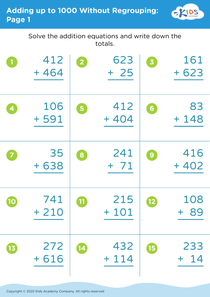
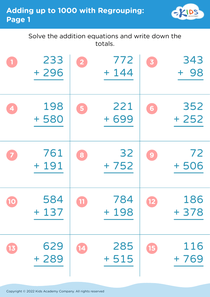
Comparing Fractions Adding up to 1000 Misc Worksheets for Ages 7-8
5 filtered results
-
From - To
Discover our engaging "Comparing Fractions Adding Up to 1000" worksheets designed specifically for children ages 7-8. These meticulously crafted resources provide a delightful way for young learners to explore and master the crucial skill of comparing fractions. Through fun activities and illustrative examples, students will gain confidence in identifying greater or lesser fractions, all while honing their understanding of number relationships in a fun and interactive manner. With plenty of practice problems, your child will enhance their math skills and prepare for more complex concepts ahead. Ideal for classroom use or at-home learning, these worksheets make fraction comparison enjoyable and effective!
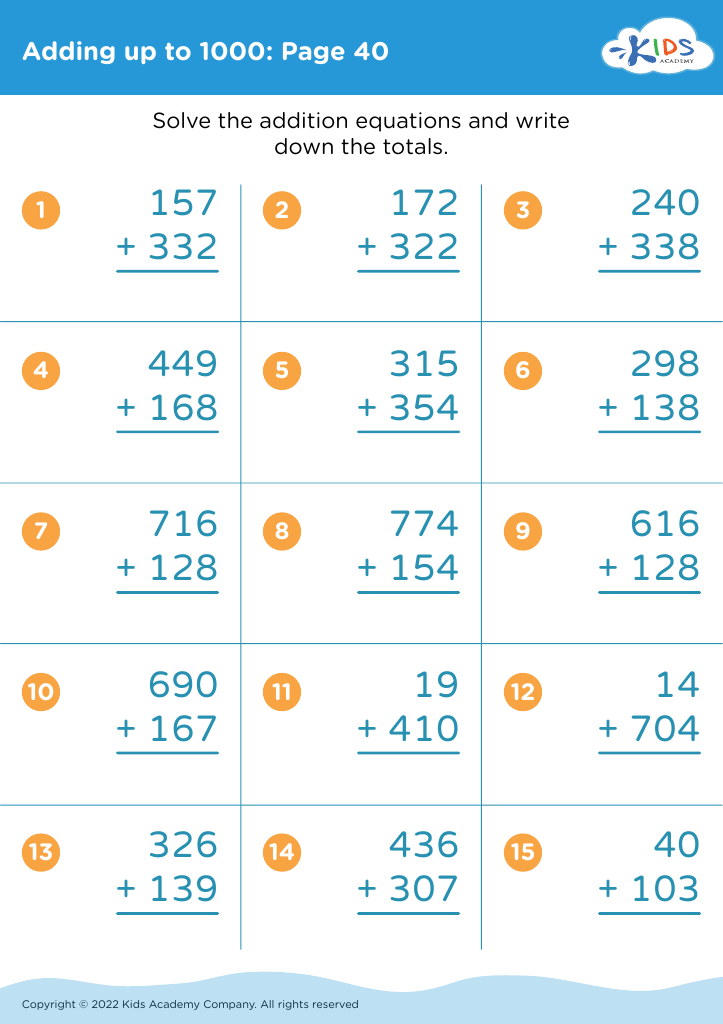
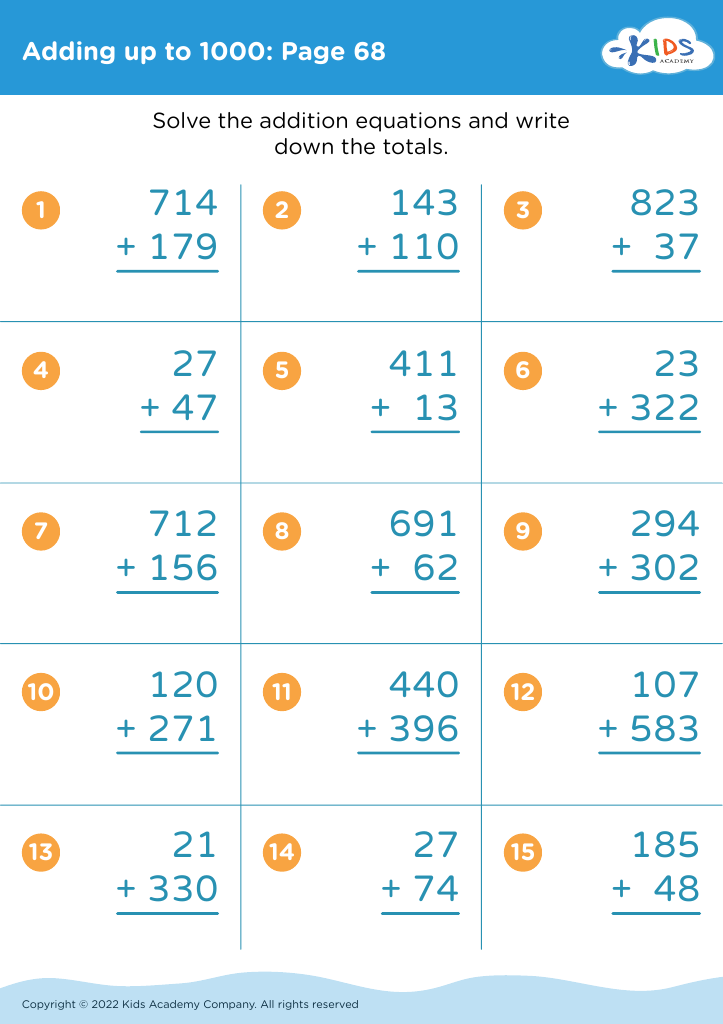
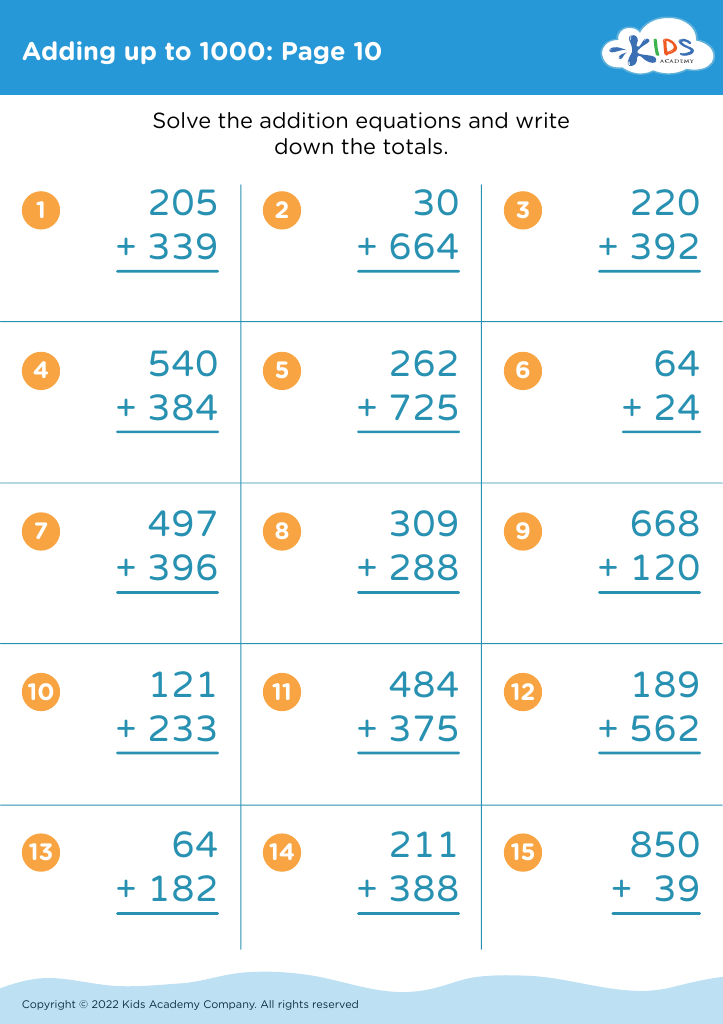
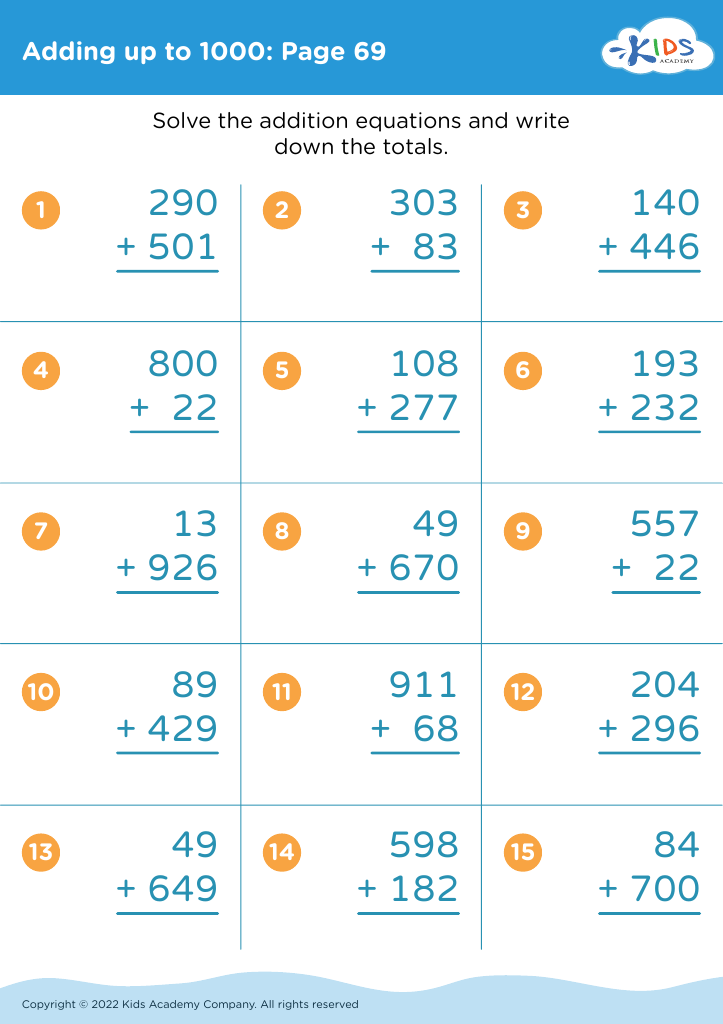
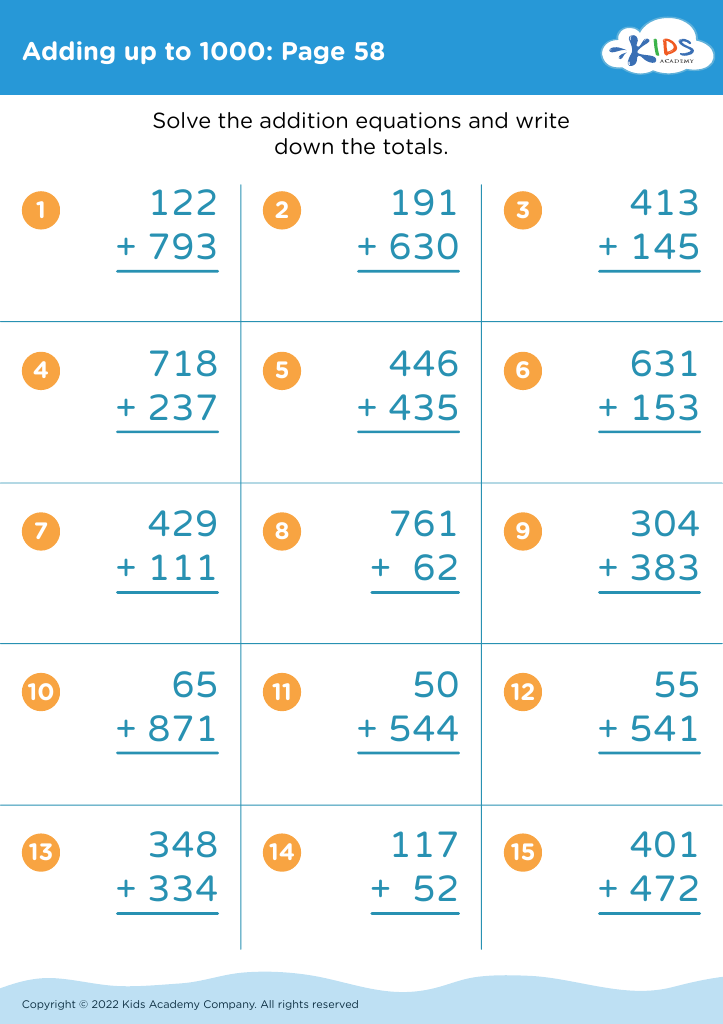


Comparing fractions is a foundational skill that significantly contributes to children's overall mathematical understanding, especially for ages 7-8. At this stage, students begin to delve deeper into the world of arithmetic, where understanding fractions becomes essential for solving problems both in and outside the classroom.
First, comparing fractions aids in developing critical thinking. Students learn to analyze relationships between quantities, strengthening their reasoning skills. This lays a solid groundwork for more advanced mathematical concepts in later grades, such as algebra and geometry.
Second, understanding fractions fosters a sense of proportional reasoning, valuable in daily life. Whether it's cooking, budgeting, or measuring, being able to compare and manipulate fractions empowers students to make informed decisions.
Additionally, engaging activities the "Adding up to 1000" technique prompt deeper participation in learning, making math enjoyable and relatable. This hands-on approach ensures students grasp concepts thoroughly, nurturing a positive attitude towards learning.
Ultimately, parents and teachers should emphasize this skill because it cultivates not only a strong mathematical foundation but also boosts confidence and perseverance. Encouraging proficiency in comparing fractions helps children become adept problem solvers, preparing them for future academic challenges and real-world applications.