Critical Thinking Adding up to 1000 Misc Worksheets for Ages 7-8
3 filtered results
-
From - To
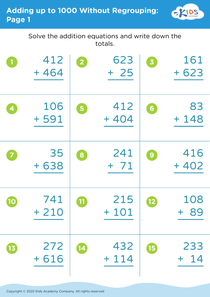
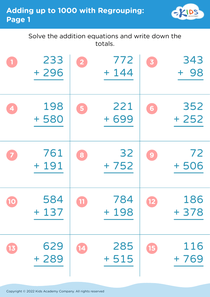
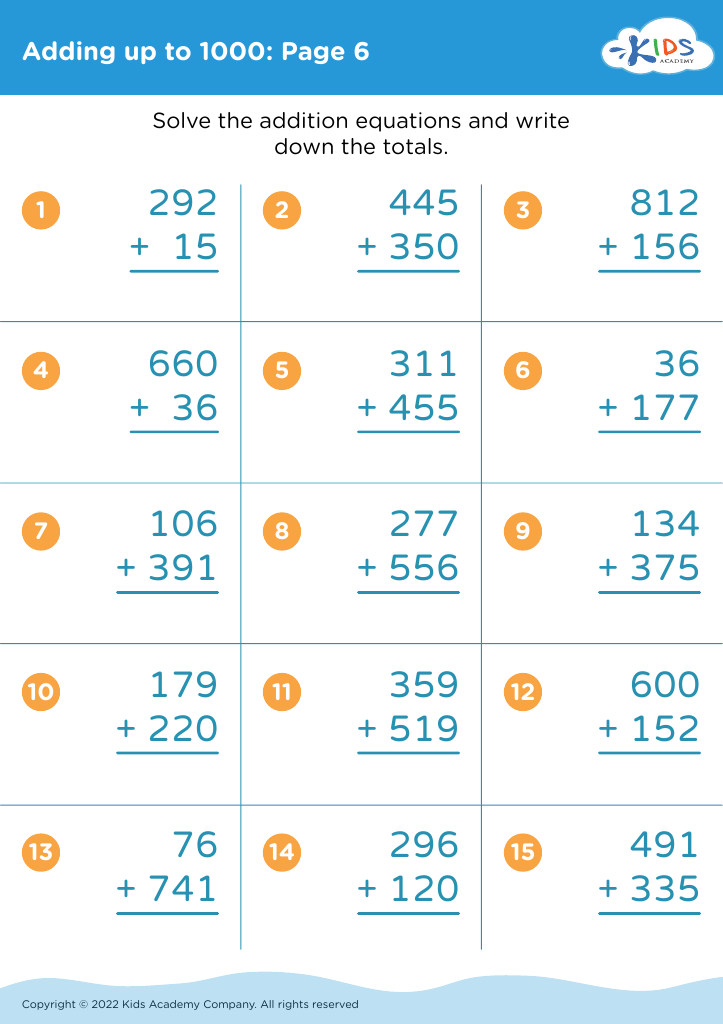
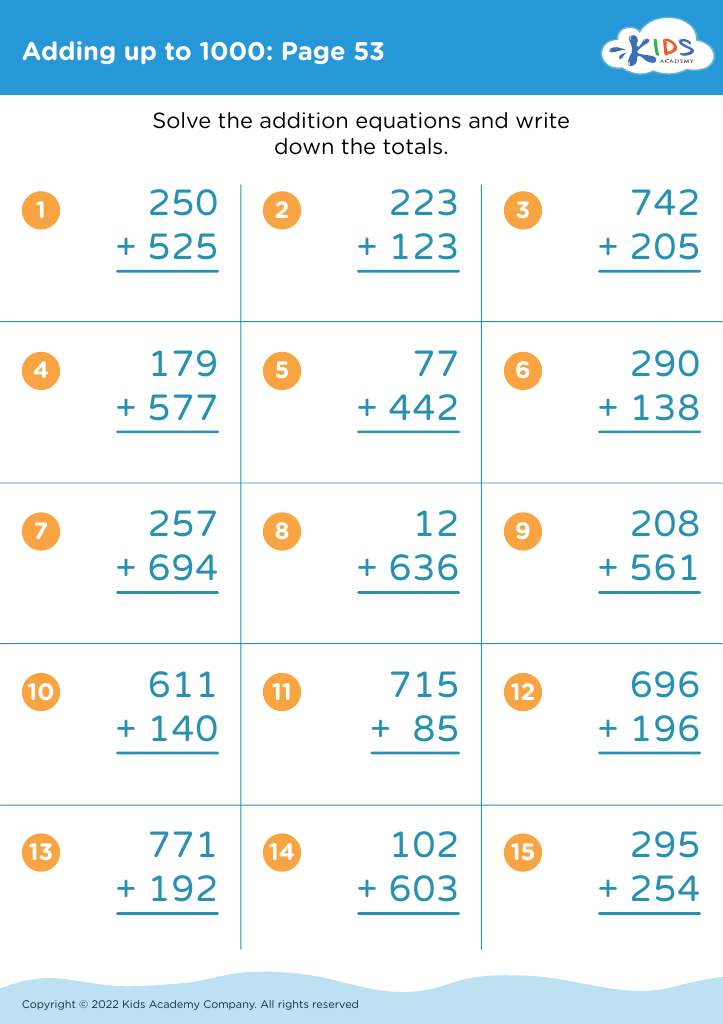
Welcome to our "Critical Thinking Adding up to 1000 Misc Worksheets" designed for ages 7-8! These engaging worksheets enhance mathematical understanding while promoting critical thinking skills. By tackling diverse problems that require reasoning and analysis, young learners will develop a deeper grasp of numerical concepts as they practice addition and subtraction up to 1000. Our thoughtfully crafted activities encourage students to think creatively and strategically, making math both fun and educational. Perfect for homeschooling or classroom use, these worksheets provide an excellent opportunity for children to build confidence and competence in their math skills. Explore our collection and watch your child's critical thinking flourish!
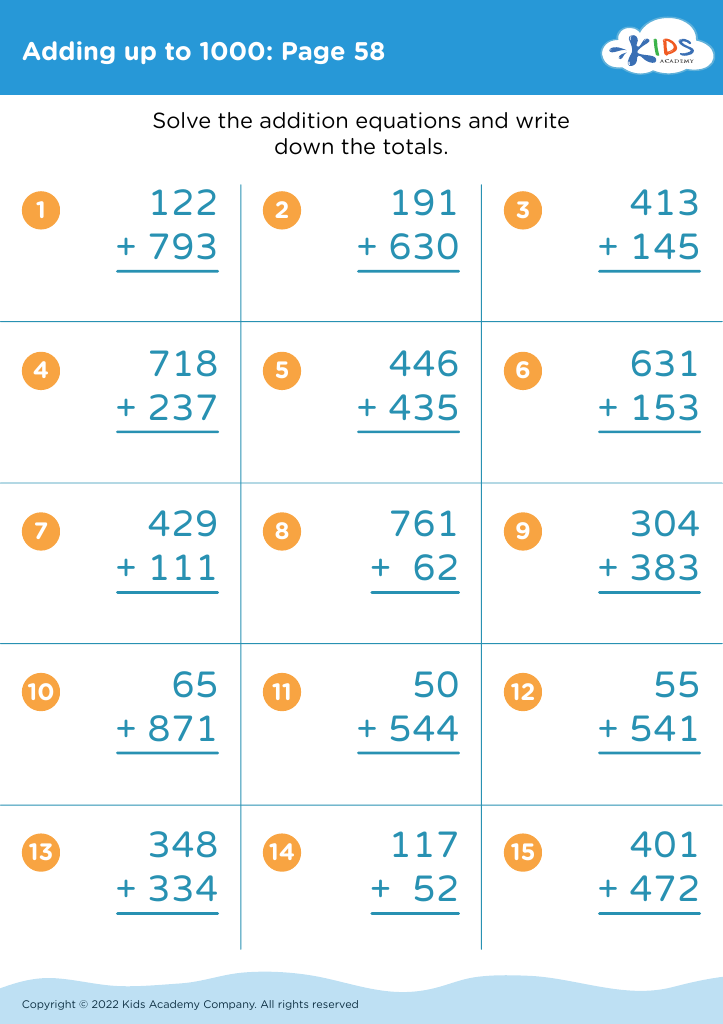


Critical thinking is a vital skill that allows children to analyze information, make informed decisions, and solve problems effectively. For children aged 7-8, developing critical thinking skills is particularly crucial, as this is a formative stage in their cognitive development.
Parents and teachers should care about fostering critical thinking because it empowers children to question information, think creatively, and approach problems from multiple angles. In an age flooded with information—from social media to educational content—critical thinking helps kids discern credible sources from misleading ones. This ability will serve them well not only in academics but also in everyday life choices.
Furthermore, critical thinking builds self-confidence. When children learn to express their thoughts, challenge assumptions, and back up their ideas with reasoning, they become more engaged learners. This engagement can lead to a greater enthusiasm for learning and exploration.
Incorporating activities that promote critical thinking, such as puzzles, debates, or inquiries in the classroom can spark curiosity and deeper understanding. By nurturing these skills early on, parents and teachers equip children with the necessary tools to navigate a complex world, ensuring they grow into thoughtful, capable, and independent adults. In summary, caring about critical thinking is an investment in a child's future success.