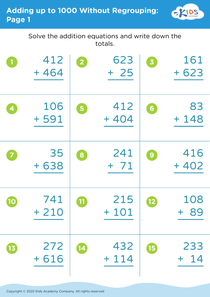
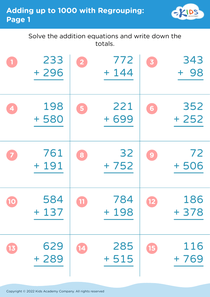
Fraction simplification Adding up to 1000 Misc Worksheets for Ages 7-8
5 filtered results
-
From - To
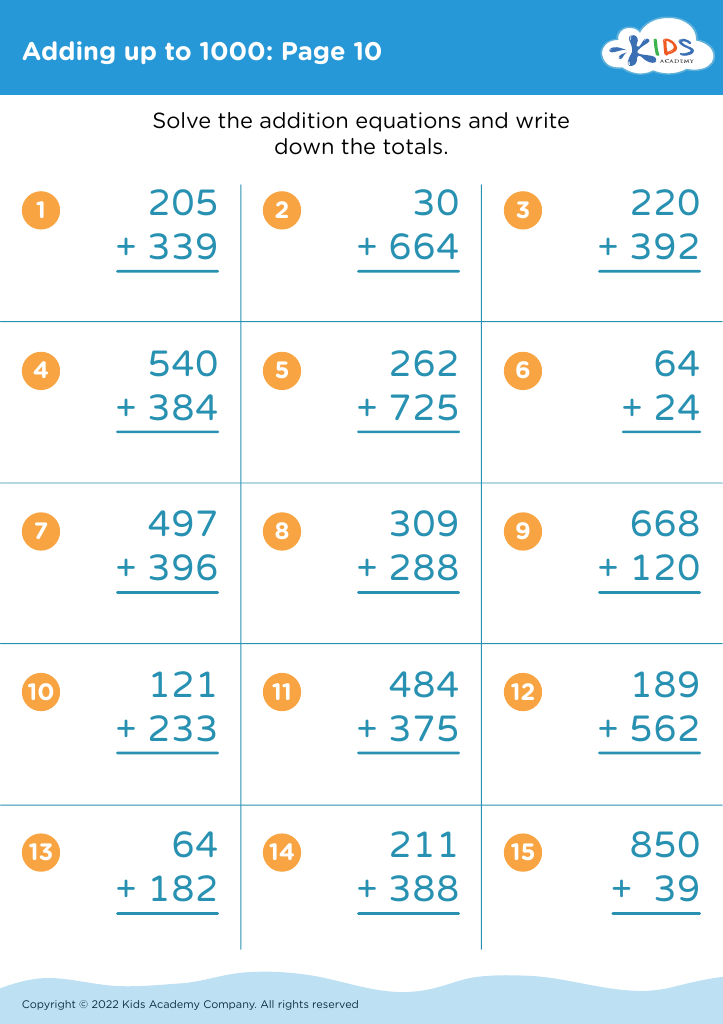
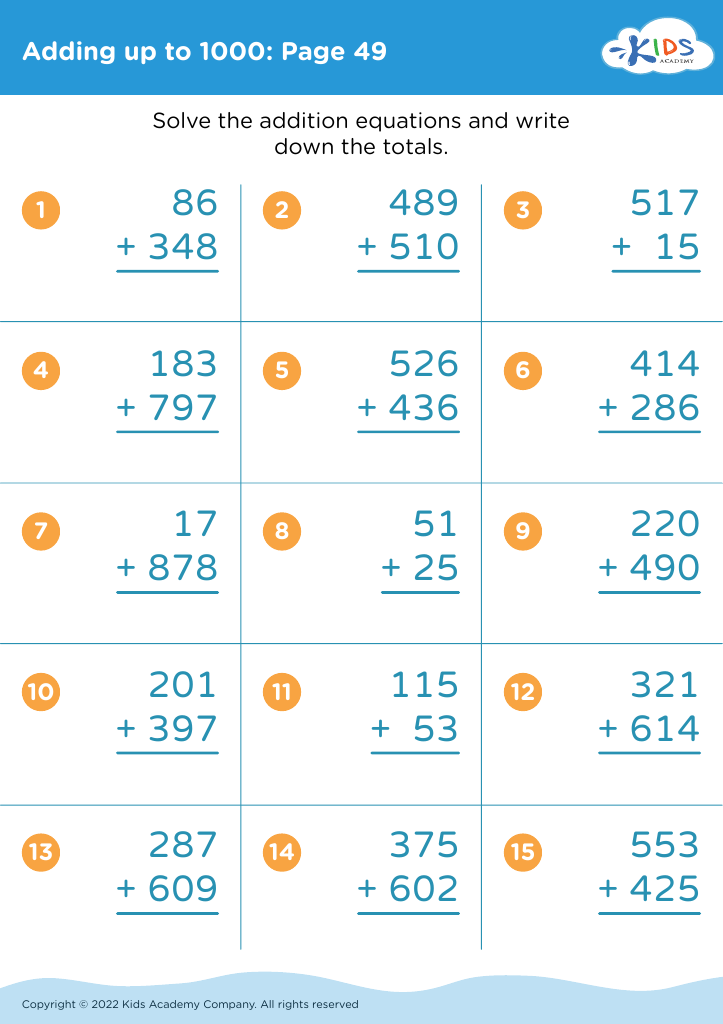
Discover engaging fraction simplification worksheets designed for children aged 7-8 on our website. Perfect for enhancing math skills, these printables help students understand simplifying fractions while adding up to 1000. The fun and interactive activities foster a strong foundation in mathematical concepts, making learning enjoyable and effective. Through diverse exercises, kids can practice their fraction skills, boost their confidence, and gain mastery in arithmetic operations. Whether at home or in the classroom, our worksheets provide the perfect resource for young learners to explore fractions creatively and confidently. Download now to support your child’s learning journey in mathematics!
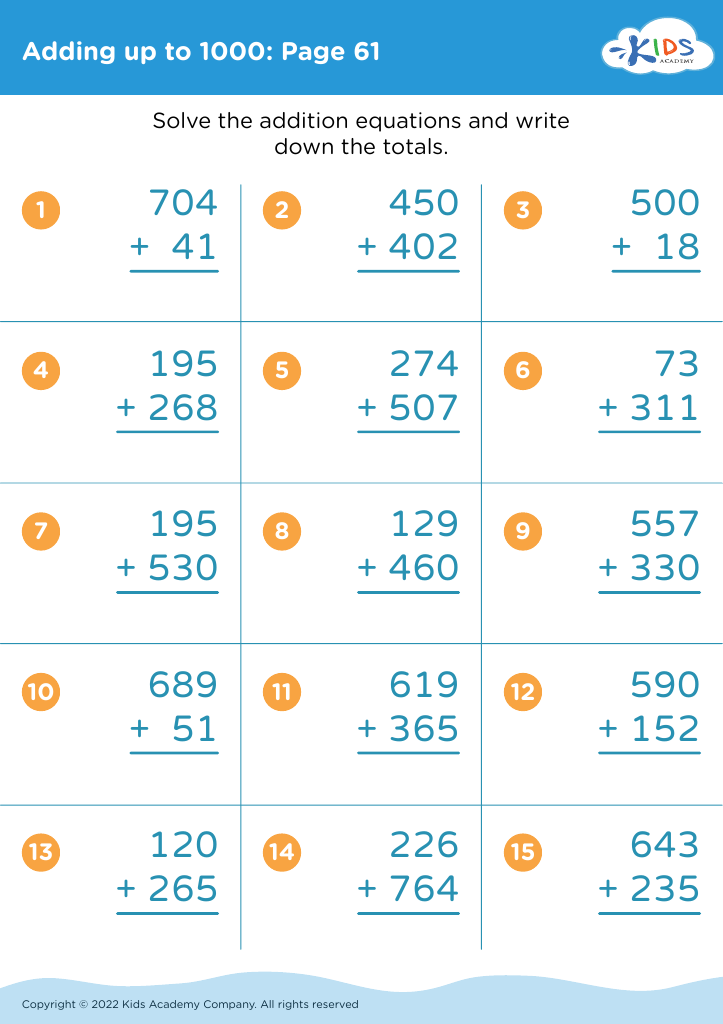
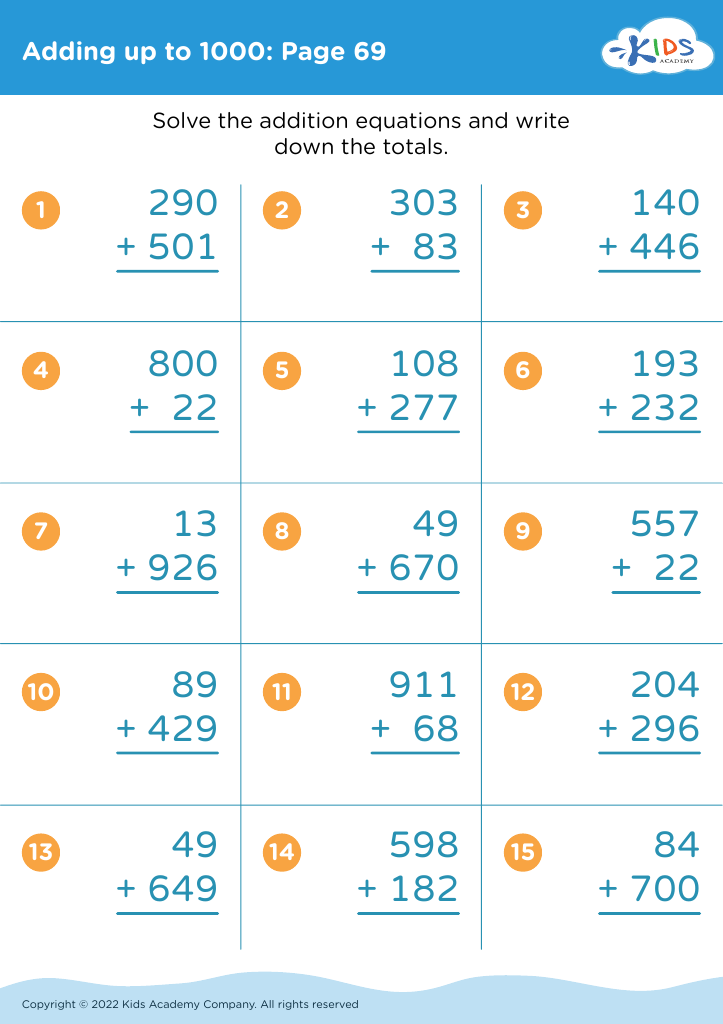
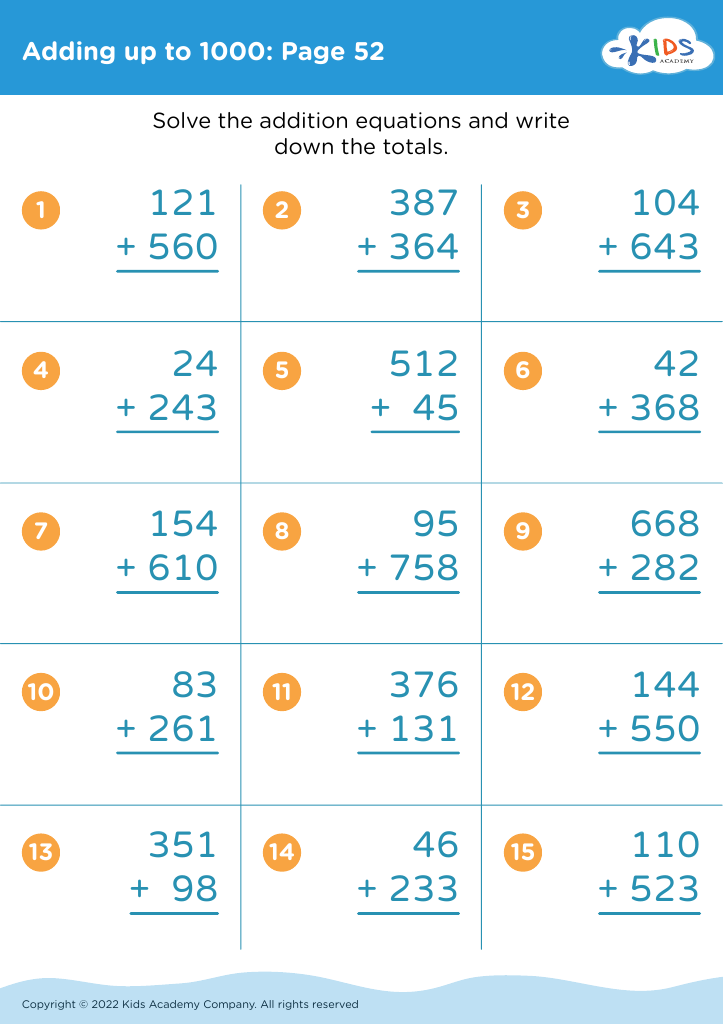


Teaching fraction simplification to children aged 7-8 is crucial for several reasons. First, understanding fractions forms the foundation for more complex mathematical concepts they will encounter later, like ratios and percentages. Simplifying fractions helps students develop critical thinking skills, as they learn to recognize patterns and relationships between numbers. This skill not only enhances their mathematical proficiency but also fosters confidence in problem-solving.
Additionally, fraction simplification leads to a better grasp of basic arithmetic operations. For example, when adding or subtracting fractions, simplifying before performing calculations can make those operations less daunting and more manageable. It also prepares students for real-world applications, such as cooking, shopping, and measurements, where fractions are frequently encountered.
Incorporating fun, engaging activities that add up to 1000, for example, makes learning these concepts enjoyable and memorable. This motivates them to become active learners and cultivates a positive attitude towards math. Lastly, by establishing these foundational skills, teachers and parents are not just preparing children for exams, but for a mathematically literate future, equipping them with skills necessary for everyday life, fostering strong decision-making skills, and shaping their overall academic journey.