Reading comprehension Adding up to 1000 Misc Worksheets for Ages 7-8
4 filtered results
-
From - To
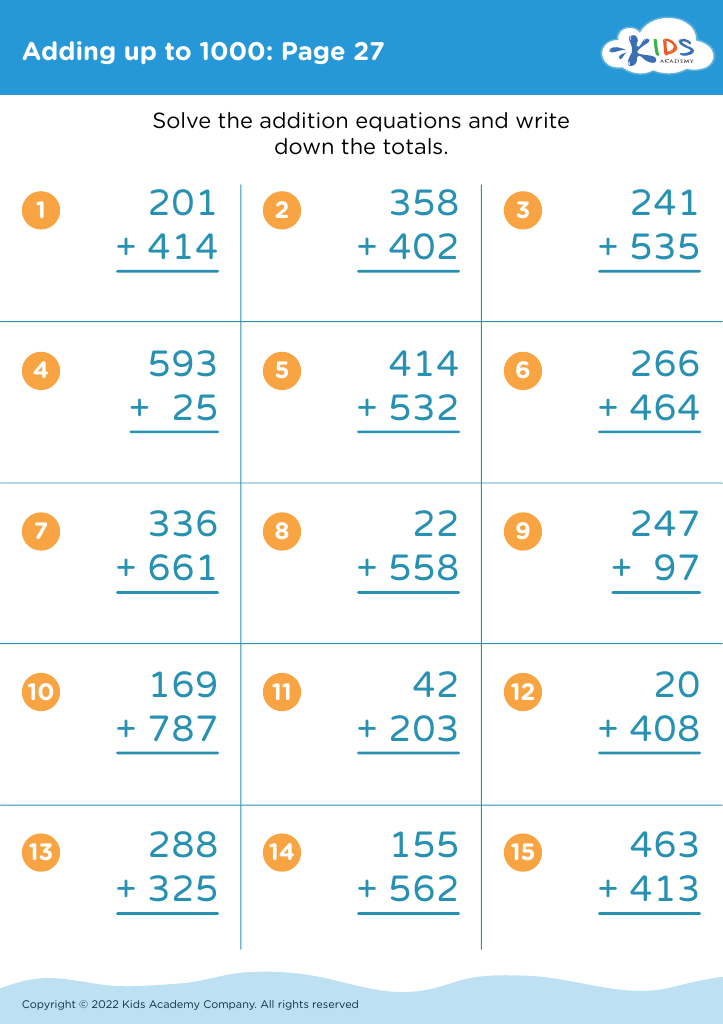
Enhance your child's reading comprehension skills with our engaging "Adding up to 1000 Misc Worksheets" designed specifically for ages 7-8. These worksheets combine math practice with reading activities, fostering critical thinking and problem-solving abilities. Each activity encourages children to interpret instructions and analyze math word problems, reinforcing their understanding of numeracy concepts while developing essential reading skills. The worksheets provide a variety of exercises that are fun, interactive, and aligned with grade-level learning objectives. Help your child thrive in both math and literacy as they explore the world of numbers through thoughtful reading practices. Download today and watch learning come alive!


Reading comprehension is vital for children aged 7-8 as it serves as a foundational skill for academic success and lifelong learning. At this age, children are transitioning from learning to read to reading to learn. If they cannot comprehend what they read, their ability to engage with the curriculum diminishes significantly in subjects like math, science, and social studies.
Effective reading comprehension allows children to extract meaning, make inferences, and connect ideas, fostering critical thinking and analytical skills. This not only enhances their academic performance but also supports personal development, honing creativity, empathy, and a broader understanding of the world.
For parents and teachers, prioritizing reading comprehension means nurturing better communication skills and vocabulary, essential tools for articulate expression. Supporting children in understanding stories and informational texts also develops their confidence and motivation towards reading. Additionally, proficient comprehension skills contribute to improved school engagement, as students are more likely to participate actively in discussions and activities when they grasp the material.
Investing time and resources into developing reading comprehension skills can significantly impact a child’s educational journey and ignite a lifelong love for reading, ensuring they grow into informed and capable individuals.