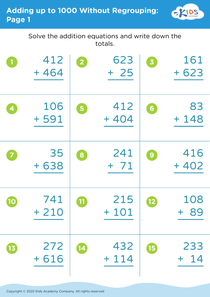
Color Identification Adding up to 1000 with Regrouping Worksheets for Ages 7-8
5 filtered results
-
From - To
Discover our engaging "Color Identification Adding up to 1000 with Regrouping Worksheets" designed for children aged 7-8. These worksheets skillfully combine math practice and color identification, allowing learners to master addition with regrouping while enhancing their color recognition skills. As students tackle addition problems that total up to 1000, they will identify and use vibrant colors to help visualize and solve mathematical challenges. This interactive approach makes learning fun and interactive, reinforcing key math concepts. Perfect for in-class activities or homework, our worksheets promote problem-solving and critical thinking in a creative way, setting the foundation for future mathematical success.
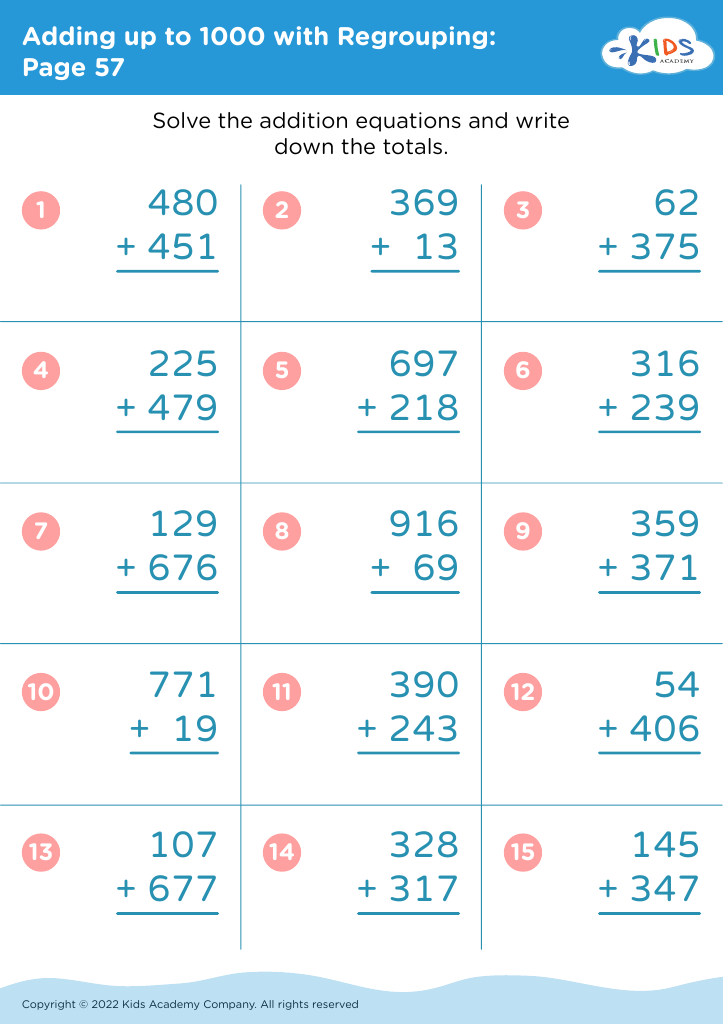
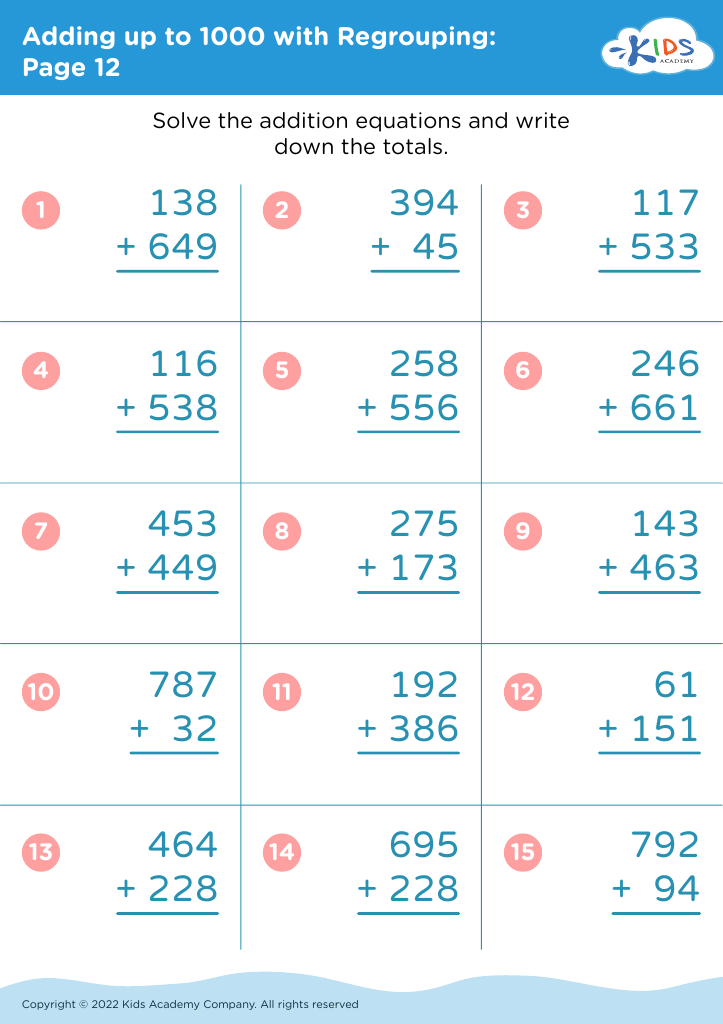
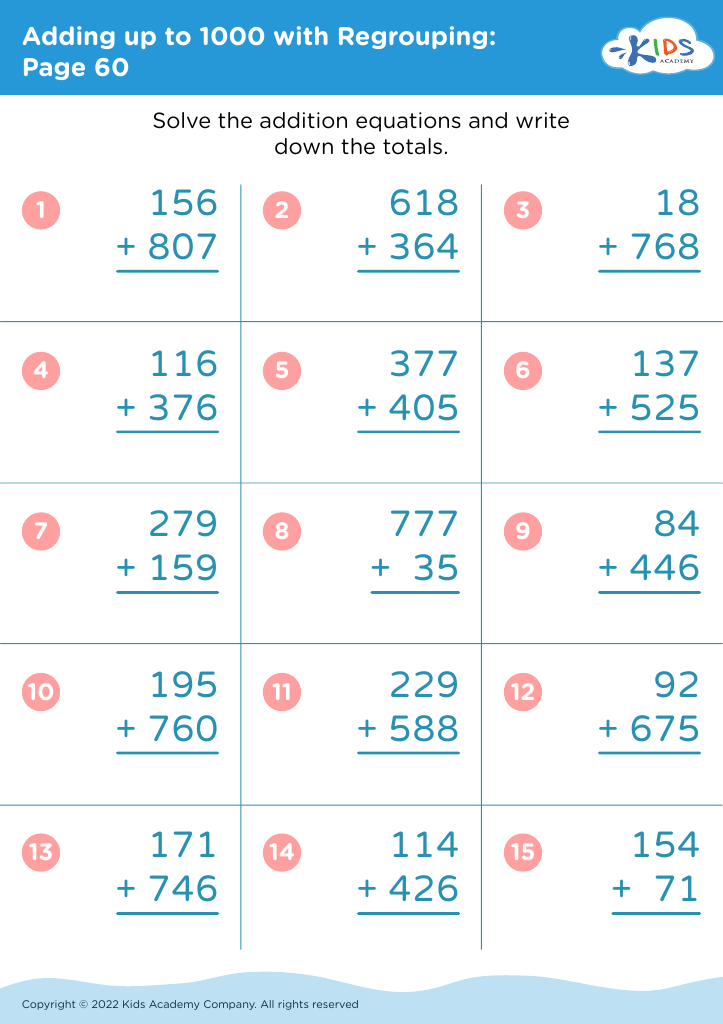
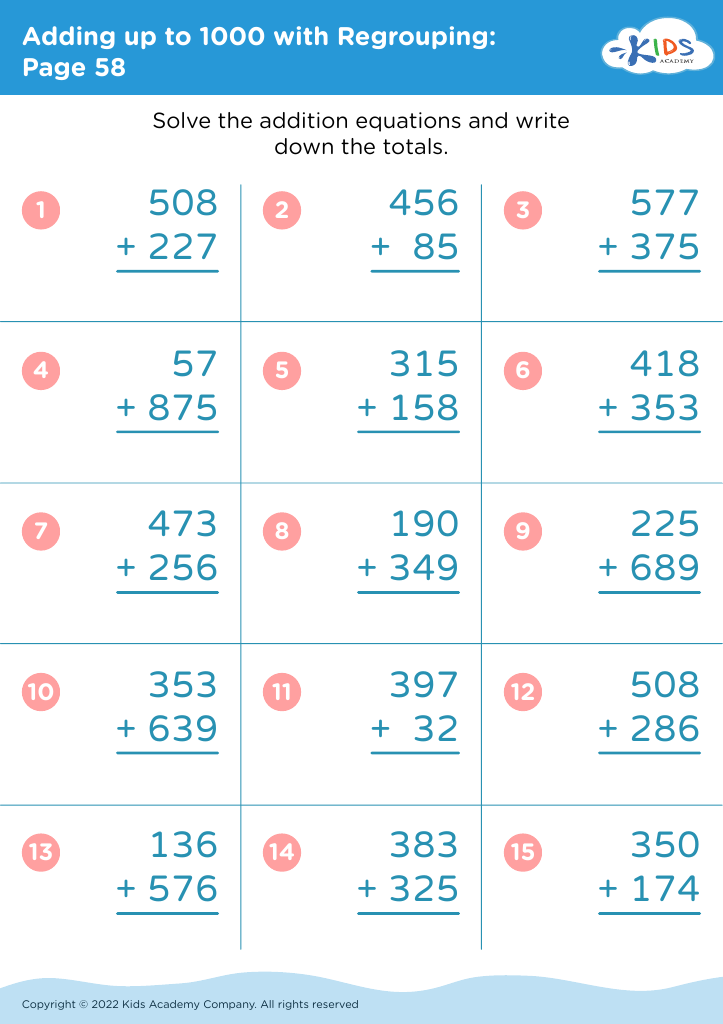
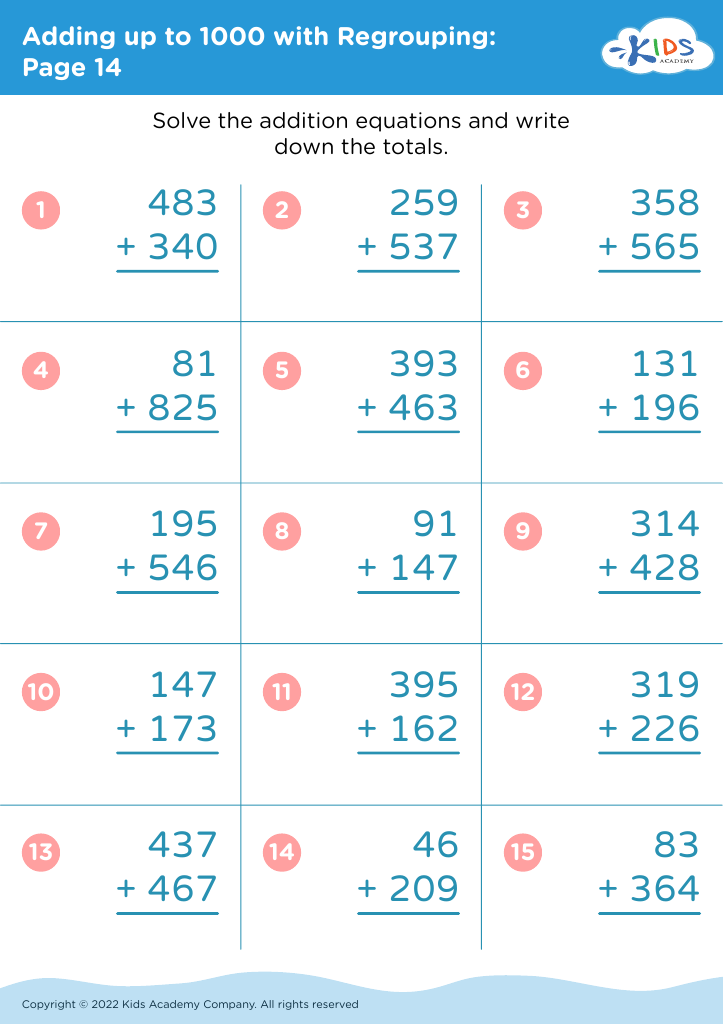


Parents and teachers should prioritize color identification and addition with regrouping for children ages 7-8 because these skills lay a crucial foundation for mathematical competence and cognitive development. Color identification enhances visual discrimination, which is important for recognizing patterns, sorting objects, and improving focus. When colors are integrated into math activities, they add an engaging, multisensory element that captivates young learners' attention.
Learning addition up to 1000 with regrouping is significant for developing mental arithmetic and problem-solving skills. Mastery of regrouping not only promotes number fluency but also encourages logical thinking and resilience in tackling complex problems. As children grow, understanding regrouping increasingly contributes to their capability to manage more advanced math concepts.
Moreover, lessons that combine color identification and regrouping foster creativity in problem-solving and critical thinking. By interacting with these concepts through various playful and visual contexts, students stay motivated and interested in math. This proactive engagement cultivates positive attitudes toward learning, inviting deeper exploration into mathematics. Encouraging parents and teachers to foster these skills not only enhances children's academic performance but also supports their lifelong learning journey and confidence in tackling future challenges.