Mathematical reasoning Adding up to 1000 with Regrouping Worksheets for Ages 7-8
3 filtered results
Difficulty Level
Grade
Age
-
From - To
Subject
Activity
Standards
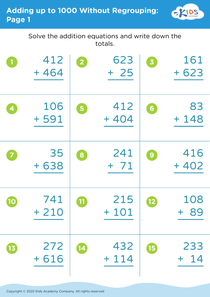
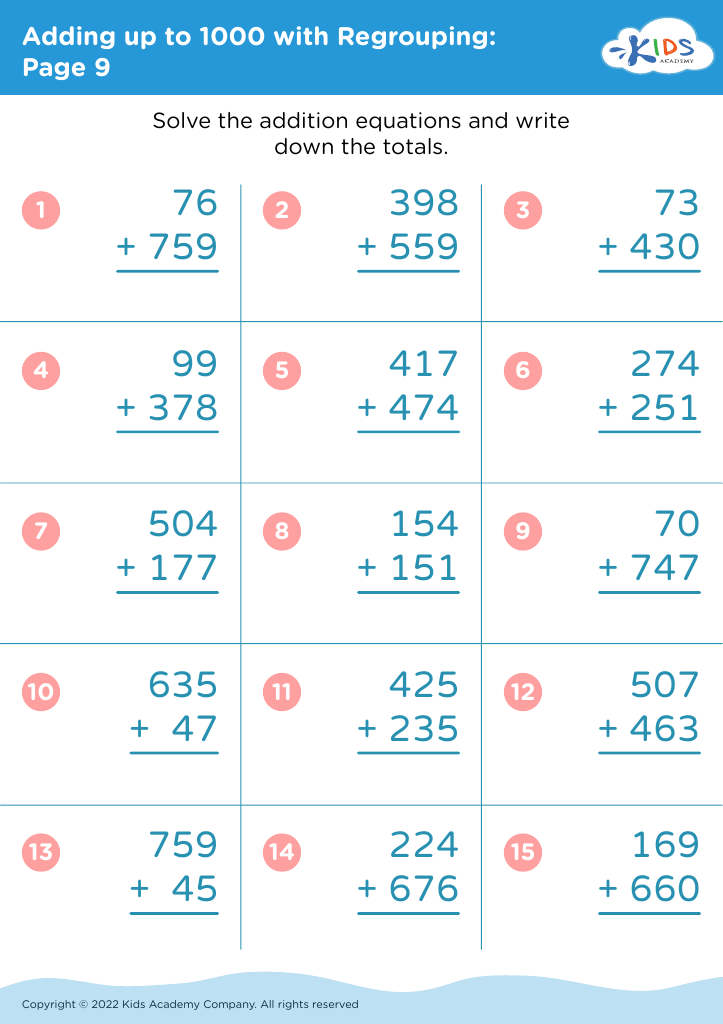
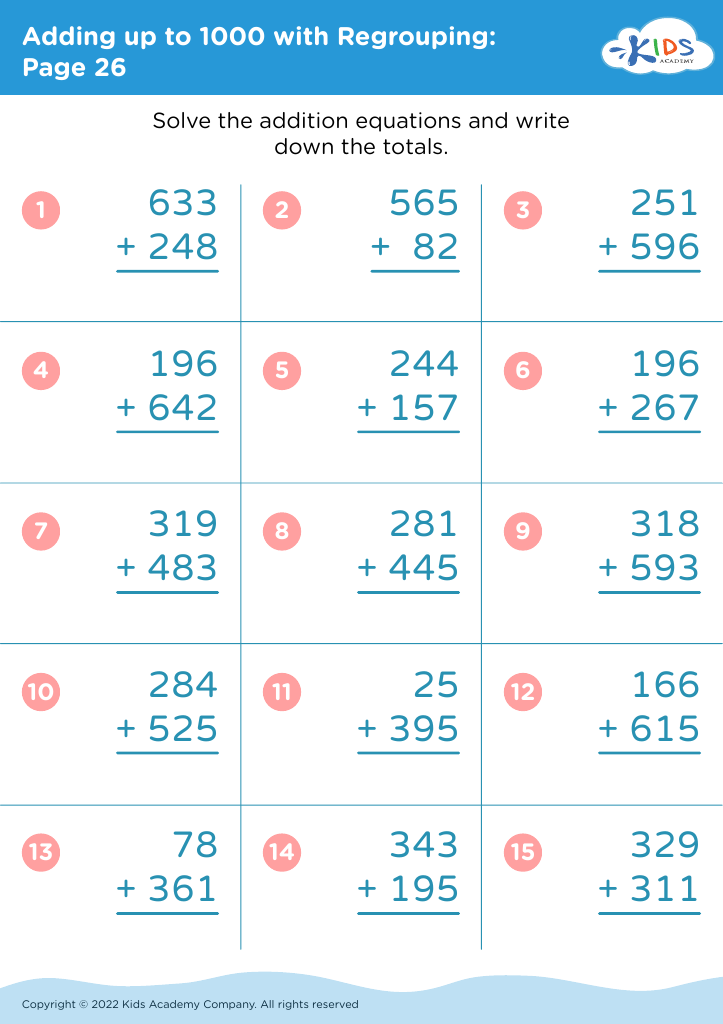
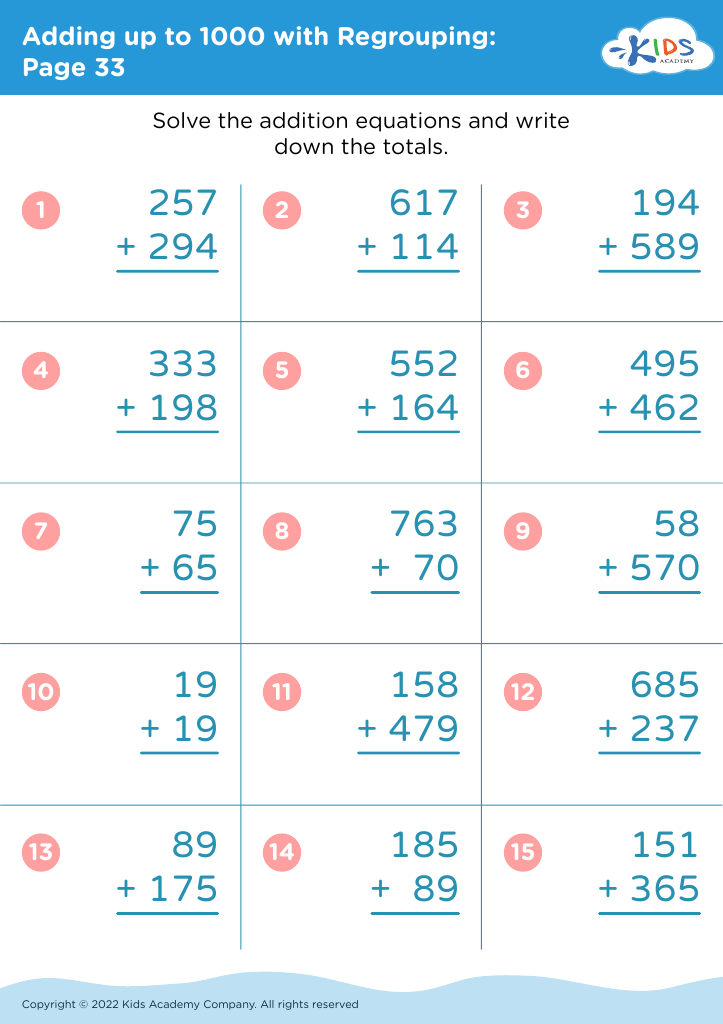
Boost your child's math skills with our "Mathematical Reasoning Adding Up to 1000 with Regrouping Worksheets" tailored for ages 7-8. These expertly-designed worksheets help young learners master addition with regrouping, enhancing their confidence and understanding of complex problems. Engaging and interactive exercises make learning fun, while fostering crucial mathematical reasoning skills. Perfect for both classroom and home practice, these worksheets provide a solid foundation for future math success. Transform your child's learning experience and watch them excel with our comprehensive and easy-to-follow resources designed specifically for their age and skill level.
Favorites
With answer key
Interactive
Join Kids Academy for Free
Who is primarily going to use this learning content?


Mathematical reasoning is a pivotal skill for young learners, particularly when it comes to adding up to 1,000 with regrouping, a process often introduced around ages 7-8. This isn't just about mastering arithmetic; it's about shaping cognitive abilities that extend beyond mathematics.
First, comprehension of these concepts builds a strong foundation for future math learning. Without grasping regrouping, students may struggle with more complex operations like multiplication or division. This skill also reinforces their understanding of the base-ten number system and place values, critical components of mathematics literacy.
Second, mastering addition with regrouping develops critical thinking and problem-solving skills. It teaches children to approach problems systematically, breaking them down into smaller, more manageable parts. This kind of reasoning is applicable in everyday tasks, including money management, time planning, and even strategic games that require continuous analytical thinking.
Moreover, tackling such problems boosts confidence and encourages a growth mindset. When children see their hard work lead to correct answers and understanding, it fosters a positive attitude toward learning. Finally, educators and parents can ensure that students remain engaged and motivated to learn, helping them to recognize math not as a hurdle, but as a tool for solving interesting real-world challenges.