Problem-Solving Skills Adding up to 1000 with Regrouping Worksheets for Ages 7-8
5 filtered results
-
From - To
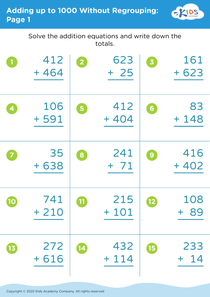
Enhance your child's mathematical abilities with our "Problem-Solving Skills Adding up to 1000 with Regrouping Worksheets"! Targeted for ages 7-8, these comprehensive worksheets sharpen student problem-solving skills by teaching them to add large numbers using regrouping techniques. The fun, engaging exercises and activities help build a strong foundation in mathematics, making complex problems easier to tackle. Perfect for both classroom and home use, these worksheets ensure students gain confidence and proficiency in adding numbers up to 1000 while enhancing their critical thinking and problem-solving abilities. Transform learning into an exciting adventure today!
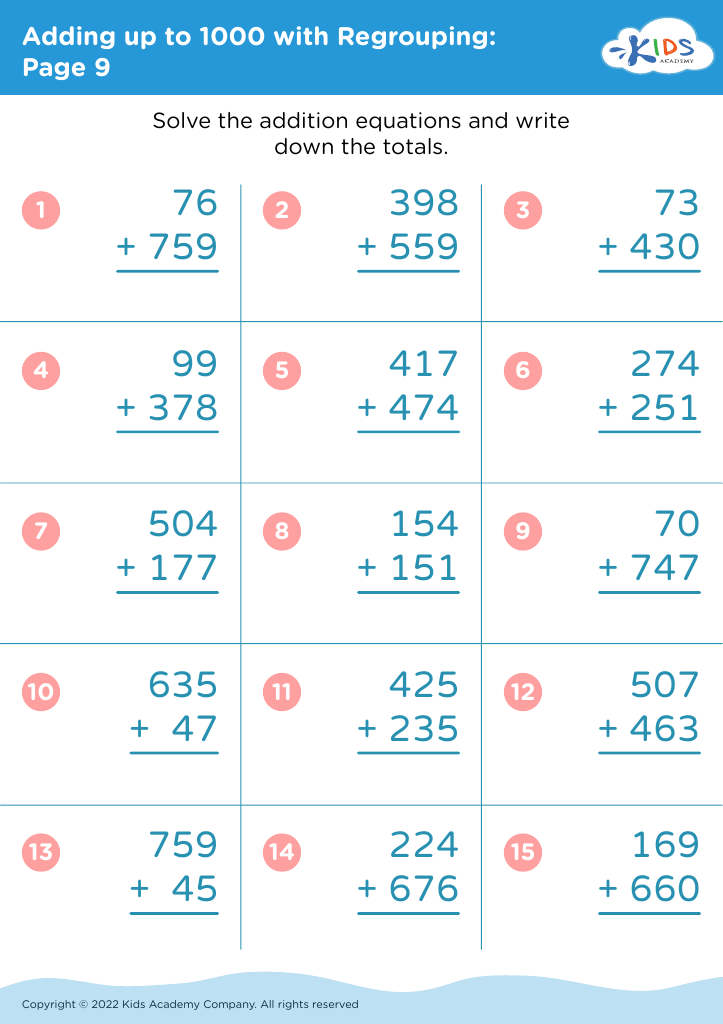
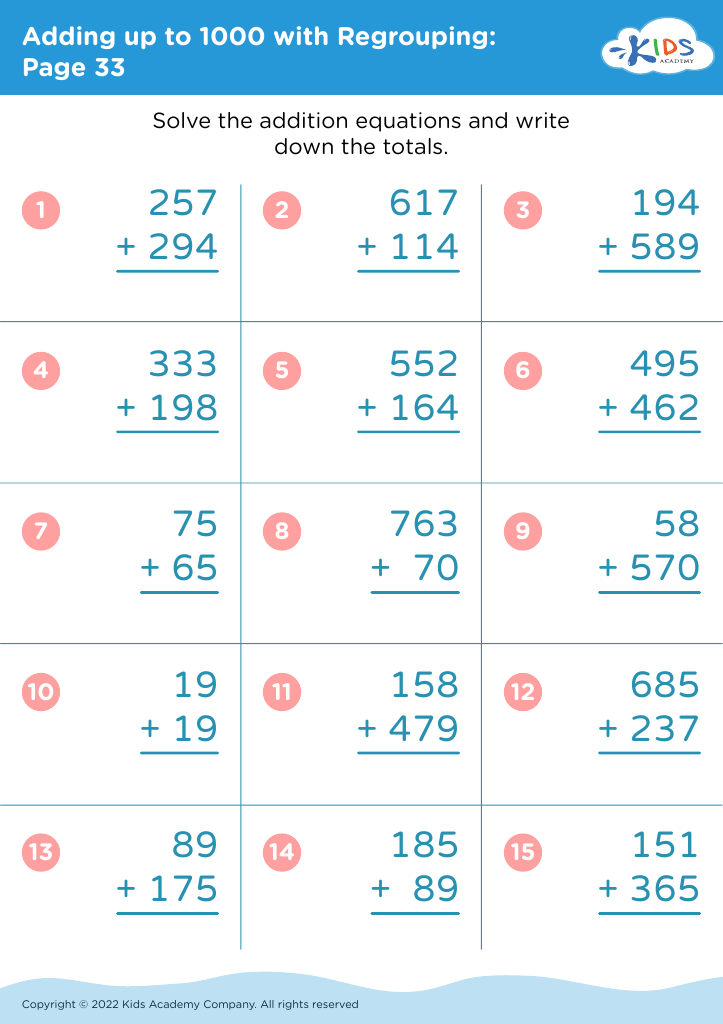
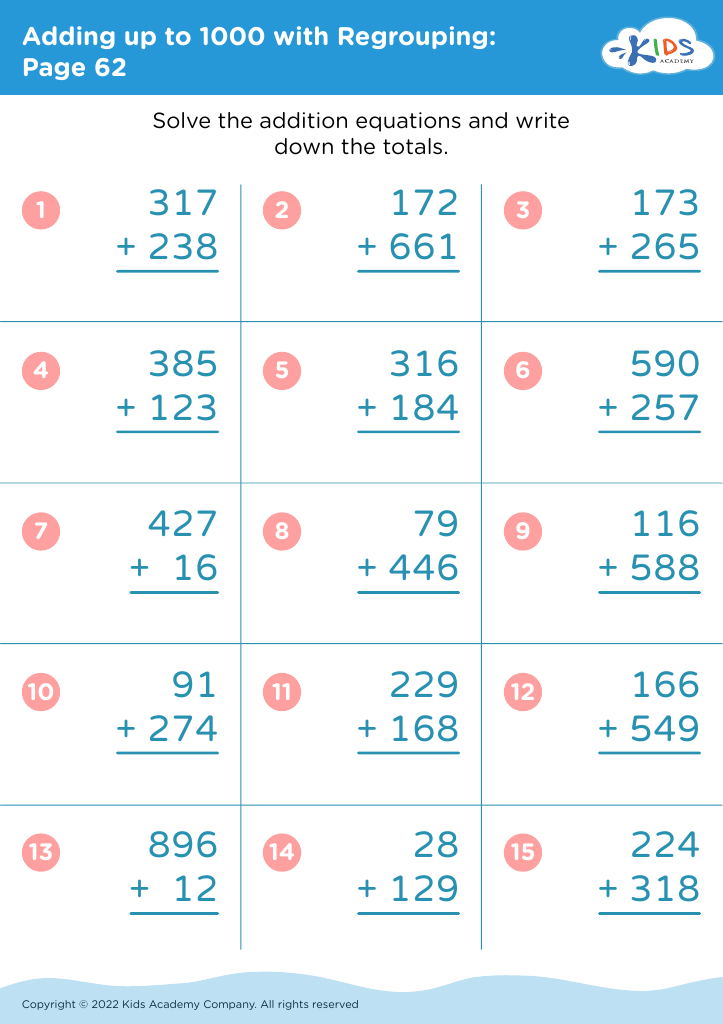
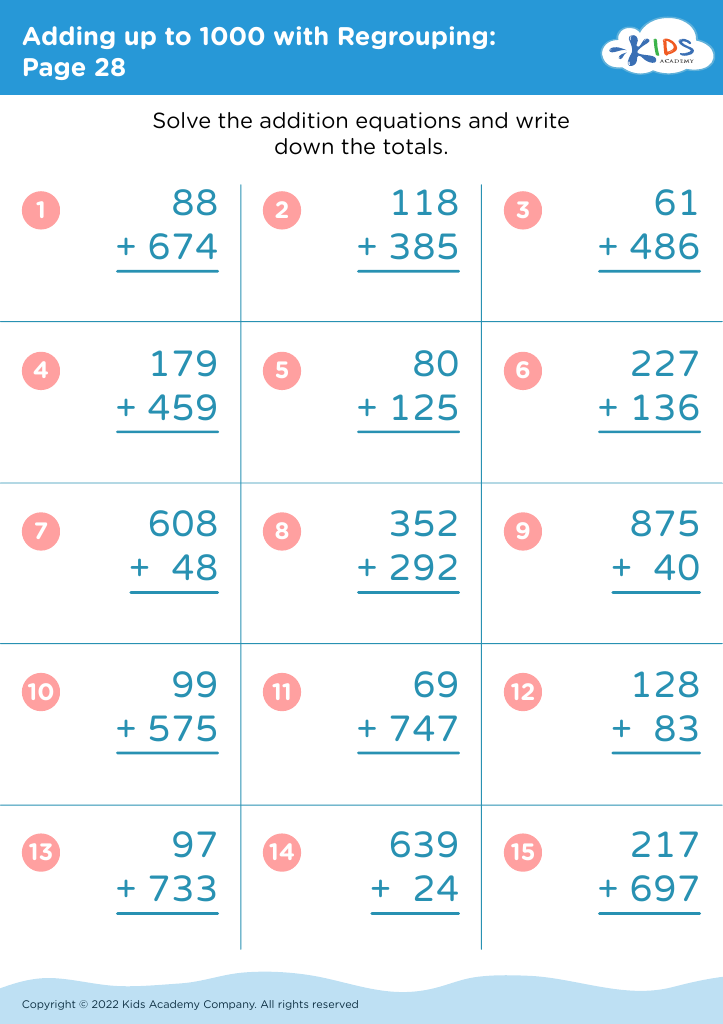
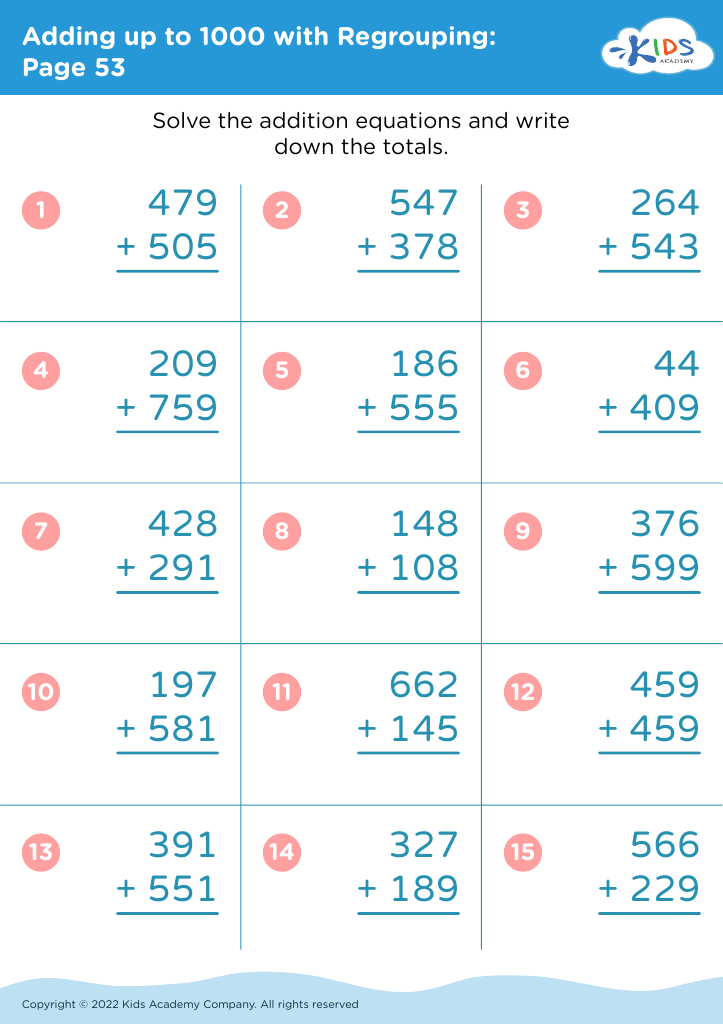


Problem-solving skills, particularly in arithmetic such as adding up to 1000 with regrouping for ages 7-8, are foundational for several reasons. Firstly, mastering addition with regrouping boosts a child's mathematical competence, facilitating their grasp of more complex concepts in the future, like multiplication and division. It also enhances their ability to think logically and methodically, crucial for tackling problems both in and out of school.
Additionally, developing these skills at a young age fosters a strong sense of confidence and accomplishment. When children successfully work through problems, they build resilience and a growth mindset. These attitudes carry over into other subjects and areas of life, encouraging persistent, positive approaches to learning and challenges.
Teachers and parents play a critical role in this development. Supportive adults can provide the necessary practice, guidance, and praise that motivate children to refine their abilities. Simple, hands-on problems and real-world applications that involve adding and subtracting large numbers can make learning both engaging and relevant.
In essence, investing time and energy into nurturing strong problem-solving skills with regrouping helps young students gain critical analytical abilities, promotes self-confidence, and sets them up for lasting academic and life success. Their future achievements in higher levels of math, science, technology, and day-to-day decision making will often trace back to these fundamental early experiences and teachings.