Shape Recognition Adding up to 1000 with Regrouping Worksheets for Ages 7-8
6 filtered results
-
From - To
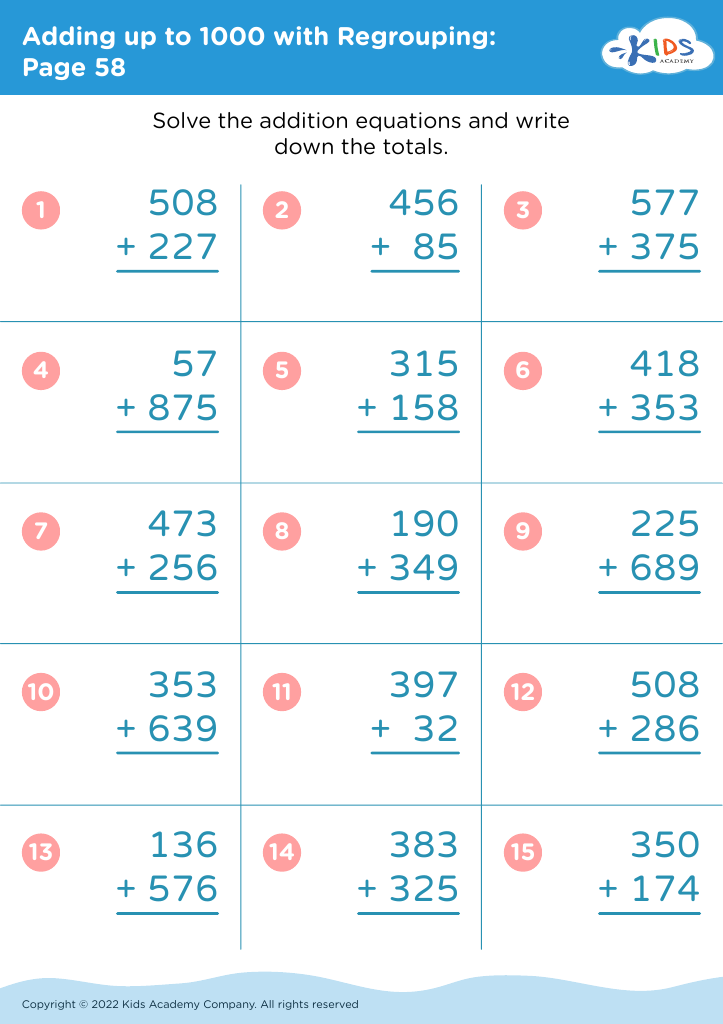
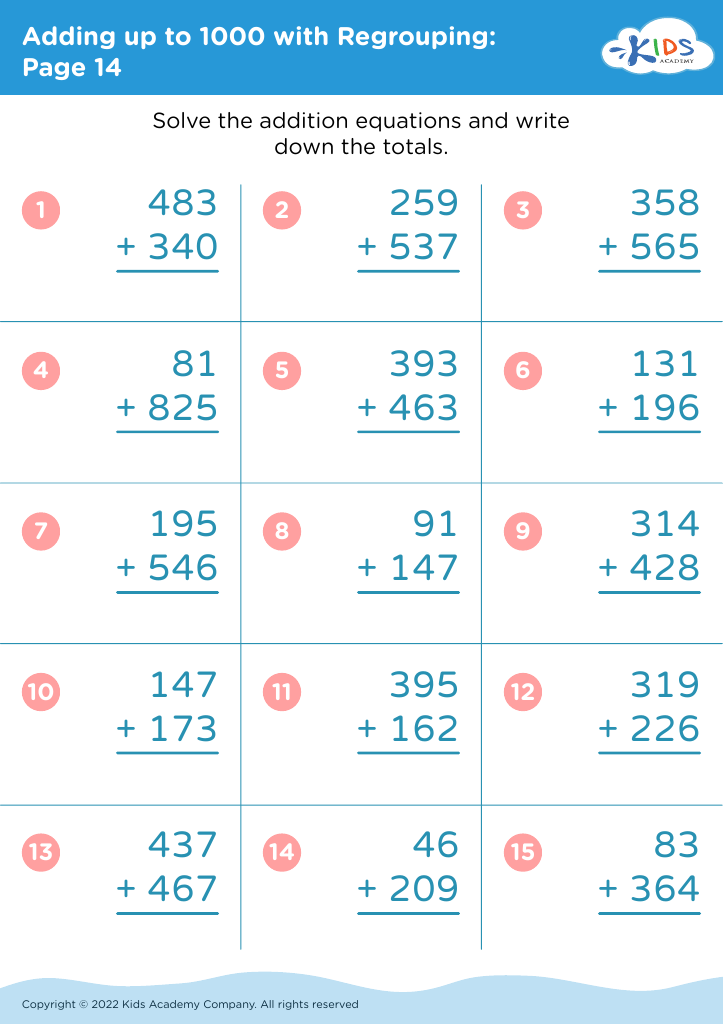
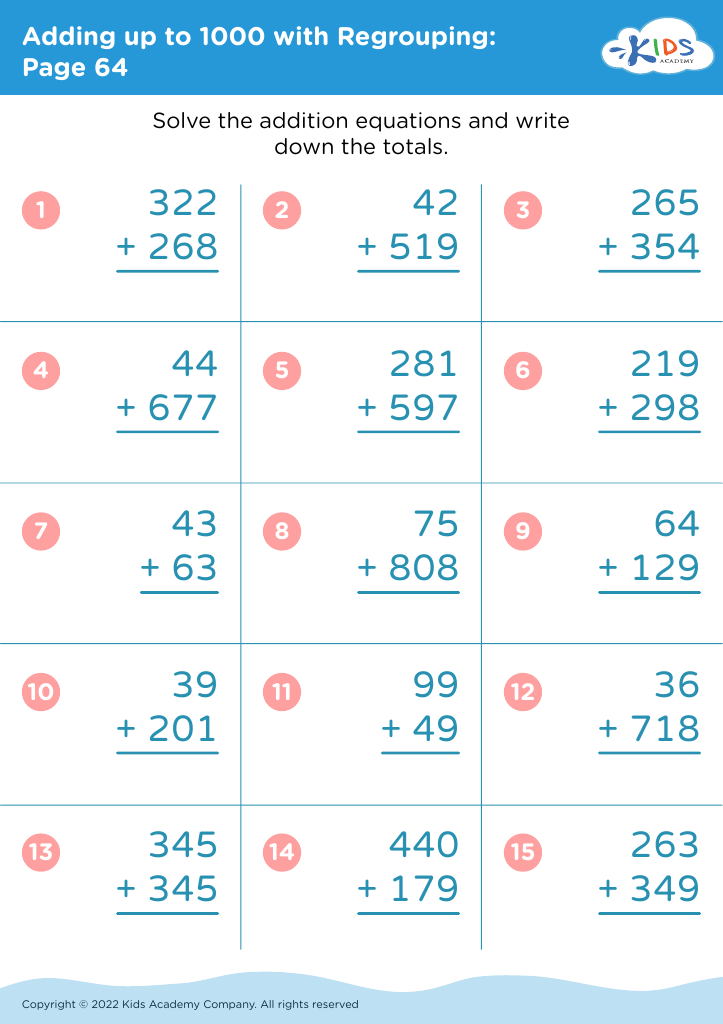
Enhance your child's mathematical skills with our engaging "Shape Recognition Adding up to 1000 with Regrouping Worksheets," designed specifically for ages 7-8. These worksheets seamlessly combine rigorous math practice with fun shape recognition activities. Kids will develop their understanding of adding three-digit numbers and mastering regrouping techniques, all while identifying and categorizing various shapes. Perfect for reinforcing classroom learning, these worksheets promote critical thinking and problem-solving skills in a playful context. Download now and help your little learners build confidence in math while discovering the fascinating world of shapes in their everyday life! Ideal for at-home practice or classroom use.
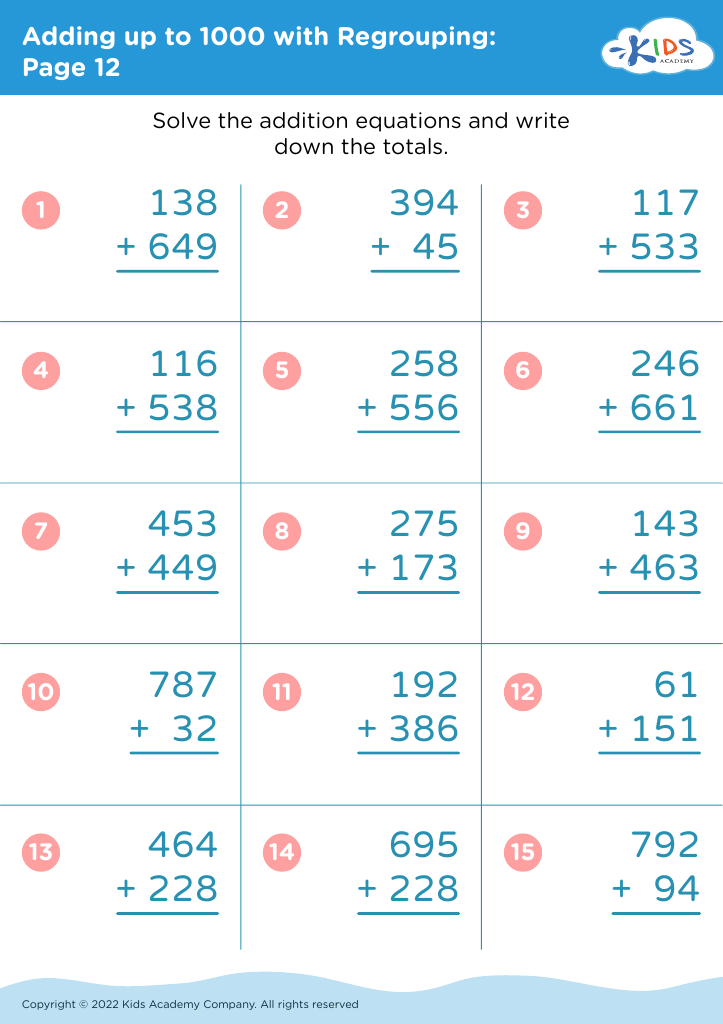
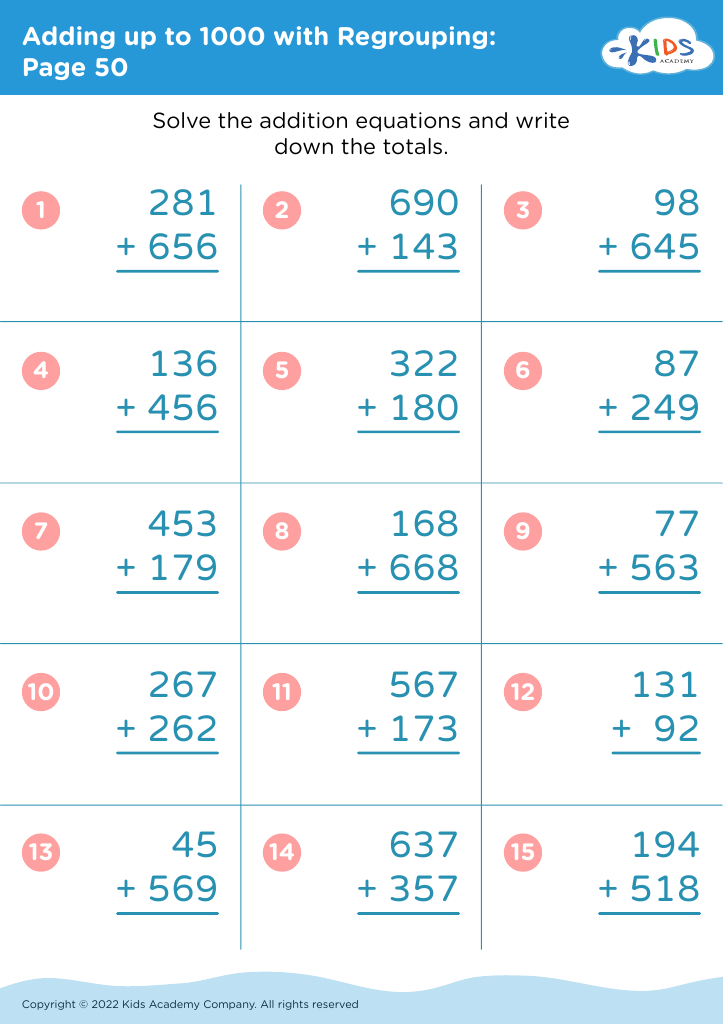
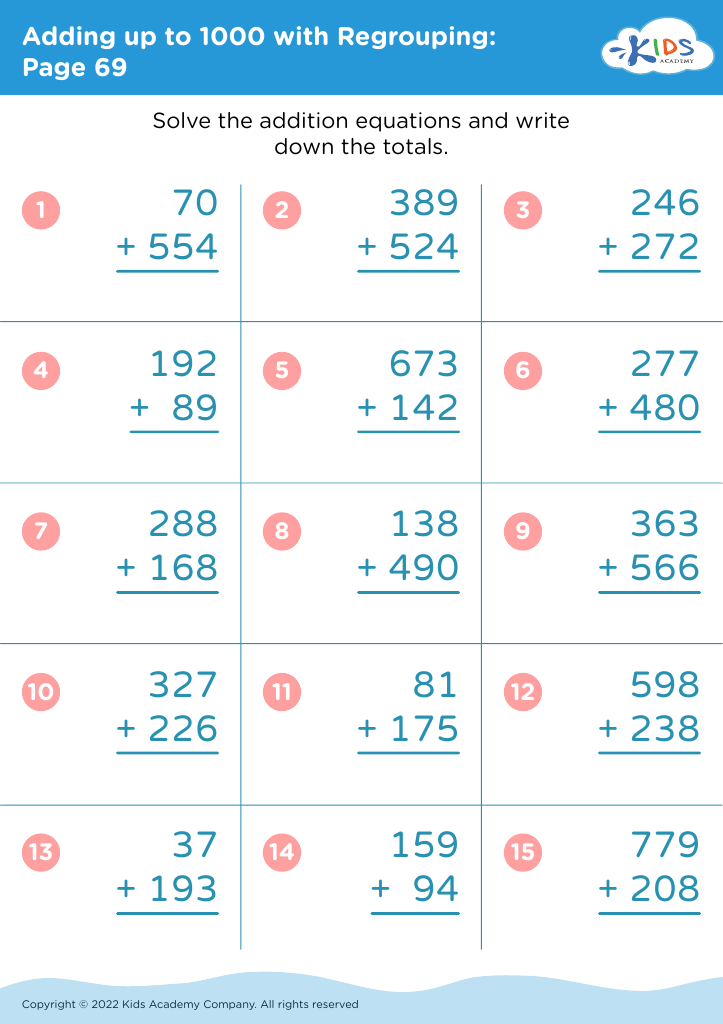


Shape recognition and understanding regrouping in mathematics are foundational skills for children ages 7-8, playing a crucial role in their cognitive development and academic success.
Shape recognition enhances spatial awareness, which is essential in geometry and everyday tasks. By identifying different shapes, children develop critical thinking and problem-solving skills, essential for navigating their environment and understanding more complex mathematical concepts later on.
Regrouping is a vital arithmetic skill that builds on addition and subtraction. It helps children manage larger numbers by breaking them down into more manageable parts. Understanding regrouping not only improves their mathematical proficiency but also fosters perseverance and a growth mindset. This skill promotes logical reasoning as students learn to rearrange numbers and find different paths to solve problems, ultimately preparing them for higher-level math in the future.
Moreover, these abilities encourage creative thinking, as children apply their knowledge to real-world scenarios, such as organizing their space or even art projects involving shapes. Teachers and parents should prioritize these skills because they cultivate a versatile, analytical approach to learning, laying a strong foundation for lifelong learning and success across various disciplines. Supporting children in mastering these skills empowers them to tackle more complex challenges confidently.