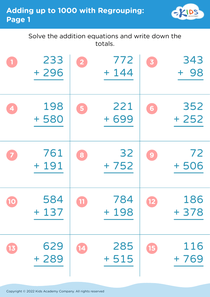
Alphabet Recognition Adding up to 1000 Without Regrouping Worksheets for Ages 7-8
3 filtered results
-
From - To
Discover our engaging "Alphabet Recognition Adding up to 1000 Without Regrouping Worksheets" specifically designed for children ages 7-8. This unique resource combines essential math skills with alphabet recognition, making learning both fun and effective. Students will practice addition without regrouping while enhancing their letter knowledge through a variety of interactive exercises. Each worksheet encourages cognitive development, helping young learners gain confidence in basic math operations alongside literacy skills. Perfect for classroom use or at-home learning, these worksheets are a great way to motivate children and reinforce their understanding of numbers and letters. Start your child’s educational journey today with our printable resources!
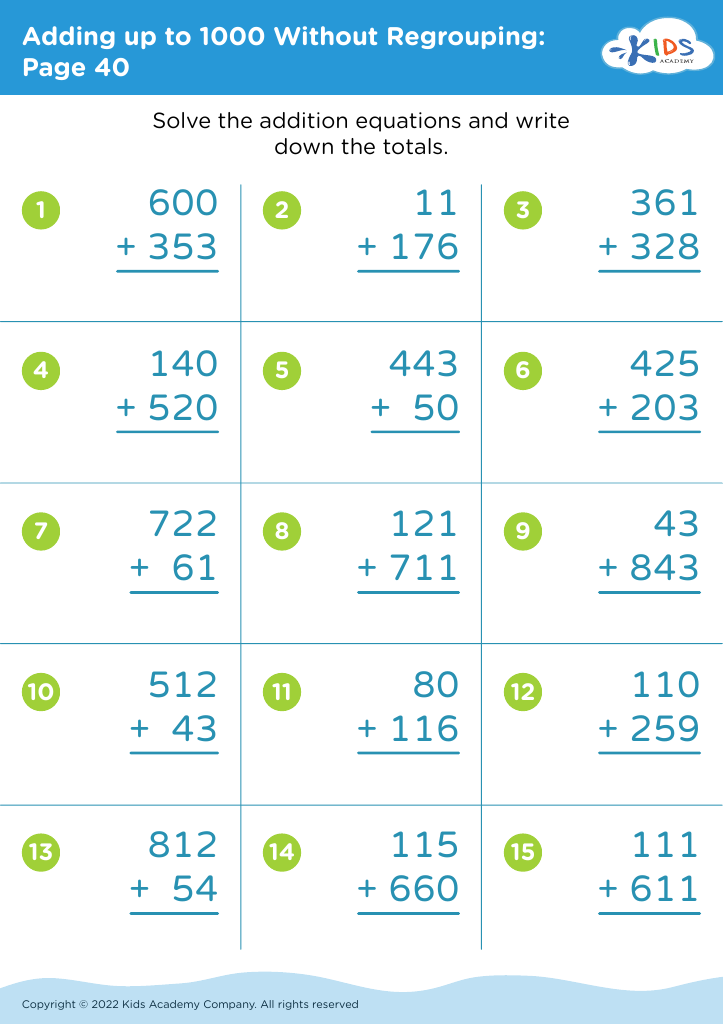
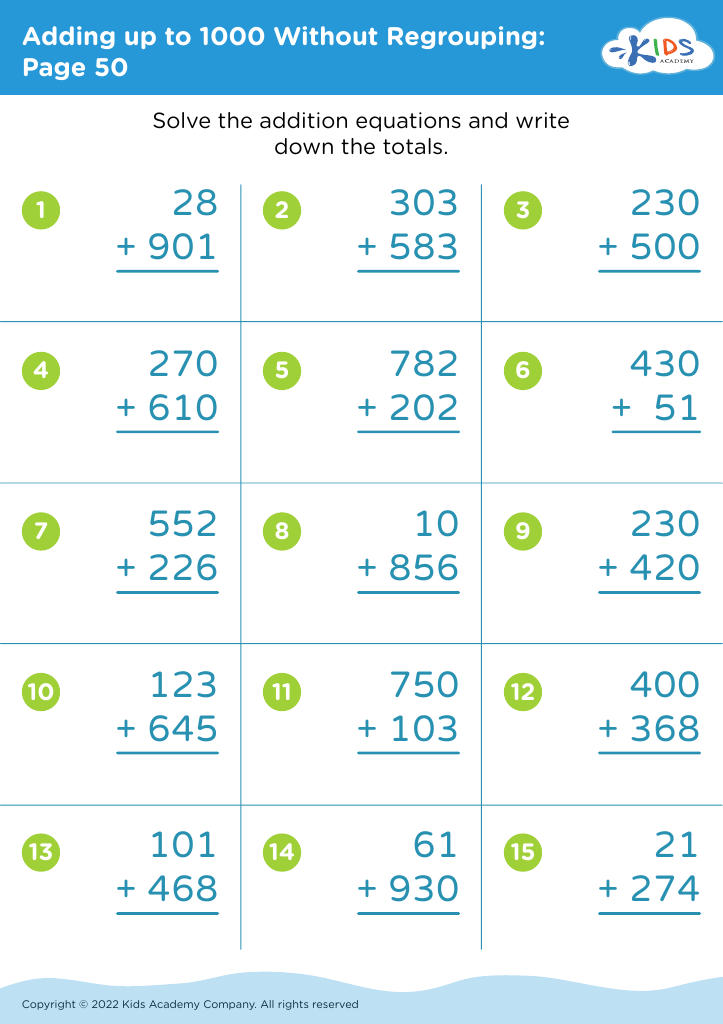
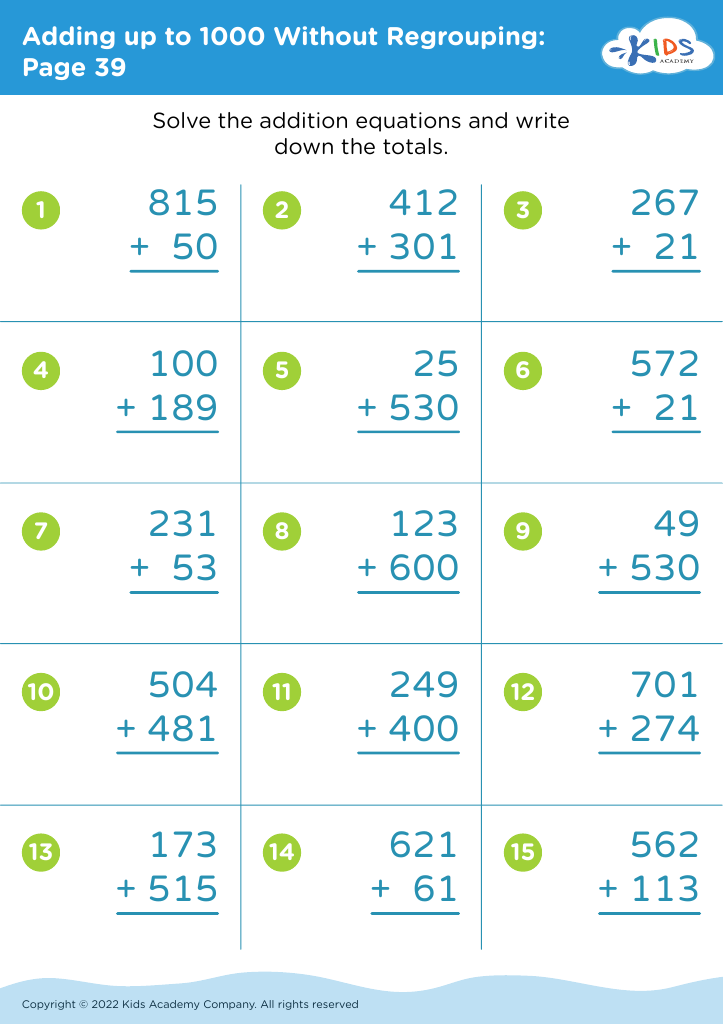


Alphabet recognition and mathematical skills, such as adding up to 1000 without regrouping, are foundational elements in early childhood education and should be prioritized by parents and teachers.
First, alphabet recognition is crucial for early literacy development. It lays the groundwork for reading and writing, which are essential for communication and comprehension across subjects. Children who can identify and understand letters more easily can transition to reading words and sentences. This skill fosters a love for reading, boosts self-confidence, and enhances vocabulary.
Likewise, the ability to add numbers up to 1000 without regrouping is vital for developing number sense and mathematical fluency. For children aged 7-8, mastering this concept helps build a strong mathematical foundation. By understanding how to add and manipulate numbers without regrouping, students enhance their problem-solving skills, critical thinking, and ability to tackle more complex arithmetic in the future.
Both areas of focus contribute not only to academic success but also to personal growth. Proficient readers and capable mathematicians tend to perform better in school, which positively impacts their overall educational journey. Ultimately, prioritizing alphabet recognition and arithmetic skills enables children to become well-rounded learners, setting the stage for future success in all educational endeavors.