Basic Math Skills Adding up to 1000 Without Regrouping Worksheets for Ages 7-8
3 filtered results
-
From - To
Enhance your child's math skills with our "Basic Math Skills Adding up to 1000 Without Regrouping Worksheets" specifically designed for ages 7-8. These engaging worksheets provide opportunities for young learners to practice addition in a fun and stress-free way. By mastering addition without regrouping, students will build a strong foundation for more advanced math concepts. With a variety of problems, these worksheets encourage critical thinking and problem-solving skills while boosting confidence in math. Perfect for classroom settings or home practice, our resources make learning enjoyable. Download now and watch your child excel in basic math skills effortlessly!
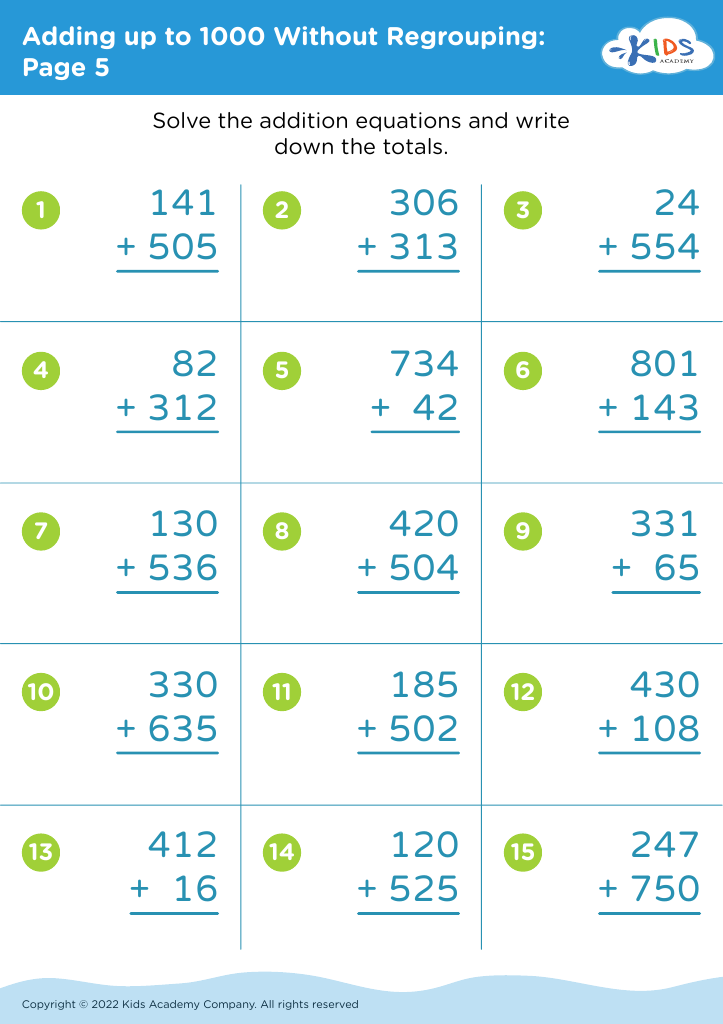
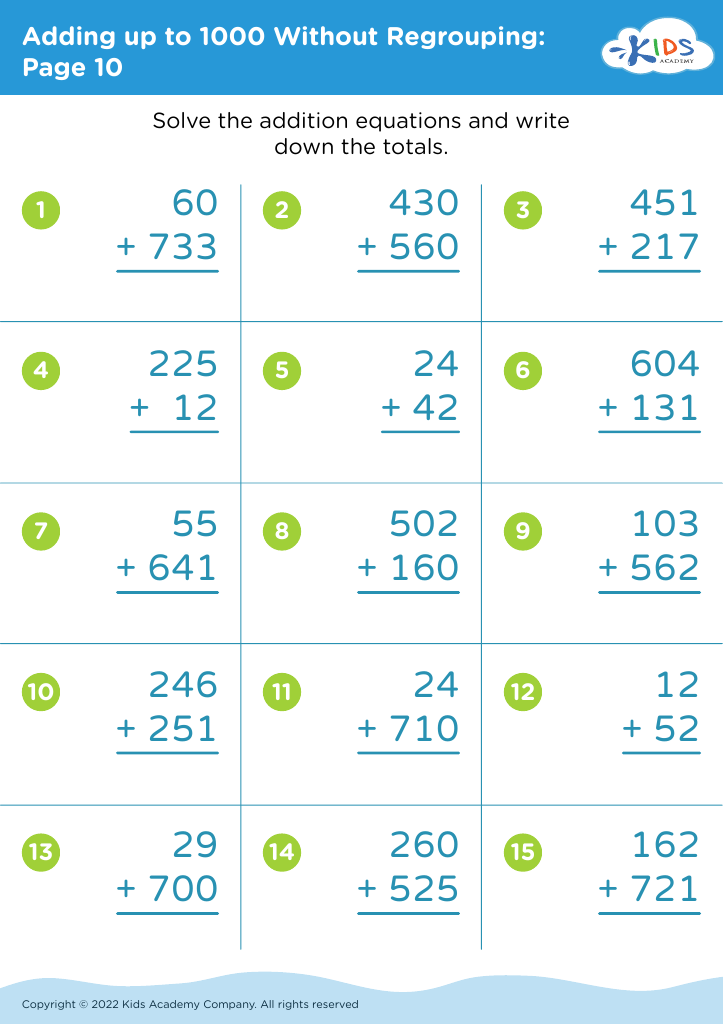
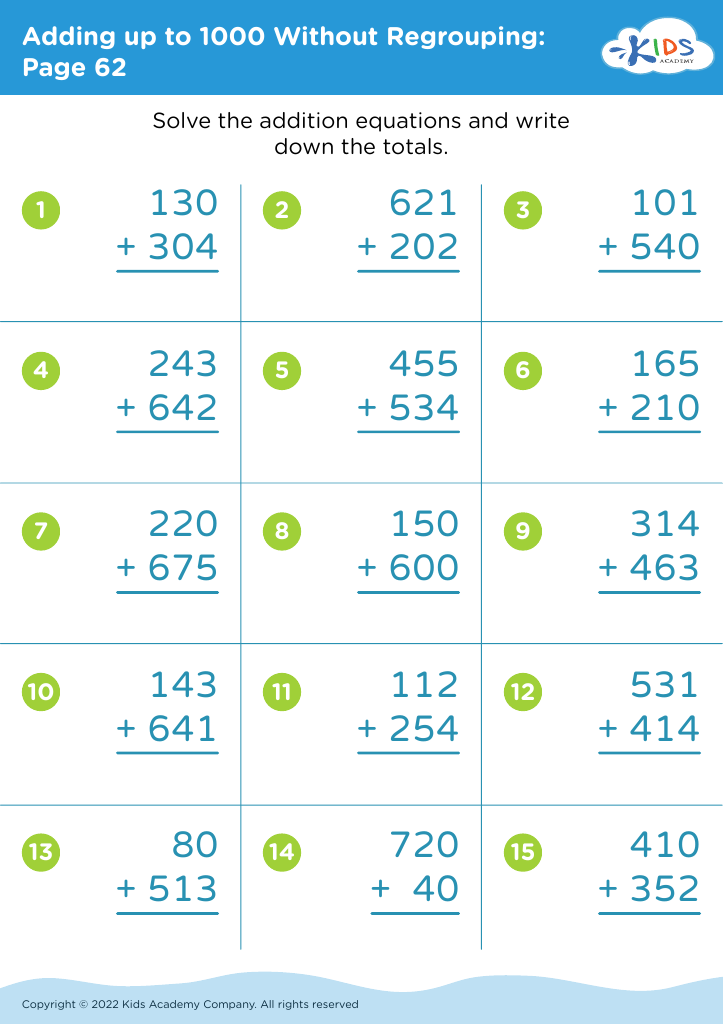


Basic math skills, such as adding up to 1000 without regrouping, are crucial for children aged 7-8. At this age, children are developing foundational skills that will set the stage for more complex mathematical concepts later on. Understanding addition without regrouping helps them to grasp the place value system and enhances number sense, fostering confidence in their abilities.
Parents and teachers should care about this skill because it forms the basis for everyday problem-solving. Mastery in addition equips children to handle not only academic tasks but also real-life situations, such as budgeting, shopping, or measuring. It deepens cognitive skills, improving critical thinking as they learn to visualize and manipulate numbers.
Furthermore, practicing straightforward addition builds precision and speed, essential for tackling more intricate mathematics later on. Neglecting these foundational skills can lead to difficulties in advanced math, creating a self-perpetuating cycle of frustration.
By emphasizing basic math skills in young learners, parents and teachers are not just preparing them for tests; they are nurturing lifelong abilities that extend beyond the classroom. Investing time in developing these skills contributes to a child's overall academic success and fosters a positive attitude toward mathematics.