Comparing Fractions Adding up to 1000 Without Regrouping Worksheets for Ages 7-8
3 filtered results
-
From - To
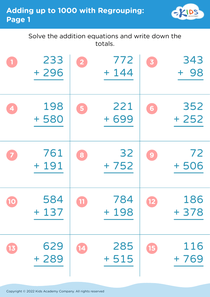
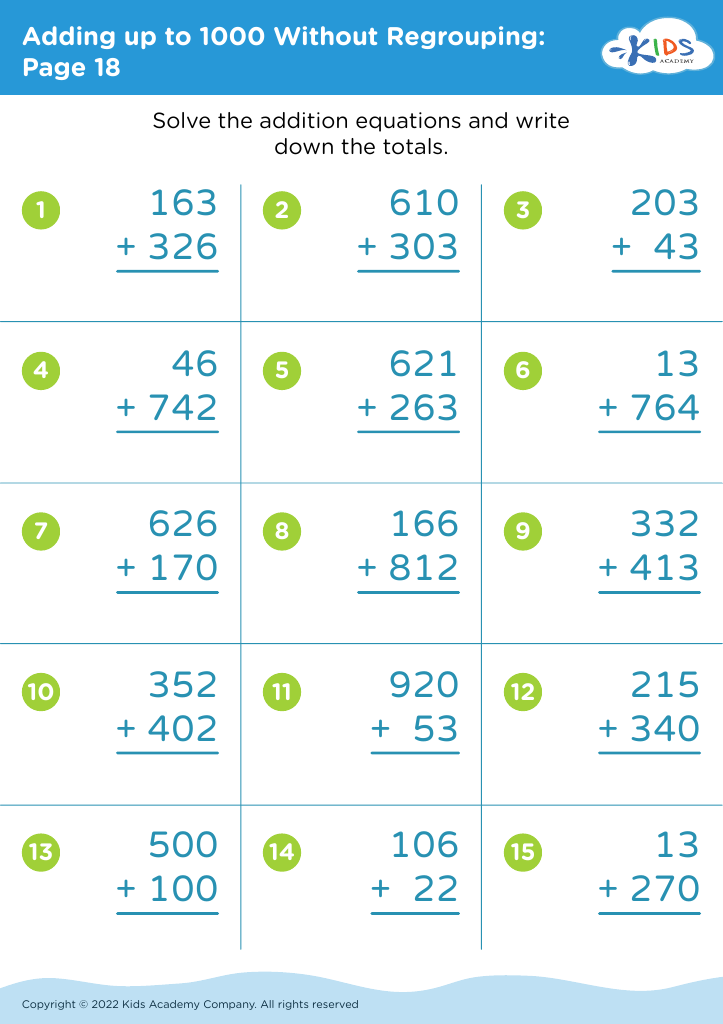
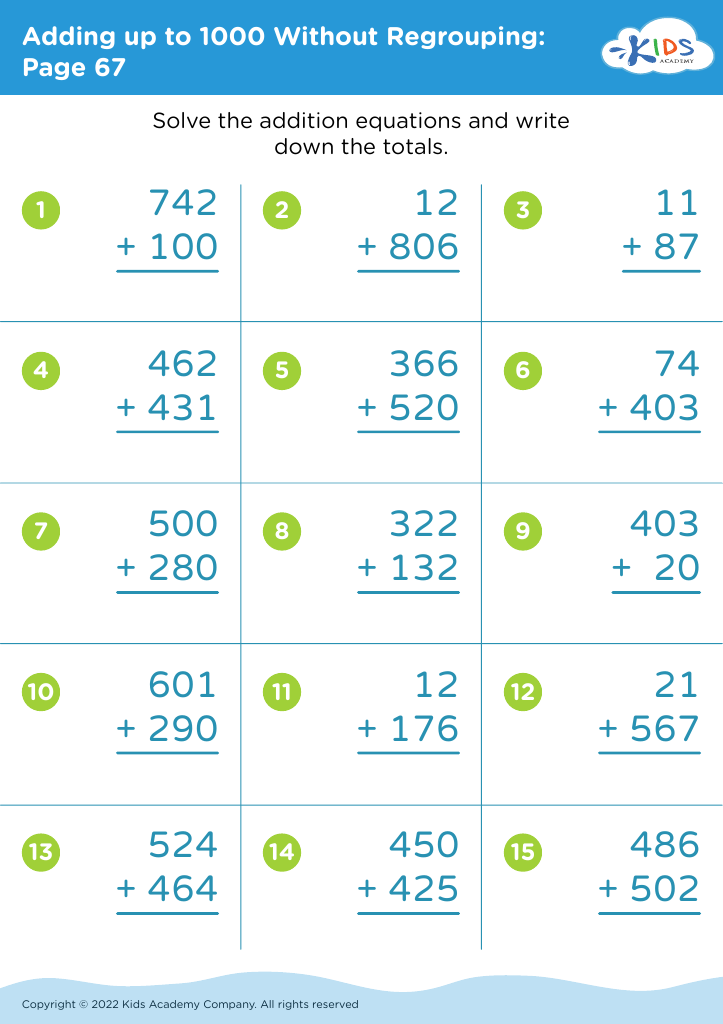
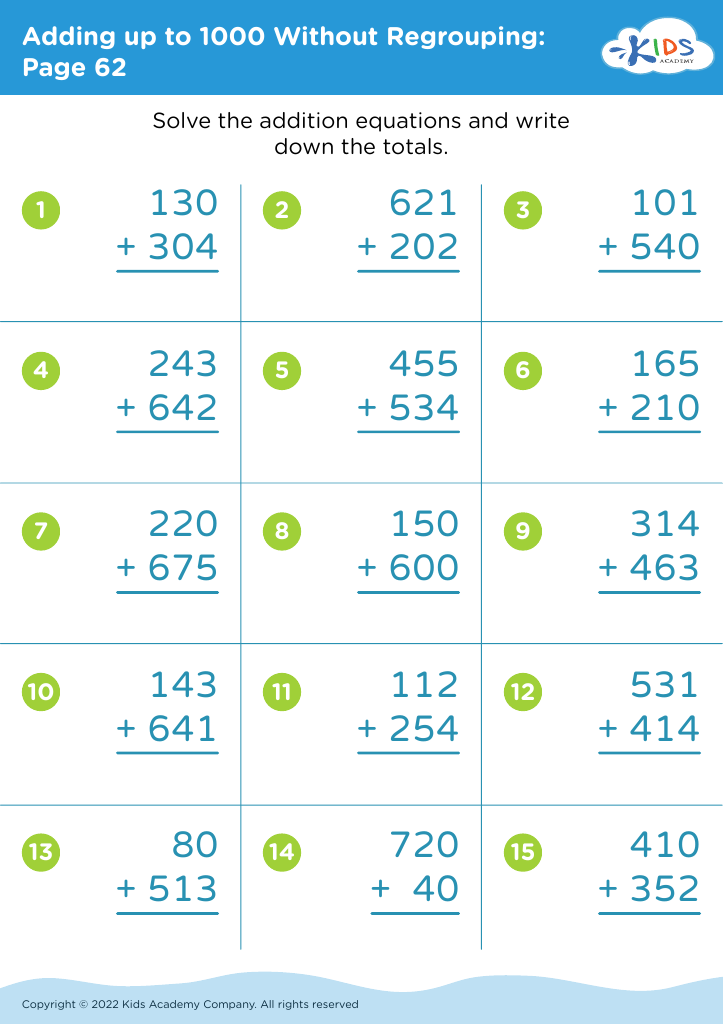
Our "Comparing Fractions Adding up to 1000 Without Regrouping" worksheets are designed for kids aged 7-8 to strengthen their math skills. These printables help children master comparing fractions and performing addition up to 1000 without the complexity of regrouping. Perfect for young learners, our engaging worksheets build foundational math confidence in a structured and enjoyable way. Children will practice comparing fractional values while seamlessly improving their addition skills. This provides a comprehensive approach to learning crucial math concepts at an early age, aiming for clear understanding and long-term retention. Download now to enhance your child's math expertise today!


Teaching children to compare fractions and work with numbers up to 1000 without regrouping is essential for laying a solid mathematical foundation. By ages 7-8, kids are typically in 2nd or 3rd grade, a critical period for developing numerical confidence and skills.
First, understanding fractions, even basic ones, is fundamental to arithmetic progression. Comparing fractions helps develop number sense, which is the ability to understand and manipulate numbers flexibly, a crucial skill for advanced math concepts. Familiarity with fractions also ties directly to real-world problem-solving situations, like dividing a pizza or understanding measurements in recipes.
Second, working with large numbers up to 1000 trains students’ calculation abilities and enhances their memory retention. The ability to handle these numbers without regrouping fosters an intuitive understanding of place value, which is essential for more complex operations in the future. It also helps in developing mental math skills, enabling quick estimations and better proficiency in everyday math tasks.
Teachers and parents play a pivotal role in encouraging these skills. They can create supportive, engaging activities that make comparing fractions and working with large numbers fun and less intimidating. This preparation will ensure that children are not only able to tackle more advanced math in later grades with confidence but are also equipped with essential life skills.