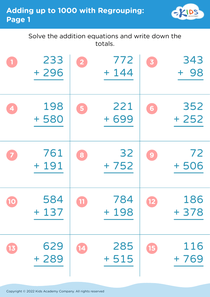
Fraction comparison Adding up to 1000 Without Regrouping Worksheets for Ages 7-8
4 filtered results
-
From - To
Explore our "Fraction Comparison Adding up to 1000 Without Regrouping Worksheets" designed for kids aged 7-8. These engaging resources help young learners master fraction comparison and addition up to 1000, all without regrouping. Each worksheet is crafted to build confidence and enhance mathematical skills, providing a perfect blend of fun and education. Ideal for both classroom use and home practice, our worksheets support the development of critical thinking and problem-solving abilities. Give your child the advantage they need with our expertly designed activities, fostering foundational skills in a stress-free and enjoyable manner.
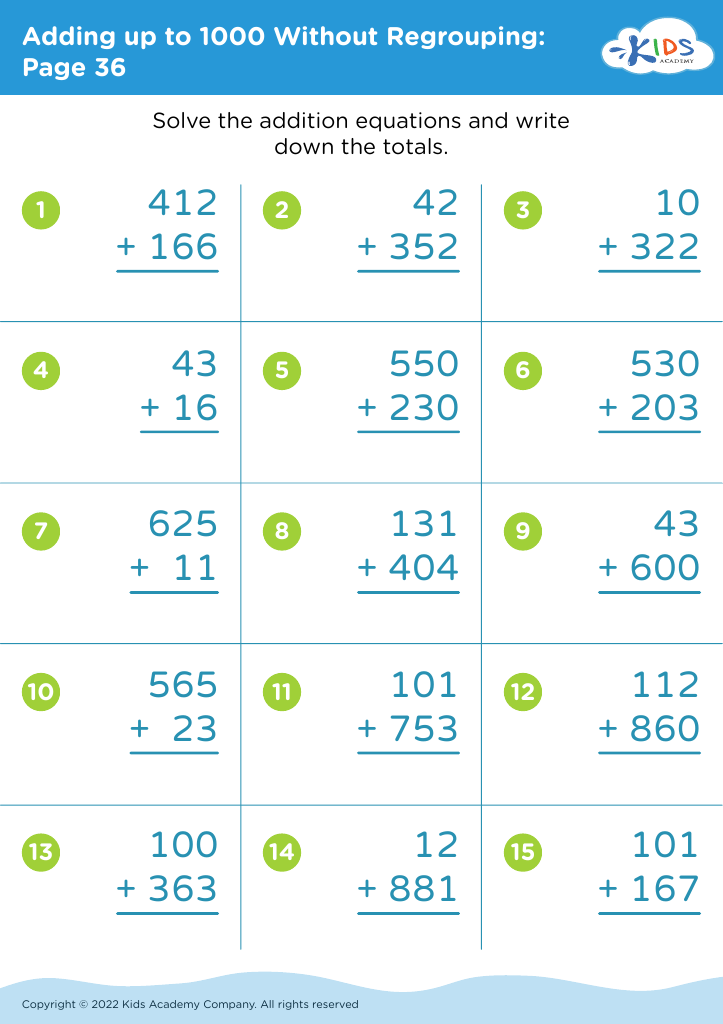
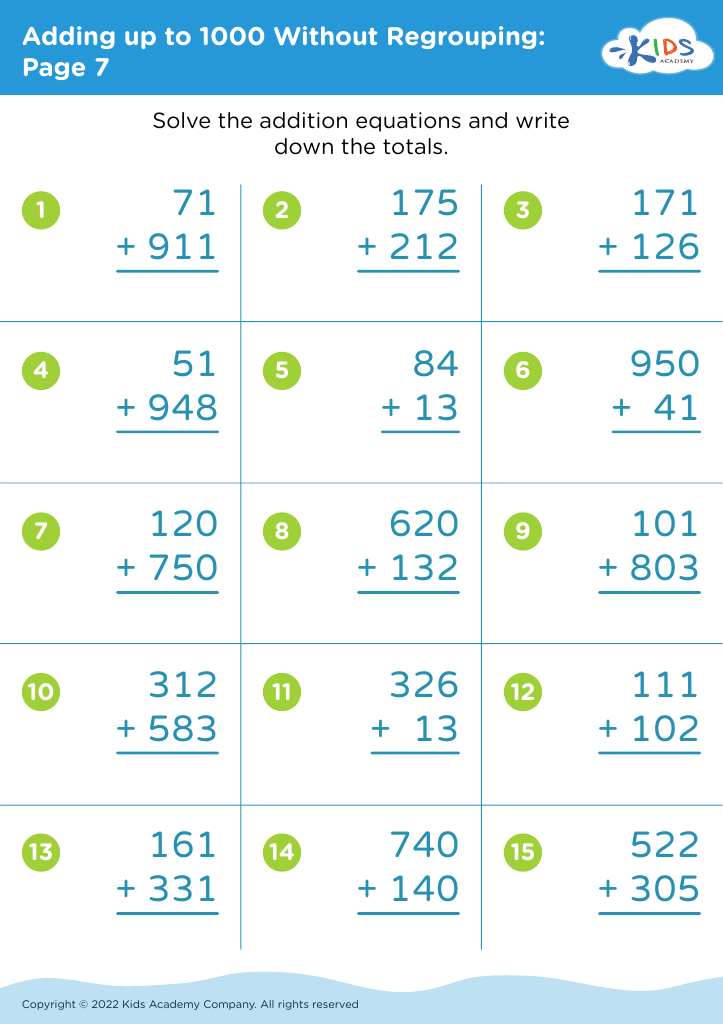
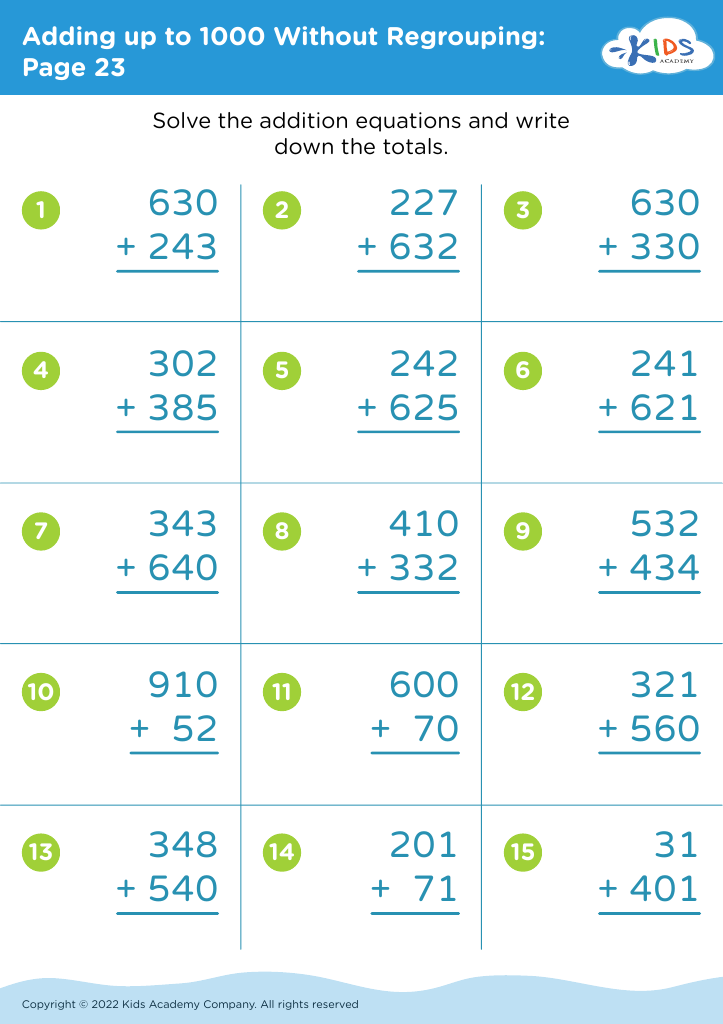
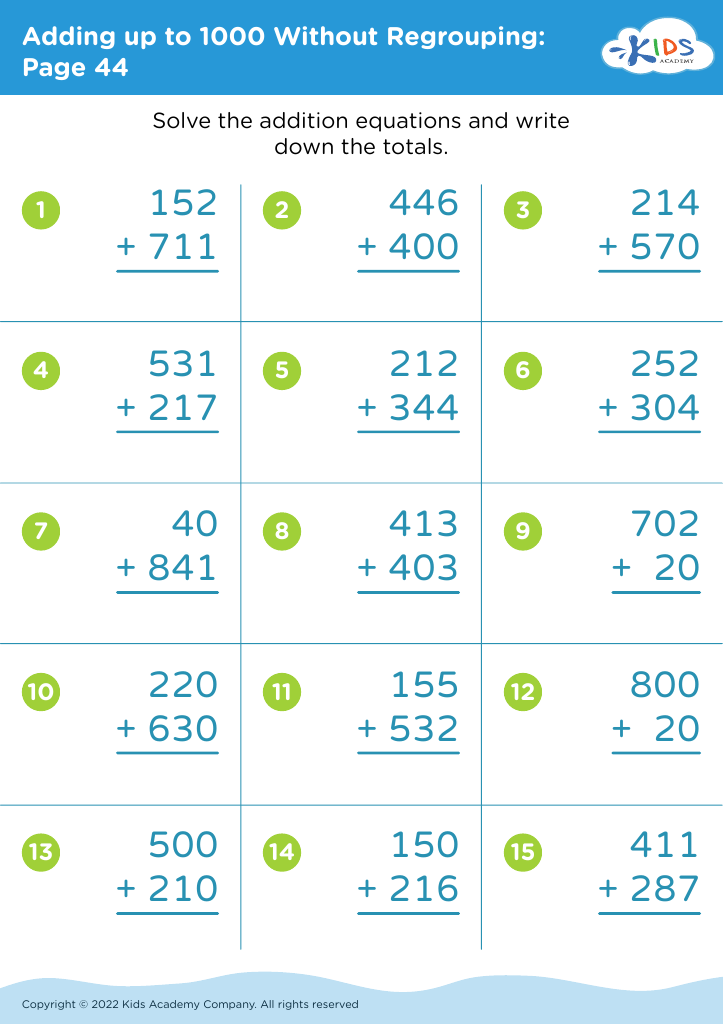


Fraction comparison and adding up to 1000 without regrouping are fundamental mathematical concepts that parents or teachers should care about for children aged 7-8 because they support the development of essential math skills and lay a strong foundation for future learning.
At this developmental stage, children transition from basic arithmetic to more complex mathematical operations. Learning how to compare fractions helps young students understand the idea that numbers can represent parts of a whole and can be bigger or smaller than each other even if they might look different. This critical thinking skill fosters a deeper appreciation for numbers and their relationships, which is crucial for more advanced math topics, including algebra and geometry.
Similarly, adding up to 1000 without regrouping reinforces place value understanding and accuracy in arithmetic calculations. This practice helps kids manage larger numbers confidently while minimizing errors, ensuring that they’re building a reliable base in number sense.
Both activities also nurture problem-solving skills and boost mathematical fluency, so children are more likely to approach math tasks with confidence. By focusing on these concepts, parents and teachers not only support academic success but also help to instill a positive attitude towards math, encouraging lifelong learning and persistence in the subject.