Reading comprehension Adding up to 1000 Without Regrouping Worksheets for Ages 7-8
4 filtered results
-
From - To
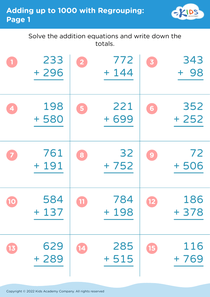
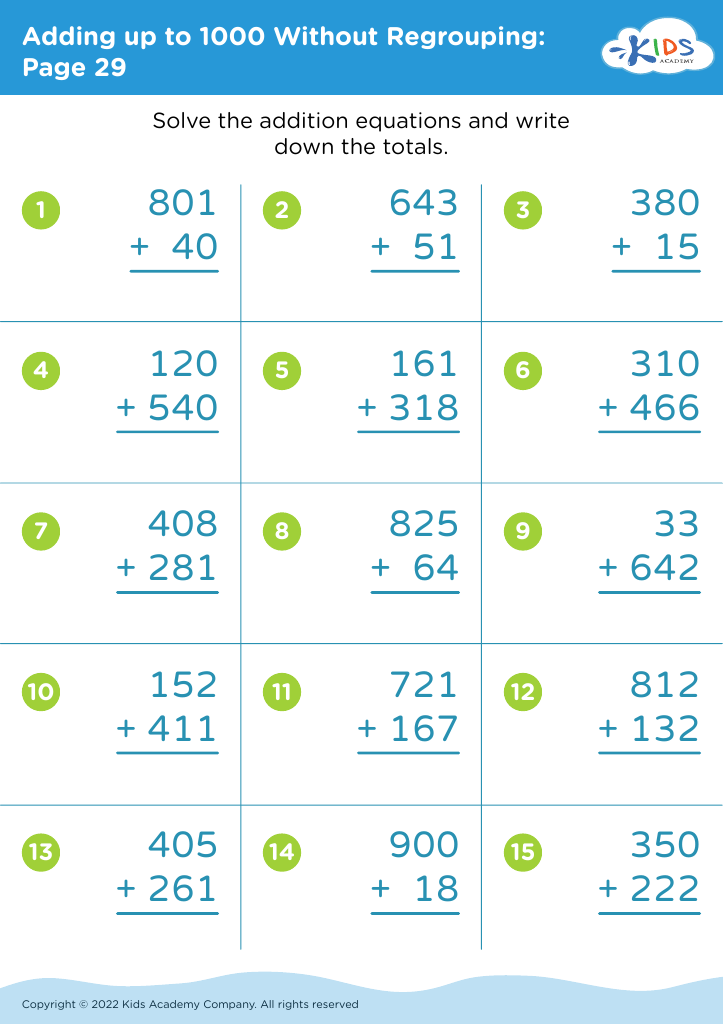
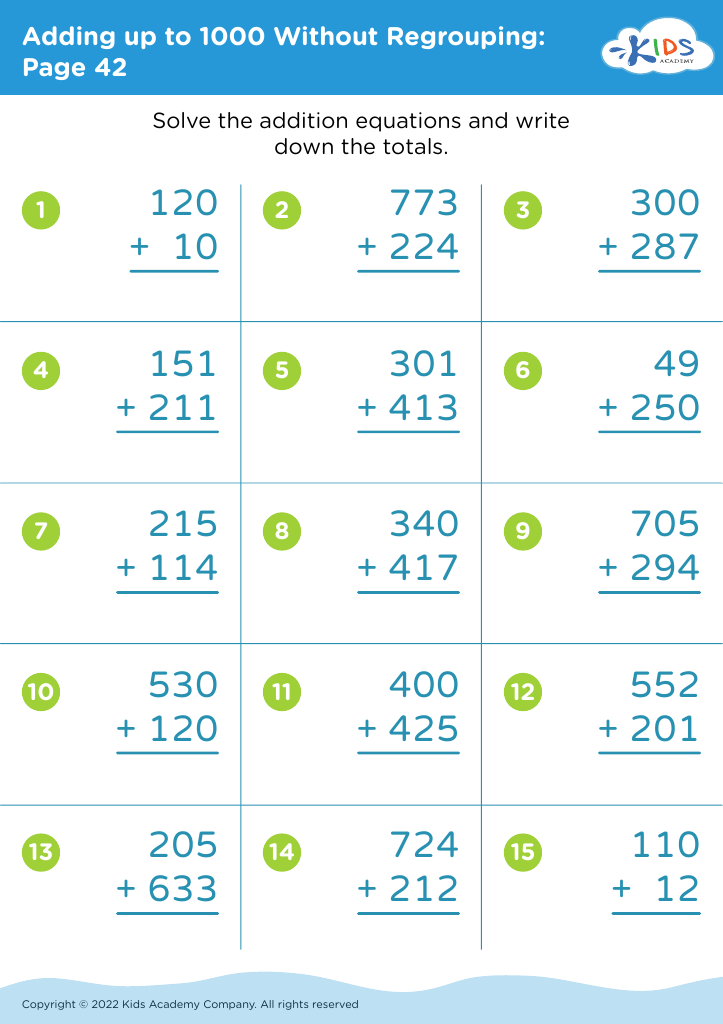
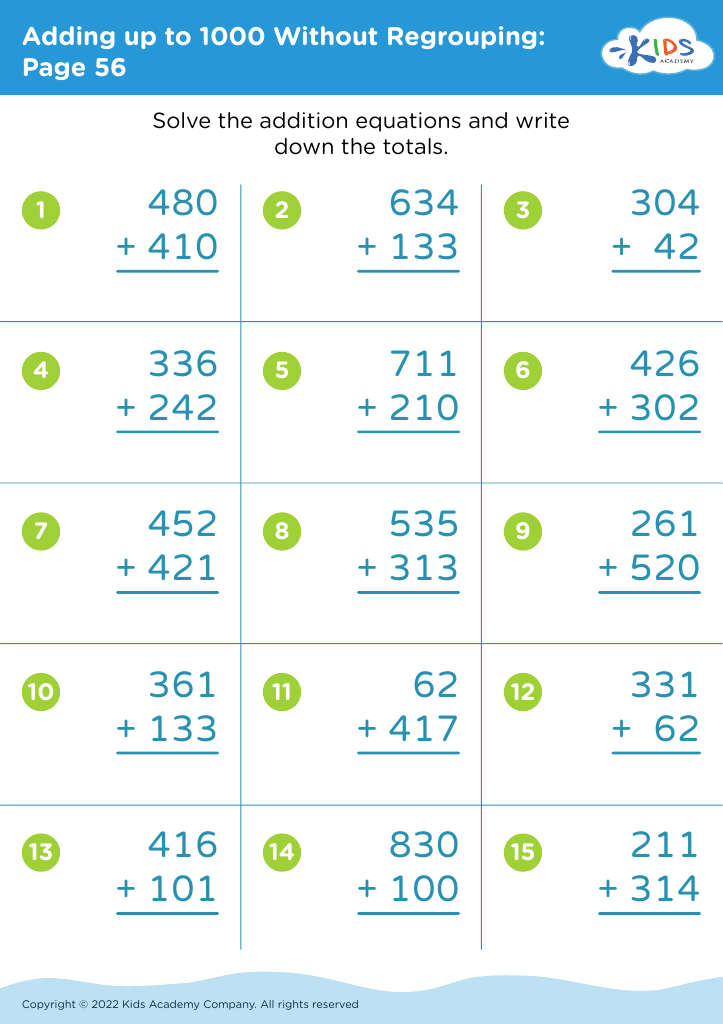
Empower your 7-8-year-olds' math skills with our "Reading Comprehension Adding up to 1000 Without Regrouping Worksheets." These printable activities blend math and reading comprehension, fostering a dual approach to learning. Each worksheet features engaging exercises that improve addition skills up to 1000 while enhancing reading understanding. Thoughtfully designed for young learners, they provide clear instructions, immersive content, and an effortless learning process. Ideal for classroom or home use, boost your child’s confidence and competence in math and reading simultaneously. A perfect resource to lay a strong foundation for future academic success!
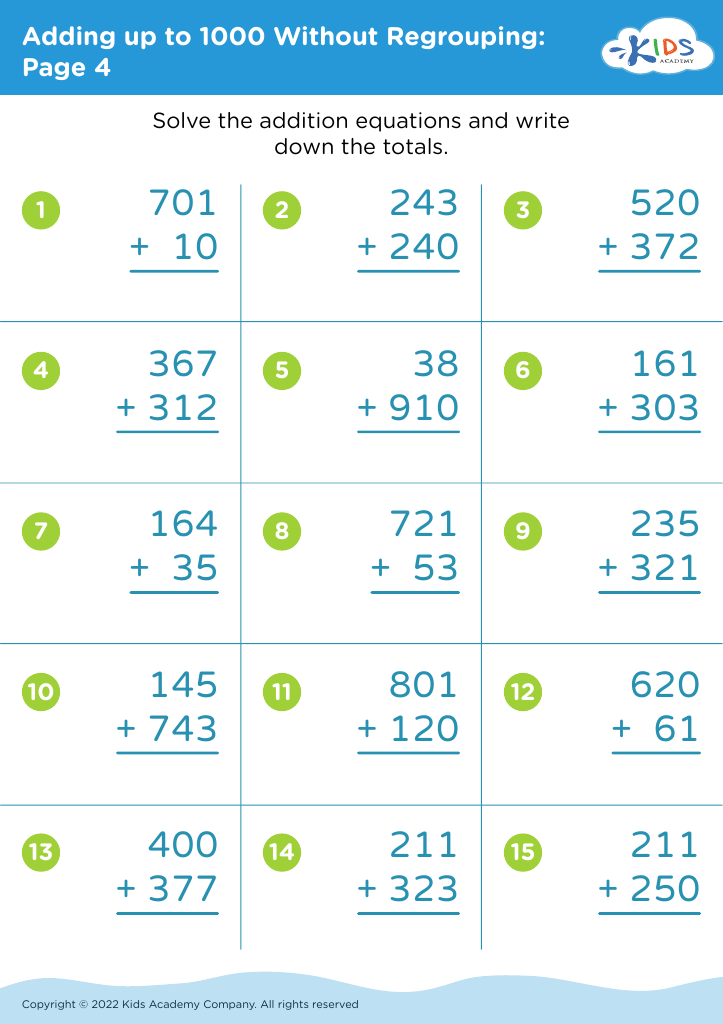


Reading comprehension and learning basic arithmetic without regrouping are foundational skills for children ages 7-8, and it's important for parents and teachers to understand their significance.
Firstly, reading comprehension plays a key role in a child's academic success. It enhances vocabulary, critical thinking, and the ability to access complex ideas. Comprehension ensures that children not only read but also understand and interpret text, laying the groundwork for subject mastery across the curriculum.
On the other hand, arithmetic skills—specifically adding up to 1000 without regrouping—are equally crucial at this stage. Mastery of this helps in developing a strong number sense and fluency with math facts—all fundamental abilities needed as math becomes more complex in later years. Without regrouping, children can focus on understanding the place values and the mechanics of addition, developing confidence and accuracy.
Investing in both skills builds a balanced and robust educational foundation. Children proficient in reading can better comprehend and follow math problems, and those confident in math can better estimate and understand concepts in story contexts. By prioritizing these skills, parents and teachers enable children to achieve holistic educational development, setting them up for future academic and personal success.