Filters

16 filtered results

Clear all filters
Favorites
With answer key
Interactive

16 filtered results

Difficulty Level

Grade


Discover our engaging "Comparing Fractions Adding Up to 1000 Worksheets" designed for children ages 7-8. These PDF resources empower young learners to develop vital math skills while mastering how to compare fractions effectively. With colorful illustrations and fun exercises, students will calculate and compare fractions in various scenarios, strengthening their understanding of number relationships. Each worksheet fosters critical thinking and builds confidence in math as students explore different fraction scenarios that add to 1000. Perfect for classroom activities or at-home learning, our worksheets encourage a love for math through interactive and educational practice. Start building fraction mastery with us today!
Check out this FREE Trial Lesson on Adding up to 1000 for age 7-8!

P

Favorites
With answer key
Interactive
  • 7-8
  • Comparing Fractions
  • Adding up to 1000
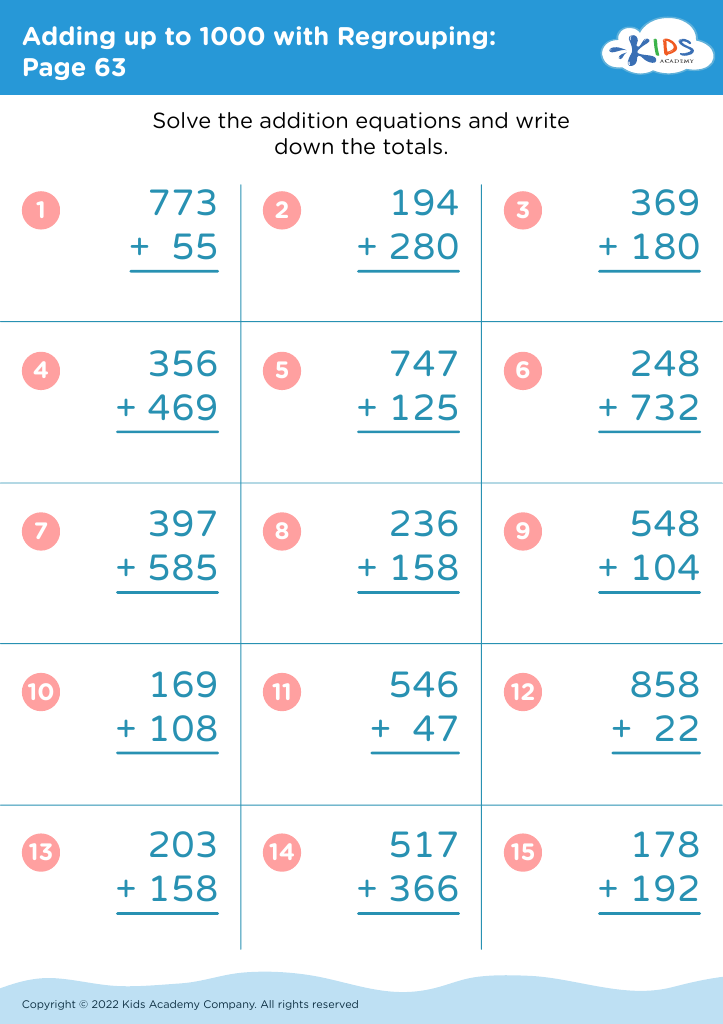
Adding up to 1000 with Regrouping: Page 63
Worksheet
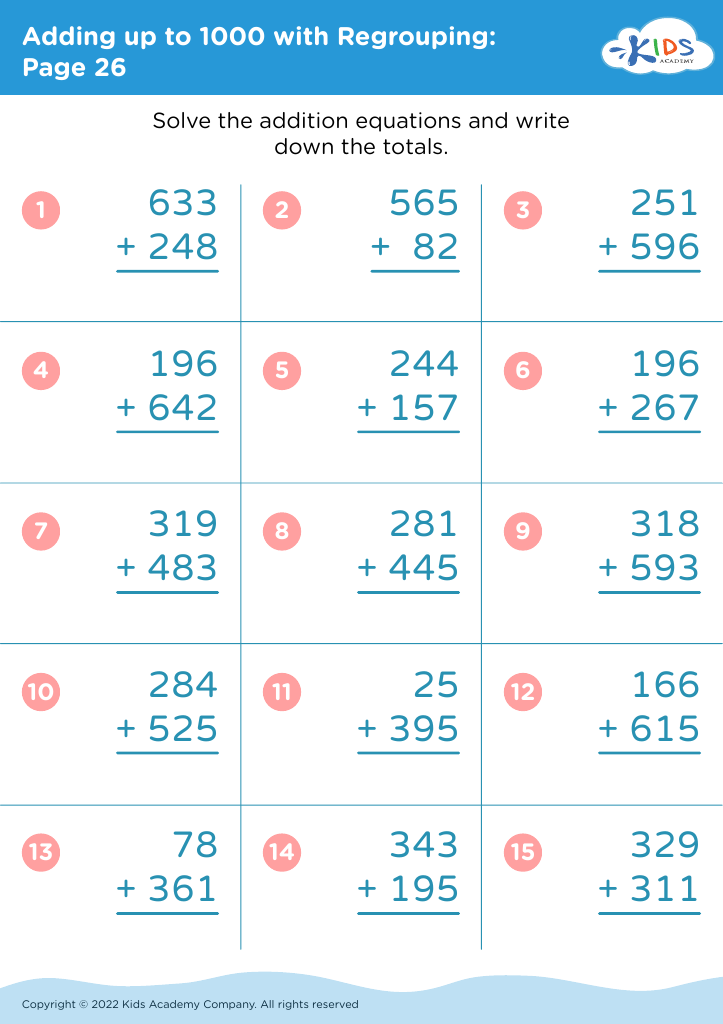
Adding up to 1000 with Regrouping: Page 26
Worksheet
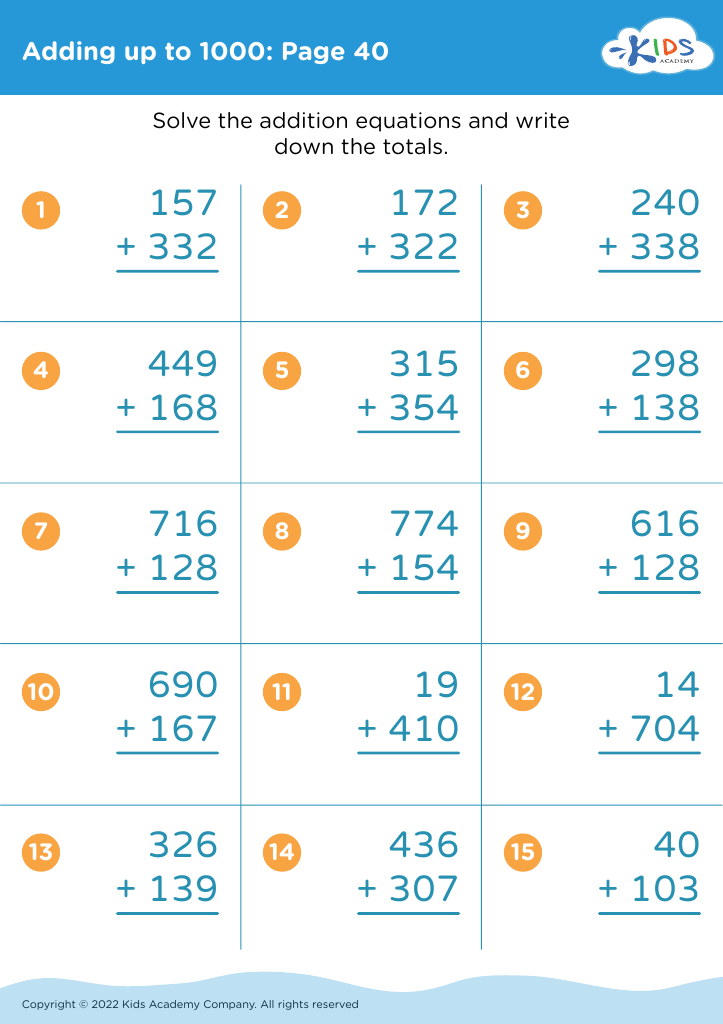
Adding up to 1000: Page 40

Adding up to 1000: Page 40

Adding up to 1000: Page 40
Worksheet
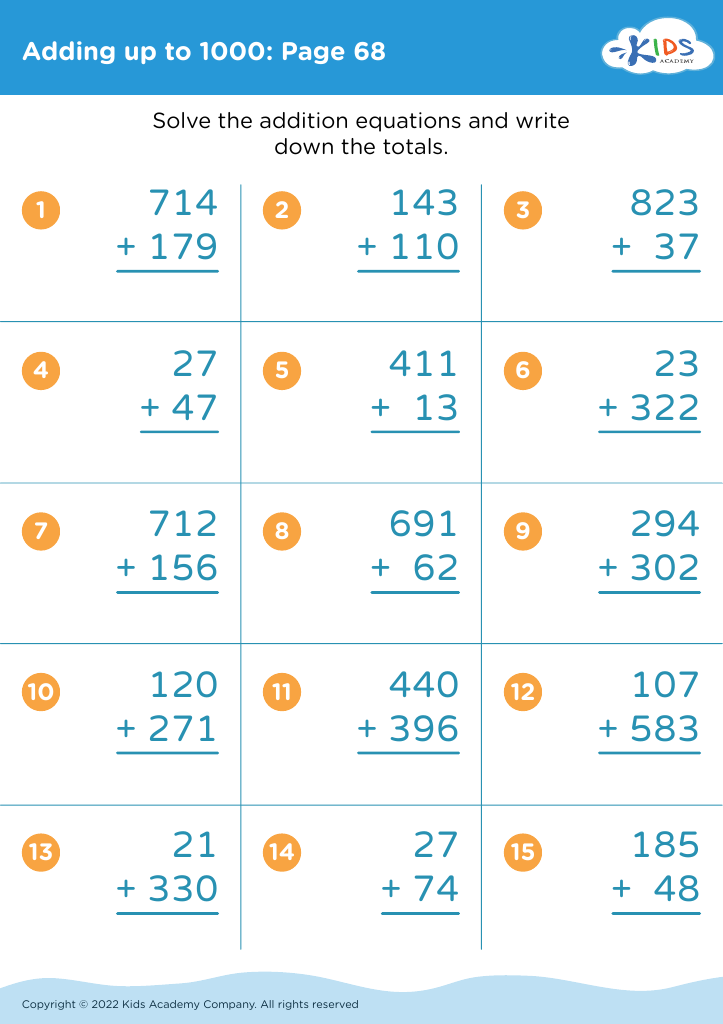
Adding up to 1000: Page 68

Adding up to 1000: Page 68

Adding up to 1000: Page 68
Worksheet
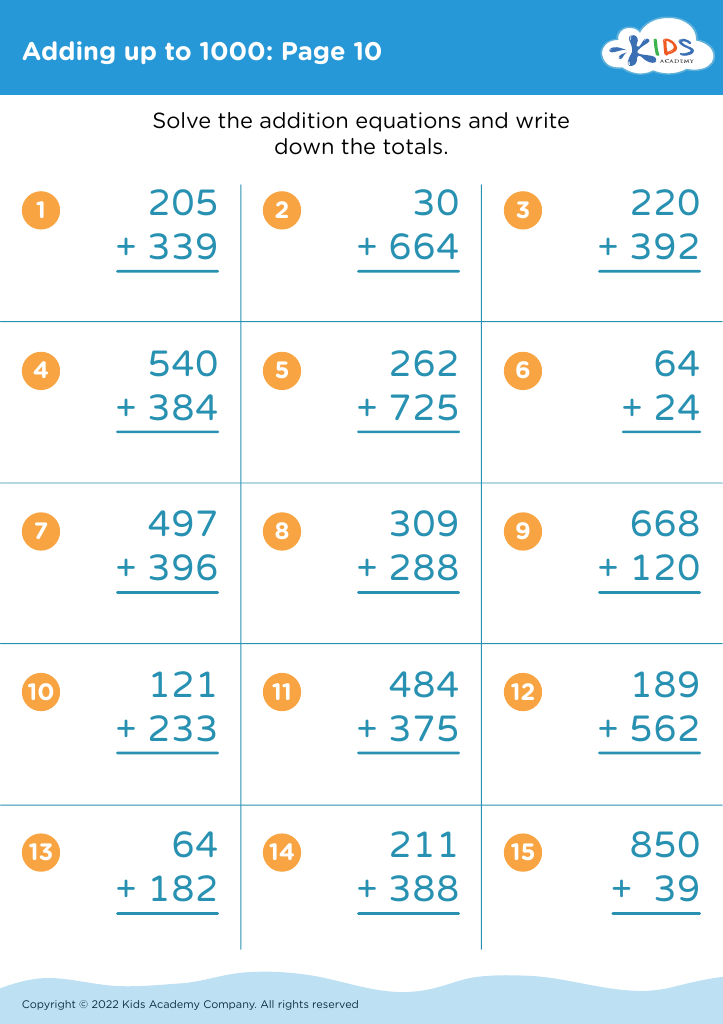
Adding up to 1000: Page 10

Adding up to 1000: Page 10

Adding up to 1000: Page 10
Worksheet
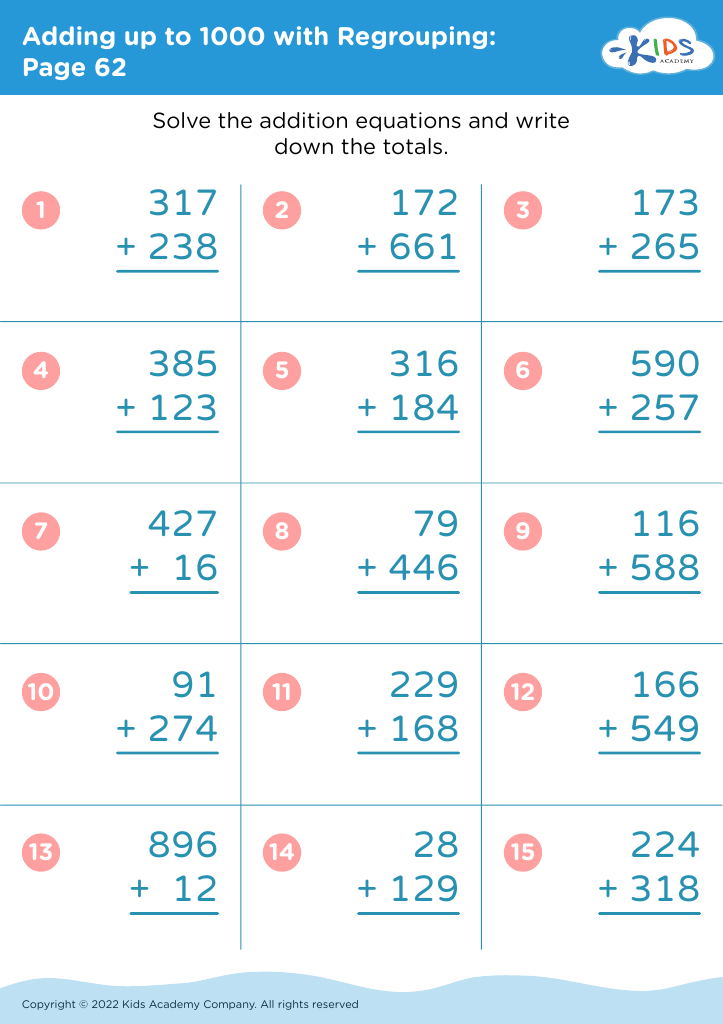
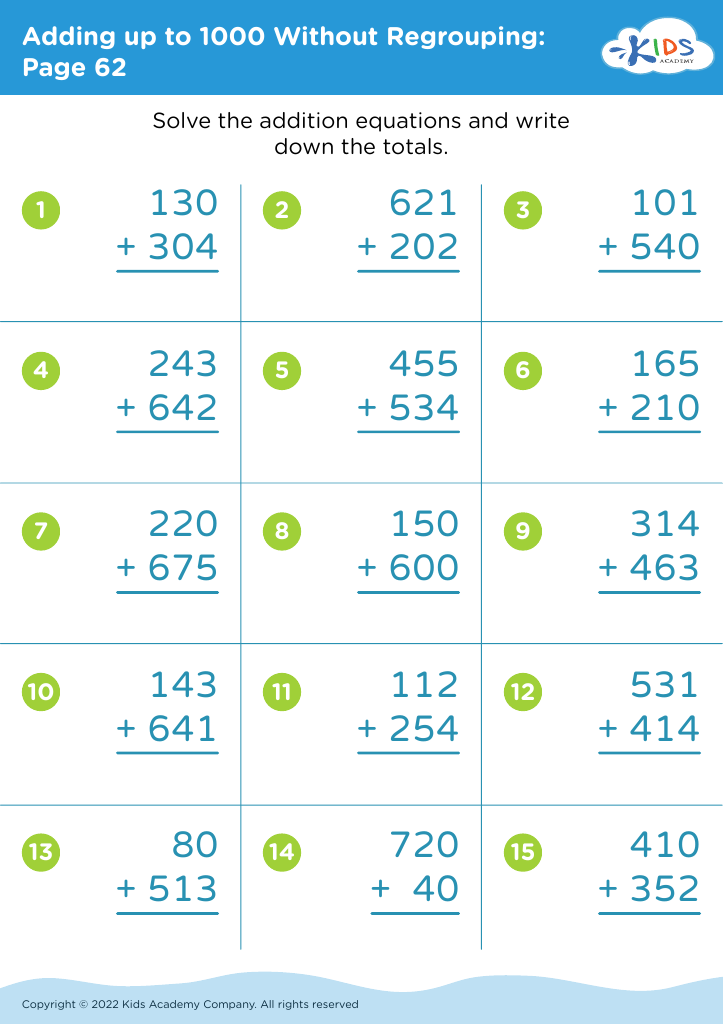
Adding up to 1000 with Regrouping: Page 62
Worksheet
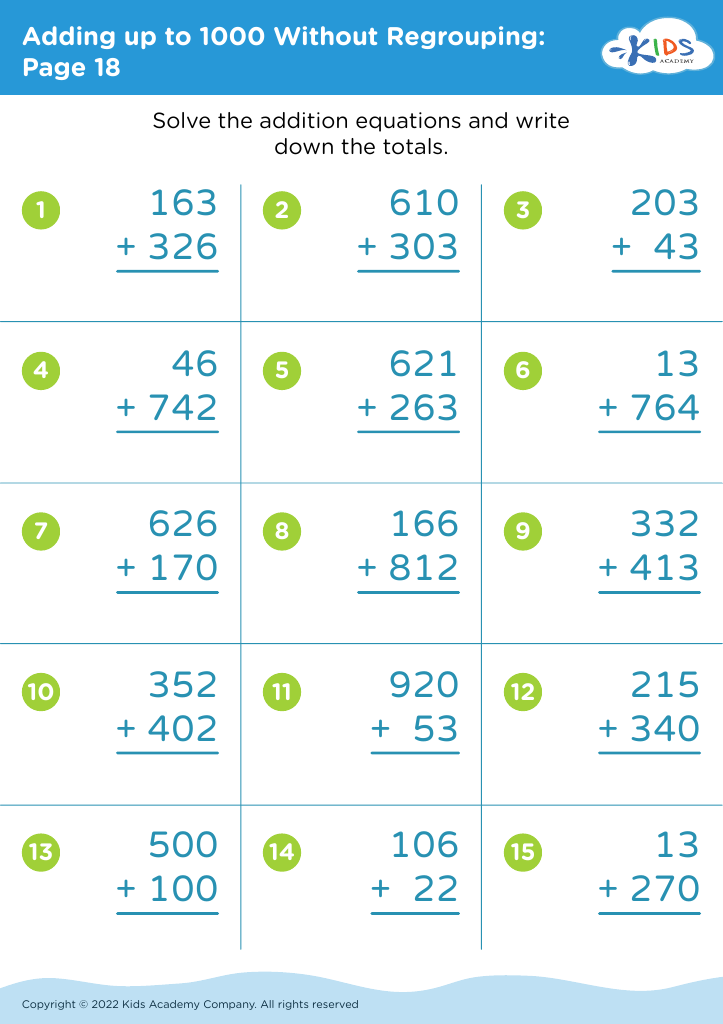
Adding up to 1000 Without Regrouping: Page 18
Worksheet
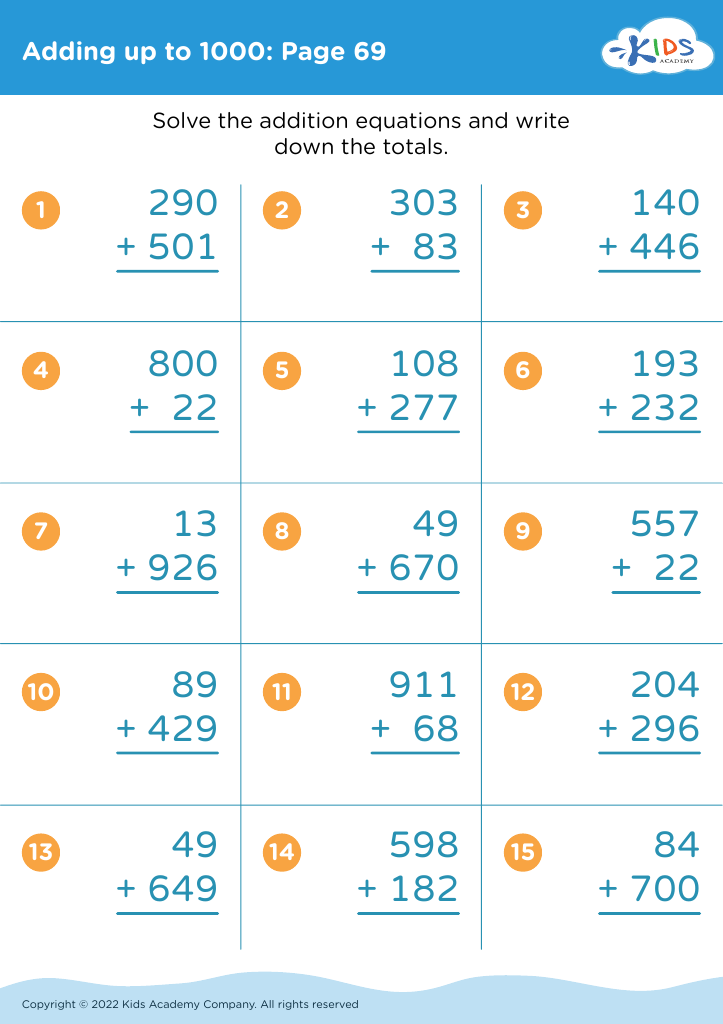
Adding up to 1000: Page 69

Adding up to 1000: Page 69

Adding up to 1000: Page 69
Worksheet
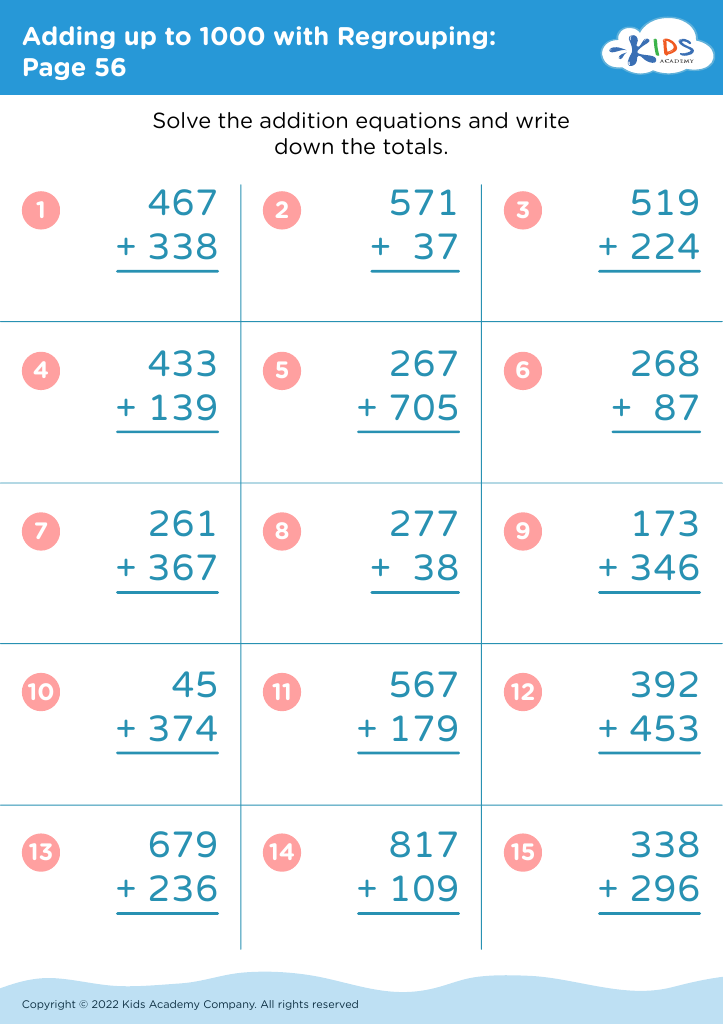
Adding up to 1000 with Regrouping: Page 56
Worksheet
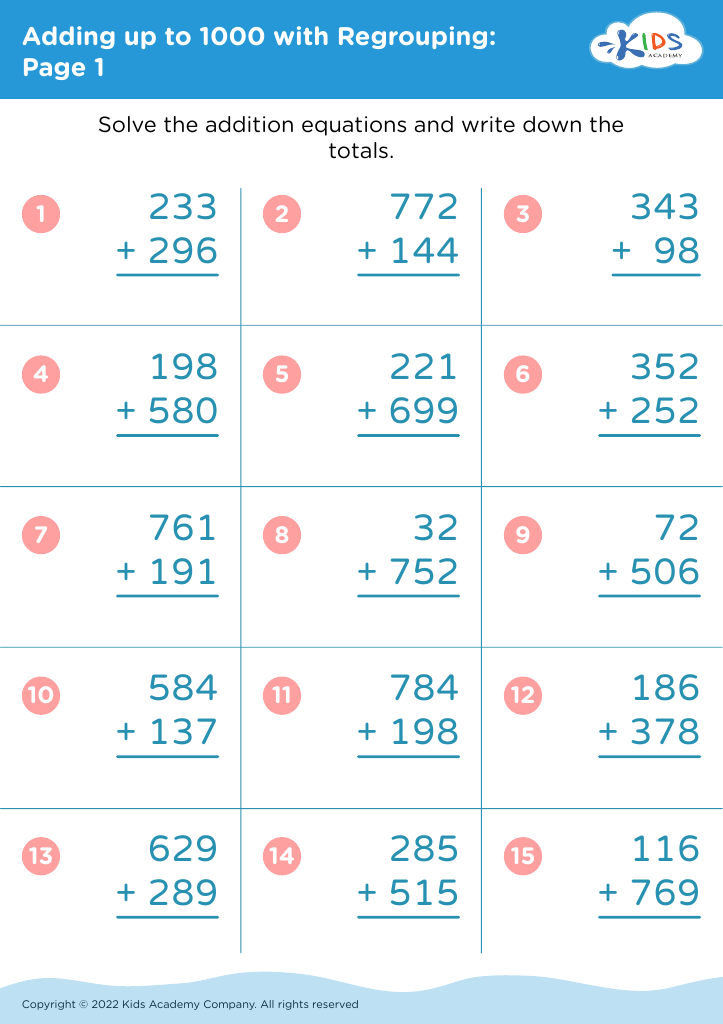
Adding up to 1000 with Regrouping: Page 1
Worksheet
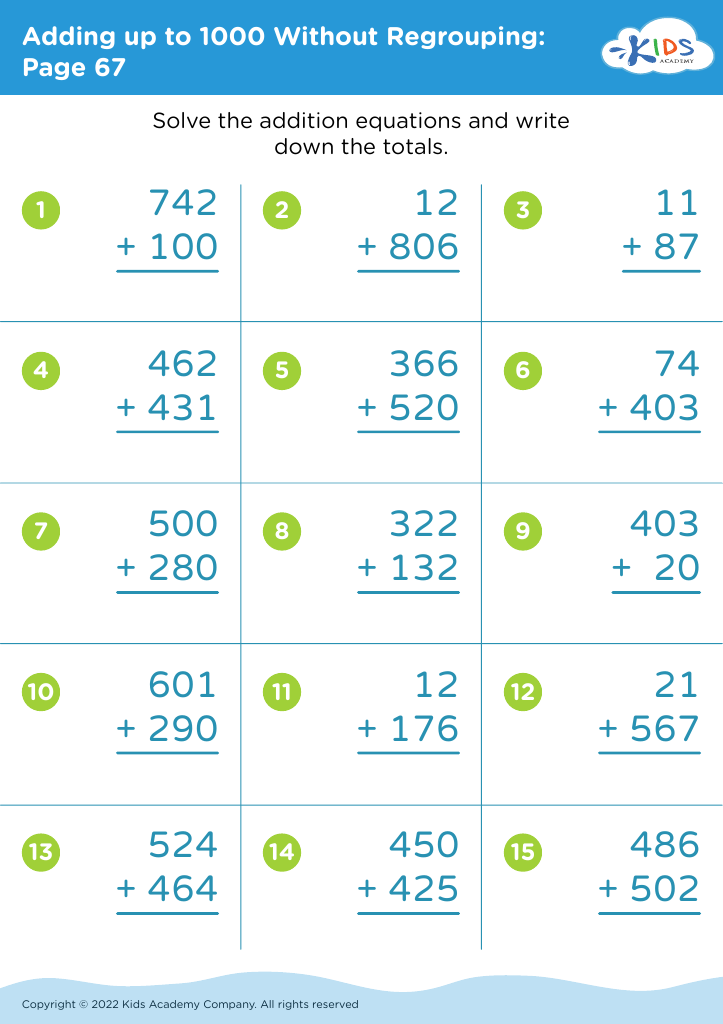
Adding up to 1000 Without Regrouping: Page 67
Worksheet
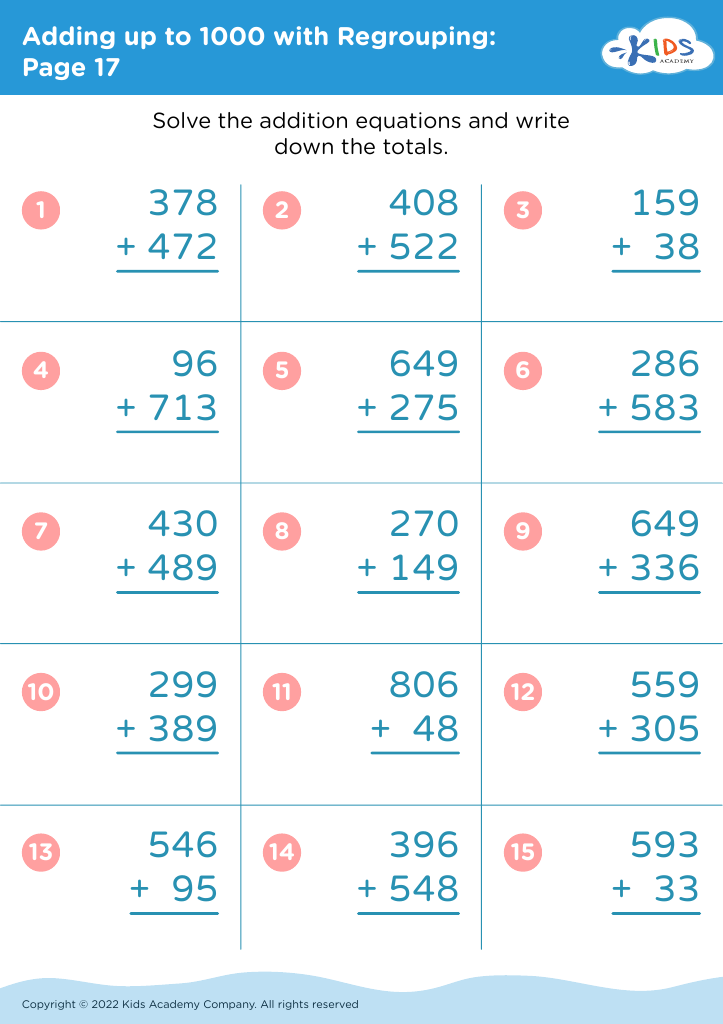
Adding up to 1000 with Regrouping: Page 17
Worksheet
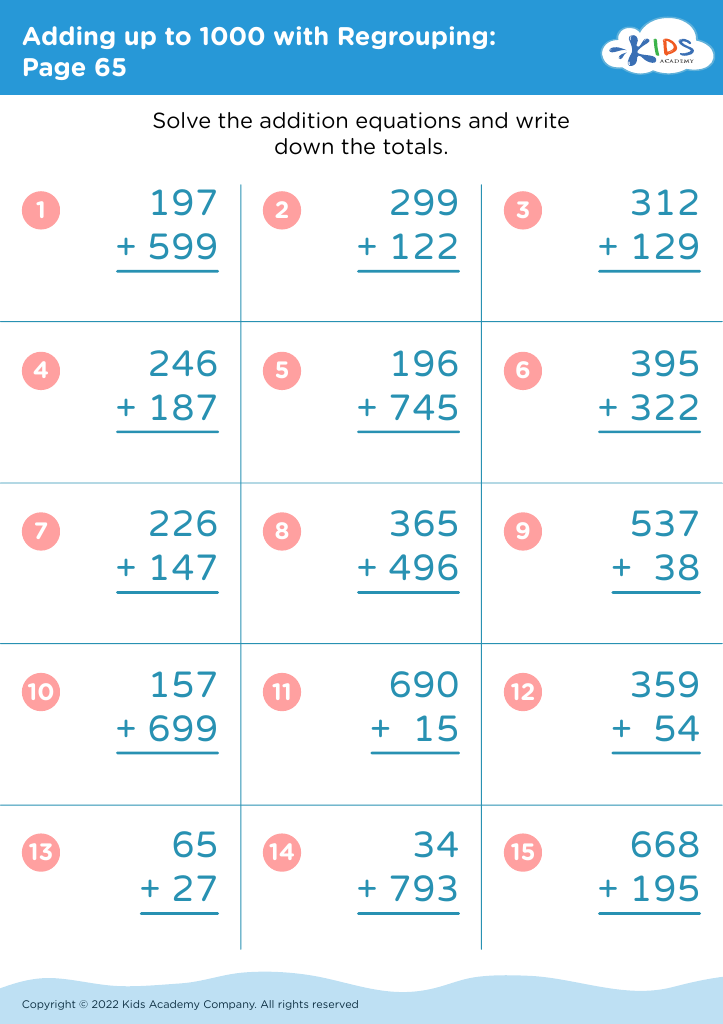
Adding up to 1000 with Regrouping: Page 65
Worksheet
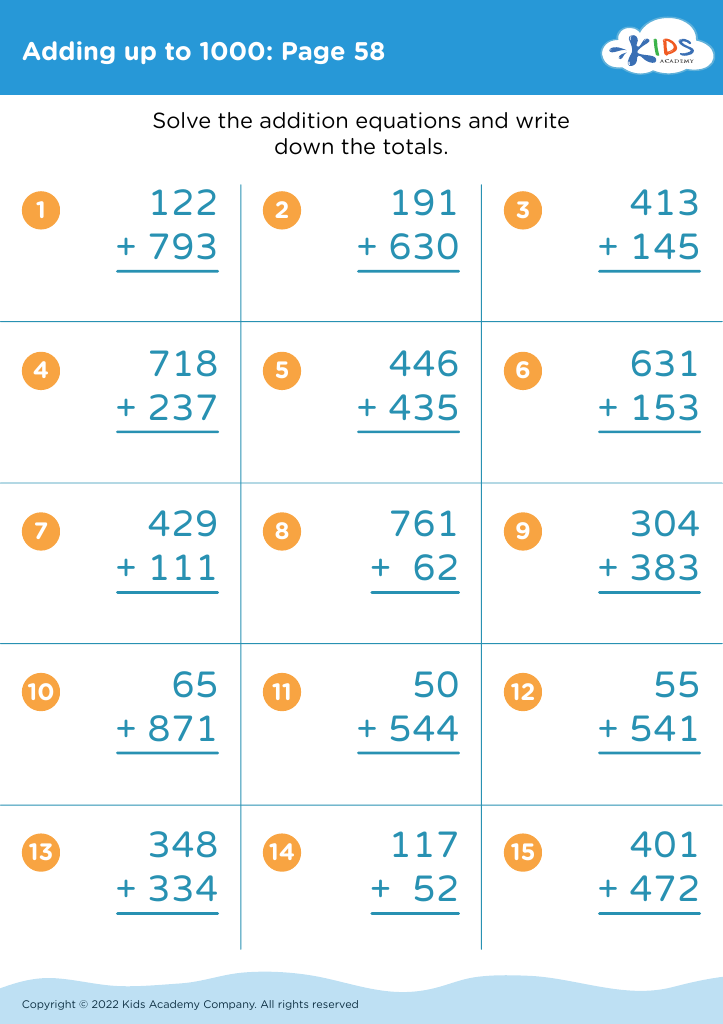
Adding up to 1000: Page 58

Adding up to 1000: Page 58

Adding up to 1000: Page 58
Worksheet
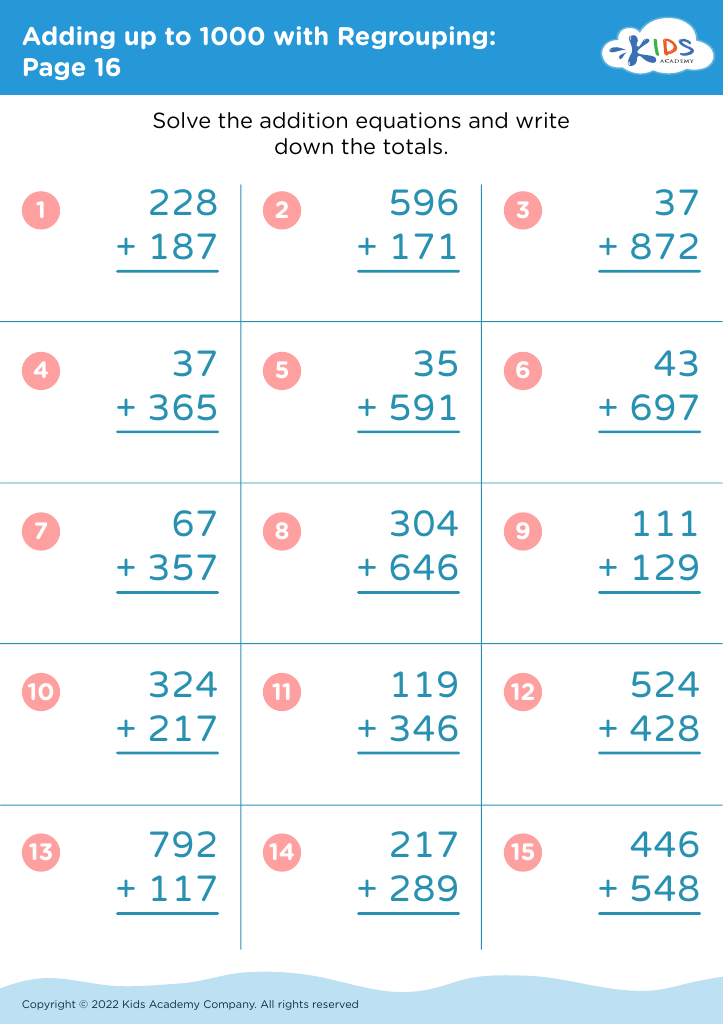
Adding up to 1000 with Regrouping: Page 16
Worksheet
Adding up to 1000 Without Regrouping: Page 62
Worksheet


Understanding how to compare fractions is a foundational skill in mathematics, especially for children ages 7-8. As students begin to engage with more complex mathematical concepts, such as addition and subtraction of fractions, being able to compare them is crucial. When students learn to compare fractions, they not only strengthen their number sense but also enhance their problem-solving abilities.

Comparing fractions lays the groundwork for a deeper understanding of equivalents and proportions, which are essential when they encounter real-world scenarios such as recipes or measuring ingredients in cooking. Furthermore, grasping the concept of fractions supports students in literacy, as they develop the ability to interpret and analyze information in everyday contexts.

Additionally, integrating the concept of comparing fractions with numbers adding up to 1000 challenges students to think critically and collaboratively. It introduces them to larger number sets and encourages them to find creative solutions. For parents and teachers, showing children how to compare fractions connects directly to their everyday experiences, making math more relatable and engaging. Ultimately, fostering this understanding can lead to increased confidence in students, setting a strong foundation for more advanced mathematics in the years to come.