Fraction simplification Adding up to 1000 Worksheets for Ages 7-8
7 filtered results
-
From - To
Discover our "Fraction Simplification Adding up to 1000 Worksheets," designed specifically for ages 7-8! Our engaging, age-appropriate worksheets help young learners master the concept of fractions through fun exercises and clear guidance. As students explore how to simplify fractions, they will enhance their problem-solving skills and mathematical understanding while tackling addition problems that total up to 1000. This interactive learning experience fosters independent practice, enables personalized learning, and supports curriculum goals. Perfect for at-home or classroom reinforcement, these worksheets provide the ideal opportunity for children to build confidence and excel in their math journey. Download now and watch their skills flourish!
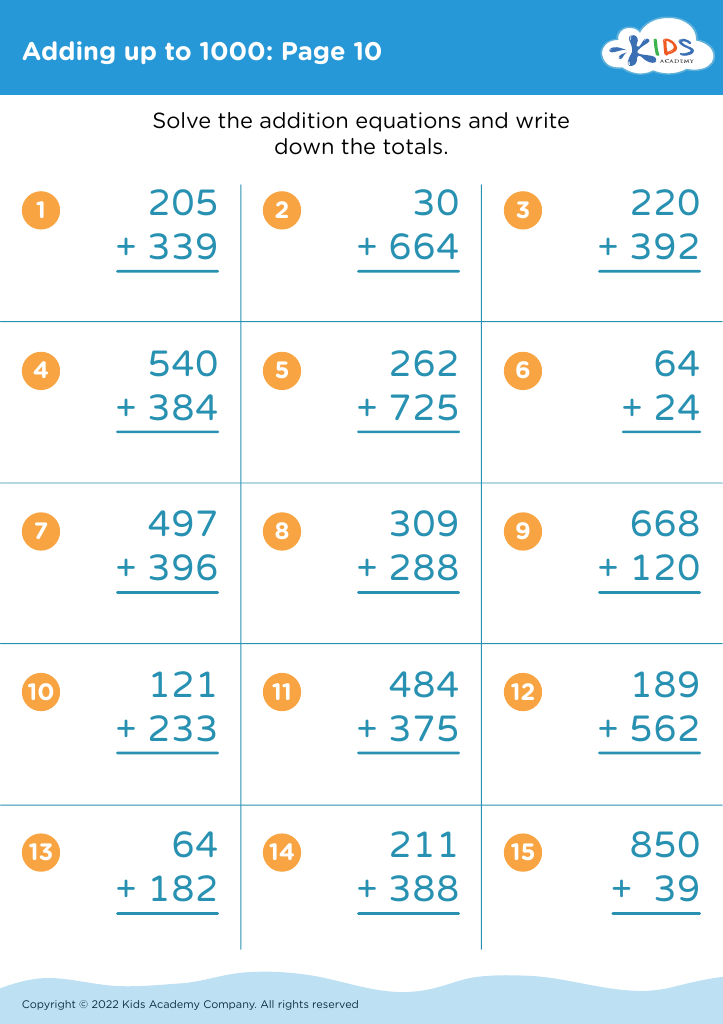
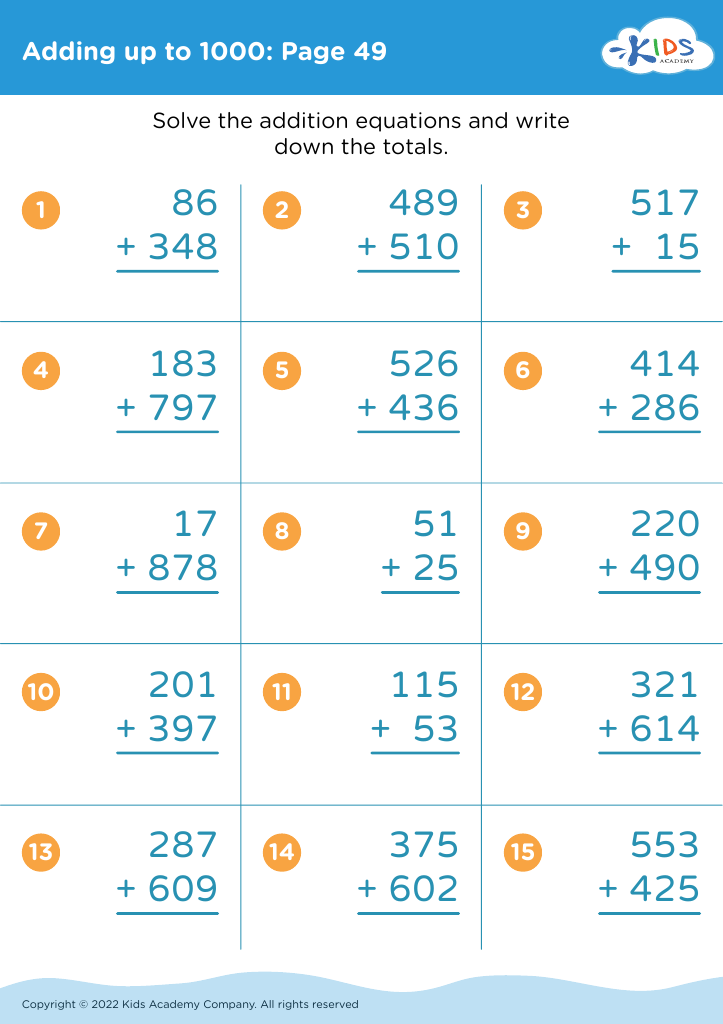
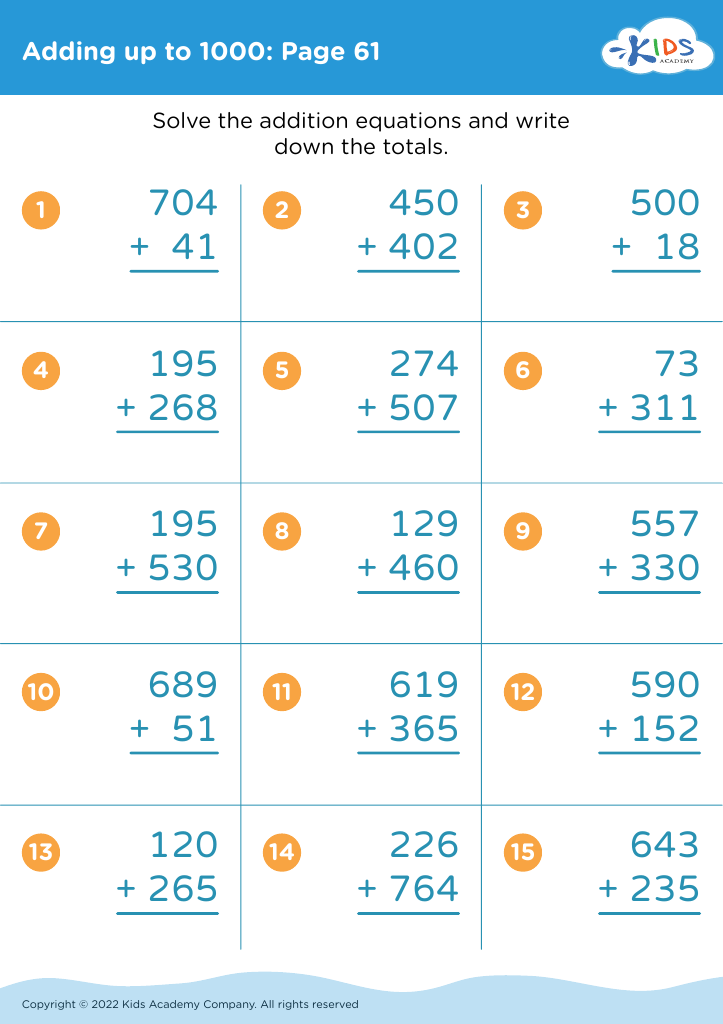
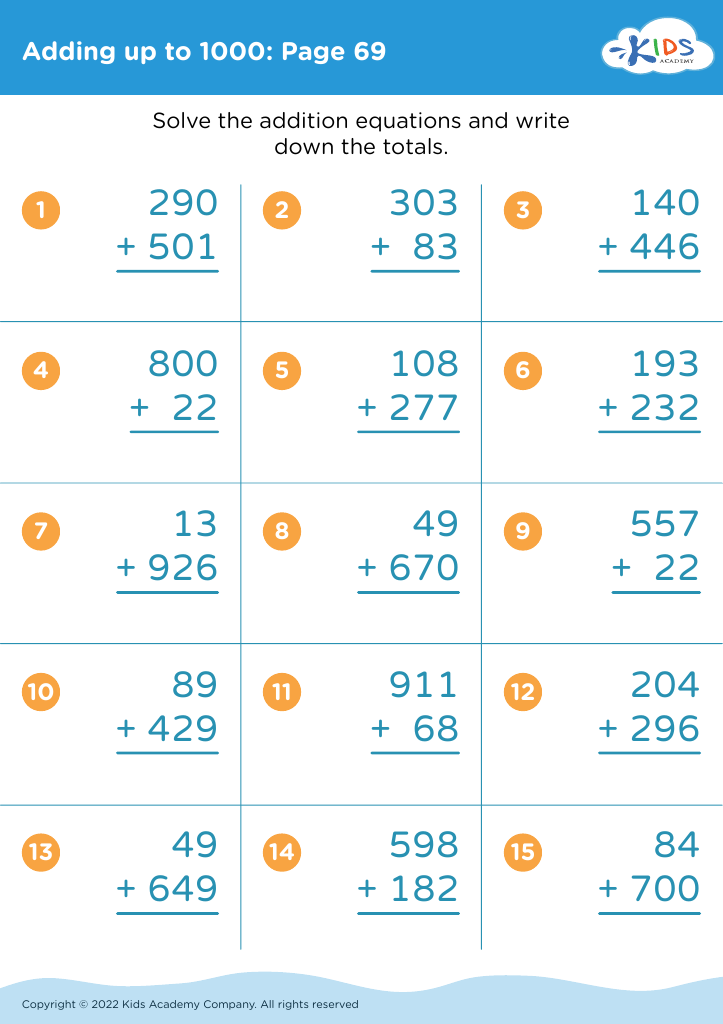
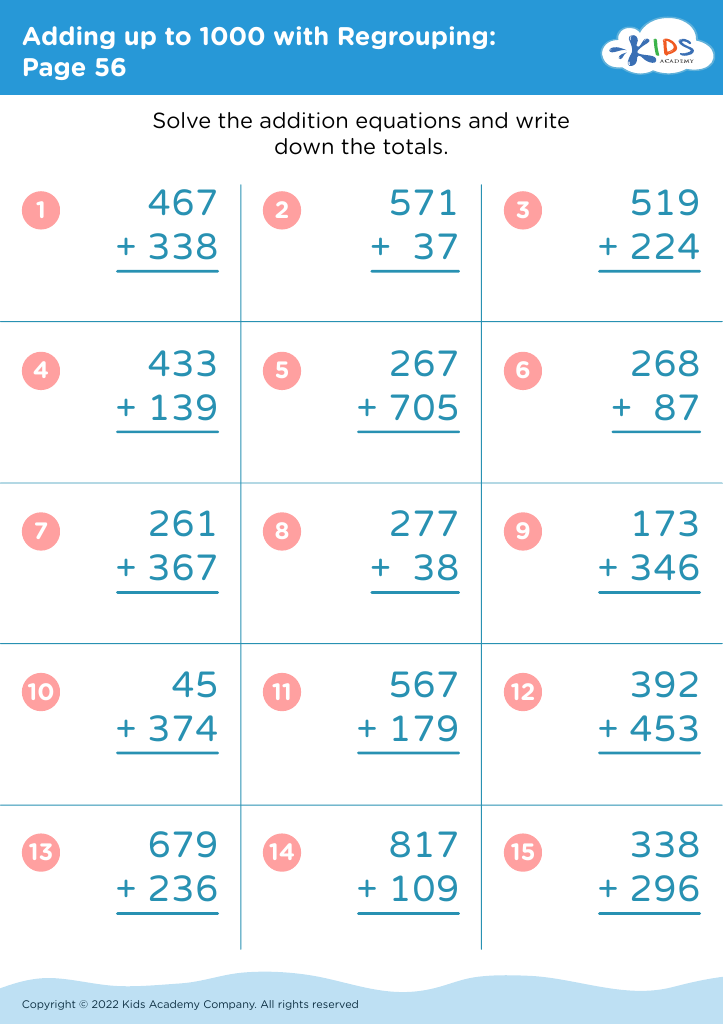
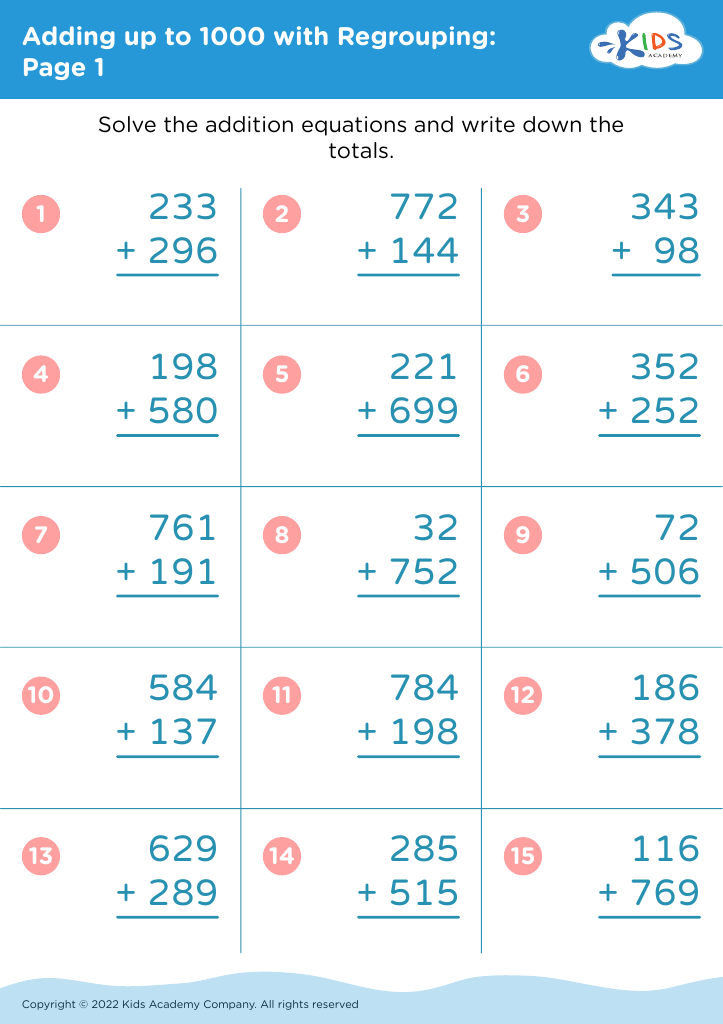
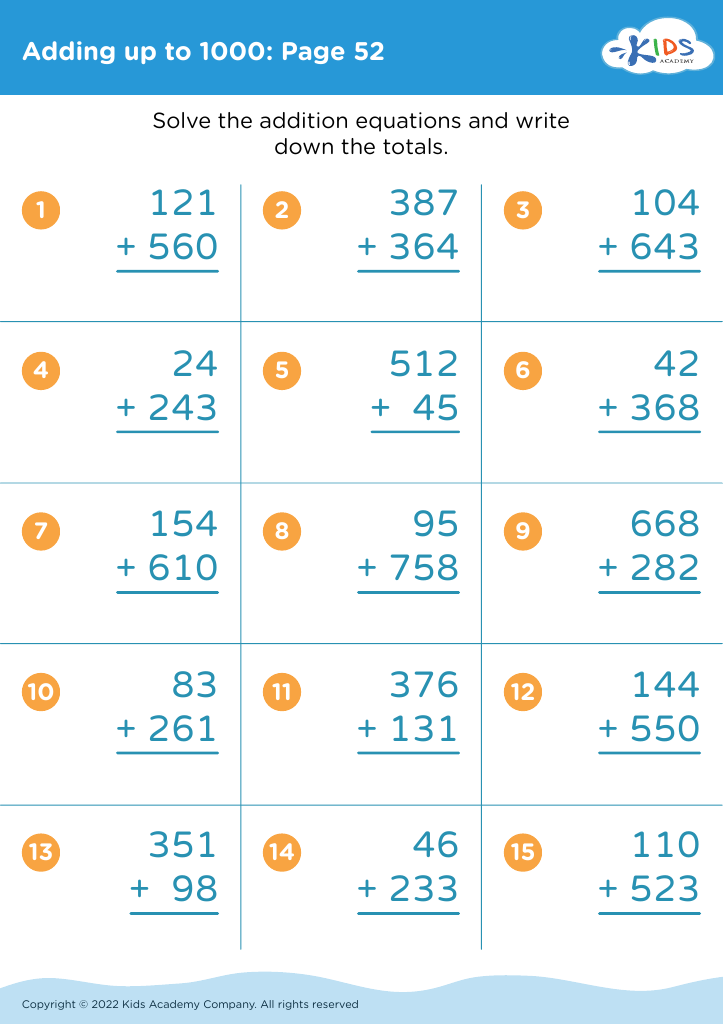



Parents and teachers should prioritize teaching fraction simplification and summing fractions up to 1,000 to children aged 7-8, as it forms a foundational skill in math that promotes critical thinking and problem-solving. Understanding fractions is essential for later math concepts such as ratios, proportions, and percentages, which appear frequently in everyday scenarios. Simplifying fractions helps children recognize equivalence and the relationship between numbers, fostering a deeper understanding of numerical concepts.
Additionally, when children learn to add fractions, especially those that sum up to 1,000, they enhance their ability to work with larger numbers and improve their mental math skills. This knowledge is not only valuable for academic success but also beneficial for real-life situations such as cooking, budgeting, and measuring.
Engaging children in these mathematical concepts at an early age can boost their confidence and foster a positive attitude toward math. By emphasizing the importance of fraction simplification and addition, parents and teachers equip children with the tools to navigate more complex challenges in the future, ultimately laying the groundwork for lifelong learning and analytical thinking.








