Number identification Adding up to 1000 Worksheets for Ages 7-8
3 filtered results
-
From - To
Our 'Number Identification Adding up to 1000 Worksheets for Ages 7-8' are meticulously designed to reinforce students' mathematical skills, focusing on accurately identifying and adding large numbers. Ideal for enhancing classroom learning or extra practice at home, these engaging and educational worksheets help children build a solid understanding of number relationships and arithmetic within 1000. With vibrant visuals and thought-provoking problems, students will be inspired to develop confidence in their math abilities. By introducing these activities, you ensure your child or student receives the essential practice to excel in mathematics while making learning intuitive and fun.
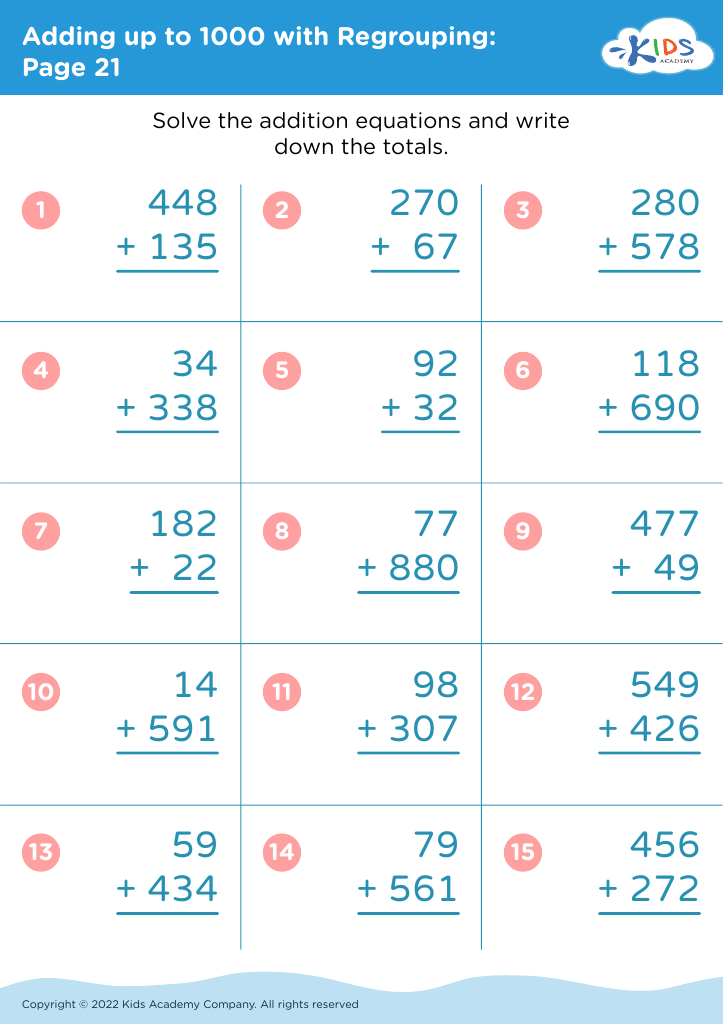
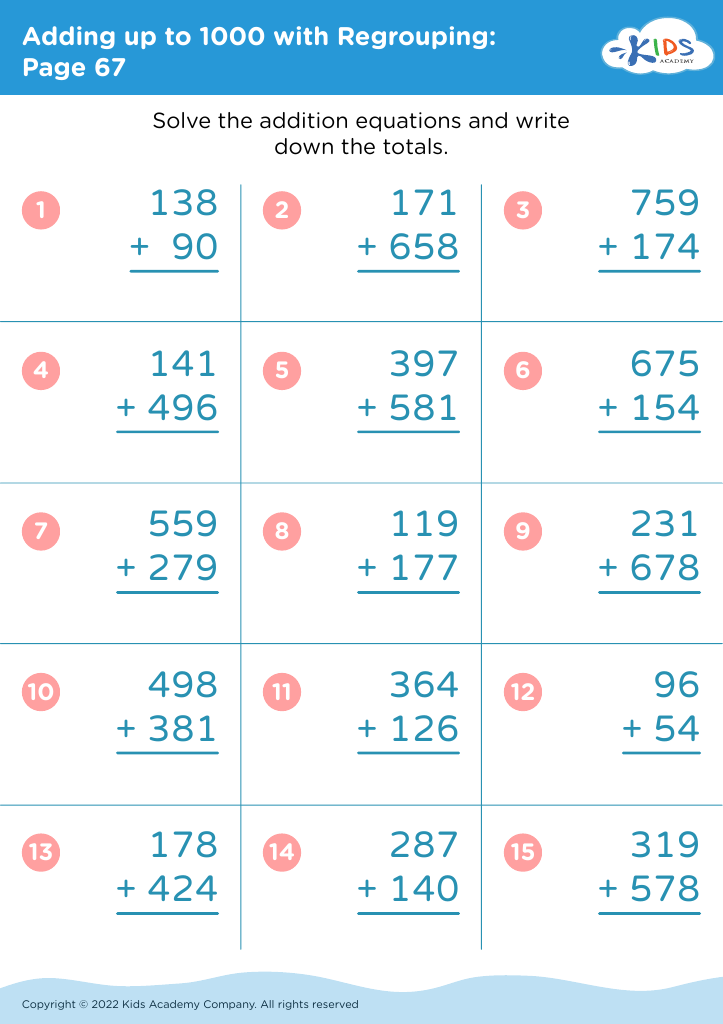
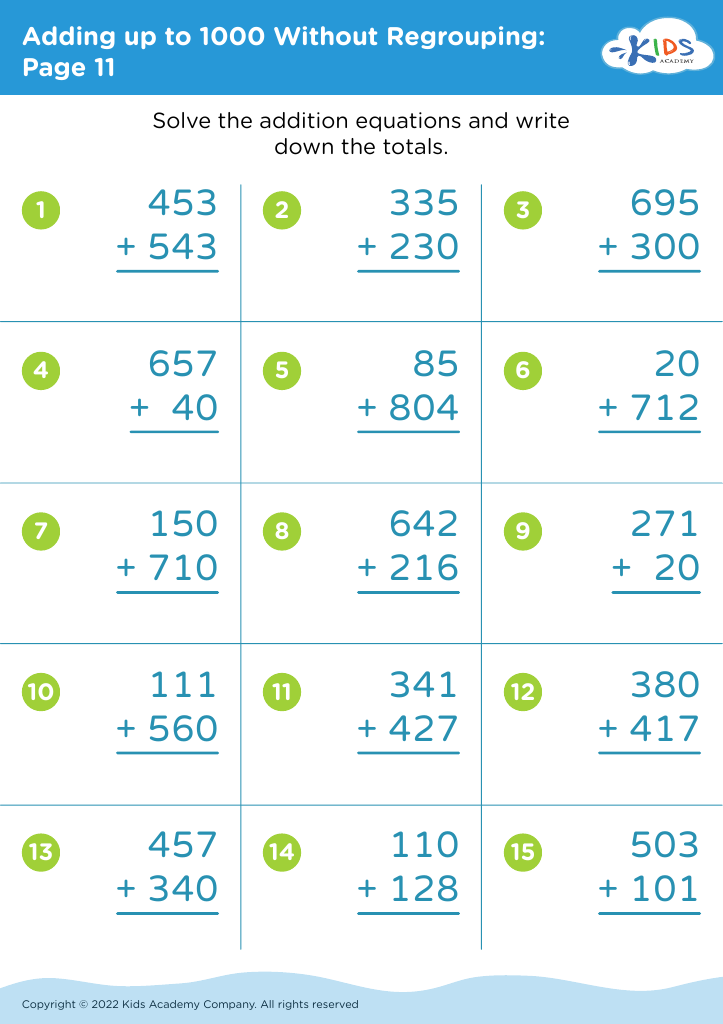



Number identification and the ability to add up to 1000 for children aged 7-8 are critical skills to develop for several reasons. First, these competencies are foundational for their later success in mathematics. Understanding and recognizing numbers up to 1000 helps children in grasping the concept of place value, which is essential for more complex arithmetic operations like subtraction, multiplication, and division.
Secondly, proficiency in adding numbers up to 1000 builds a child's confidence and promotes a positive attitude towards math. Early success with these basic skills can lead to a lifelong interest in the subject, setting a strong foundation for future learning.
Moreover, practical applications of these skills extend beyond the classroom. Number identification and addition are necessary for everyday tasks such as handling money, measuring objects, and managing time. These activities will be more intuitive if the foundational skills are firmly in place.
Lastly, this stage in mathematical learning aligns well with cognitive developmental milestones for ages 7-8. Actively engaging in number exercises stimulates cognitive development, including memory, logical reasoning, and problem-solving skills. These benefits underscore the importance of incorporating number identification and addition exercises into the learning routines of children within this age range.








