Practice writing numbers Adding up to 1000 Worksheets for Ages 7-8
3 filtered results
-
From - To
Support your child’s math journey with our "Practice Writing Numbers Adding up to 1000 Worksheets" designed for ages 7-8. These worksheets provide engaging exercises that help children practice writing numbers while mastering addition up to 1000. Packed with fun and interactive tasks, they strengthen math skills and number formation simultaneously. With varied problems for continuous learning and reinforcement, our printable worksheets are perfect for both classroom and at-home learning. Nurture your child's confidence in math and watch their skills flourish with the expertly crafted resources from Kids Academy. Download today and make math practice enjoyable!
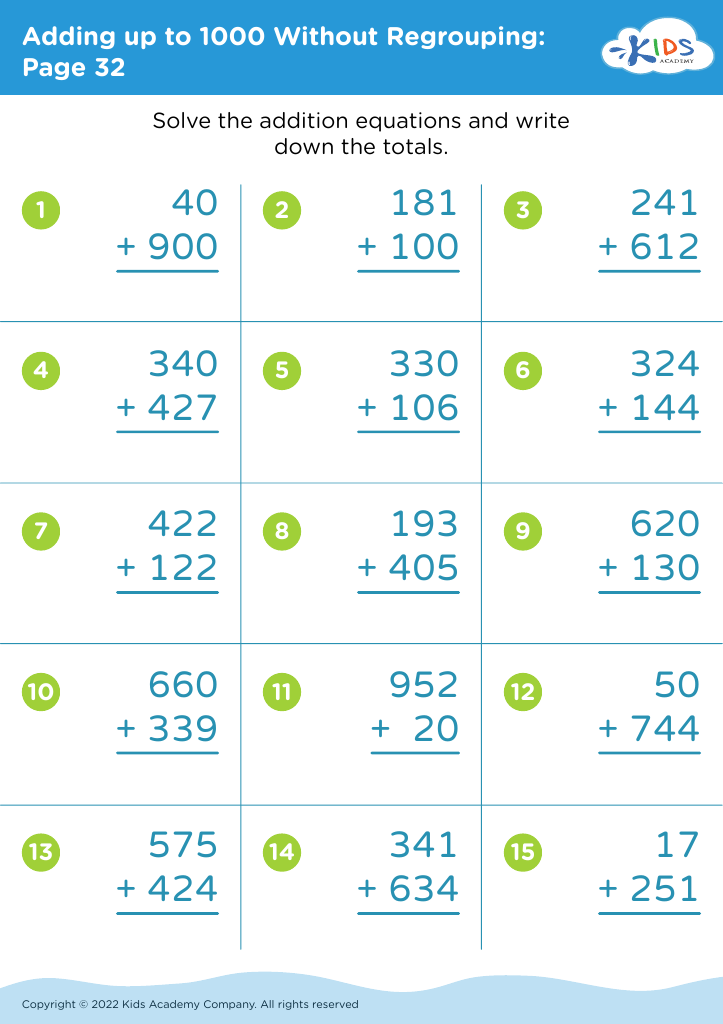
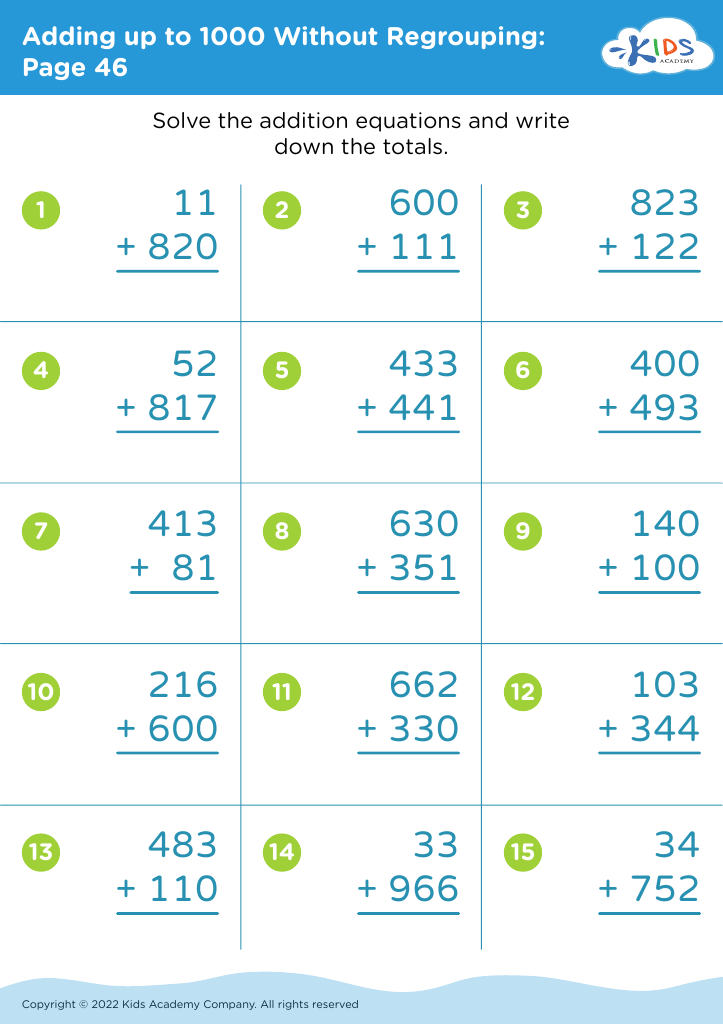
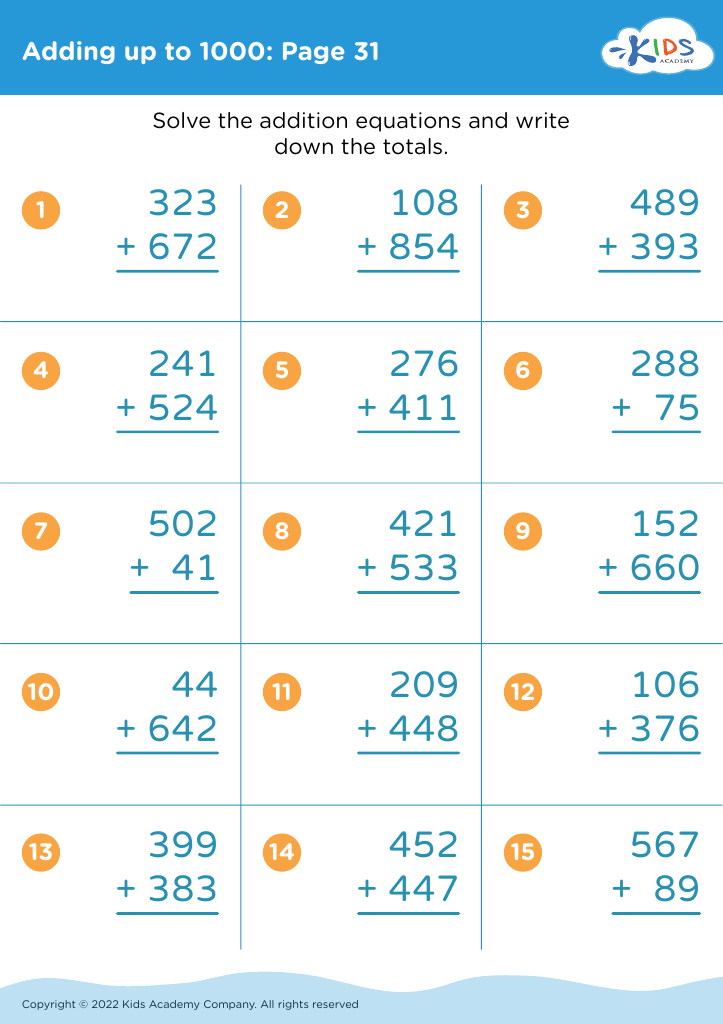



Parents and teachers should prioritize practice in writing numbers and adding up to 1000 for children aged 7-8 because it lays a crucial foundation for their mathematical understanding. At this age, kids are transitioning from basic arithmetic to more complex mathematical concepts. Mastering these skills enhances their numeracy, essential for everyday activities such as telling time, handling money, and organizing information.
Writing numbers reinforces number recognition and improves fine motor skills essential for writing. As children repeatedly practice writing, they commit numbers to memory, aiding in developing number sense, which is the ability to understand, relate, and connect numbers. Effective number sense is a predictor of future mathematical success and positive attitudes towards math.
Adding numbers up to 1000 builds upon their basic addition skills, encouraging fluency and confidence. This practice introduces concept learning of carrying over in addition, a transferrable skill useful in more advanced arithmetic. Moreover, solving practical problems involving triple-digit numbers can develop logical thinking, problem-solving abilities, and cognitive flexibility.
Providing ample practice opportunities ensures children grasp these concepts thoroughly and comfortably, paving their way for a smoother progression to higher-level math in later years. A strong mathematical foundation correlates with better academic performance overall, making it valuable to a child’s educational journey.








