Shape identification Adding up to 1000 Worksheets for Ages 7-8
6 filtered results
-
From - To
Boost your child's mathematical skills and shape knowledge with our Shape Identification Adding up to 1000 worksheets, specially designed for ages 7-8. These engaging, printable worksheets seamlessly combine fundamental arithmetic practice with fun shape identification tasks, helping kids reinforce their addition skills while recognizing a variety of shapes. By integrating visual learning with math problems, these exercises cater to different learning styles, ensuring a comprehensive and enjoyable educational experience. Perfect for both classroom and home use, these worksheets lay a solid foundation for future math success while keeping young learners engaged and motivated. Enhance learning with Kids Academy’s trusted resources today!
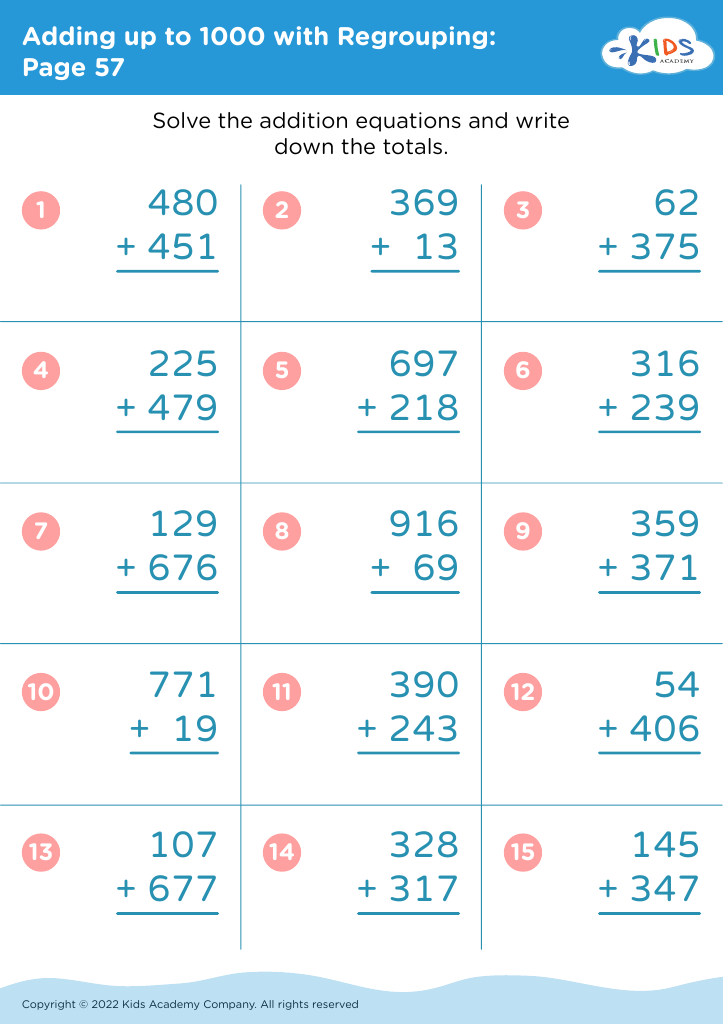
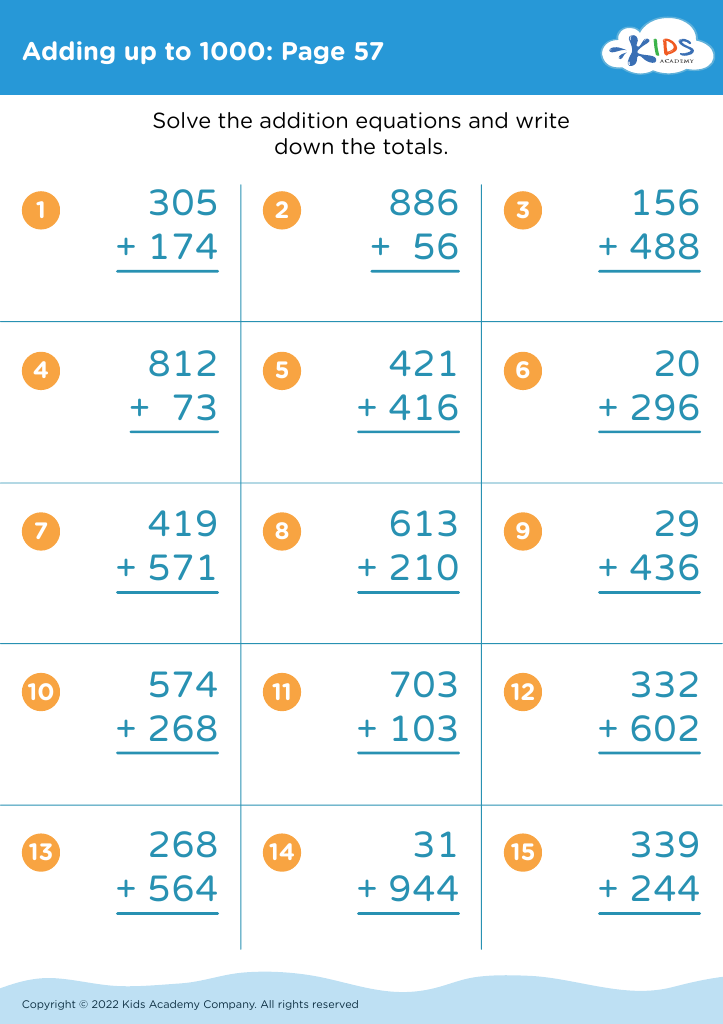
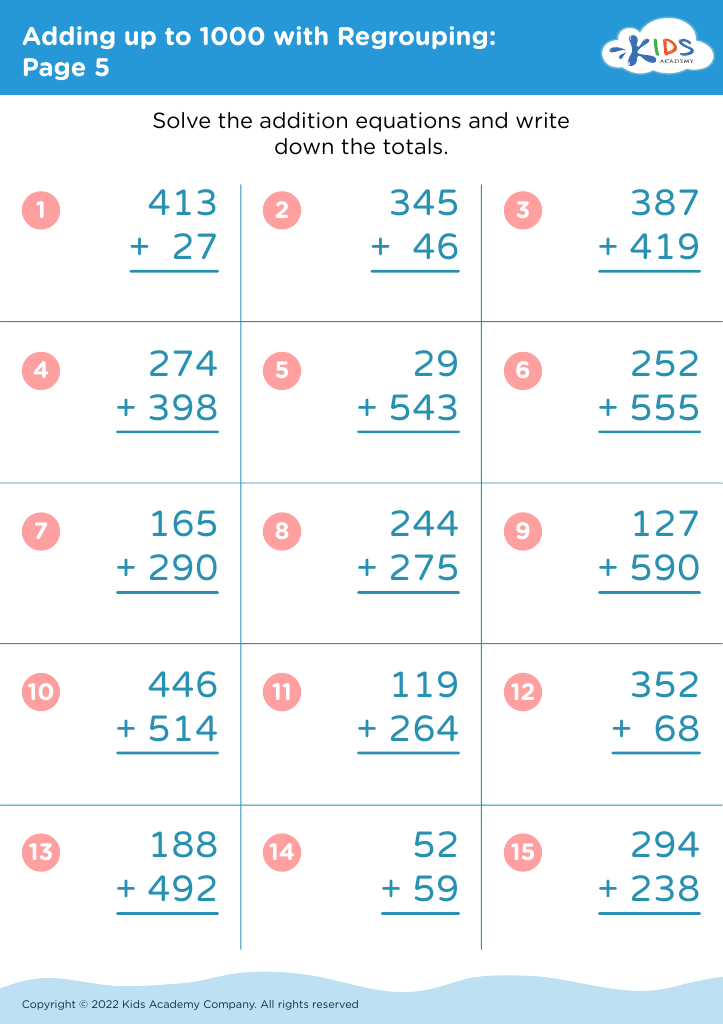
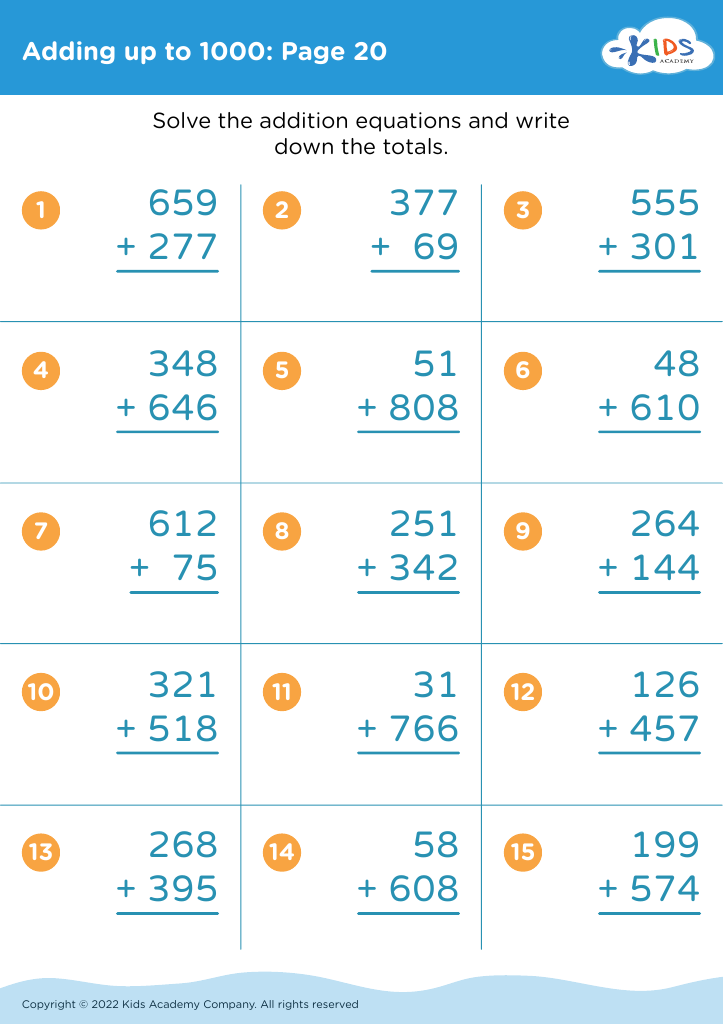
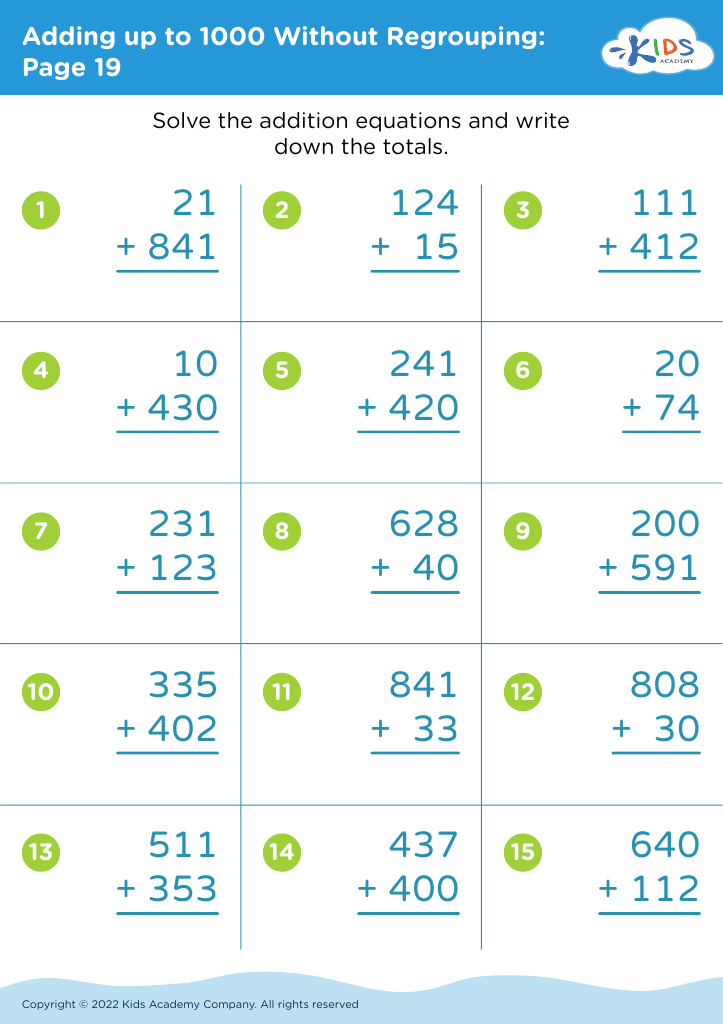
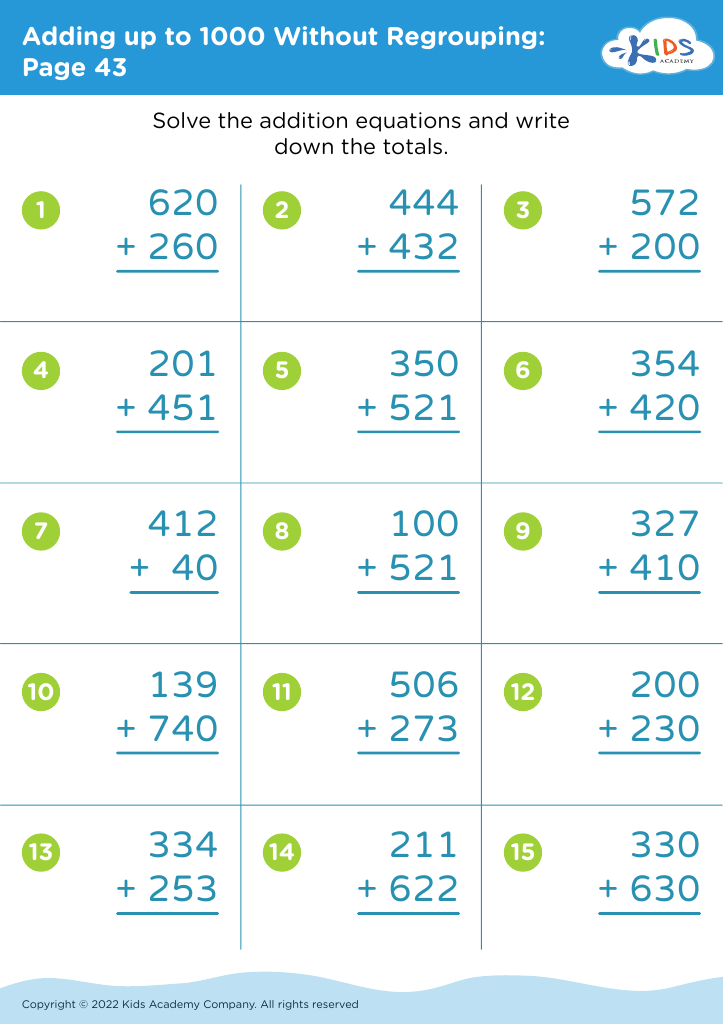



Shape identification and learning to add up to 1,000 are foundational skills that play crucial roles in a child's early education, specifically for ages 7-8.
Firstly, shape identification is fundamental for developing spatial awareness and geometry skills. Recognizing and naming shapes helps children understand environmental cues and patterns, fostering their ability to build more complex structures in both physical and abstract contexts. This skill translates not only into better math comprehension but also into real-world problem solving, where recognizing patterns and spatial reasoning are critical.
Adding up to 1,000 solidifies a child's understanding of our number system and enhances computational fluency. This mathematical competence allows kids to tackle more complex arithmetic and algebraic thinking in later grades. Addition strategies at this stage promote critical thinking, attention to detail, and accuracy—skills that are transferable to all subjects. Mastery in adding large numbers also builds confidence, giving children a stronger mathematical foundation and positive attitude towards learning.
By focusing on these skills, parents and teachers equip children with essential tools for academic success, comprehensive critical thinking, and effective problem solving—contributing significantly to their overall cognitive development and readiness for future academic challenges.








