Subtraction skills Adding up to 1000 Worksheets for Ages 7-8
4 filtered results
-
From - To
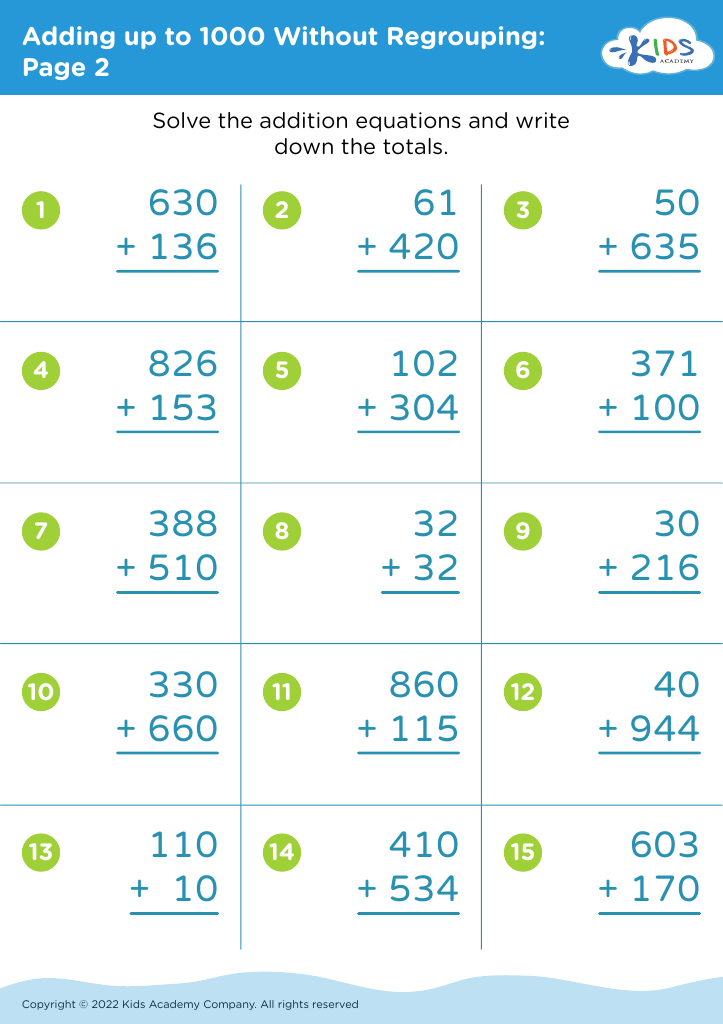
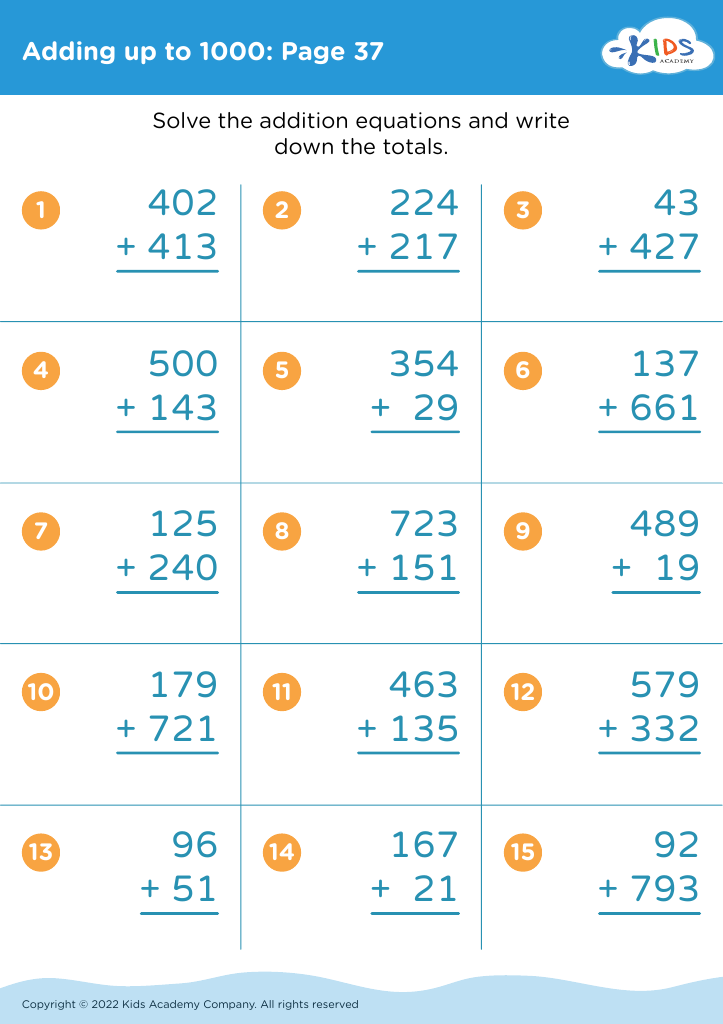
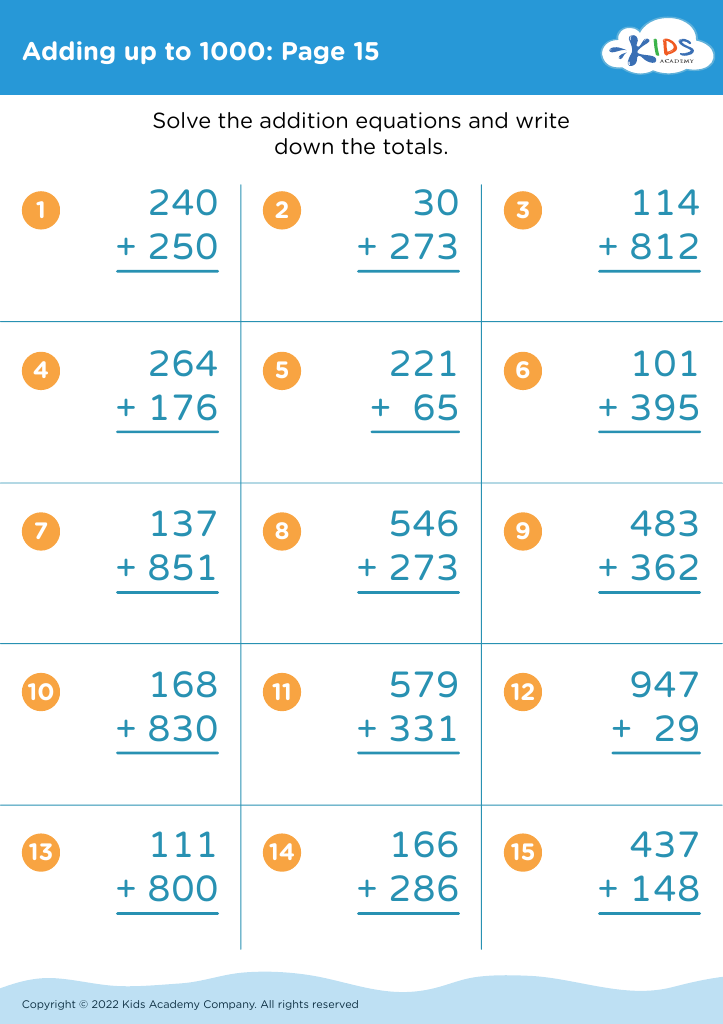
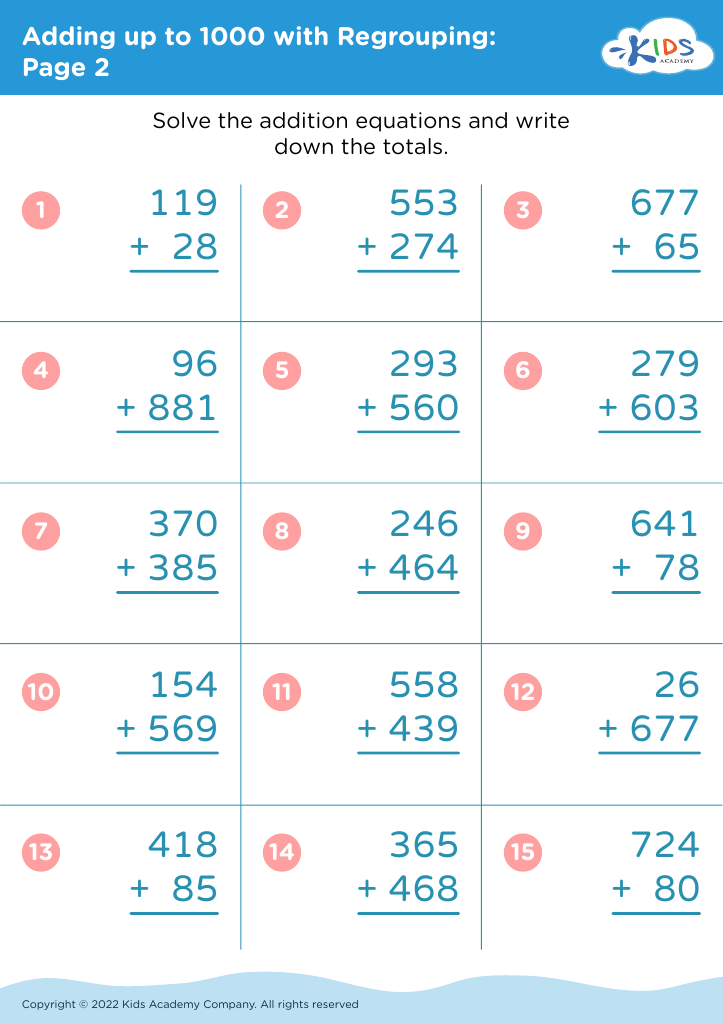
Boost your child's math abilities with our engaging Subtraction Skills Worksheets designed specifically for ages 7-8. These worksheets offer a comprehensive approach, helping young learners understand the concepts of subtraction through fun, interactive exercises. Children will practice subtracting numbers up to 1000, building a solid foundation for their mathematical skills. With colorful visuals and age-appropriate problems, students will stay motivated while enhancing their problem-solving abilities. These resources not only help improve arithmetic skills but also foster critical thinking. Perfect for classroom use or extra practice at home, our subtraction worksheets will make learning subtraction enjoyable and effective!



Parents and teachers should prioritize subtraction skills that can add up to 1000 for children aged 7-8 for several vital reasons. First, proficient subtraction skills form a fundamental aspect of a child’s overall mathematical understanding. At this age, children transition from simple arithmetic to more complex mathematical concepts, like borrowing and regrouping, which serve as the foundation for procedures involving larger numbers.
Second, mastery of subtraction enhances problem-solving abilities. As children learn to subtract larger numbers, they not only gain confidence in navigating math but also develop critical thinking skills. This ability to dissect challenges is essential not only in math but also in everyday decision-making.
Additionally, strong subtraction skills are vital for real-life applications, such as managing money, calculating scores in games, or handling measurement in practical tasks. These skills foster a sense of independence and responsibility.
Lastly, building strong subtraction skills helps to prevent future learning difficulties in mathematics. When children struggle with foundational skills, it can lead to a lack of confidence and disinterest in math as they progress in their education. Therefore, nurturing these abilities at this stage is integral to fostering a lifelong interest and competence in mathematics.








