Understanding division Adding up to 1000 Worksheets for Ages 7-8
3 filtered results
-
From - To
Welcome to our "Understanding Division Adding Up to 1000 Worksheets" designed specifically for ages 7-8! These engaging and interactive worksheets are perfect for helping young learners grasp the concept of division while practicing their addition skills up to 1000. Each worksheet features a variety of problems that encourage critical thinking and reinforce mathematical concepts. Kids will build confidence in their division abilities through fun exercises that make learning enjoyable. Ideal for classroom use or at-home practice, our resources support a strong foundational understanding of math. Explore our collection to enhance your child's learning experience today!
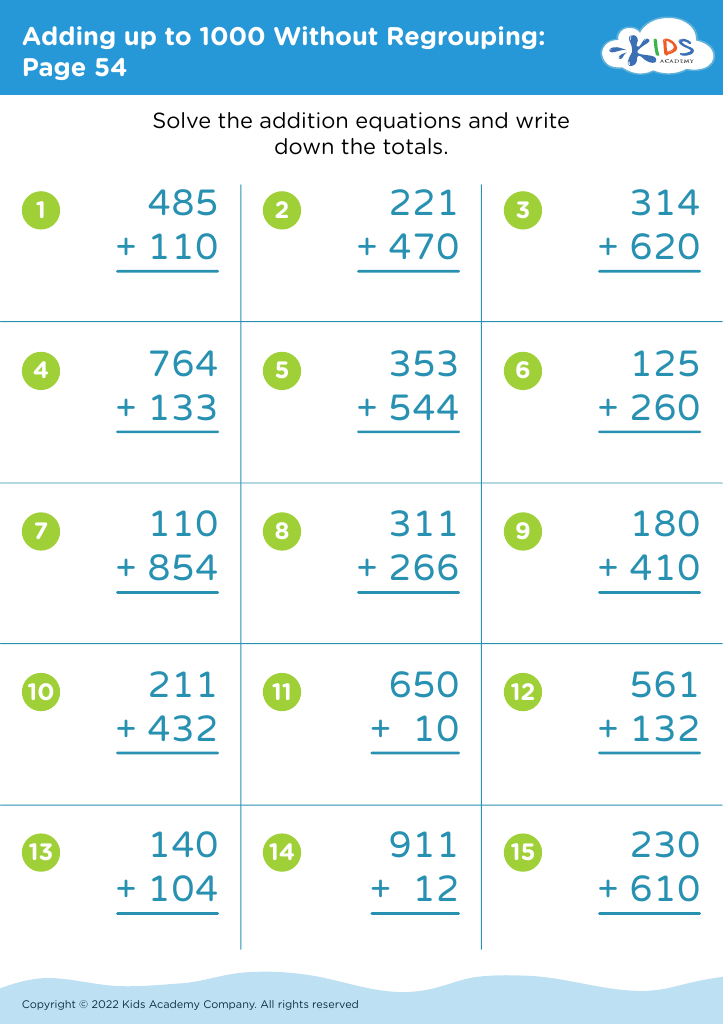
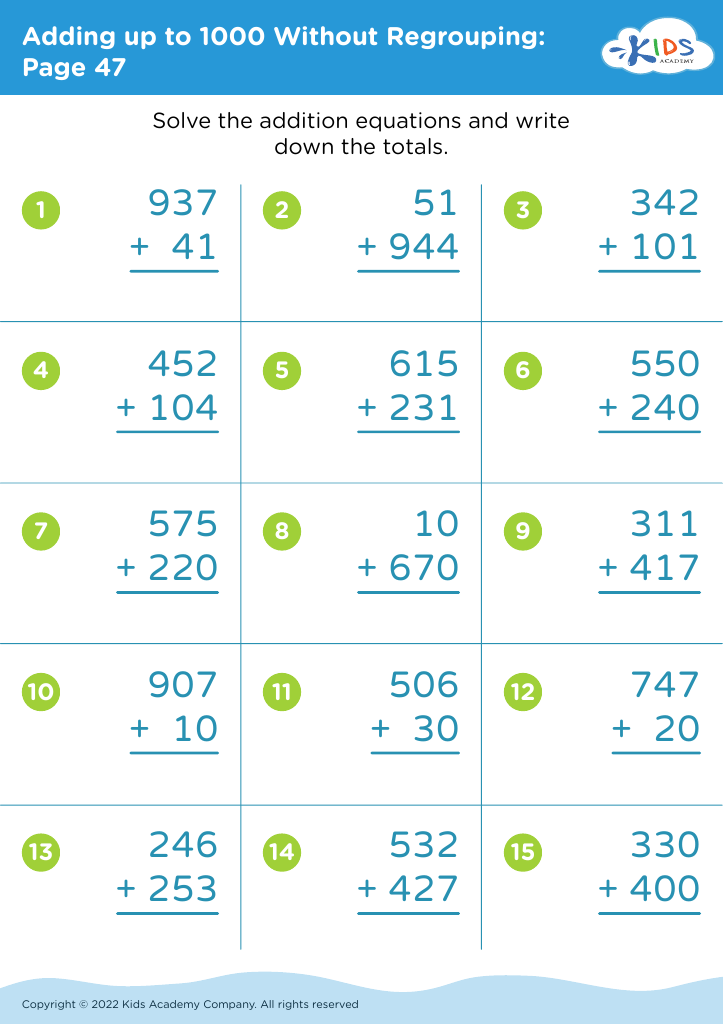
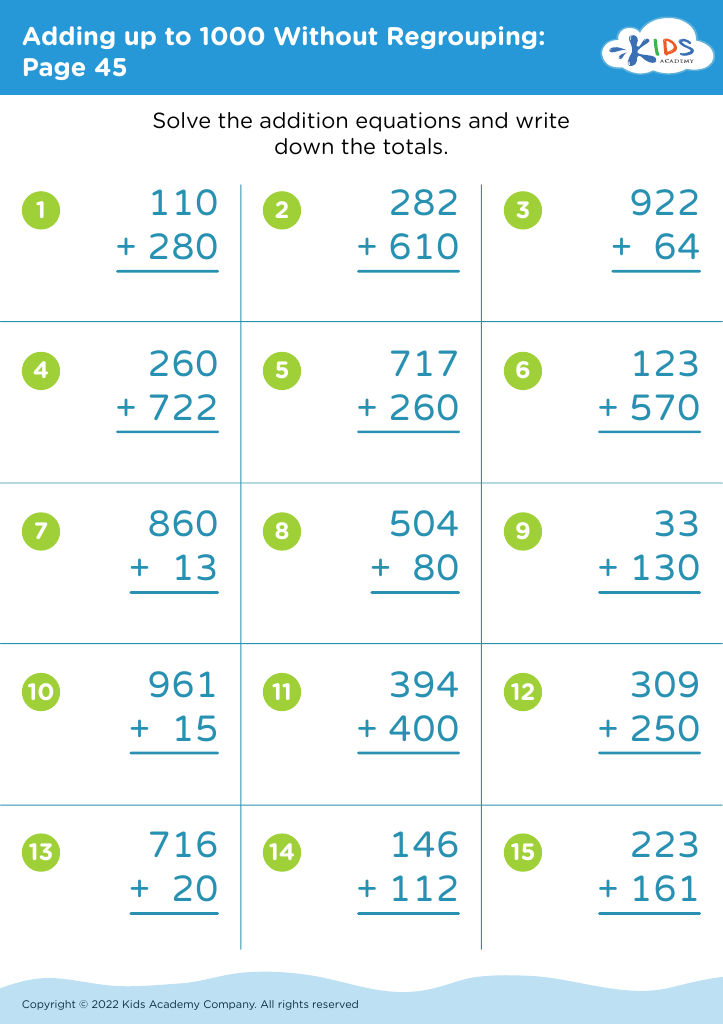



Understanding division, particularly concepts like adding up to 1000, is crucial for children ages 7-8 as it lays the foundation for their mathematical journey. At this age, children are beginning to grasp more complex mathematical ideas, and division helps them comprehend how numbers relate to one another. By learning to divide, children develop critical reasoning and problem-solving skills, promoting logical thinking that extends beyond mathematics.
For parents and teachers, fostering a solid understanding of division empowers children to tackle everyday challenges, whether it's dividing pizza slices among friends or budgeting their allowance. Mastering concepts that involve adding up to 1000 helps children perceive larger numbers and perform calculations with ease, enhancing their confidence and number sense.
Furthermore, as they progress through grades, a firm grasp of division simplifies advanced topics such as fractions, ratios, and decimals. By ensuring children develop a strong conceptual understanding, parents and teachers not only support current academic success but also instill skills that will be necessary in their future education and daily life.
Ultimately, supporting children in mastering division not only enriches their math skills but also fosters a positive attitude toward learning, paving the way for a lifelong appreciation of mathematics.








