Understanding Sequences Adding up to 1000 Worksheets for Ages 7-8
6 filtered results
-
From - To
Discover engaging and effective "Understanding Sequences Adding up to 1000 Worksheets" designed specifically for children aged 7-8. These worksheets guide young learners in mastering the concept of number sequences while enhancing their addition skills. Through vibrant illustrations and interactive exercises, students will explore patterns, build fluency in numbers, and develop critical thinking abilities. Each worksheet reinforces core math competencies, fostering confidence as they learn to navigate and manipulate sequences that total up to 1000. Perfect for classroom or home learning, these resources promote a solid foundation in mathematics tailored to the developmental stage of young learners. Unleash your child's potential in mathematics today!
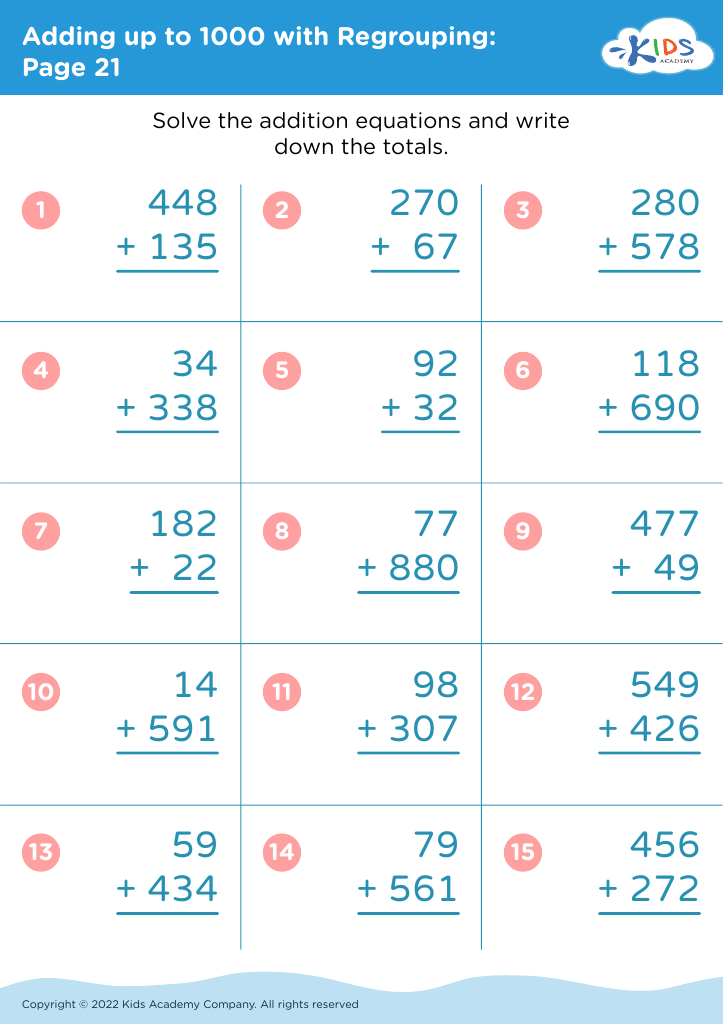
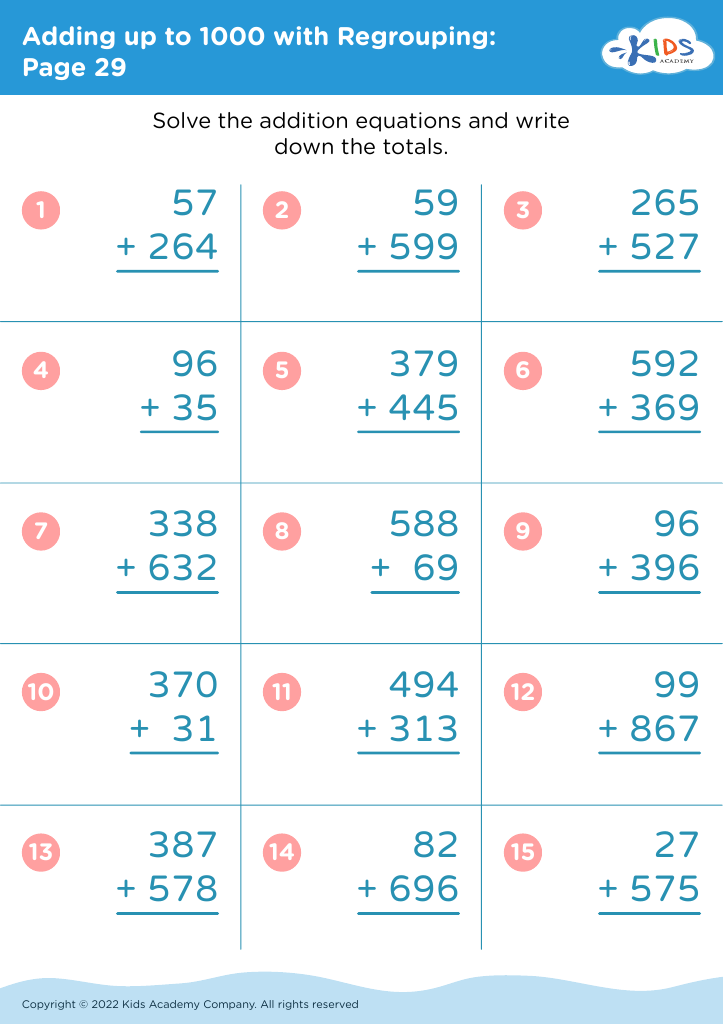
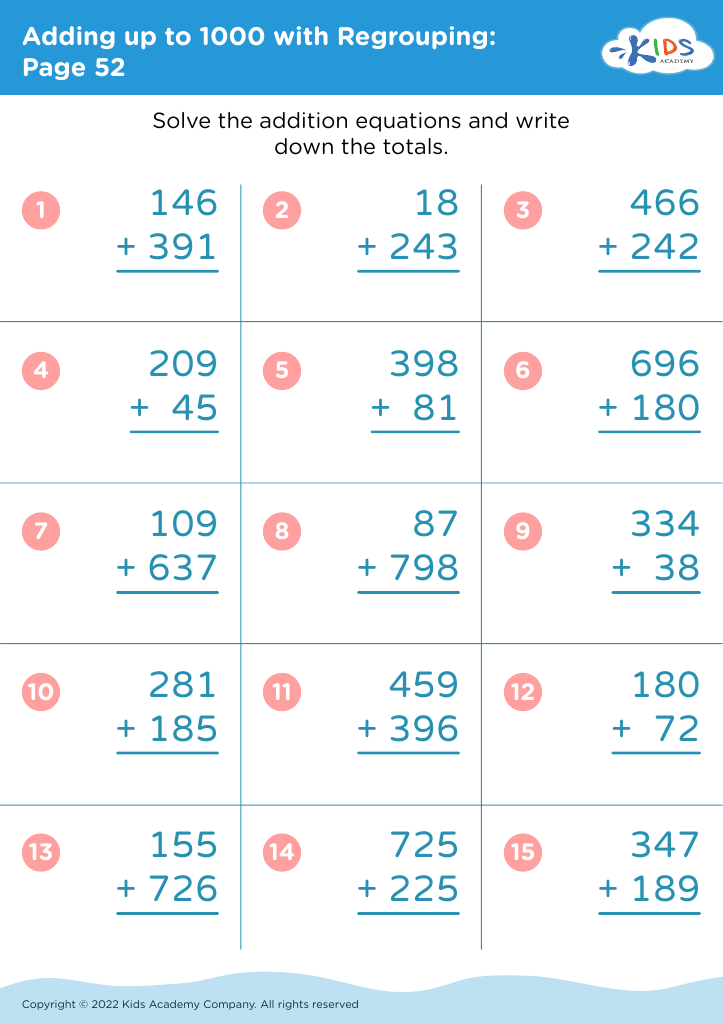
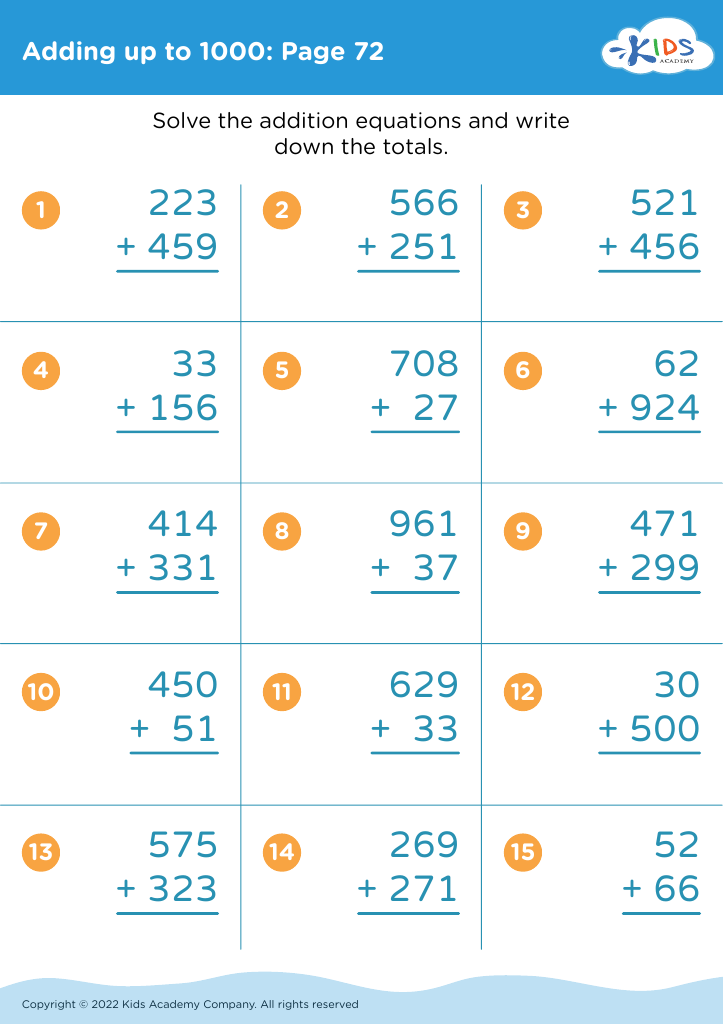
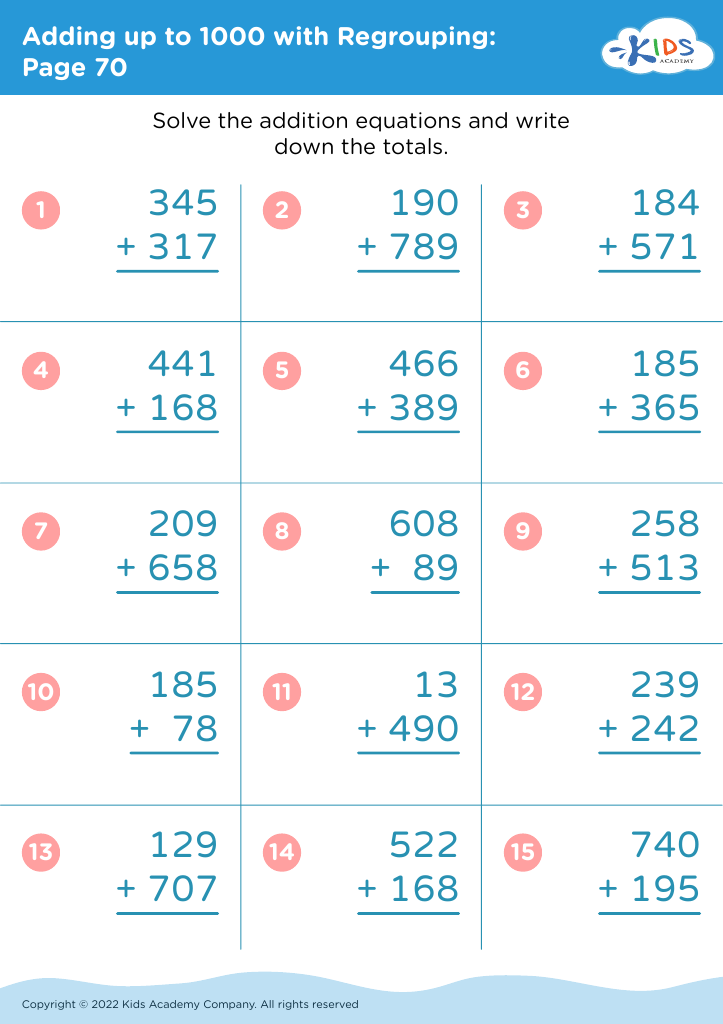
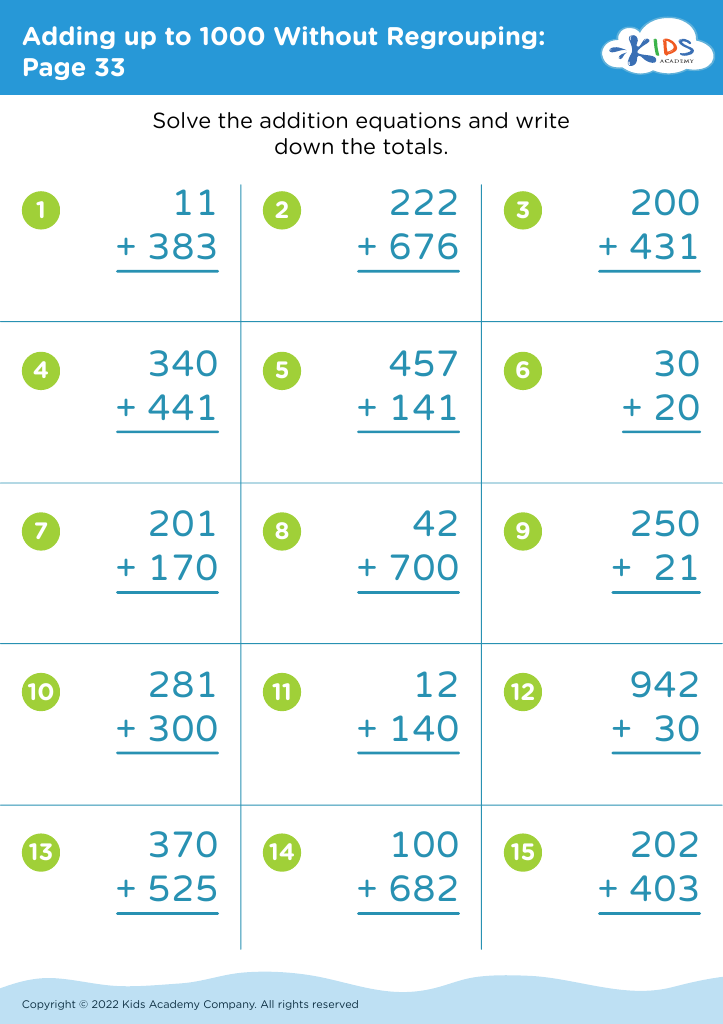



Understanding sequences, particularly sequences that add up to 1000, is crucial for children aged 7-8 as it lays the foundation for mathematical reasoning and problem-solving skills. At this developmental stage, children are beginning to grasp basic arithmetic and numeracy concepts, which form the building blocks of more complex math topics. Sequences help children recognize patterns and relationships between numbers, enhancing their ability to predict and determine subsequent values.
By mastering sequences, children can improve their mental math skills, allowing them to perform calculations faster and more efficiently. This is especially important as they progress in their education, where they will encounter more advanced mathematical concepts that build upon these foundational skills. Moreover, understanding sequences promotes critical thinking, as children learn to identify trends and make connections between numbers in real-world scenarios.
Parents and teachers should prioritize this skill to ensure children gain confidence in their mathematical abilities. Additionally, the competence in sequences encourages a love for math, transforming what can often be viewed as a challenging subject into an engaging and enjoyable experience. By supporting children in developing these skills early on, parents and teachers set the stage for long-term academic success and a positive attitude towards learning.








