Understanding symmetry Adding up to 1000 Worksheets for Ages 7-8
4 filtered results
-
From - To
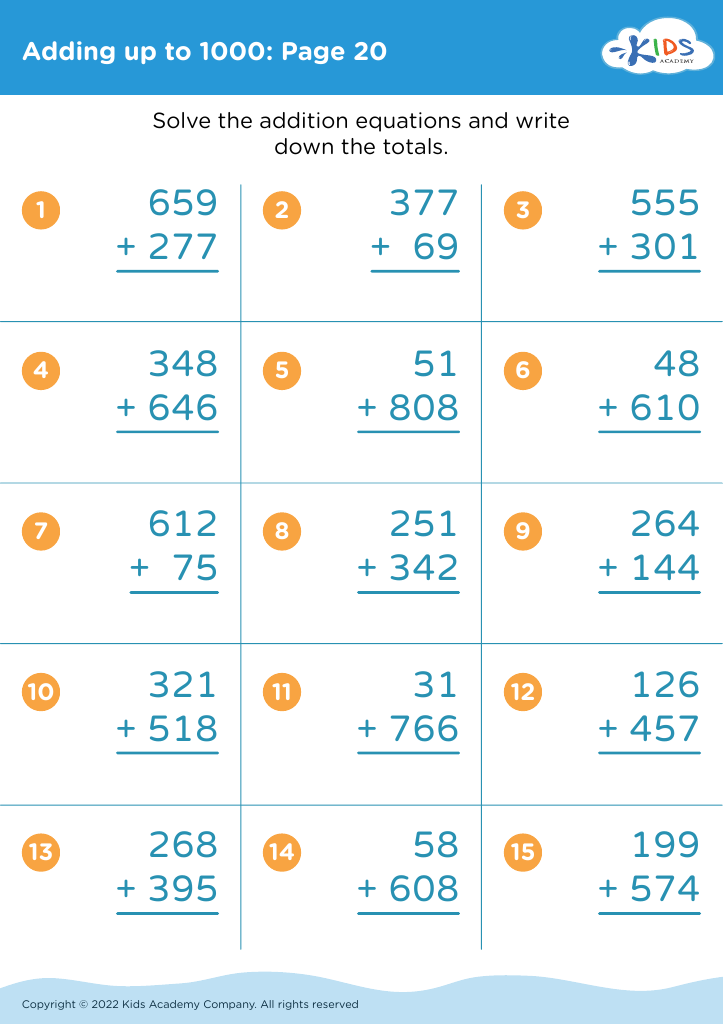
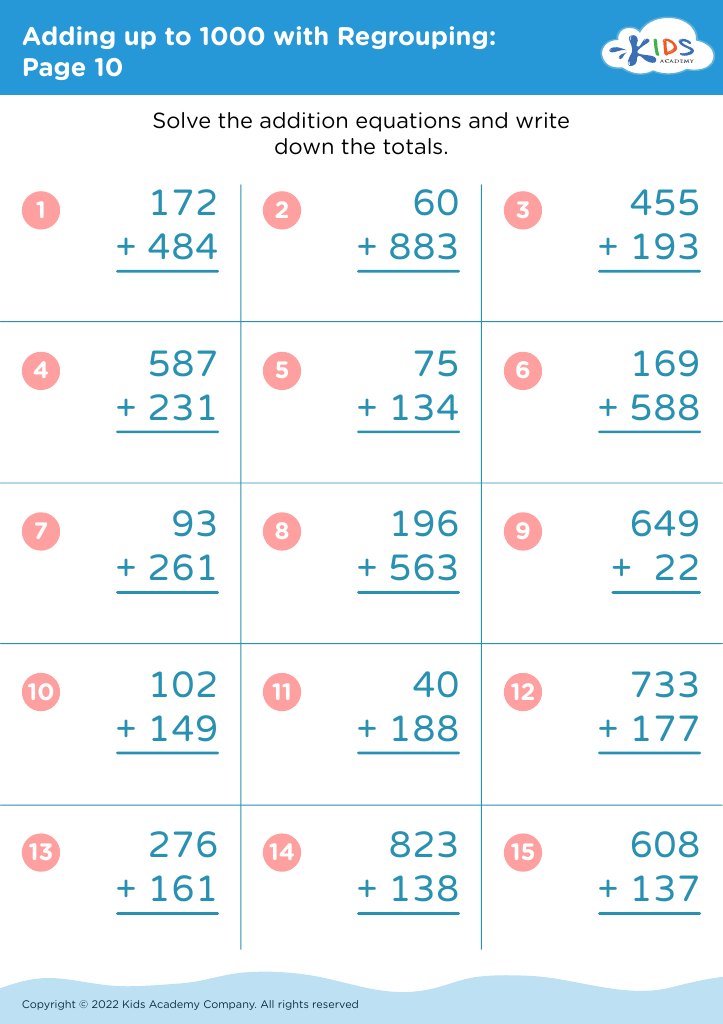
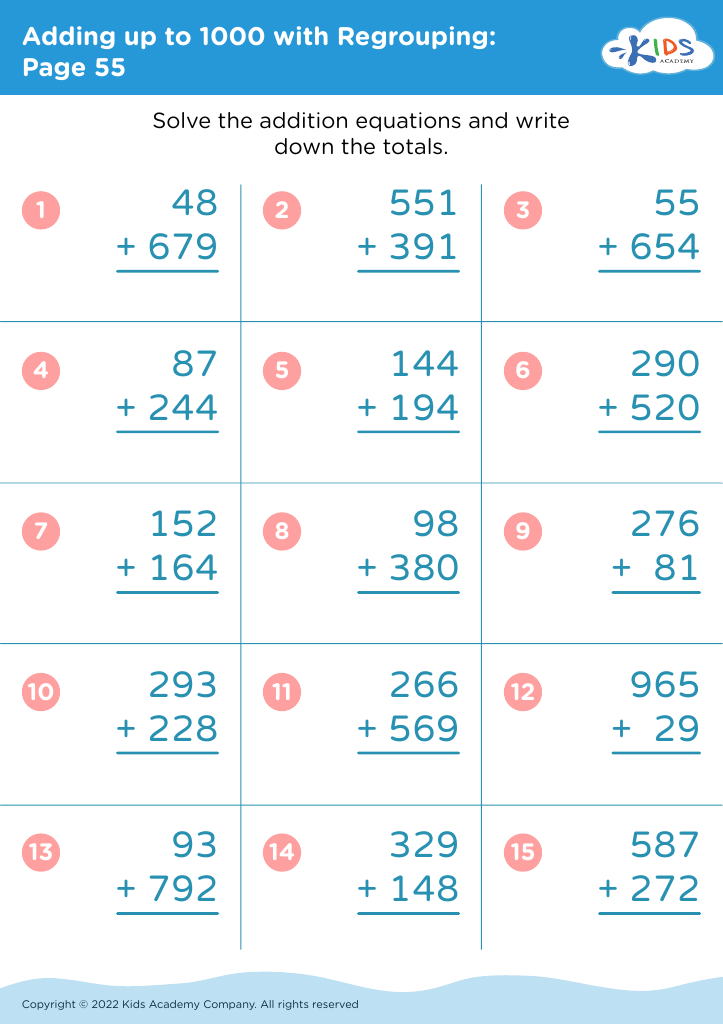
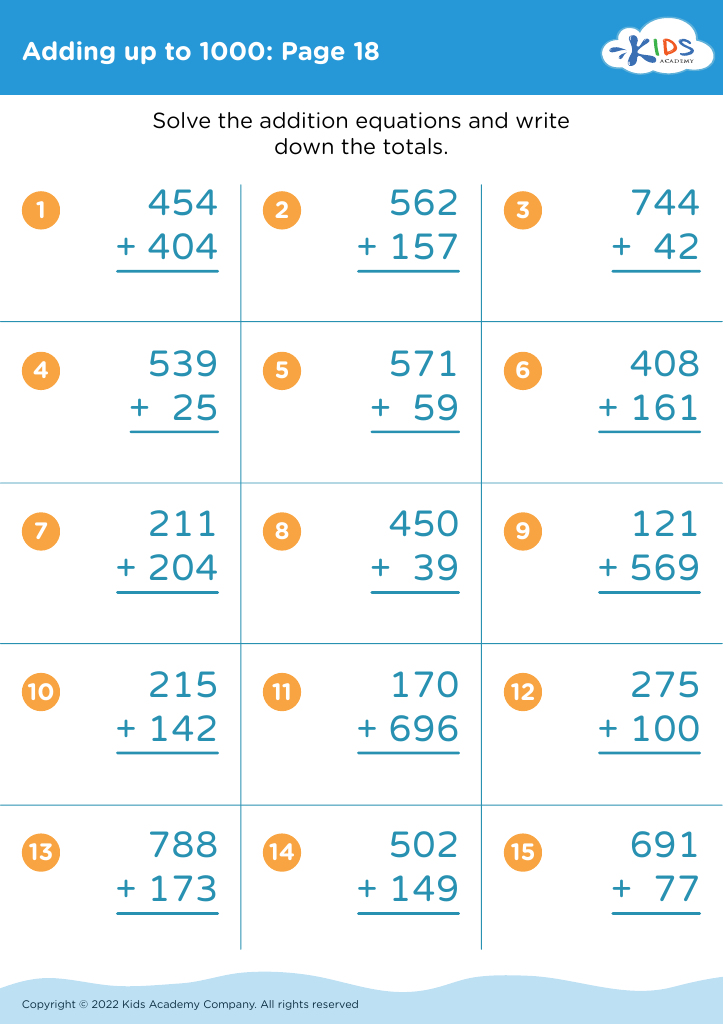
Our "Understanding Symmetry Adding Up to 1000 Worksheets for Ages 7-8" are designed to make learning math both fun and educational. Tailored specifically for 7 to 8-year-old students, these printable worksheets combine the concepts of symmetry with addition skills, providing a well-rounded approach to math practice. With engaging activities, children will learn to identify and draw symmetrical shapes while also mastering the addition of numbers up to 1000. Ideal for classroom use or at-home learning, these worksheets boost problem-solving skills, enhance logical thinking, and build a strong math foundation. Download now to help your child excel in math!



Understanding symmetry and adding up to 1000 are essential mathematical concepts for children aged 7-8, and parents and teachers should prioritize their mastery for several reasons.
First, symmetry lays the foundation for spatial awareness and geometry. It teaches children to recognize patterns, shapes, and the balance in objects and designs. Symmetry experiences enhance visual development and foster an early appreciation for mathematics in nature and art structures, simplifying future complex subject matter.
Second, adding up to 1000 extends basic arithmetic knowledge to larger numbers, crucial for developing strong number sense and calculation skills. Mastering addition within this range builds confidence and supports the learning of more advanced operations such as subtraction, multiplication, and division. It nurtures logical thinking and problem-solving abilities, vital for higher academic performance.
Furthermore, these skills integrate seamlessly into daily life applications, such as dividing objects equally (symmetry) or managing time and money (arithmetics). This relevance to everyday activities aids in motivating young learners to apply math concepts practically and effectively, igniting curiosity and love for learning.
In sum, symmetry and arithmetic fluency up to 1000 provide key cognitive developmental advantages, laying a solid mathematics foundation to support all subsequent learning levels for young minds.








