Visual interpretation Adding up to 1000 Worksheets for Ages 7-8
3 filtered results
-
From - To
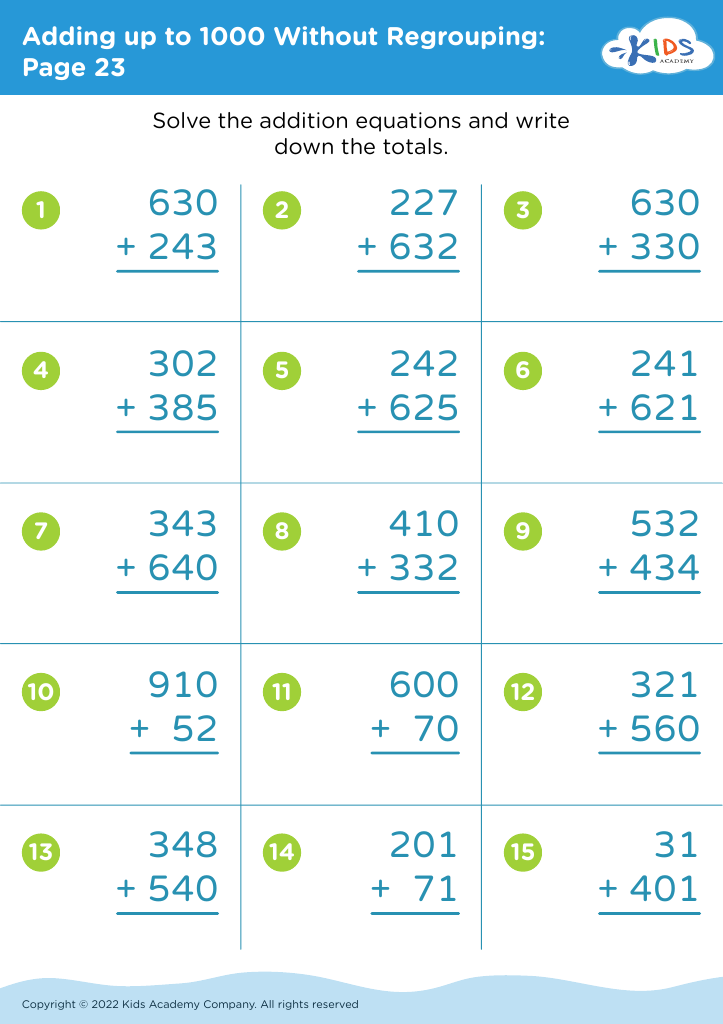
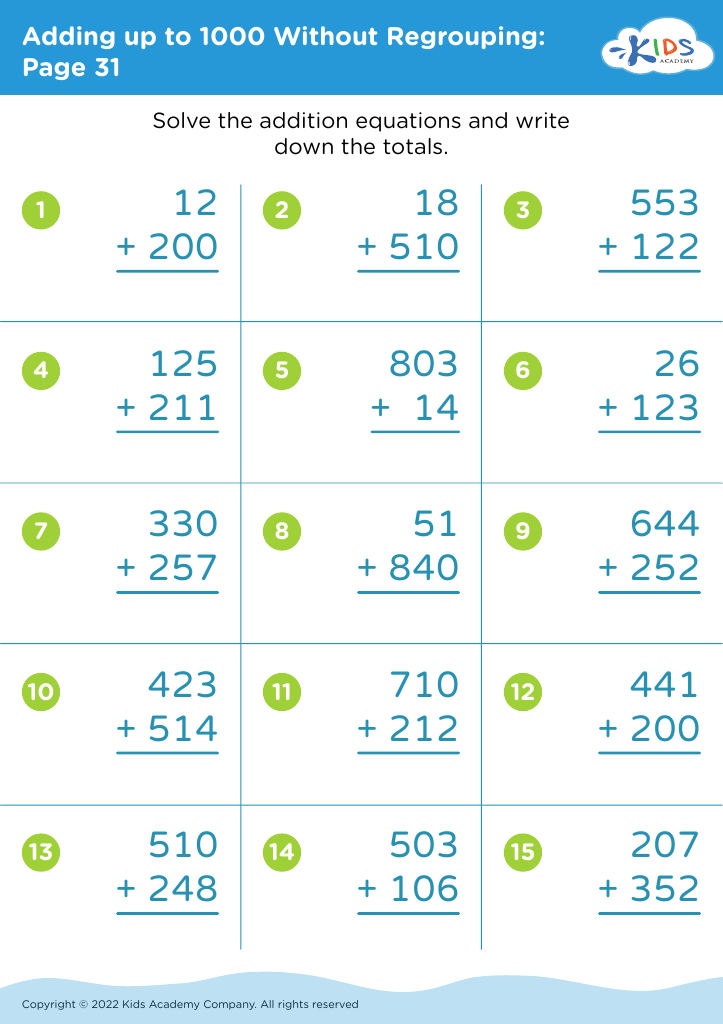
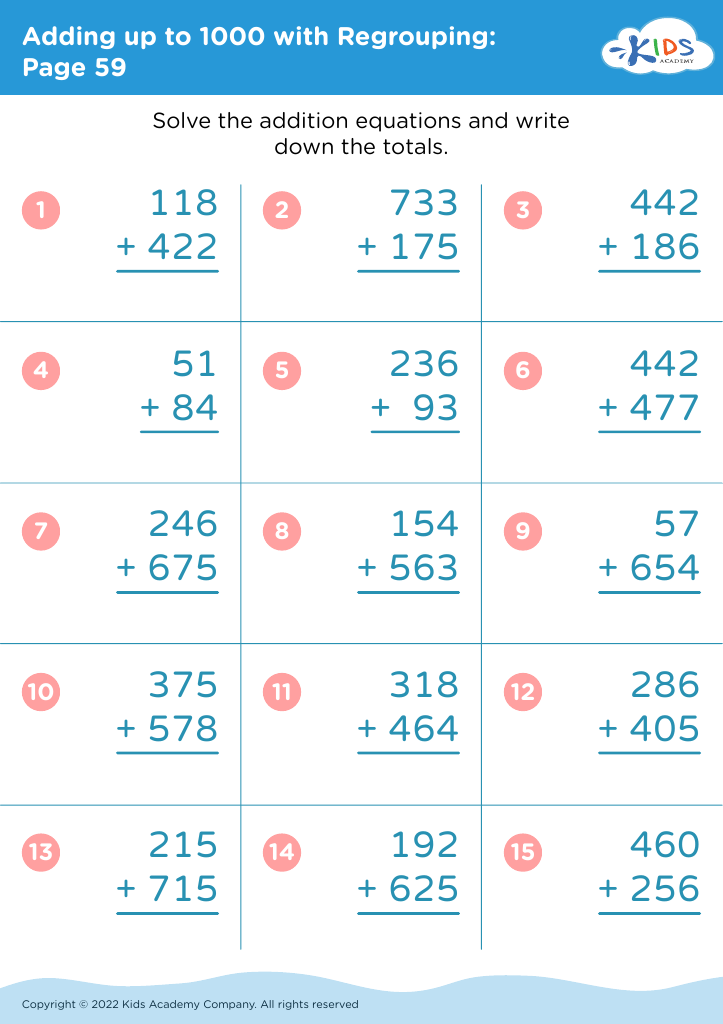
Discover our engaging "Visual Interpretation: Adding Up to 1000 Worksheets" designed specifically for children aged 7-8. These meticulously crafted worksheets foster essential math skills through vibrant visuals, making math both enjoyable and accessible. Students will enhance their abilities to interpret data, recognize patterns, and understand number relationships as they solve addition problems that total up to 1000. With clear, colorful illustrations and a variety of problem-solving strategies, learners will build confidence in their math skills. Perfect for classroom or at-home learning, our worksheets encourage critical thinking and lay a strong foundation for future mathematical success. Dive into a world of visual learning today!



Visual interpretation in mathematics, particularly for ages 7-8, is crucial for several reasons. Firstly, this age group is developing foundational skills in literacy and numeracy, so engaging with visual aids can enhance their understanding of complex concepts. By presenting numbers and operations visually, children can better grasp abstract ideas like addition and subtraction. This approach transforms math from a memorization task to one of meaningful exploration.
Additionally, visual interpretation promotes critical thinking and problem-solving skills. When children interpret graphs, charts, or visual word problems, they learn to analyze information, draw conclusions, and create connections, which are essential skills not only in math but in everyday life.
Furthermore, visual aids cater to diverse learning styles. Some children may struggle with traditional teaching methods but thrive with color-coded charts or visual manipulatives, allowing for a more inclusive classroom environment. This inclusion fosters confidence among students who may otherwise feel overwhelmed.
Ultimately, parents and teachers should value visual interpretation as it encourages emotional engagement and boosts motivation in young learners. By supporting these strategies, adults can help cultivate a strong mathematical foundation, making future learning experiences more accessible and enjoyable for children.








