Fraction simplification Adding up to 50 Misc Worksheets for Ages 7-8
5 filtered results
-
From - To
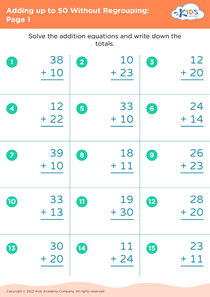
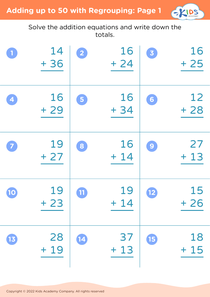
Discover our engaging "Fraction Simplification Adding Up to 50 Misc Worksheets," specially designed for children aged 7-8! These worksheets provide a fun and interactive way for young learners to grasp the concept of fraction simplification while simultaneously honing their skills in addition. With clear instructions and vibrant graphics, kids are encouraged to solve problems that involve fractions summing up to 50. Perfect for in-school practice or at-home learning, these resources support foundational math abilities in an enjoyable and effective manner. Enhance your child's confidence in math with our easily accessible and printable worksheets today! Learn, play, and excel in fractions!
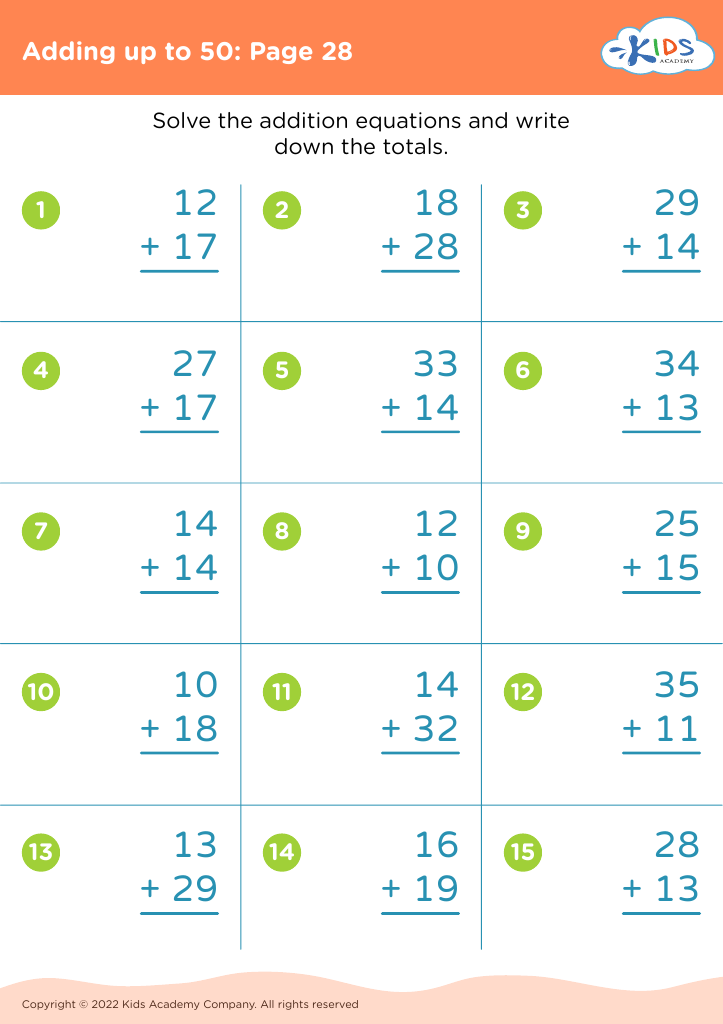
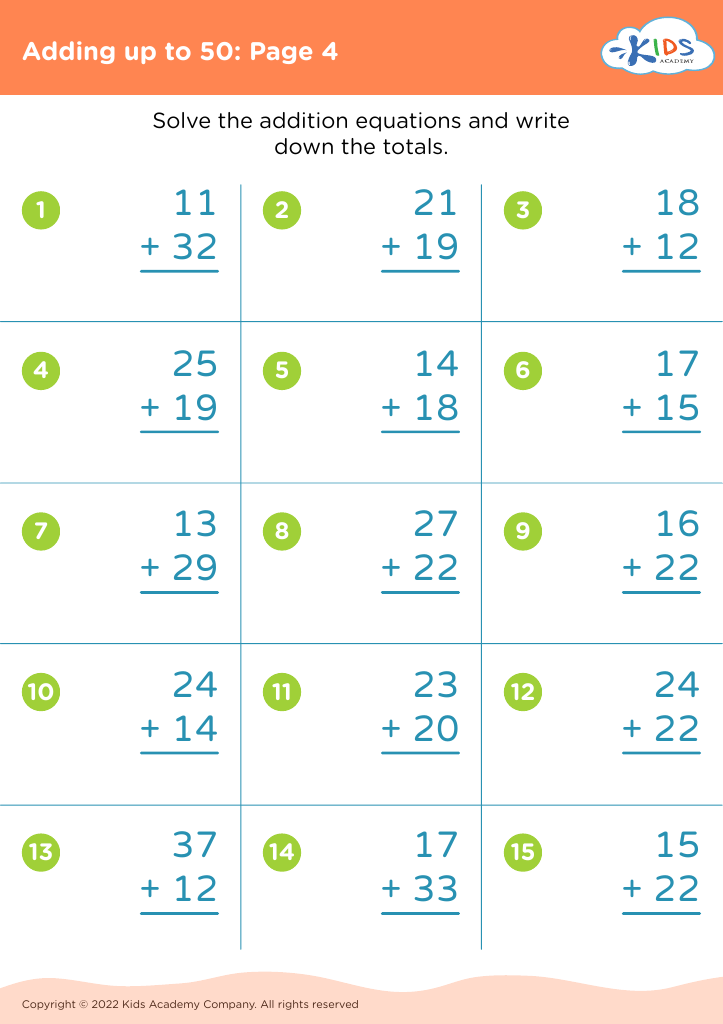
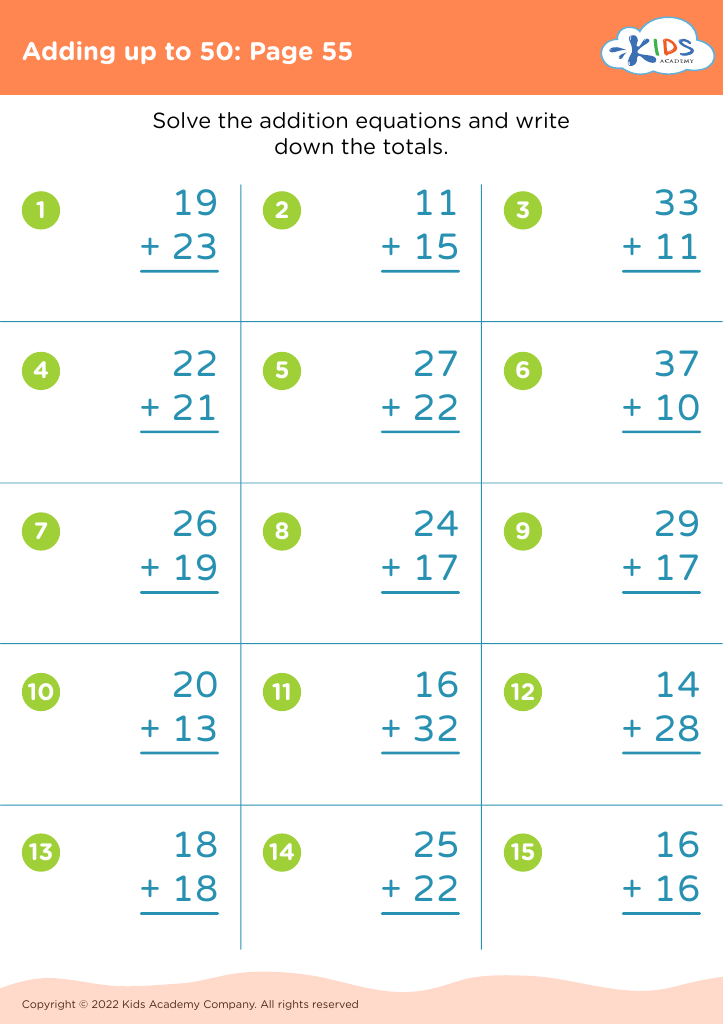
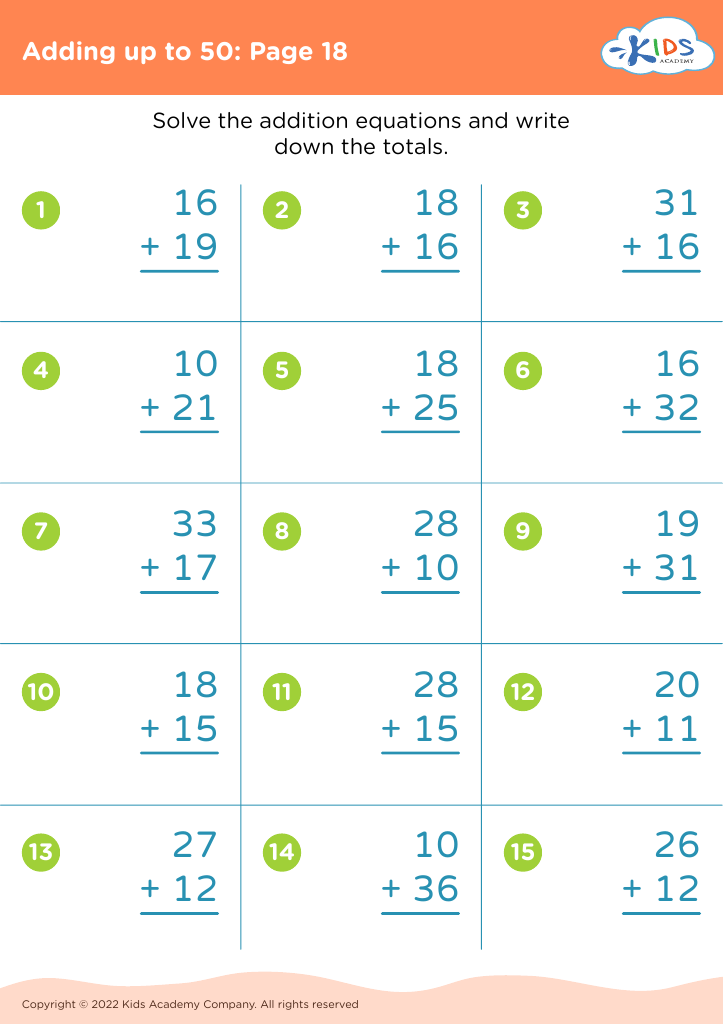
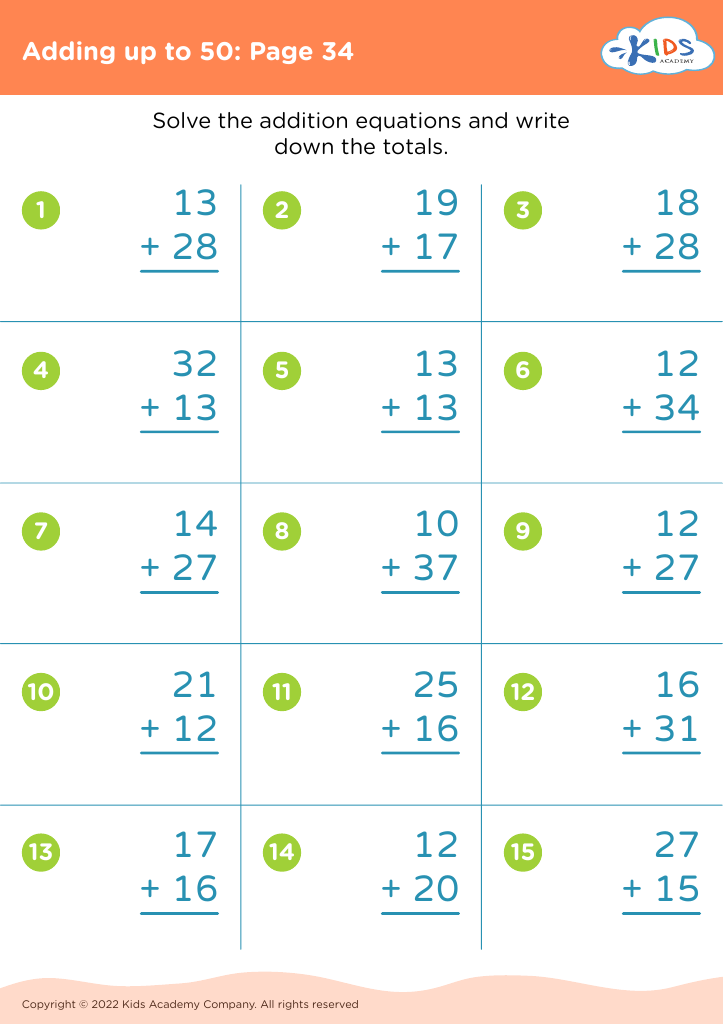


Fraction simplification and basic addition skills are fundamental for young learners aged 7-8, as they form the foundation for more complex mathematical concepts in later grades. Parents and teachers should care deeply about these skills as they promote critical thinking, problem-solving, and confidence in mathematics.
Understanding fraction simplification allows children to recognize and work with equivalent values. This skill is essential not only in math but also in real-life situations, such as cooking or managing money. By breaking down fractions into simpler forms, students learn to see patterns and relationships, reinforcing their numerical fluency.
Additionally, introducing adding up to 50 further enhances basic arithmetic skills, ensuring that children can perform calculations quickly and accurately. Mastery of these skills fosters a sense of accomplishment, encouraging a positive attitude toward math.
By focusing on these areas, parents and teachers can greatly enhance a child's mathematical competence. This targeted approach not only prepares students for future advanced concepts but also helps them apply their learning in practical, everyday scenarios. In fostering these skills, educators and parents can support a child's growth into proficient, confident, and enthusiastic learners.