Understanding adjectives Adding up to 50 Misc Worksheets for Ages 7-8
4 filtered results
-
From - To
Enhance your 7-8-year-olds' understanding of adjectives with our collection of 50 engaging worksheets designed to make learning fun! These printable resources focus on helping students identify and use adjectives effectively, enriching their vocabulary and writing skills. Each worksheet features a mix of activities, including coloring, matching, and fill-in-the-blank exercises, promoting critical thinking while reinforcing grammar fundamentals. Suitable for home or classroom use, our worksheets encourage children to express themselves clearly and creatively. Perfect for teachers and parents looking to provide extra support in language arts, this educational tool is an excellent way to nurture young learners’ loves for words and descriptions!
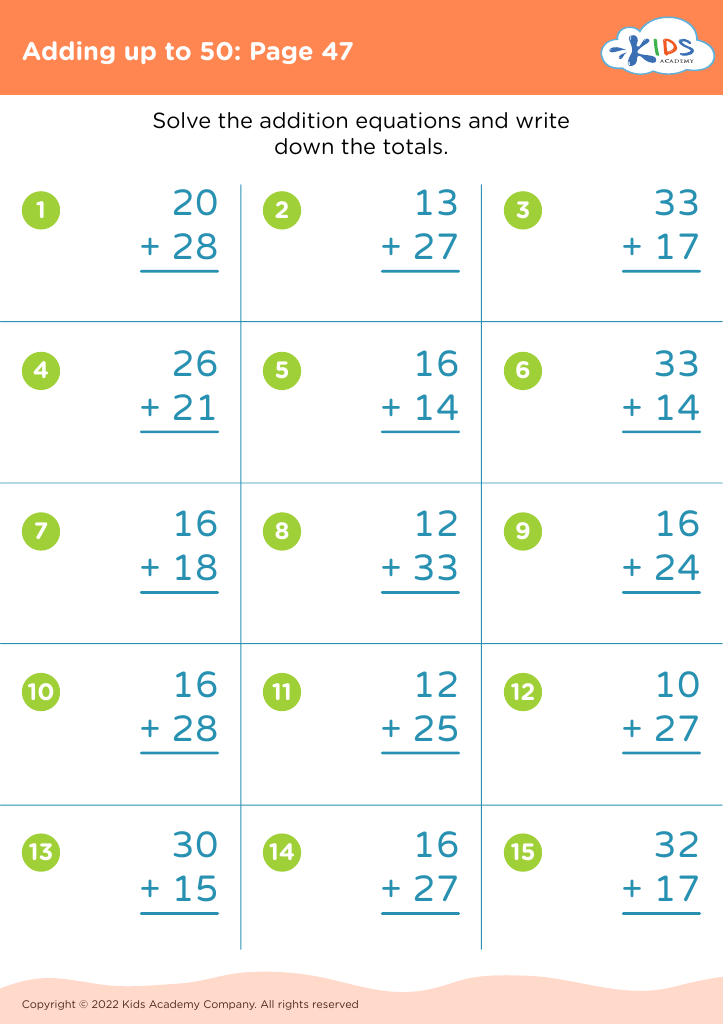
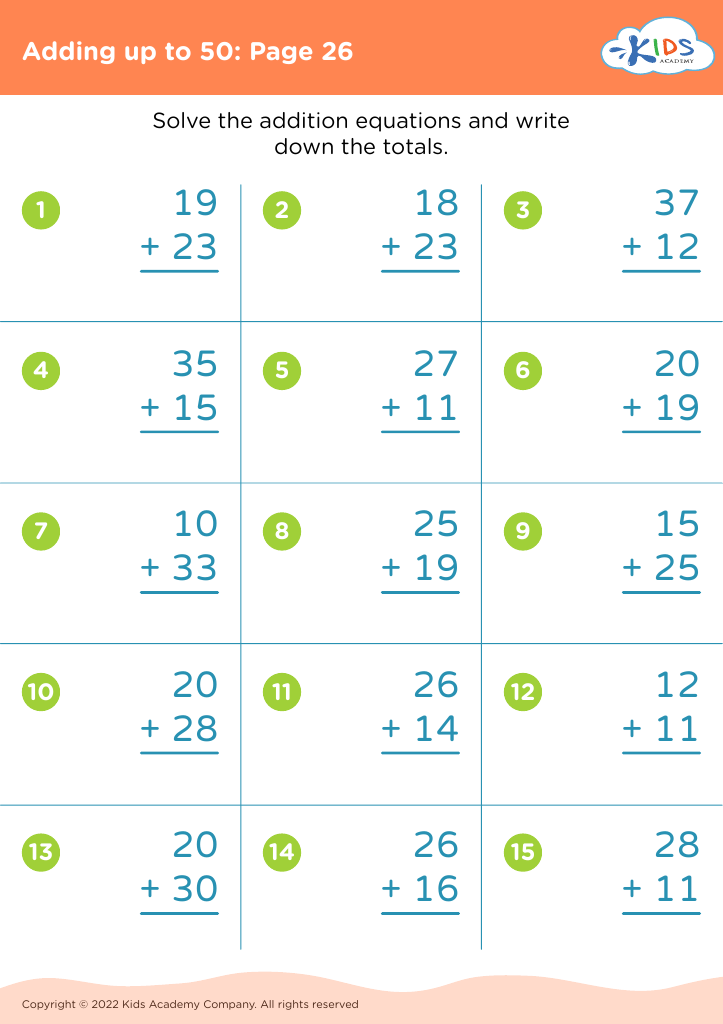
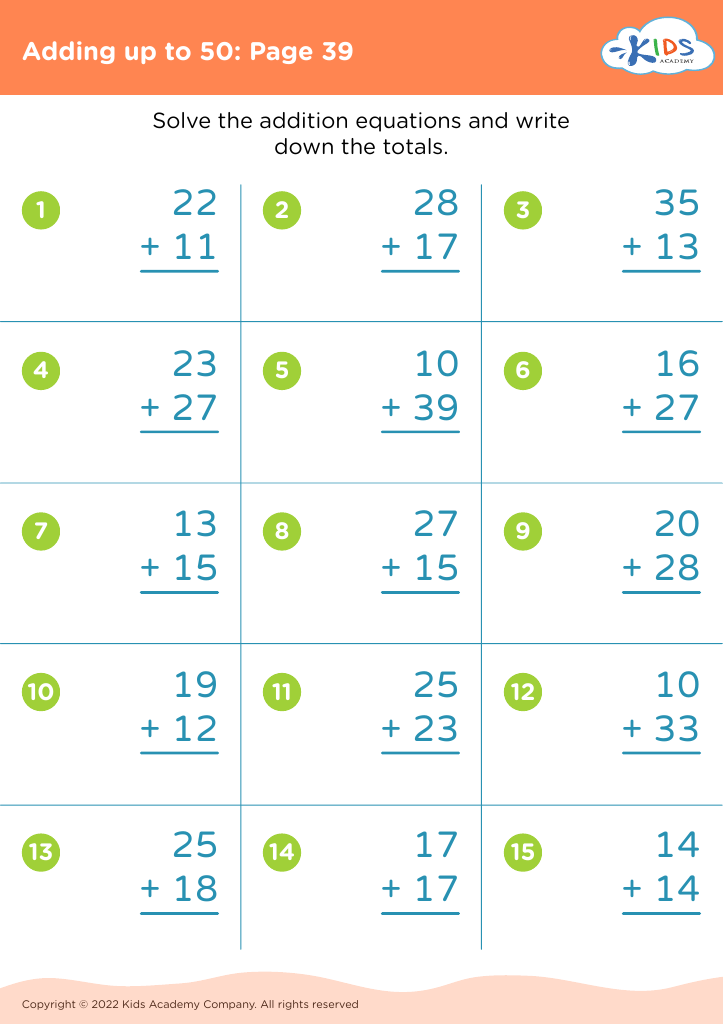
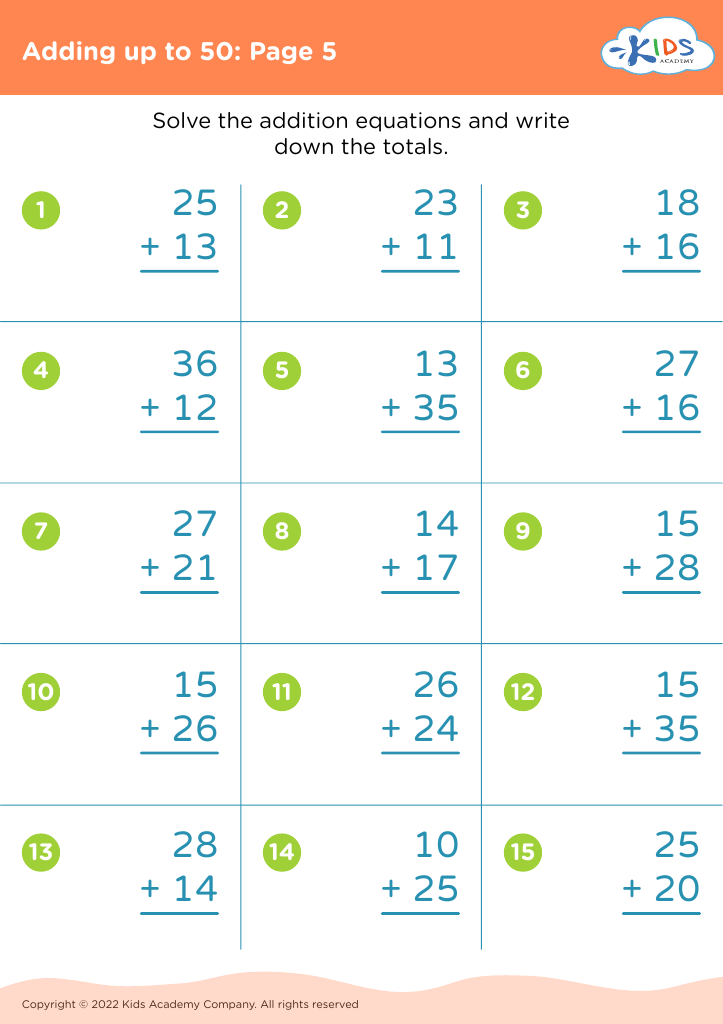


Understanding adjectives and mastering basic arithmetic skills, like adding up to 50, are fundamental components of a child's education, particularly for ages 7-8. Parents and teachers should prioritize these skills as they are intimately linked to literacy and numeracy development.
Adjectives enhance language skills by enabling children to express themselves more vividly and accurately. This proficiency in language supports reading comprehension and writing, allowing students to create richer narratives and engage fully with texts. Furthermore, enhancing vocabulary through adjectives helps in communication and emotional expression, essential for social interactions.
On the math side, being able to add numbers up to 50 lays a critical foundation for future mathematical skills. This proficiency not only develops problem-solving abilities but also boosts a child’s confidence in handling numbers. As children solve real-life challenges involving money, time, and quantities, their understanding strengthens, making advanced math concepts easier to absorb later.
Emphasizing both language and math together creates a more holistic approach to education, equipping children with the essential tools to enhance their cognitive and interpersonal skills. Such foundational learning paves the way for lifelong academic success, fostering well-rounded individuals ready to thrive in various subjects.