Understanding fractions Adding up to 50 Misc Worksheets for Ages 7-8
17 filtered results
-
From - To
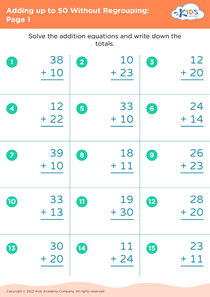
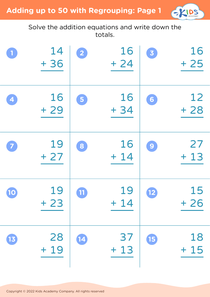
Discover our "Understanding Fractions: Adding Up to 50" miscellaneous worksheets designed specifically for children ages 7-8. These engaging resources introduce young learners to the fundamentals of fractions, enhancing their mathematical skills and confidence. Our worksheets provide a variety of exercises that make learning fun, allowing students to explore and master fractions in a stimulating way. With colorful graphics and clear instructions, kids will practice adding fractions while improving their overall understanding of numbers up to 50. Perfect for both classroom use and home practice, these worksheets are an essential tool for fostering a love of math in young learners!
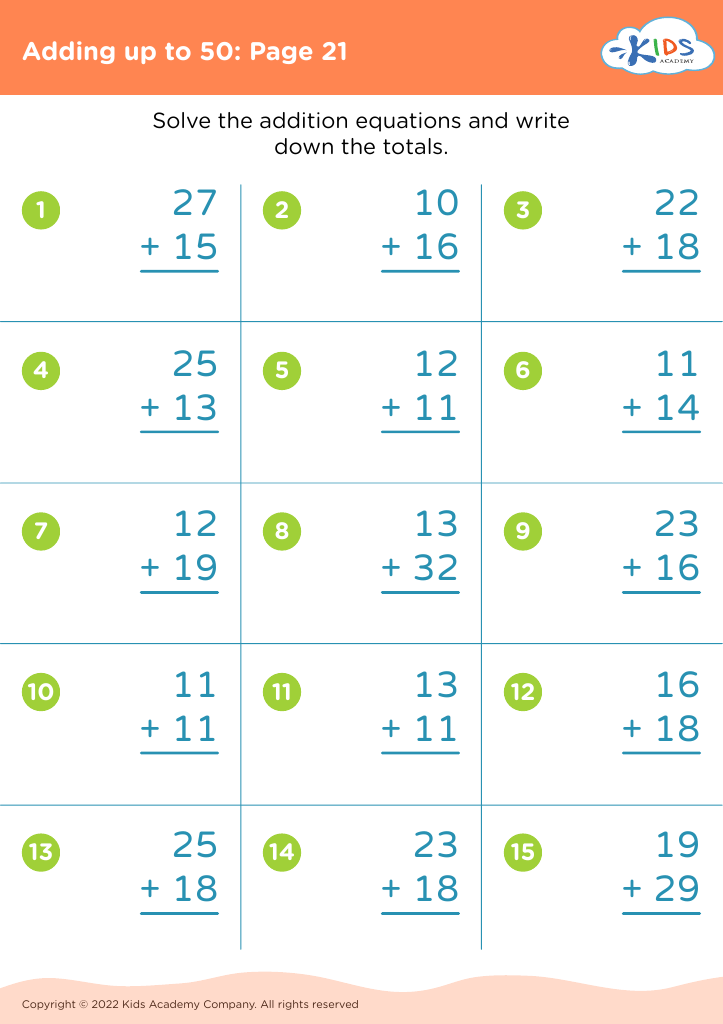
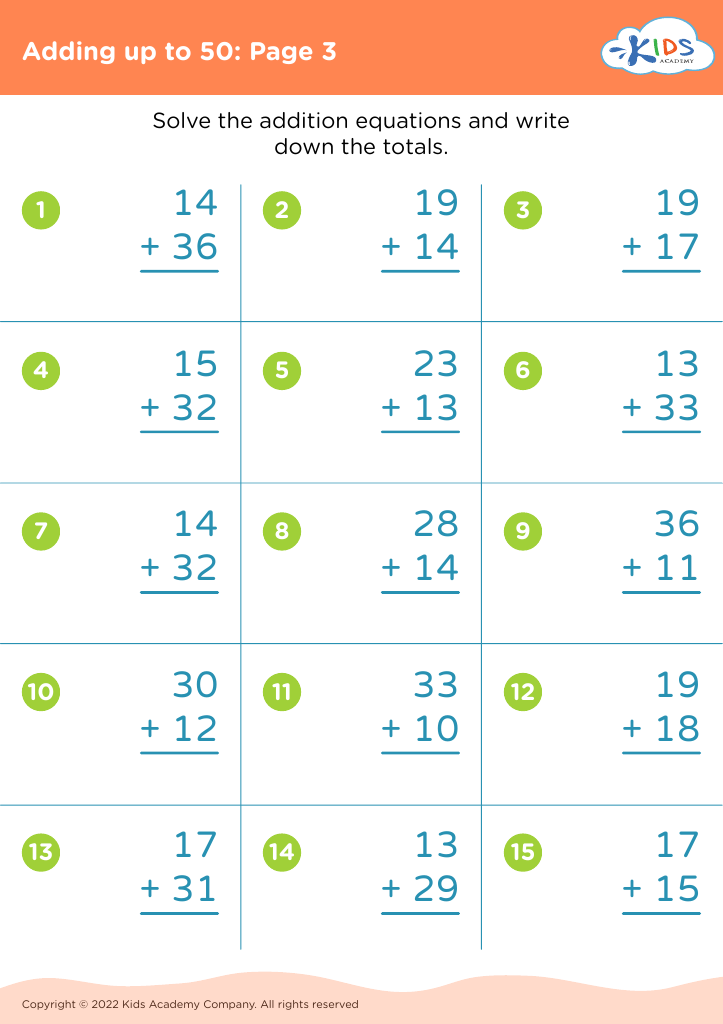
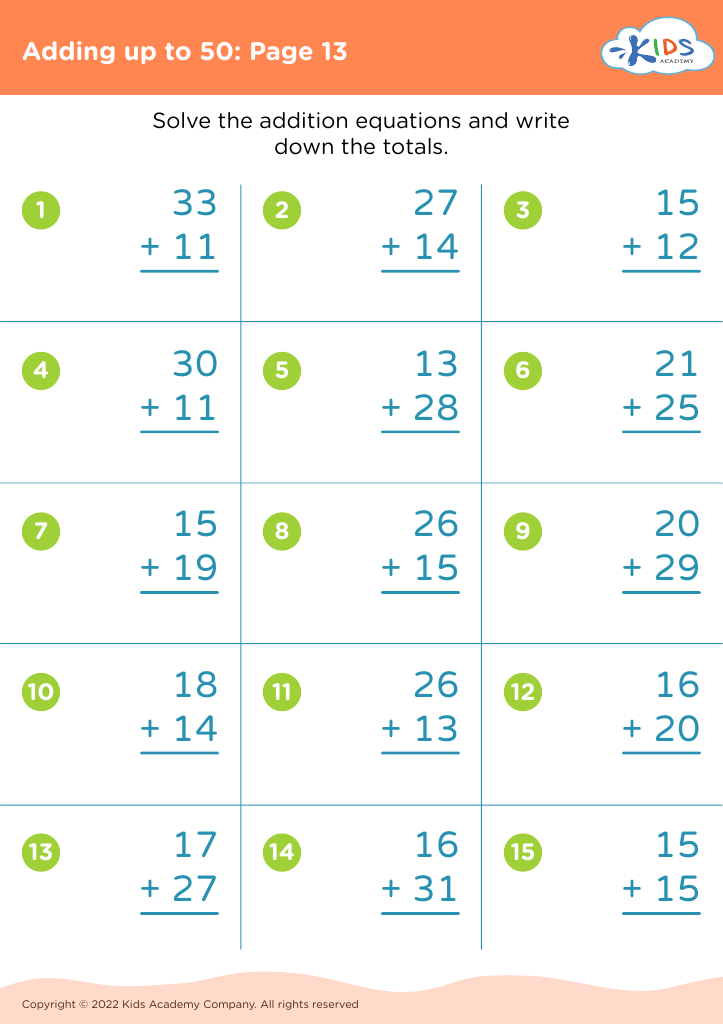
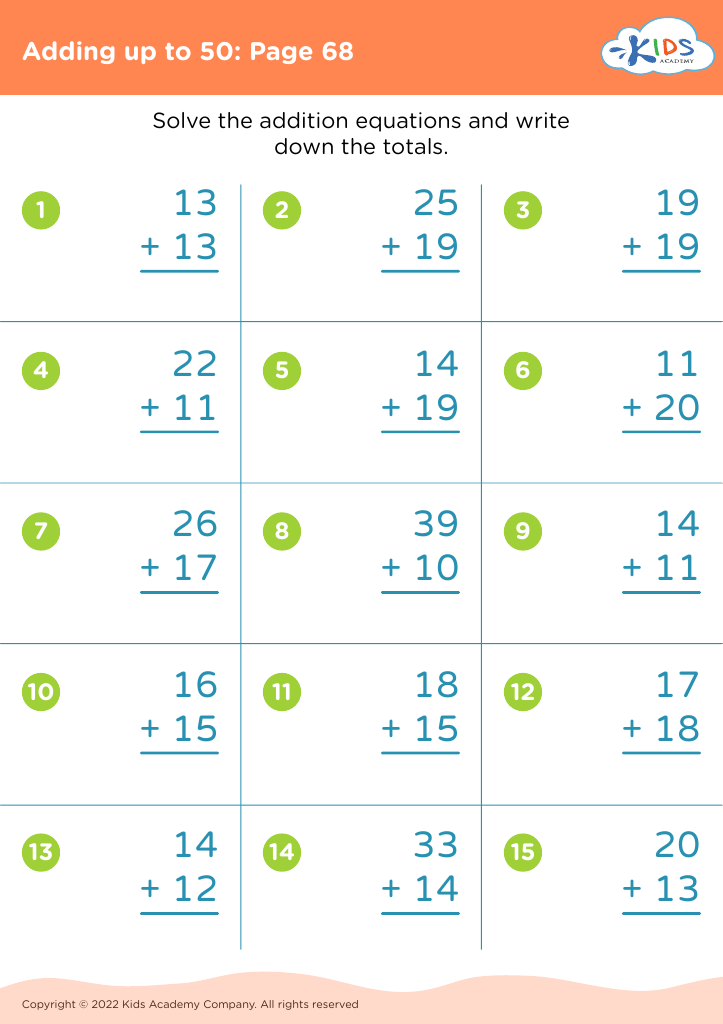
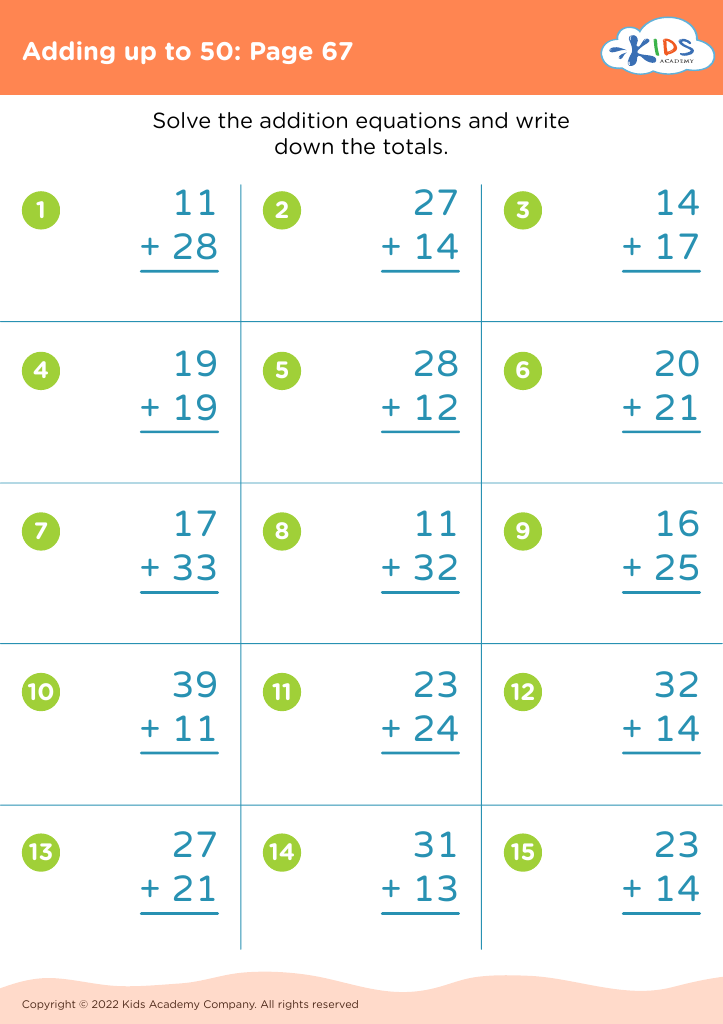
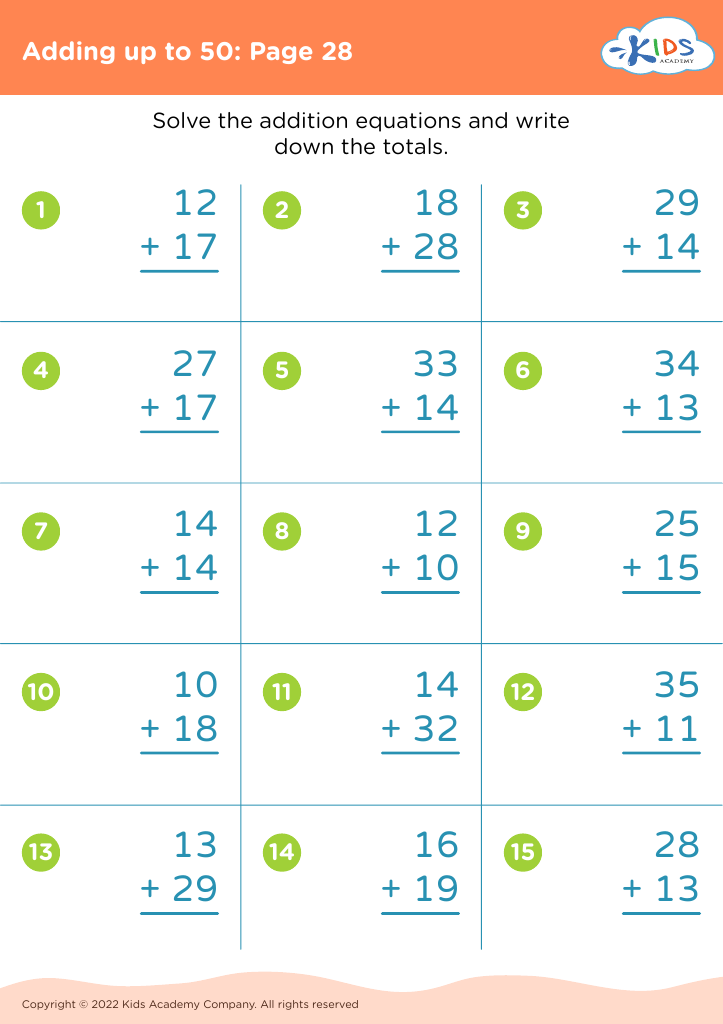
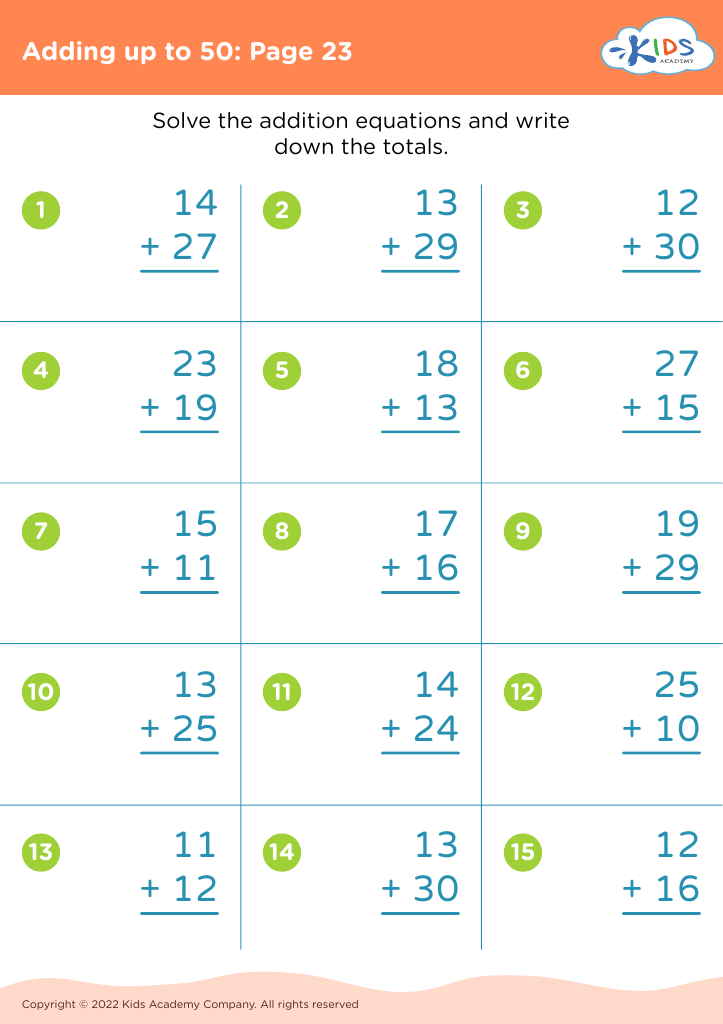
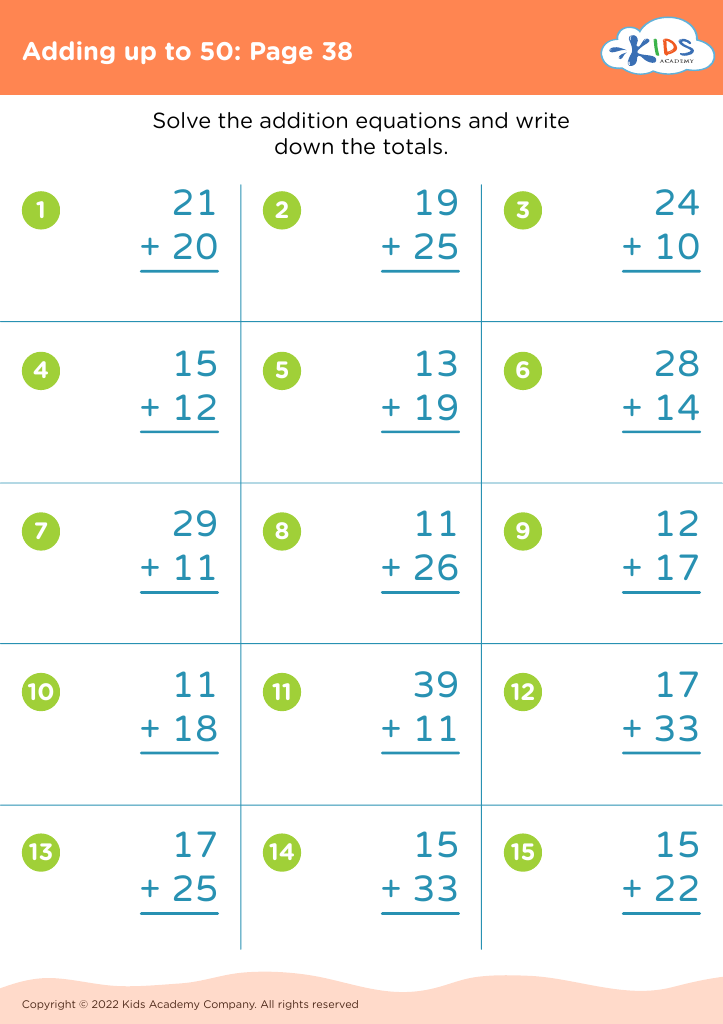
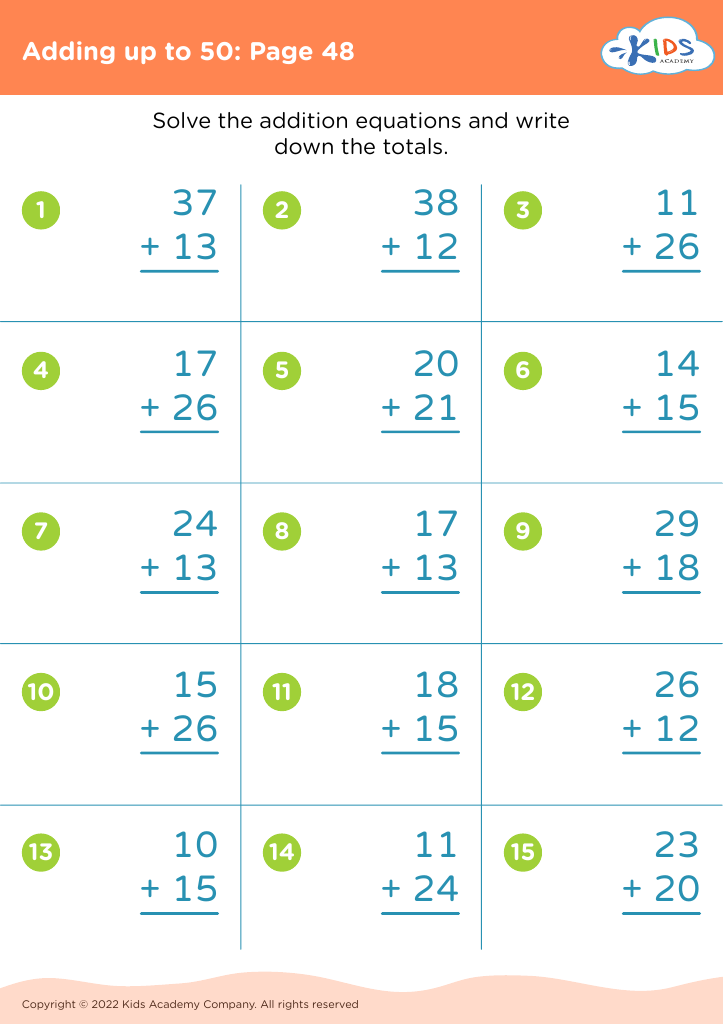
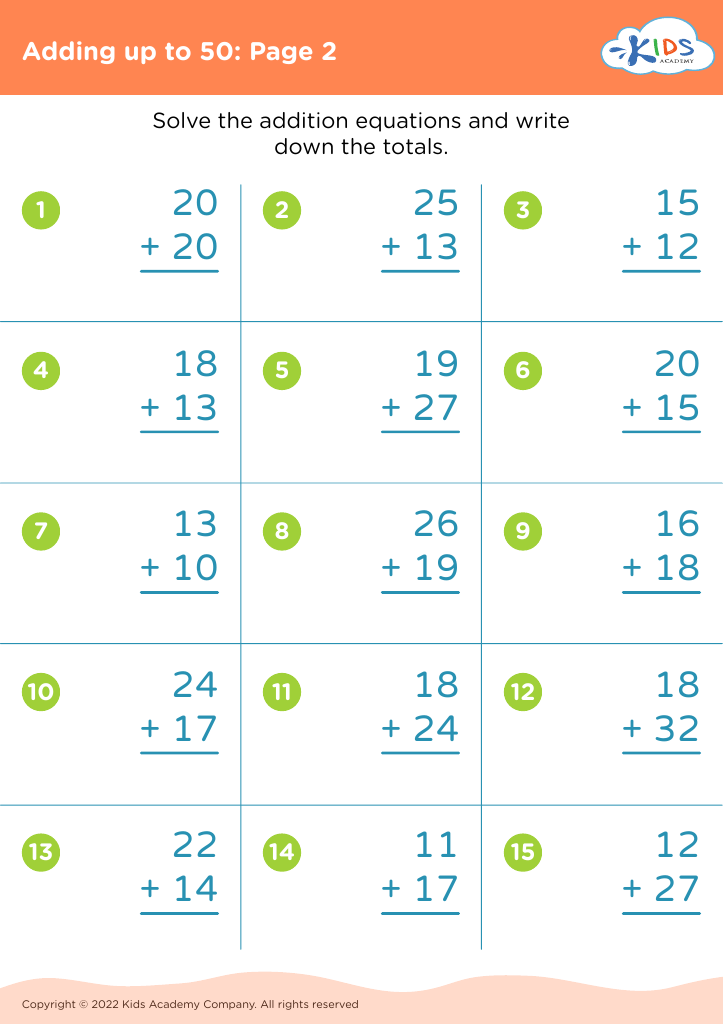
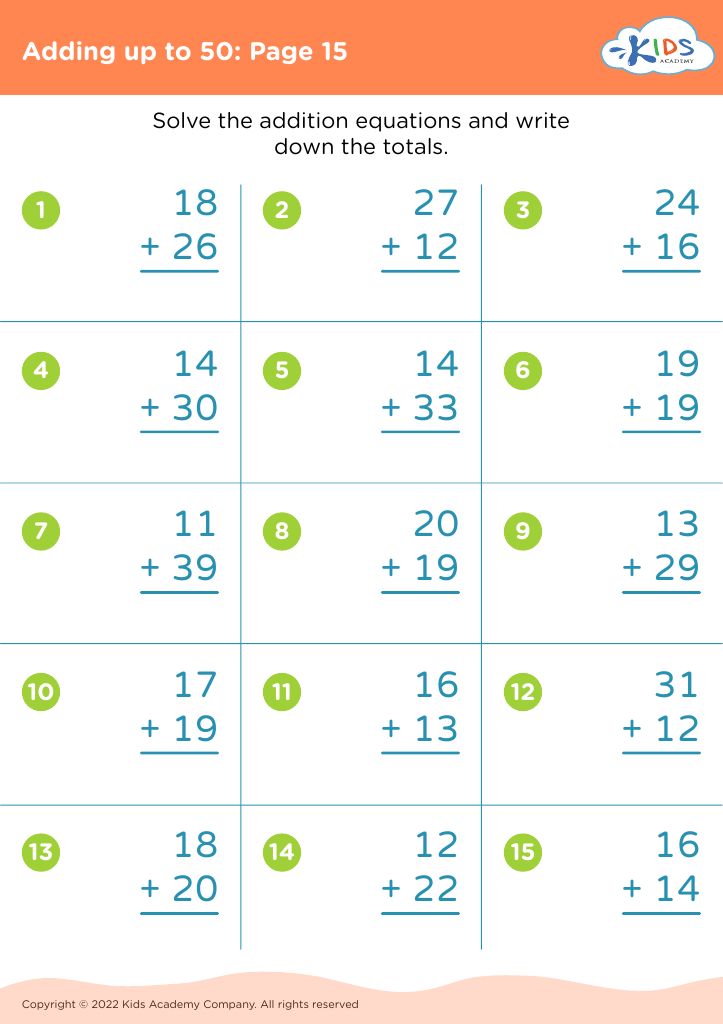
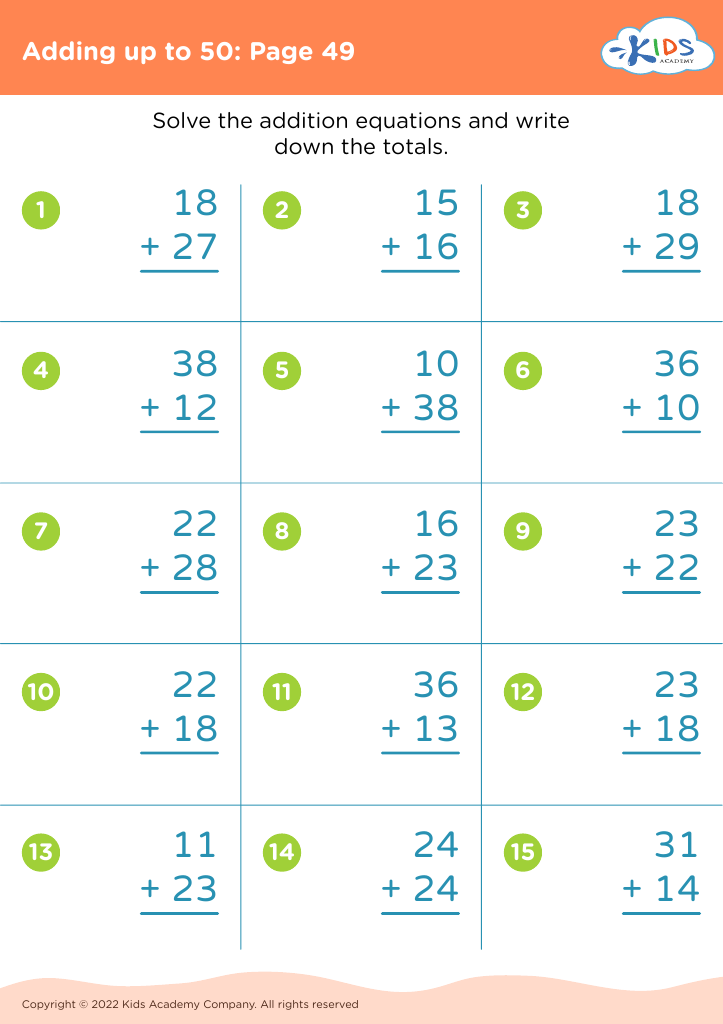
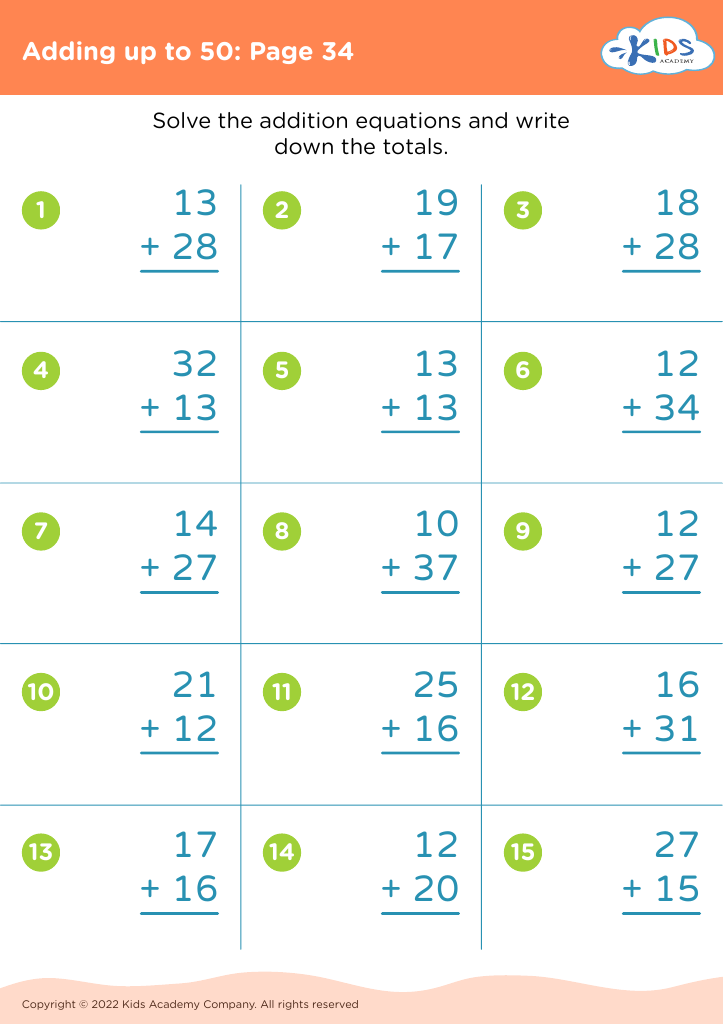


Understanding fractions and basic addition are foundational skills in mathematics that are crucial for children aged 7-8. At this developmental stage, students are becoming more comfortable with numbers and mathematical concepts, making it the perfect time to introduce fractions along with sums up to 50.
Fractions are not just abstract symbols; they represent real-world situations, such as sharing food or measuring ingredients in cooking. Grasping the concept of fractions encourages critical thinking and promotes problem-solving skills. By mastering fractions in a fun and engaging way, students can build confidence and a sense of accomplishment in math, which can positively impact their overall academic self-esteem.
Adding up to 50 is equally important as it reinforces the skills needed for more advanced mathematical operations in later grades. Proficient addition lays the groundwork for concepts like algebra and geometry, which are essential in everyday life and future education.
When parents and teachers prioritize these skills, they are not just helping children become better at math—they are equipping them with tools necessary for their everyday interactions and future academic success. A strong math foundation fosters independence, improves analytical abilities, and encourages a lifelong enjoyment of learning.