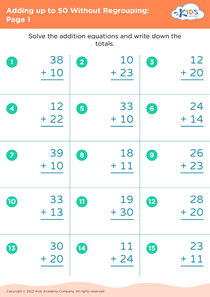
Fraction comparison Adding up to 50 with Regrouping Worksheets for Ages 7-8
3 filtered results
-
From - To
Enhance your young learner's math skills with our "Fraction Comparison: Adding Up to 50 with Regrouping" worksheets designed specifically for ages 7-8. These engaging and interactive worksheets allow students to practice comparing fractions while mastering the concepts of addition and regrouping. With a variety of exercises, children will confidently work with fractions in relatable contexts, reinforcing their understanding of mathematical relationships. Our thoughtfully crafted activities not only develop computational skills but also encourage critical thinking and problem-solving. Perfect for classroom or home use, these worksheets are an essential resource for nurturing a strong mathematical foundation in early learners.
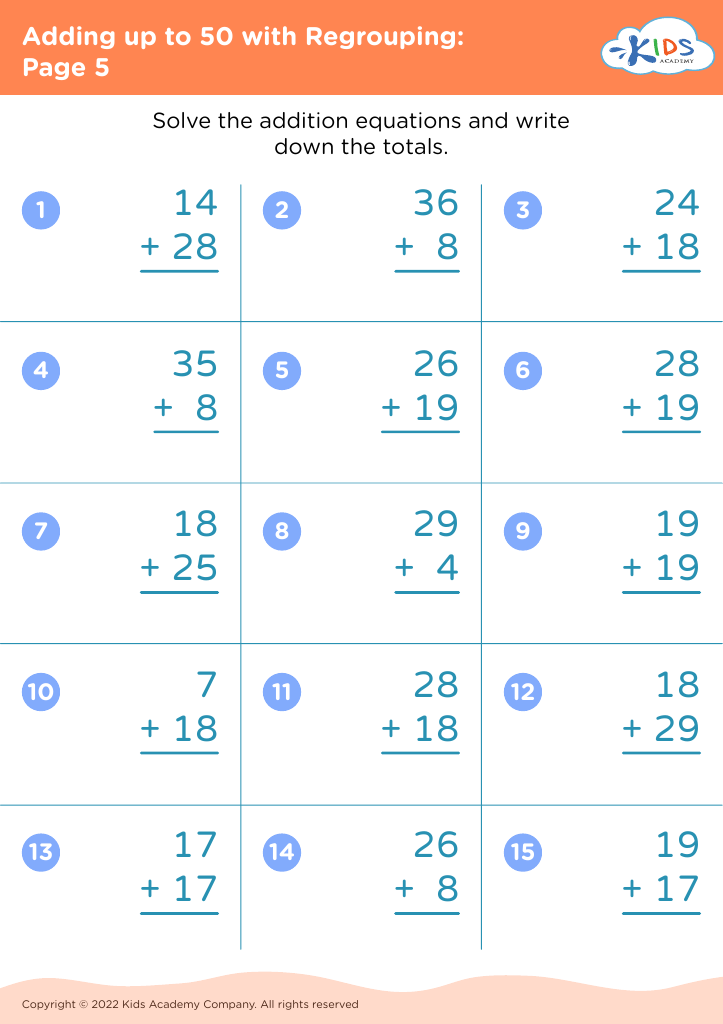
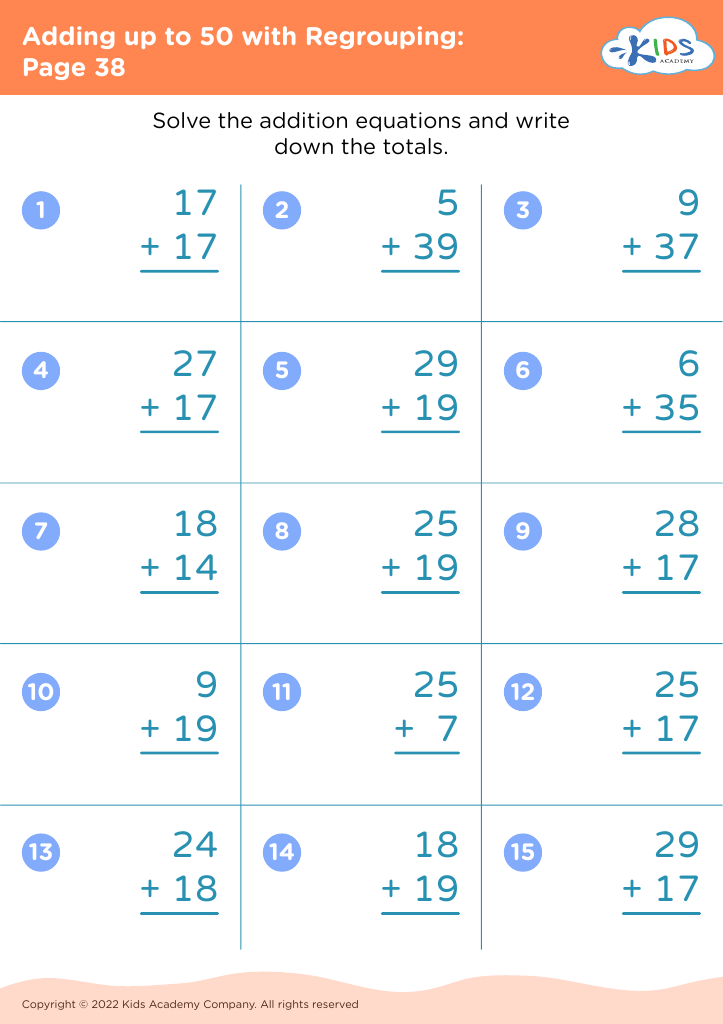
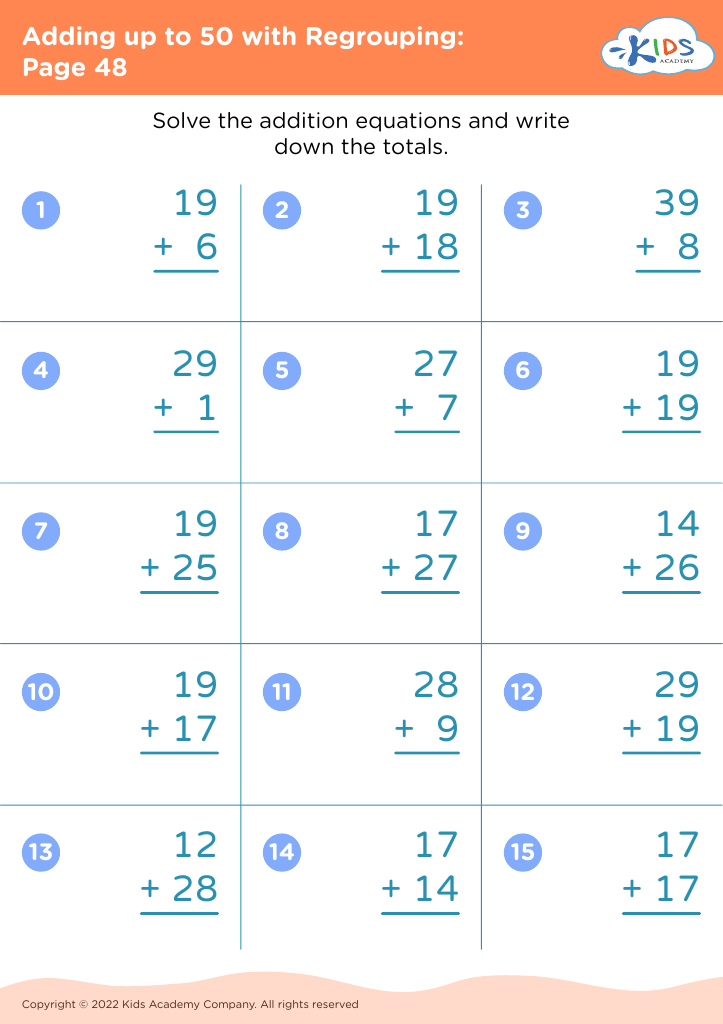


Understanding fraction comparison and addition, particularly involving regrouping, is crucial for children aged 7-8 as it forms the foundation for future mathematical concepts. At this developmental stage, children are honing their critical thinking skills and begin to grasp more complex ideas such as equivalency, divisibility, and proportional reasoning.
Learning to compare fractions helps students develop an understanding of sizes and relationships between numbers, a skill that extends beyond math and into everyday life decisions, from sharing items to analyzing data. Meanwhile, adding fractions and mastering regrouping are essential for enhancing their computational skills. These concepts are pivotal as students will encounter more advanced arithmetic in higher grades, making early mastery more beneficial.
Furthermore, successful learning in fraction comparisons and regrouping builds confidence and a positive attitude towards math. This is especially important, as a strong mathematical foundation can influence a child's overall academic performance. Parents and teachers should engage students with interactive activities that foster these skills, creating a supportive learning environment. Together, they can cultivate an appreciation for math that encourages lifelong learning and empowerment, ensuring that children not only excel in academics but also nurture valuable problem-solving skills for the future.