Simplifying Fractions Adding up to 50 with Regrouping Worksheets for Ages 7-8
4 filtered results
-
From - To
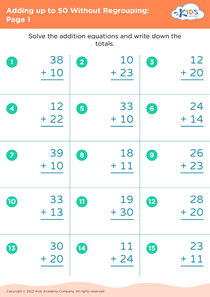
Explore our engaging "Simplifying Fractions Adding up to 50 with Regrouping" worksheets specially designed for ages 7-8. These worksheets provide young learners with the opportunity to practice essential fraction simplification skills while applying the concept of regrouping in addition. With colorful illustrations and interactive exercises, children will gain confidence as they tackle problems that involve fractions and addition coming together seamlessly. Our carefully crafted activities align with early math standards, making learning enjoyable and effective. Help your child master these vital skills and build a strong foundation in math with our fun and educational worksheets! Perfect for home or classroom use.
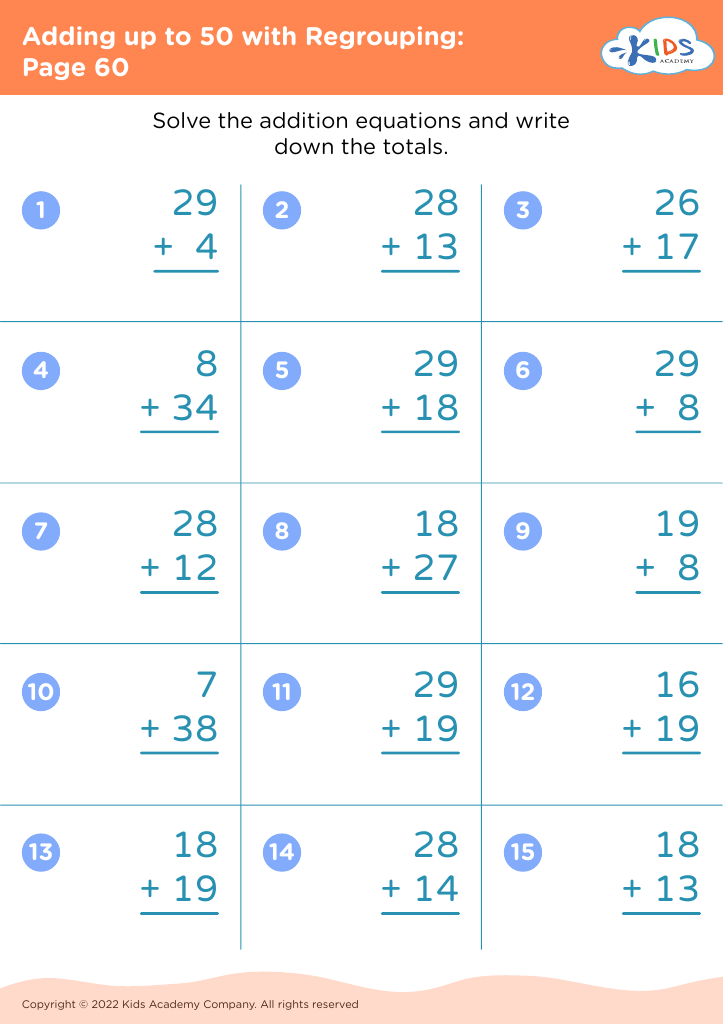
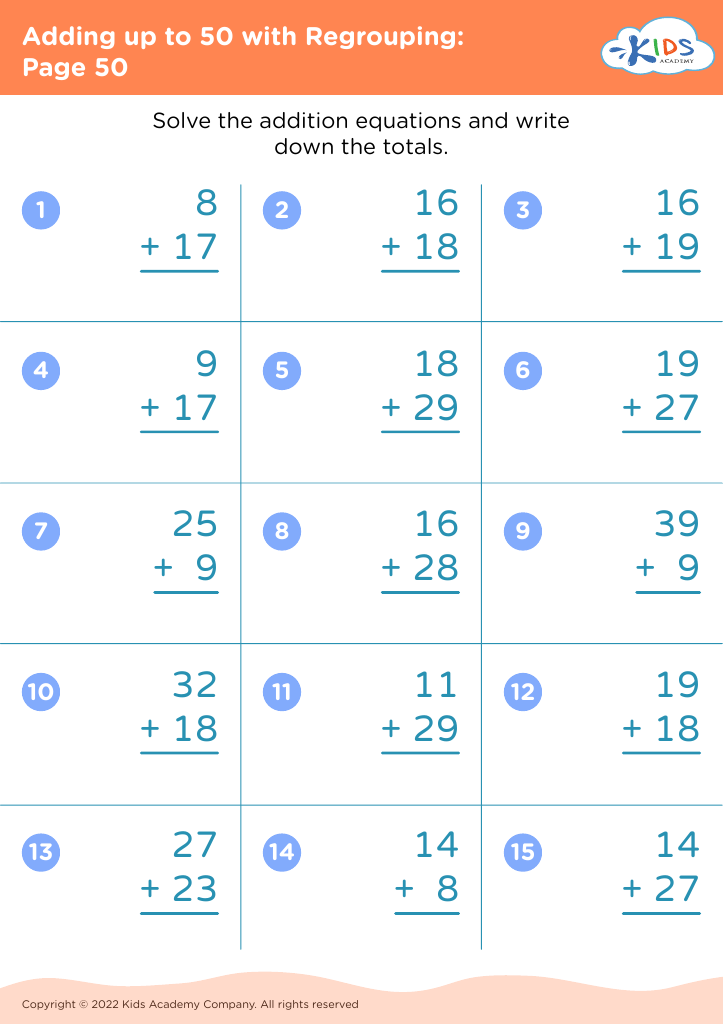
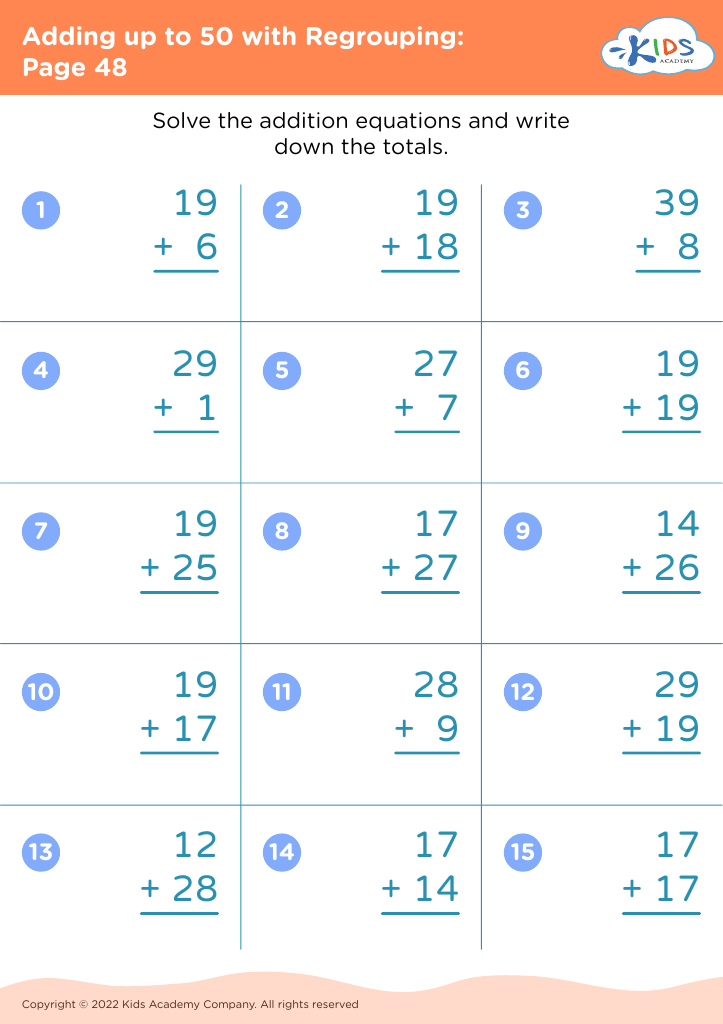
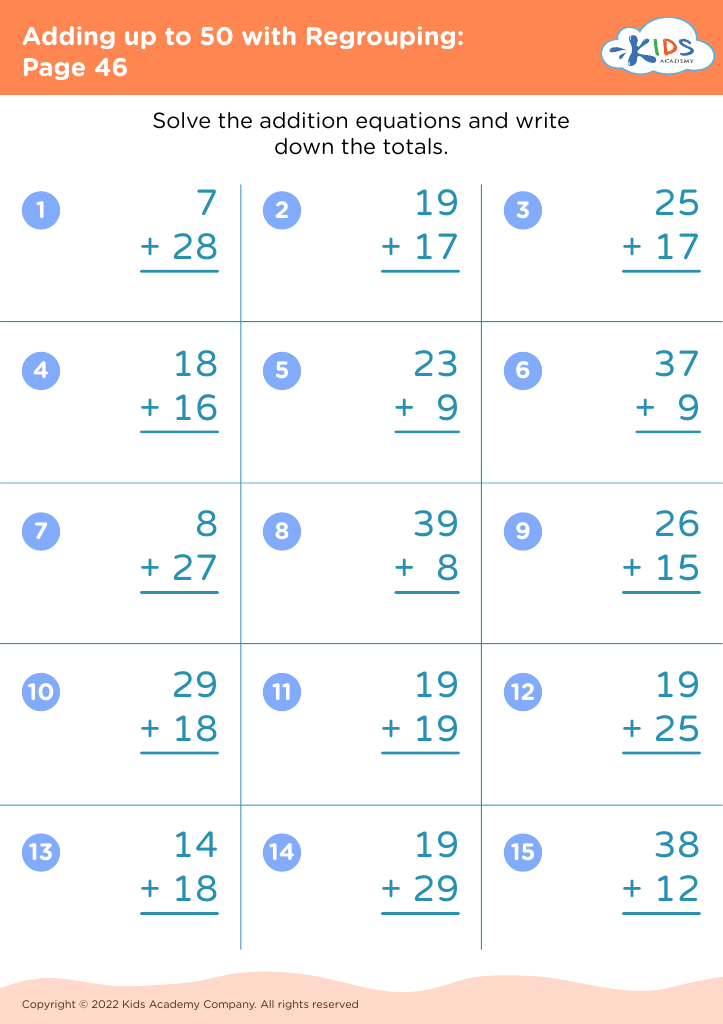


Parents and teachers should care about simplifying fractions and adding up to 50 with regrouping for children ages 7-8 because these concepts lay the groundwork for crucial mathematical understanding. At this age, students are beginning to develop critical thinking skills necessary for tackling more complex problems in the future. Simplifying fractions helps them understand relationships between numbers, encouraging number sense—an essential skill in math.
By integrating addition with regrouping, students also learn to manage larger numbers and develop strategies for problem-solving. Concepts like carrying over to the next place value cultivate flexibility in thinking and improve overall numerical fluency. Furthermore, mastery of these topics at a young age can boost children’s confidence, making them more inclined to engage with more challenging concepts later on.
Fractions and regrouping are foundational elements in various real-life situations, such as cooking or managing time and money, so fostering a strong grasp of these concepts is vital. Additionally, it aligns with educational standards and objectives for this age group, ensuring that children are prepared for future mathematics. Engaging students in fun and interactive ways to learn these skills can instill a love for math that lasts a lifetime, helping them thrive academically and personally.