Understanding symmetry Adding up to 50 with Regrouping Worksheets for Ages 7-8
4 filtered results
-
From - To
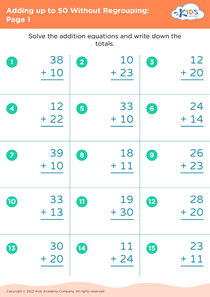
Enhance your child's mathematical skills with our "Understanding Symmetry: Adding Up to 50 with Regrouping" worksheets designed for ages 7-8. These engaging resources help young learners explore the concept of symmetry while mastering addition through regrouping. Each worksheet encourages children to identify symmetrical patterns and apply this knowledge to solve problems involving sums up to 50. With a focus on both mathematical understanding and visual awareness, our activities are perfect for reinforcing classroom learning at home. Encourage critical thinking, build confidence, and foster a love for math through fun and interactive exercises that make learning enjoyable!
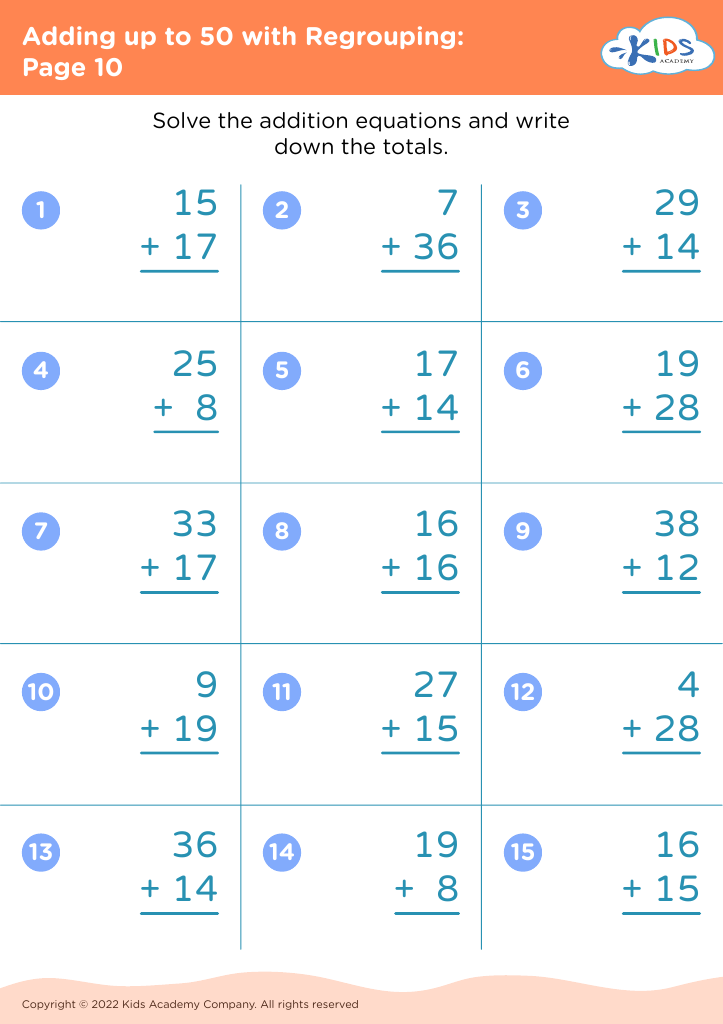
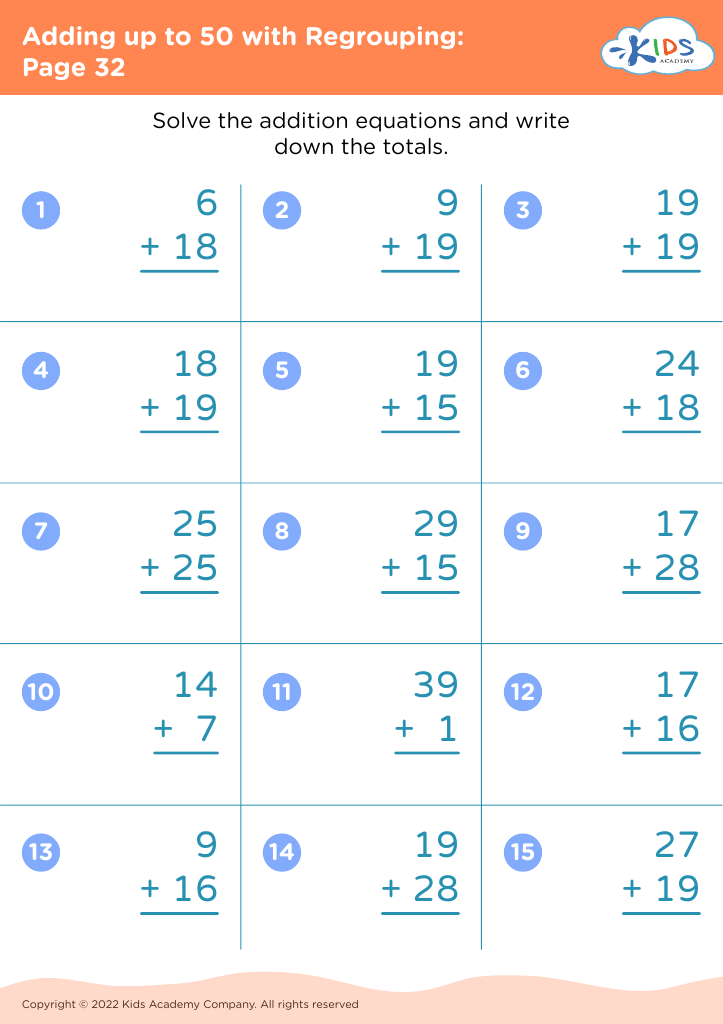
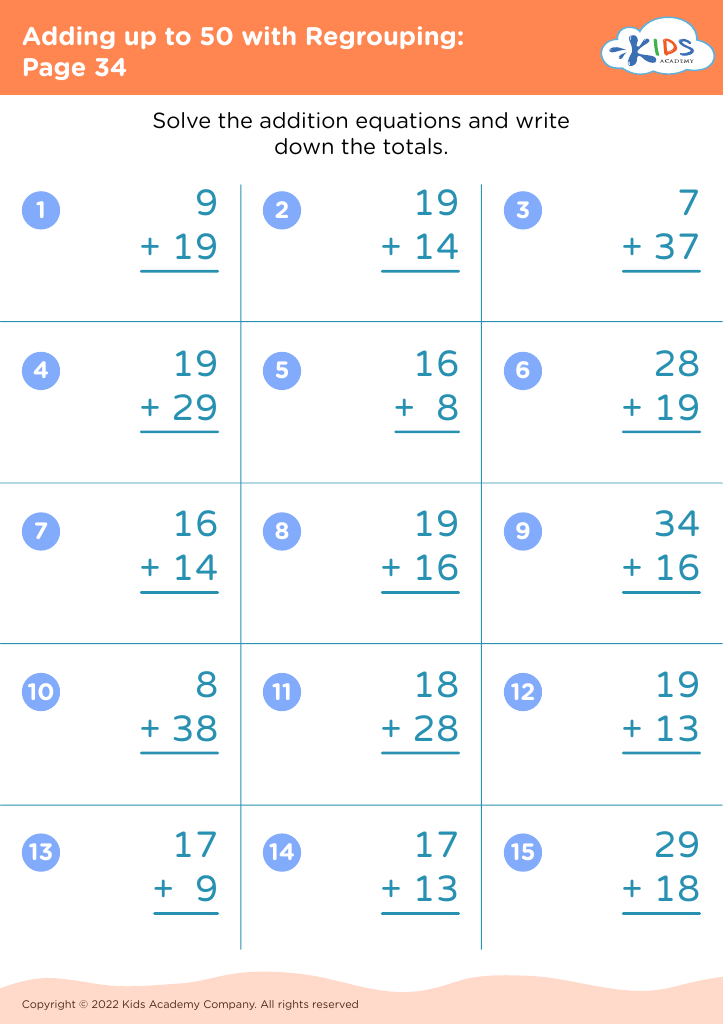
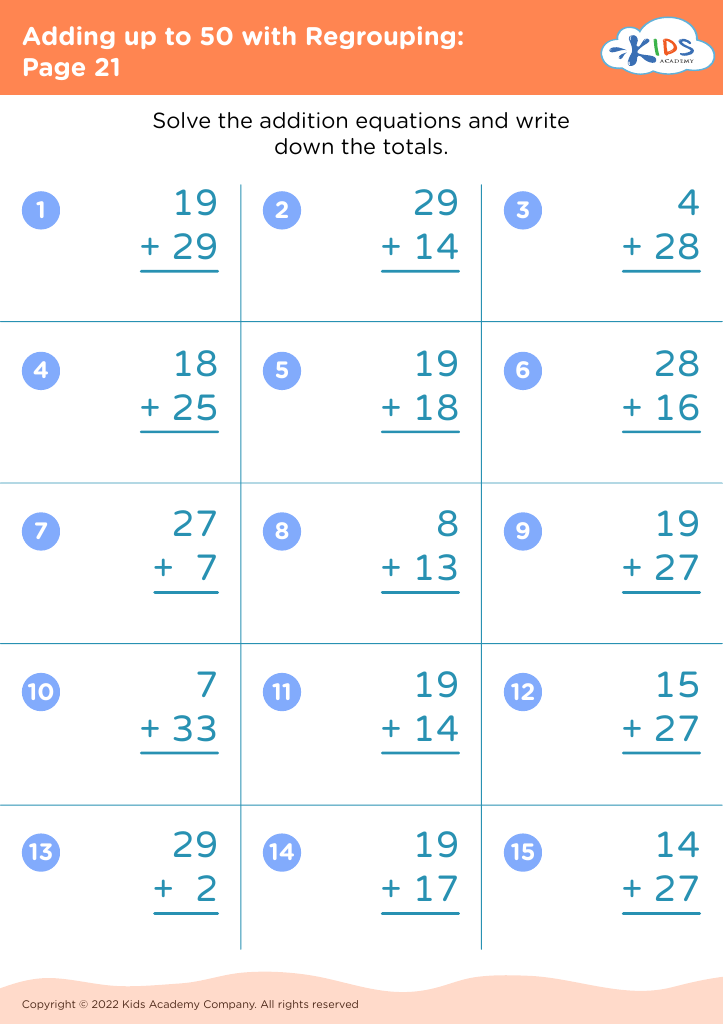


Understanding symmetry and mastering addition techniques like regrouping are crucial concepts for children aged 7-8, laying the foundation for their mathematical development. First, symmetry, an important relationship in geometry, fosters critical thinking and enhances spatial awareness. Teachers and parents can use everyday objects and activities to help students recognize symmetrical patterns, strengthening their ability to analyze and categorize shapes in broader contexts. This skill is not only fundamental in math but also plays a role in art and science, supporting interdisciplinary learning.
Additionally, the concept of adding up to 50 with regrouping introduces children to more complex arithmetic operations. This method teaches students how to break down larger numbers into manageable parts, making calculations easier and promoting a deeper understanding of number sense. Understanding regrouping allows students to handle more significant mathematical challenges in the future with confidence, laying a strong groundwork for future learning in mathematics.
For parents and teachers, focusing on these concepts can enhance students' cognitive abilities, problem-solving skills, and overall academic performance. Supporting children in these areas prepares them not only for standardized testing but also instills a love for learning, making math a fundamental tool for their education and everyday life.