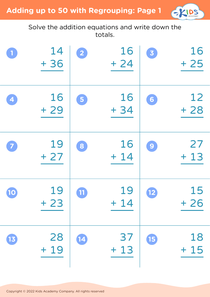
Basic addition practice Adding up to 50 Without Regrouping Worksheets for Ages 7-8
3 filtered results
-
From - To
Enhance your child’s mathematical skills with our engaging Basic Addition Practice Worksheets, designed specifically for ages 7-8. These worksheets focus on adding numbers up to 50 without regrouping, making learning simple and enjoyable. Each worksheet features a variety of problems that encourage kids to practice their addition skills while building confidence in their abilities. Perfect for classroom use or at-home learning, our worksheets offer clear instructions and fun visuals to keep learners motivated. Help your child strengthen their foundational math skills and develop a love for learning with our thoughtfully designed addition exercises today!
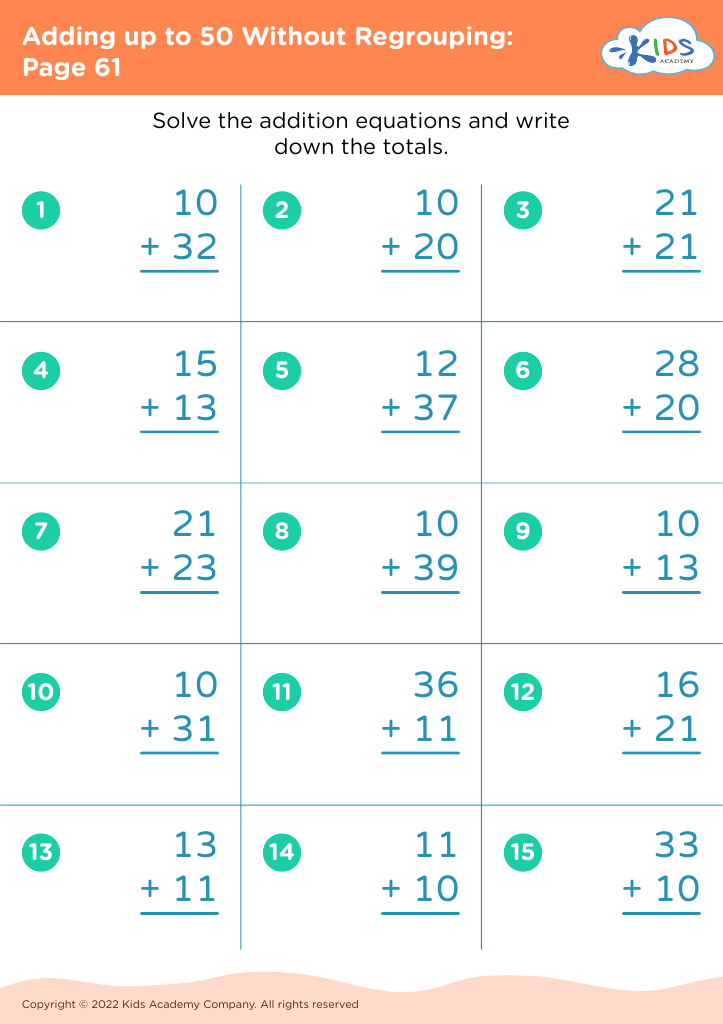
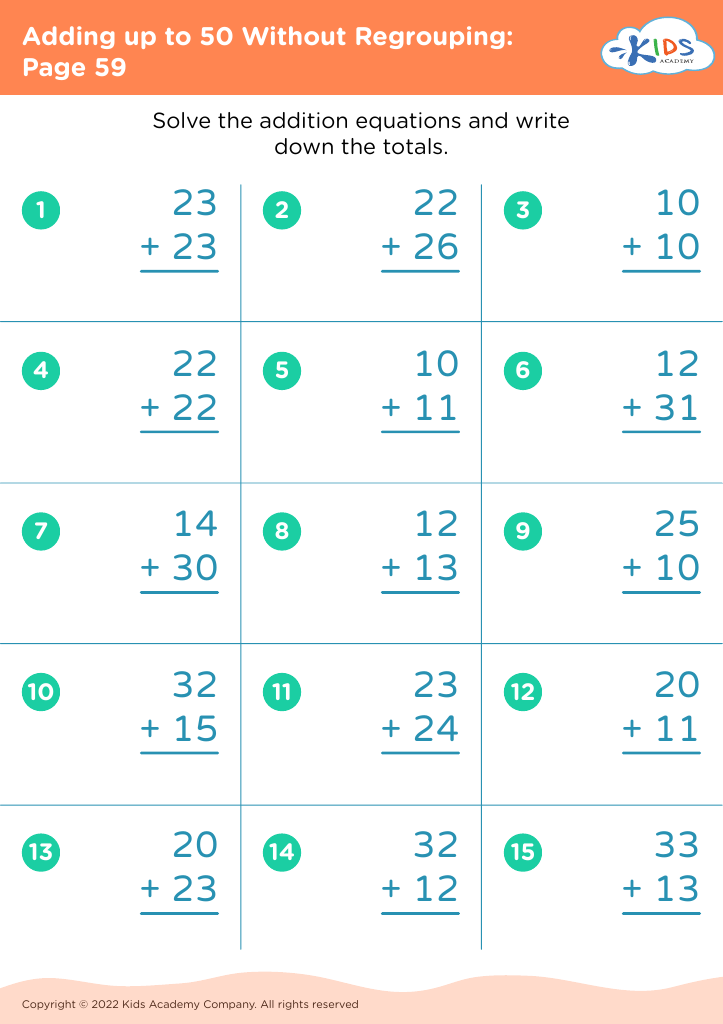
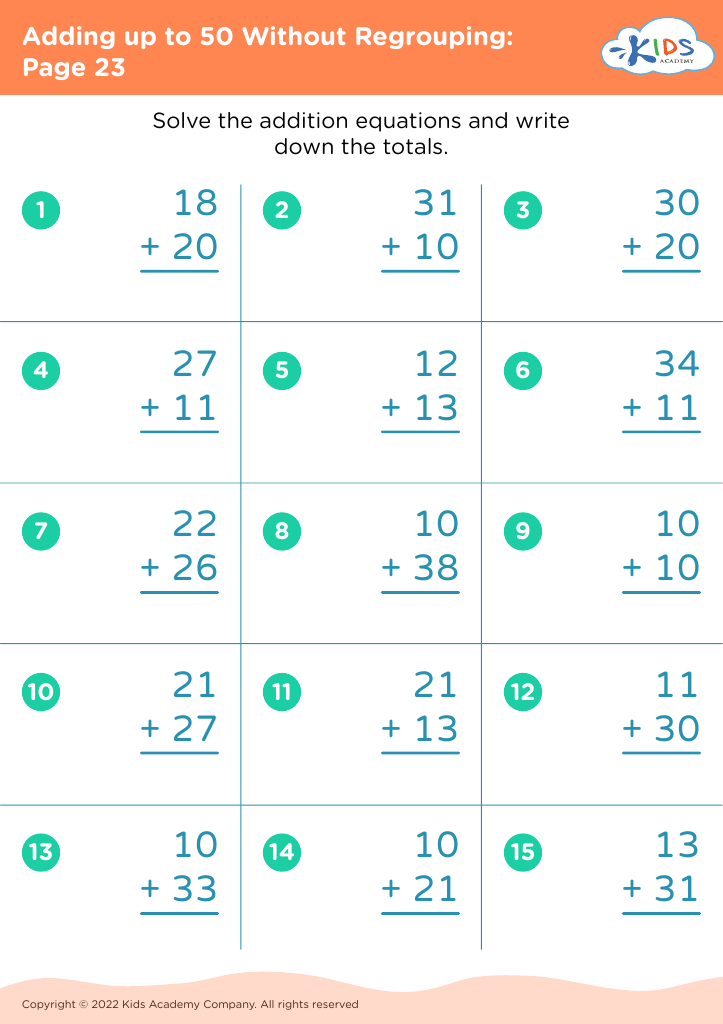


Basic addition practice, especially adding numbers up to 50 without regrouping, plays a crucial role in the foundational math skills for children ages 7-8. This age group is at a cognitive developmental stage where they begin to understand numerical concepts more deeply, making it essential to solidify their understanding of addition.
Firstly, practicing basic addition helps build confidence in young learners. Mastery of these basic skills ensures that students feel prepared for more complex mathematical concepts in the future. This foundational knowledge supports their ability to tackle addition involving larger numbers and even branching into subtraction, multiplication, and division later on.
Moreover, consistent practice helps enhance mental math skills. Quick and accurate addition promotes a seamless transition to other problem-solving activities, boosting both computational fluency and critical thinking.
In addition, basic addition skills have real-life applications; whether counting change while shopping or working with time, these skills are essential for daily living. Parents and teachers should prioritize this practice not only to support academic success but also to prepare children for practical life challenges, fostering both competence and a love for mathematics as they progress in their education.