Basic Math Skills Adding up to 50 Without Regrouping Worksheets for Ages 7-8
6 filtered results
-
From - To
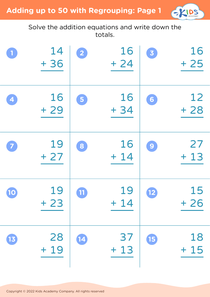
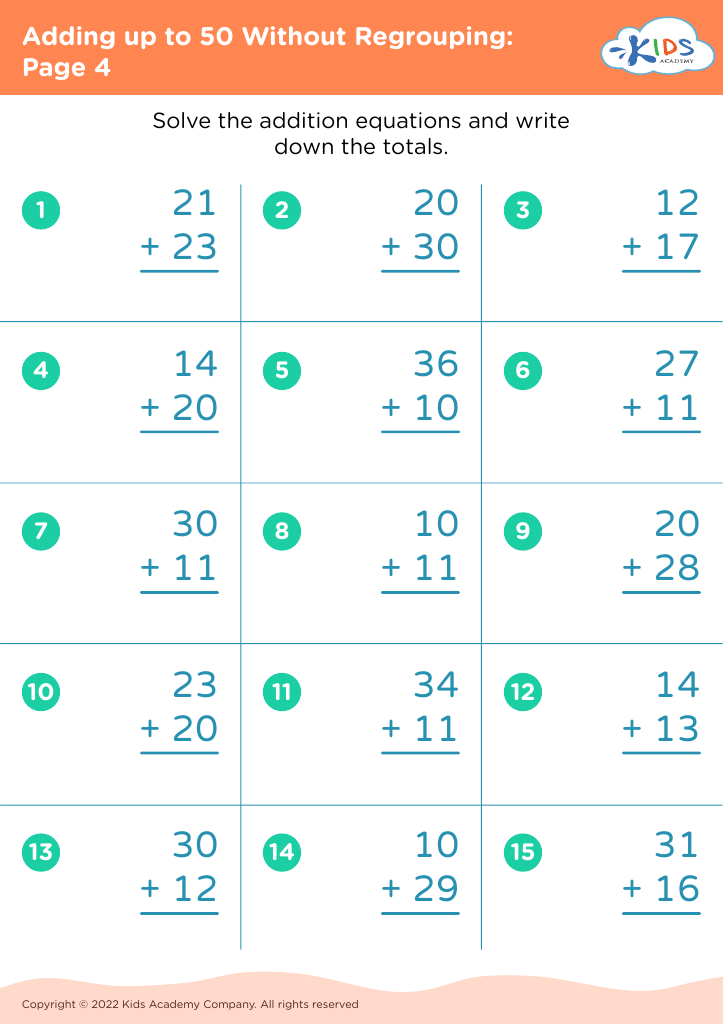
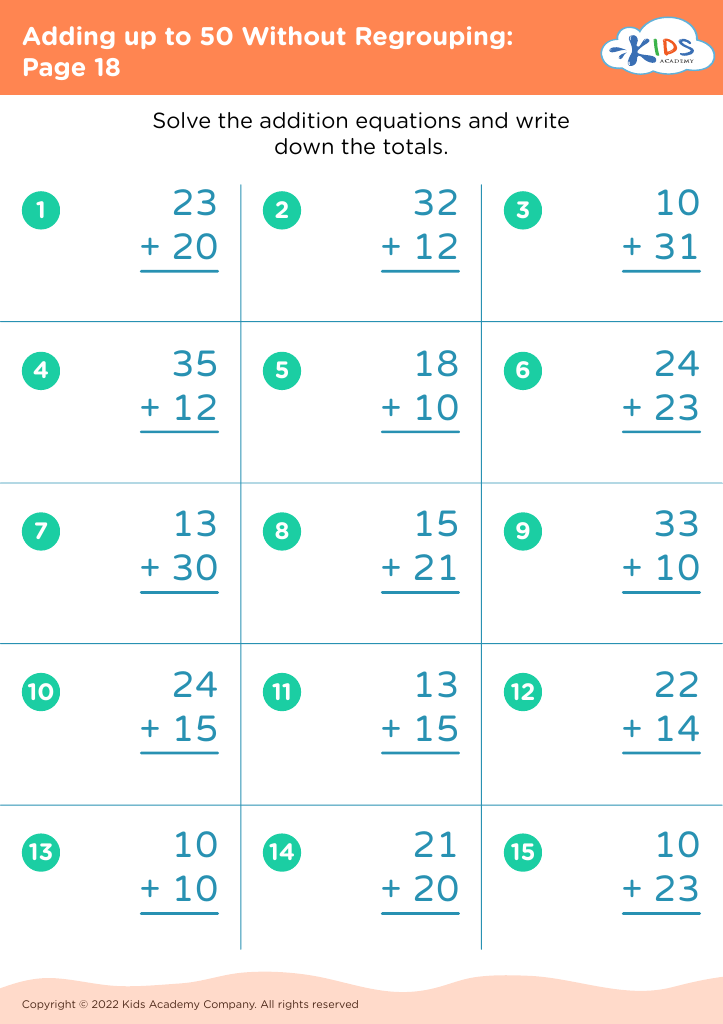
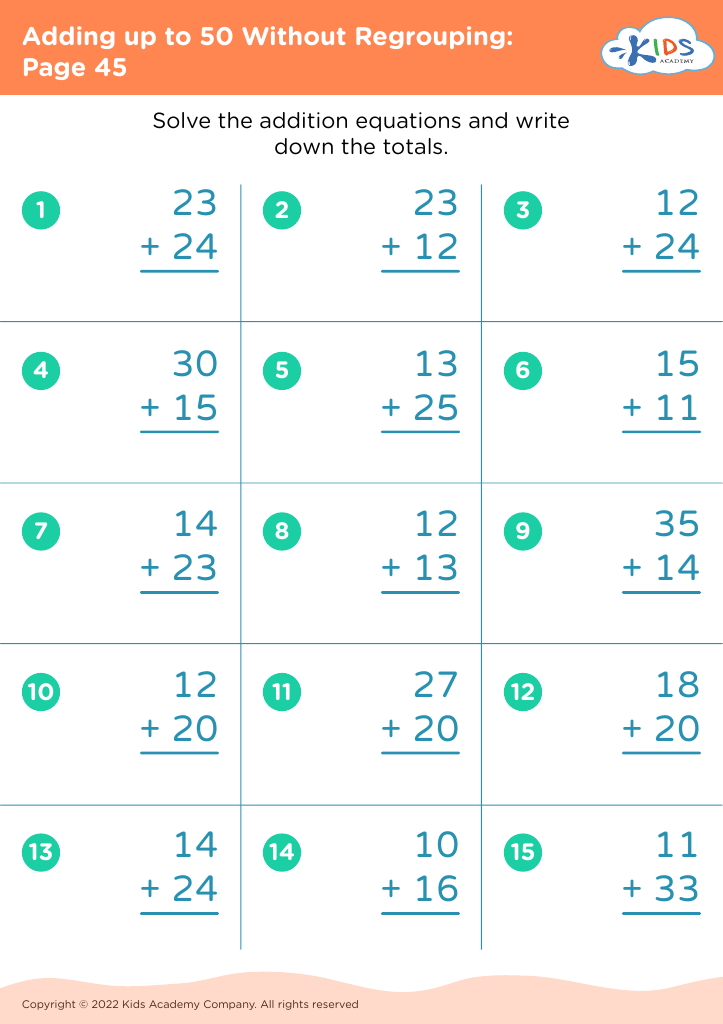
Discover our engaging "Basic Math Skills: Adding Up to 50 Without Regrouping" worksheets designed specifically for children aged 7 to 8. These interactive materials focus on enhancing young learners' addition skills without the complexities of regrouping. Perfect for practicing one-digit and two-digit addition, our worksheets foster confidence and reinforce foundational math concepts. Each activity is crafted to be age-appropriate, encouraging critical thinking while keeping learning fun. Whether in the classroom or at home, these worksheets are an excellent resource to support your child’s mathematical journey. Equip your child with the skills they need to succeed in math with our thoughtfully designed worksheets!
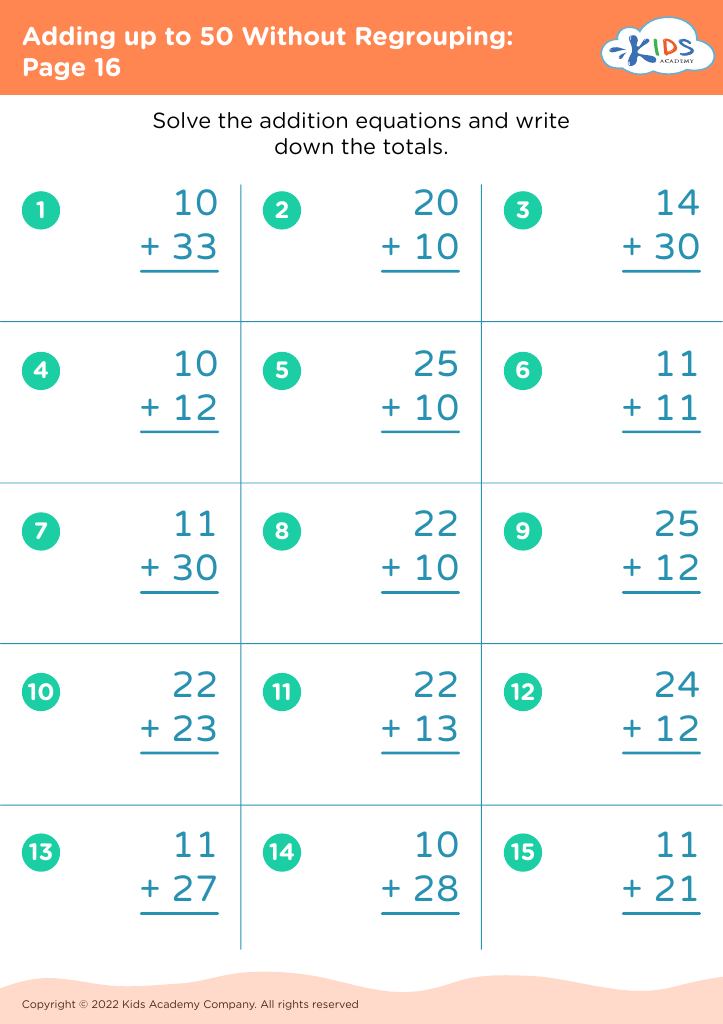
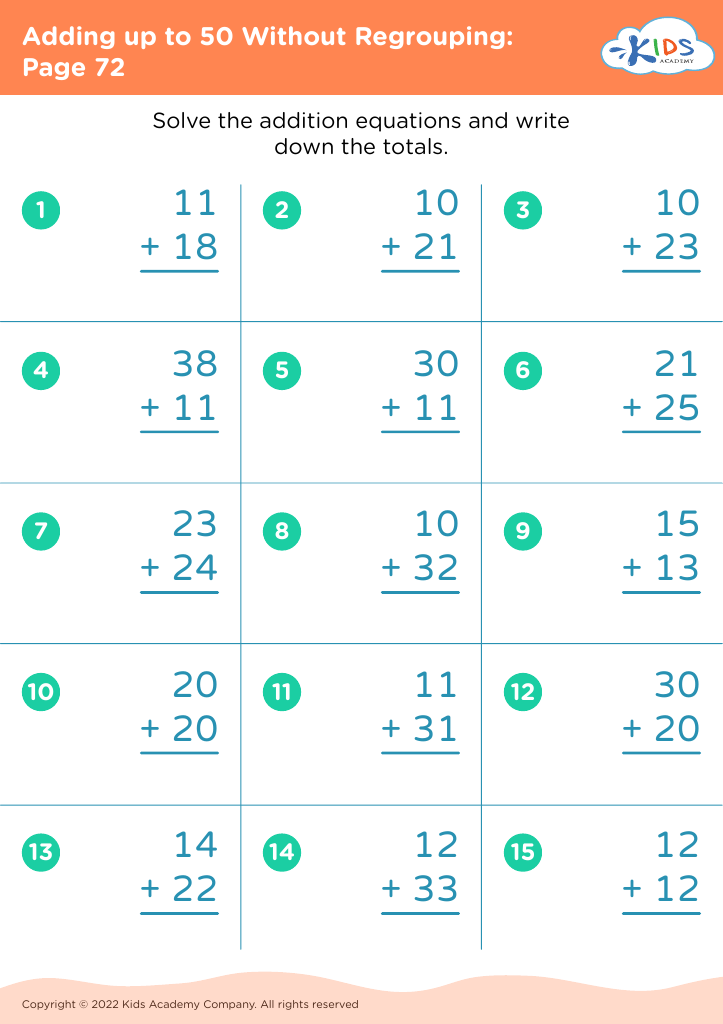
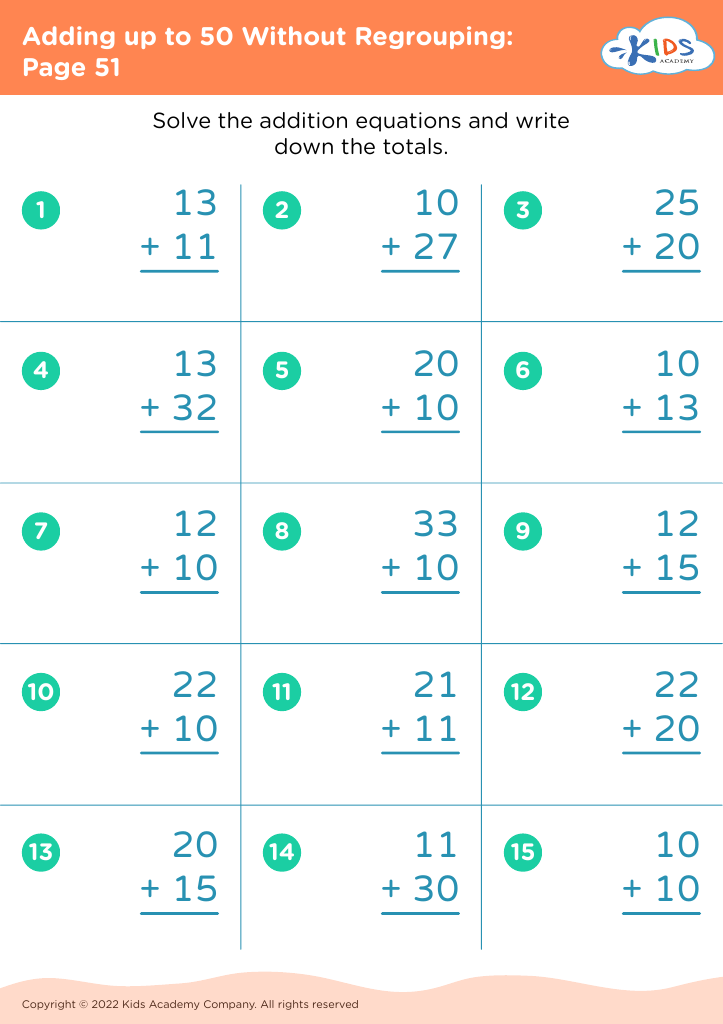


Parents and teachers should prioritize basic math skills, particularly the ability to add up to 50 without regrouping, for children aged 7-8, for several important reasons. First, this foundational skill enhances cognitive development and sharpens problem-solving abilities. Mastering simple addition without regrouping builds a strong number sense, enabling students to understand more complex mathematical concepts later on.
Secondly, these basic math skills are crucial for everyday life. From managing allowance money to estimating costs while shopping, addition is a skill that students will use regularly. By encouraging proficiency in this area, parents and teachers help students build confidence in their abilities, minimizing math anxiety and fostering a positive attitude toward learning.
In addition, early math proficiency has a significant impact on a child's academic trajectory. Research shows that solid foundational skills correlate with later success in higher-level math topics. Therefore, investing time and resources in developing basic addition skills can create a ripple effect, paving the way for future academic achievements.
Moreover, teaching these skills can be fun and engaging through games and activities, making learning enjoyable and relevant. Ultimately, equipping children with strong basic math skills empowers them for academic success and prepares them for real-world challenges.