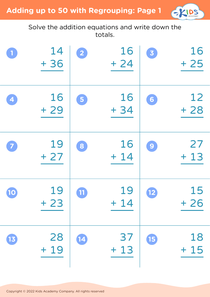
Comparing Fractions Adding up to 50 Without Regrouping Worksheets for Ages 7-8
7 filtered results
-
From - To
Discover our engaging "Comparing Fractions Adding up to 50 Without Regrouping" worksheets, specially designed for children aged 7-8! These resources help young learners master the concept of comparing fractions while enhancing their addition skills without the need for regrouping. By providing a variety of exercises and interactive activities, our worksheets encourage children to work with fractions creatively and confidently. Perfect for classroom or home use, these materials are tailored to foster critical thinking and problem-solving abilities in a fun, supportive environment. Watch your child excel in math as they explore fractions and develop essential arithmetic skills today!
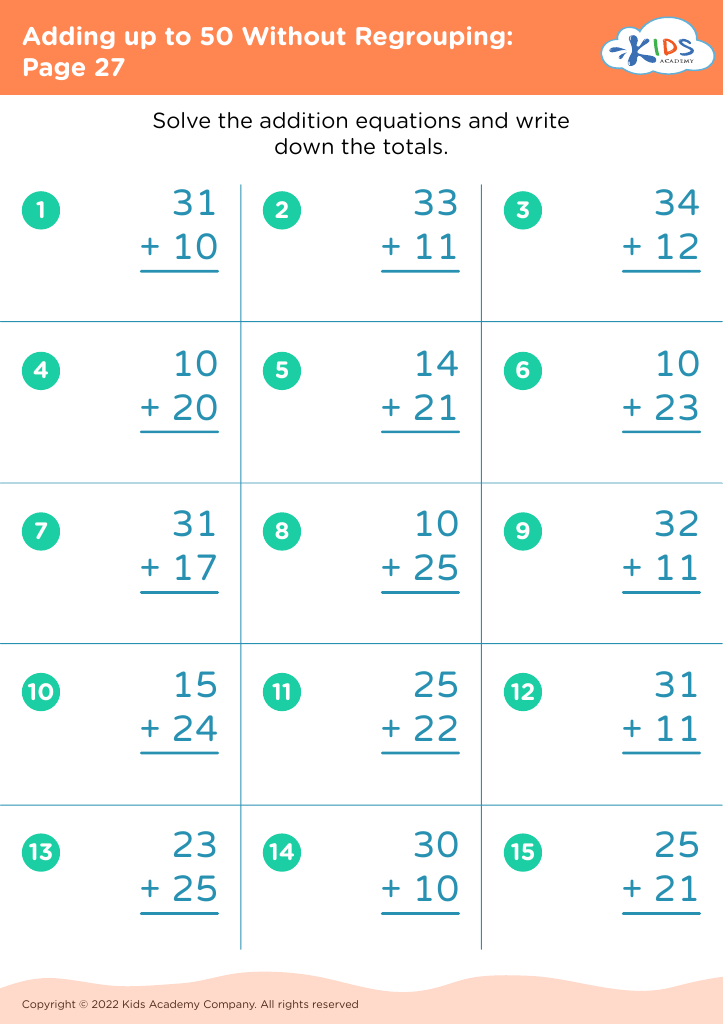
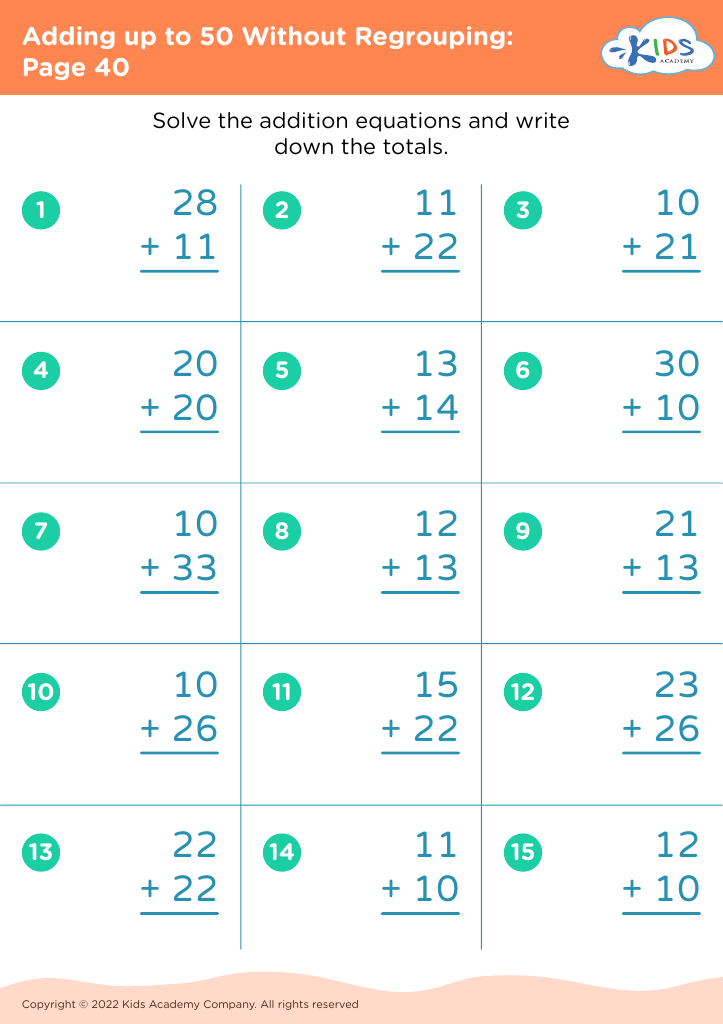
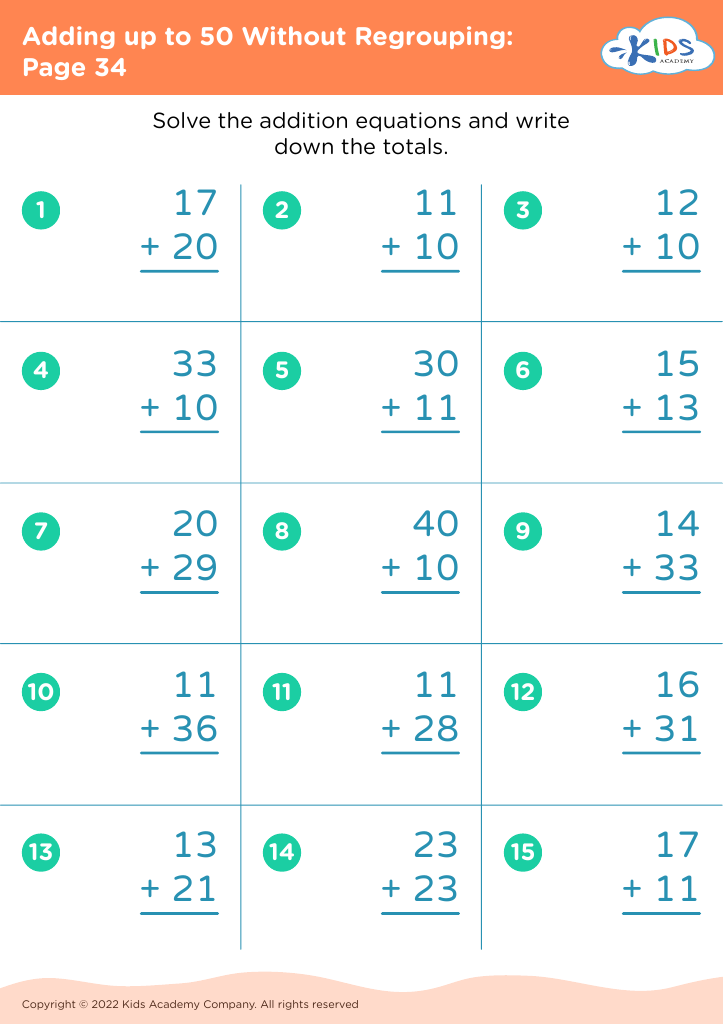
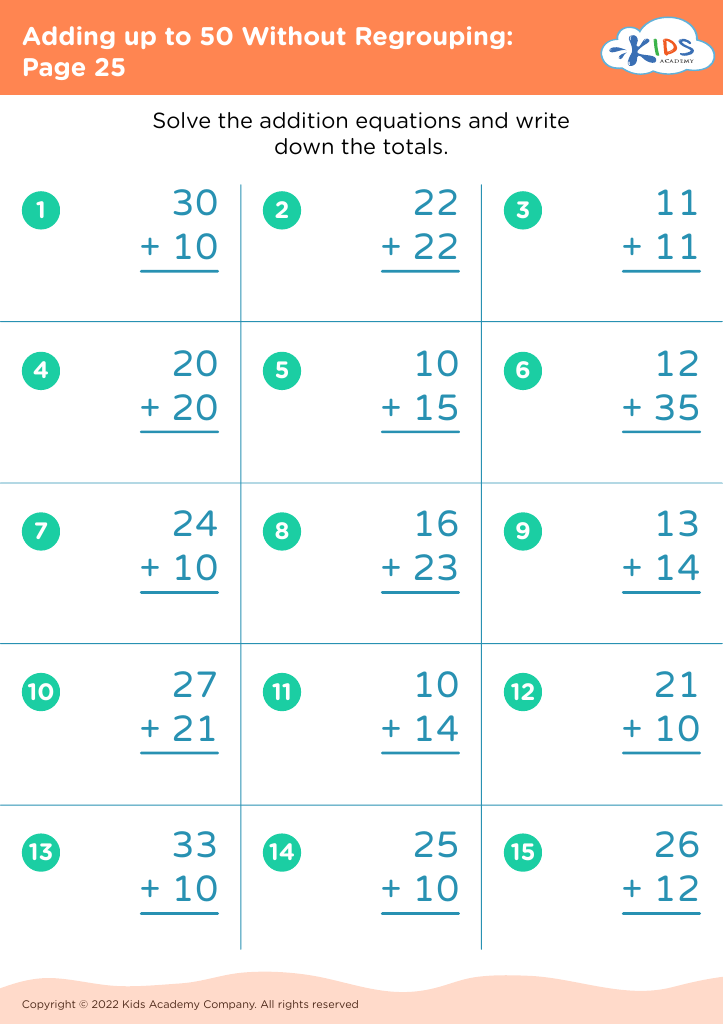
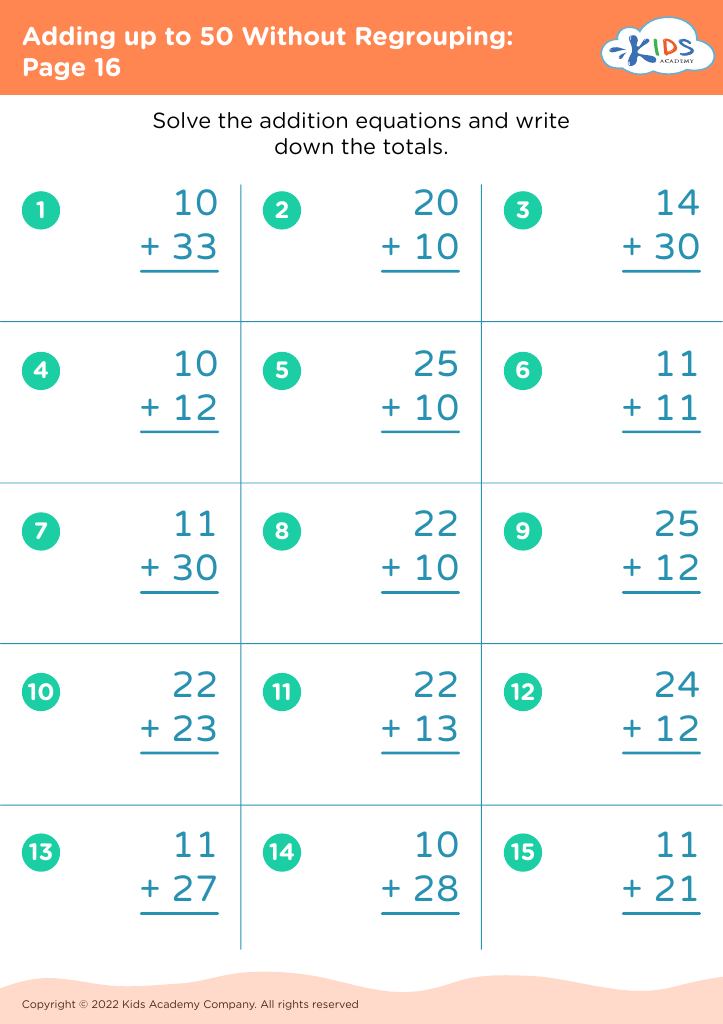
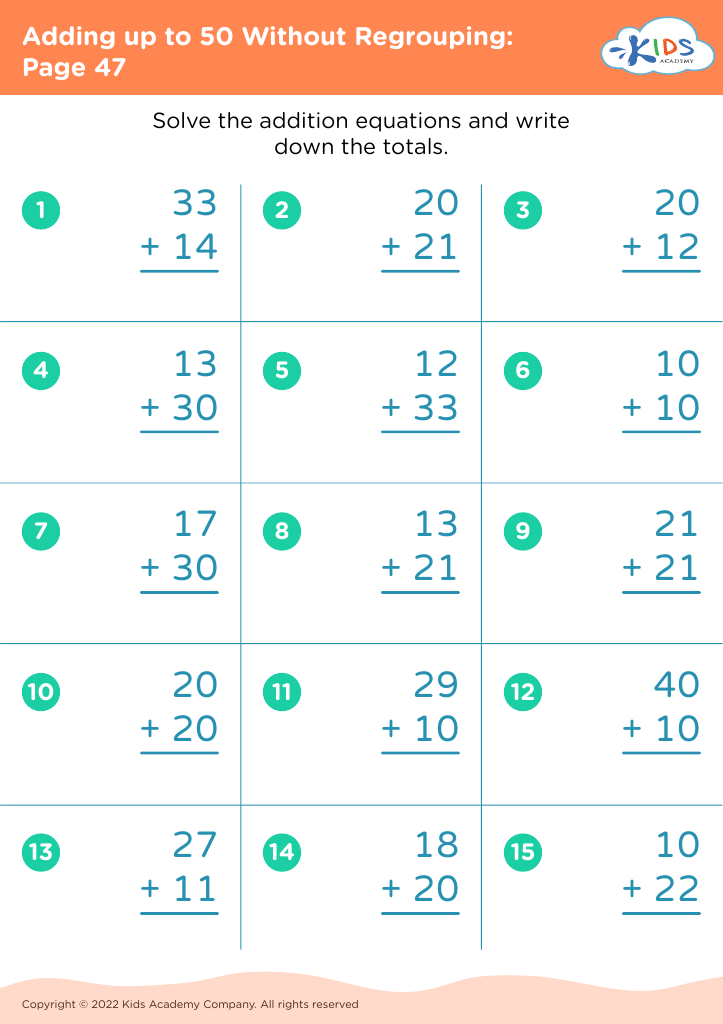
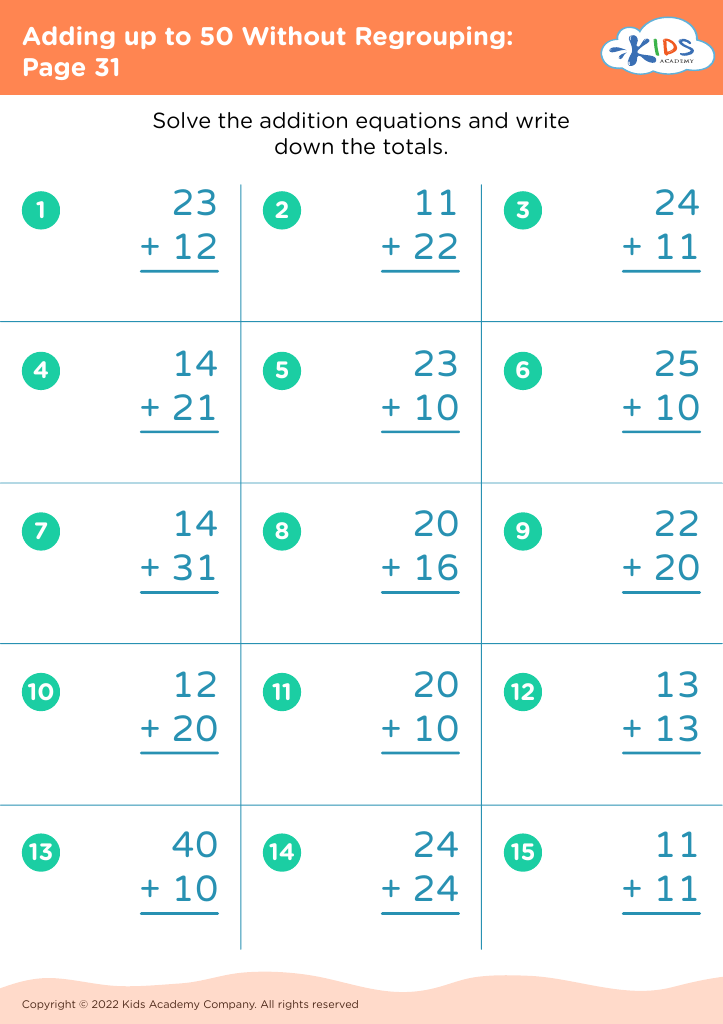


Comparing fractions and adding them up to 50 without regrouping is a crucial skill for children ages 7-8. At this age, students are at a pivotal stage in developing their mathematical understanding. By learning how to compare fractions, they build a foundation for more advanced concepts such as addition, subtraction, and algebra. This skill also fosters critical thinking, as children need to determine which fractions are larger or smaller, promoting logical reasoning abilities.
Adding fractions to reach a sum without regrouping reinforces their computational skills and enhances their number sense. It encourages precision and accuracy while nurturing confidence in tackling arithmetic challenges. Additionally, by working with a manageable total like 50, children can practice their calculations efficiently without feeling overwhelmed.
Parents and teachers play a vital role in nurturing these skills through engaging activities and real-life applications. This engagement not only makes learning fun but also strengthens the partnership between home and school. Ultimately, understanding how to compare and add fractions is an essential part of a child’s mathematical journey, setting them up for future academic success and practical problem-solving in their everyday lives.