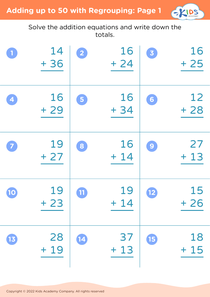
Identifying shapes Adding up to 50 Without Regrouping Worksheets for Ages 7-8
6 filtered results
-
From - To
Our "Identifying Shapes Adding up to 50 Without Regrouping Worksheets for Ages 7-8" are expertly designed to blend arithmetic practice with basic geometry. These worksheets help young learners enhance their addition skills while simultaneously identifying and categorizing common shapes. Each page features engaging exercises that make math fun and accessible, promoting confidence and a solid mathematical foundation. Whether for classroom use or home practice, our worksheets ensure a comprehensive approach to early math education, tailored to build essential skills in a dynamic and practical way. Download today to support your child’s educational journey!
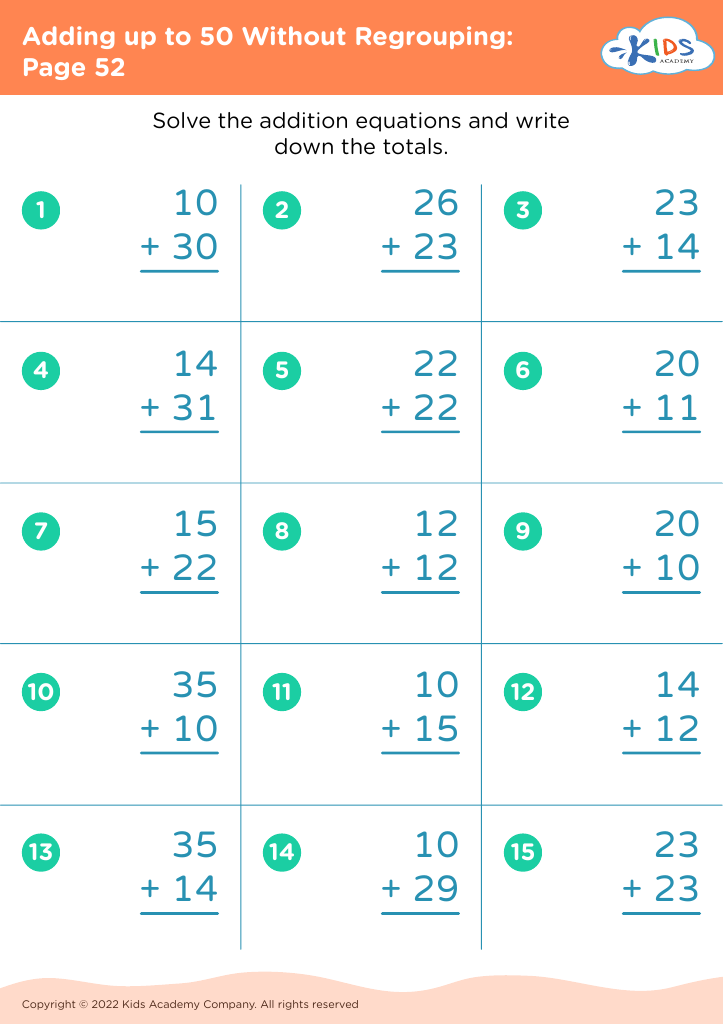
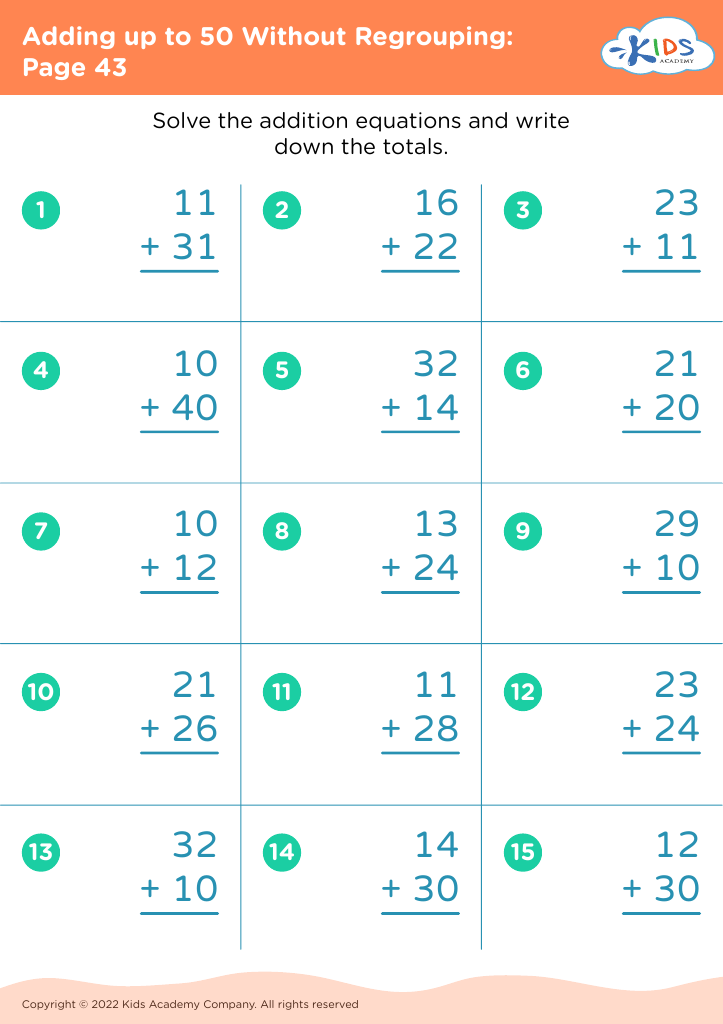
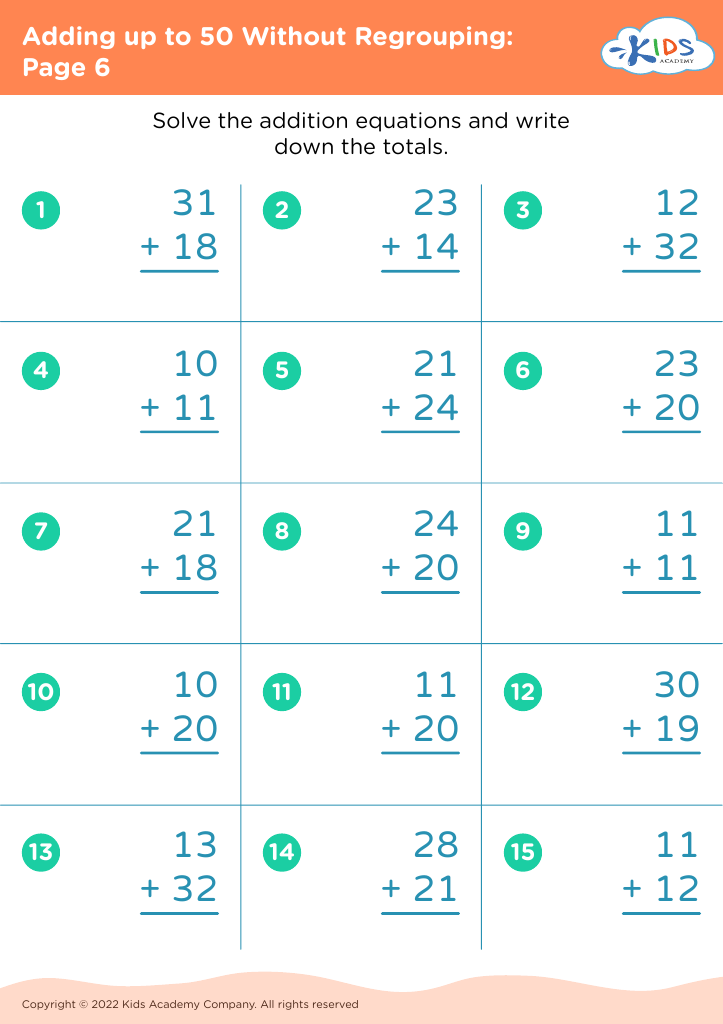
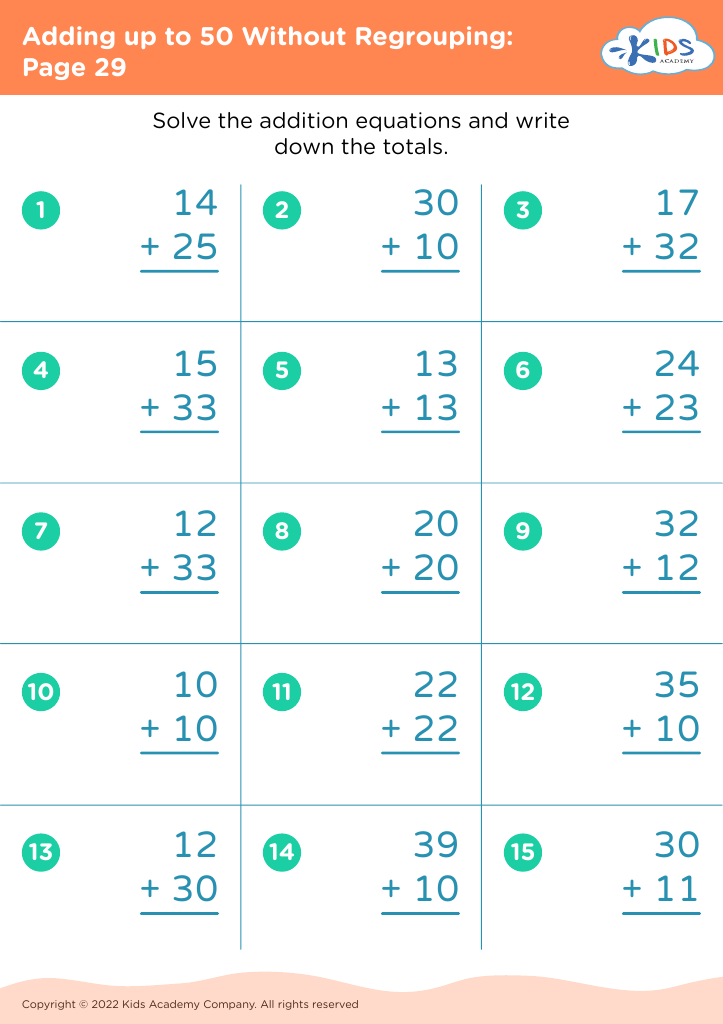
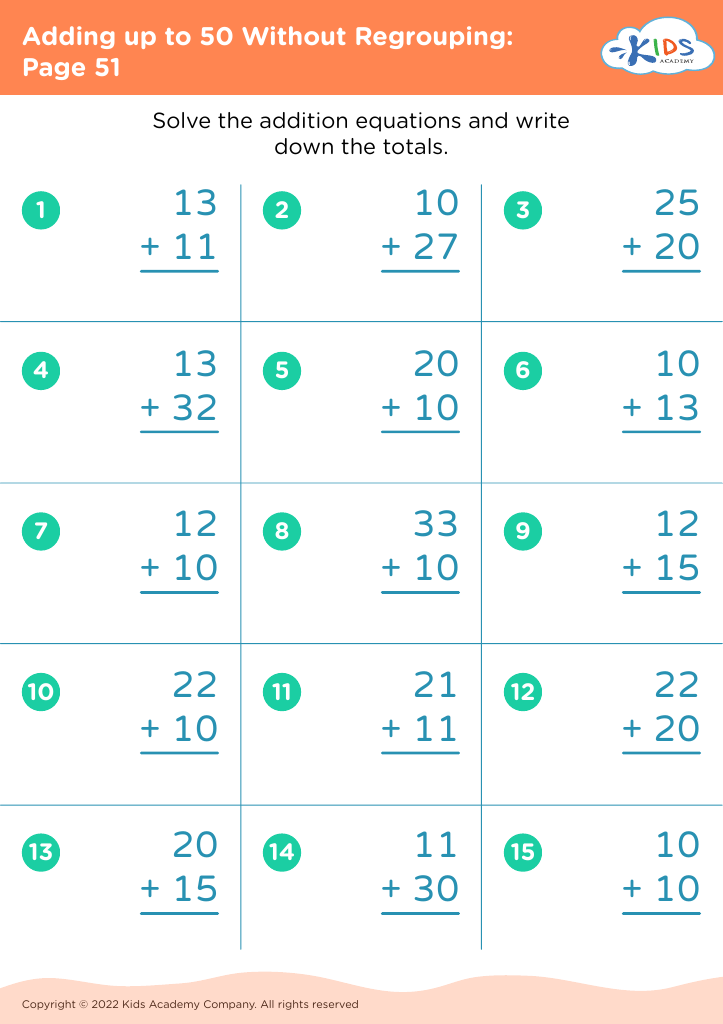
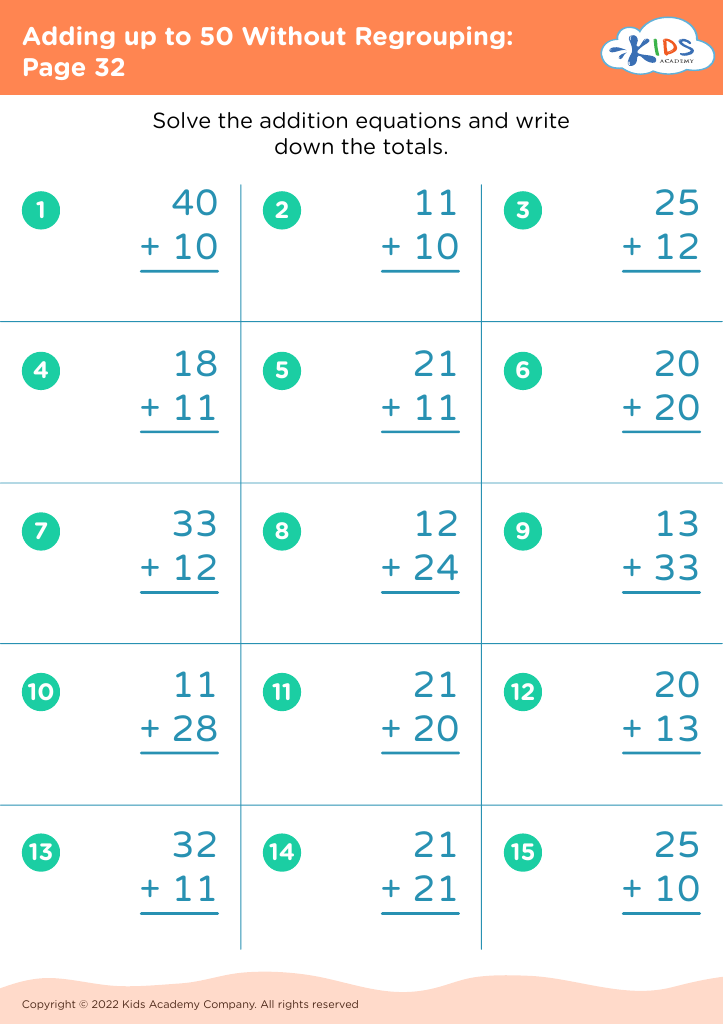


Identifying shapes and adding up to 50 without regrouping are foundational skills crucial for children aged 7-8. Parents and teachers should prioritize these skills as they form the bedrock for more complex mathematical and geometric understanding. Recognizing shapes helps children develop spatial awareness and critical thinking. It enhances their ability to distinguish and categorize objects based on geometric properties, facilitating problem-solving skills in real-world contexts such as engineering and arts.
Similarly, adding up to 50 without regrouping solidifies basic arithmetic knowledge. It builds confidence and fluency in addition, enabling the child to handle larger numbers with ease later on. This skill helps students understand the concept of value and the importance of number sense, creating a smooth transition to more advanced operations like regrouping and subtraction.
Moreover, early proficiency in these areas boosts overall academic performance and ensures children remain on track with standard educational milestones. A strong grasp of foundational math and geometry also instills a sense of accomplishment and encourages a positive attitude toward learning. Parents and teachers can foster a nurturing environment that emphasizes these essential skills, equipping children with the confidence and competence needed for future academic success.