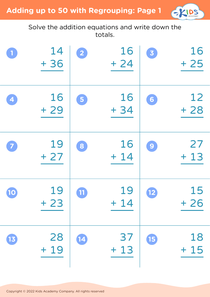
Improve counting skills Adding up to 50 Without Regrouping Worksheets for Ages 7-8
6 filtered results
-
From - To
Enhance your child's counting skills with our "Adding Up to 50 Without Regrouping Worksheets" designed for ages 7-8. These engaging worksheets provide a fun and interactive way to practice addition without regrouping, helping students build a solid foundation in math. Each worksheet features clear instructions and various exercises that promote understanding of number relationships and enhance mental math abilities. By using these resources, kids will gain confidence as they master the art of adding two-digit numbers up to 50. Perfect for home or classroom use, these worksheets ensure effective learning while keeping young minds motivated and eager to explore mathematical concepts.
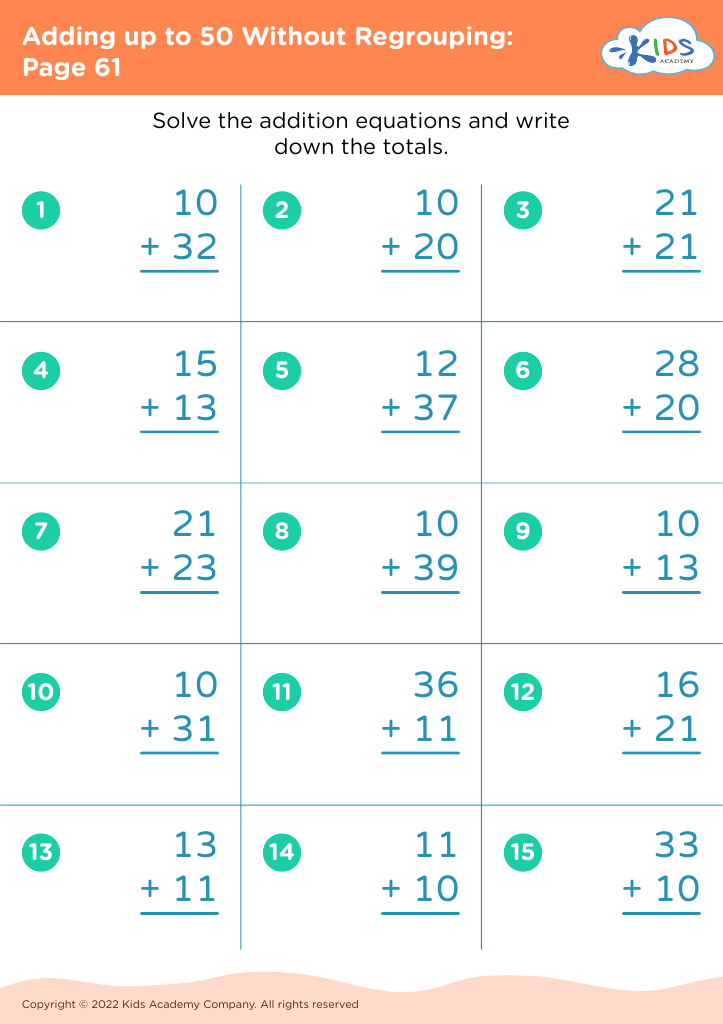
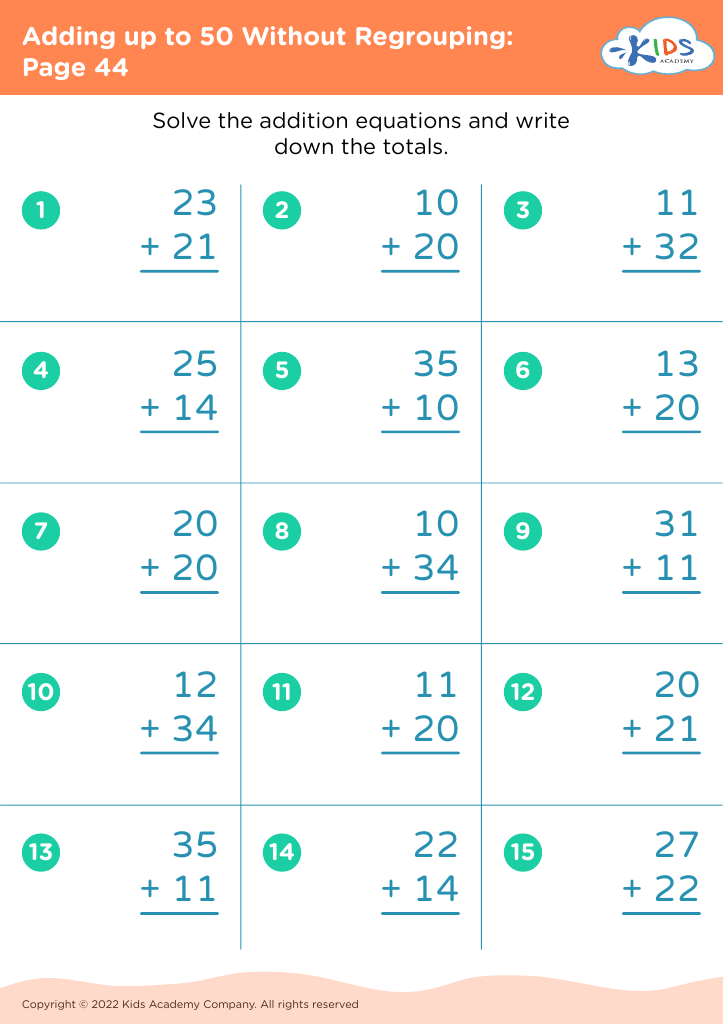
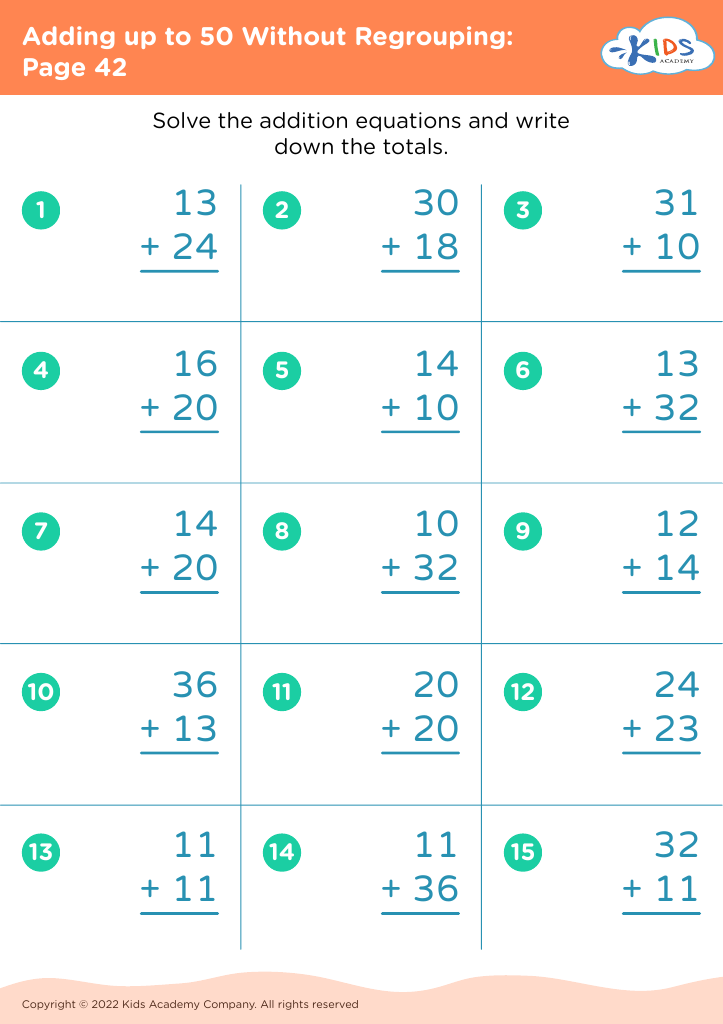
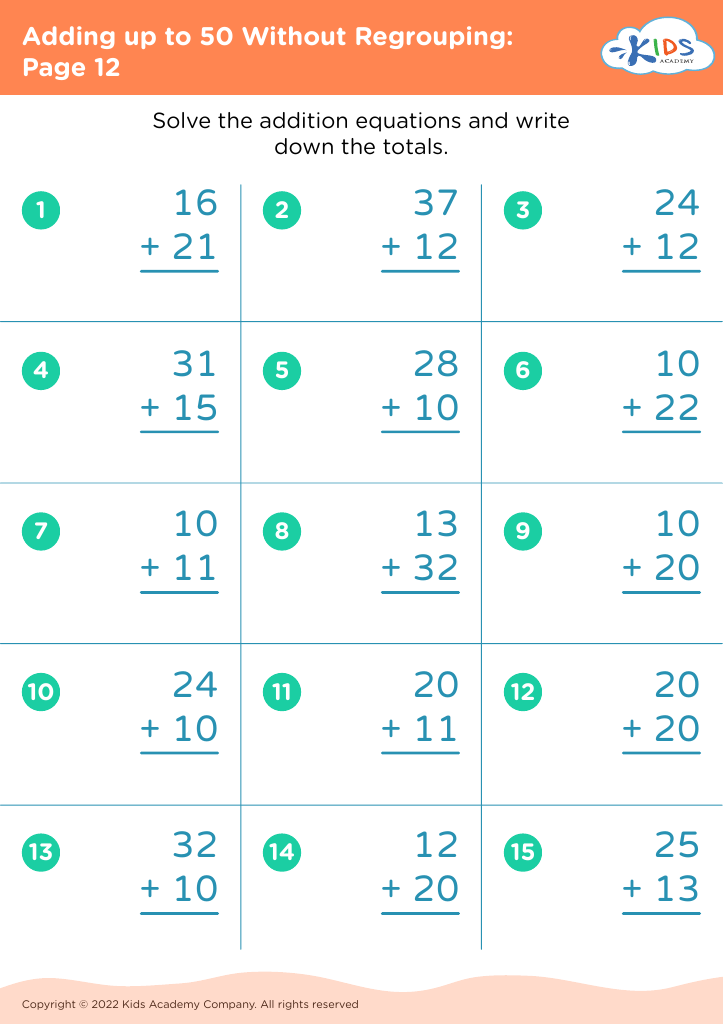
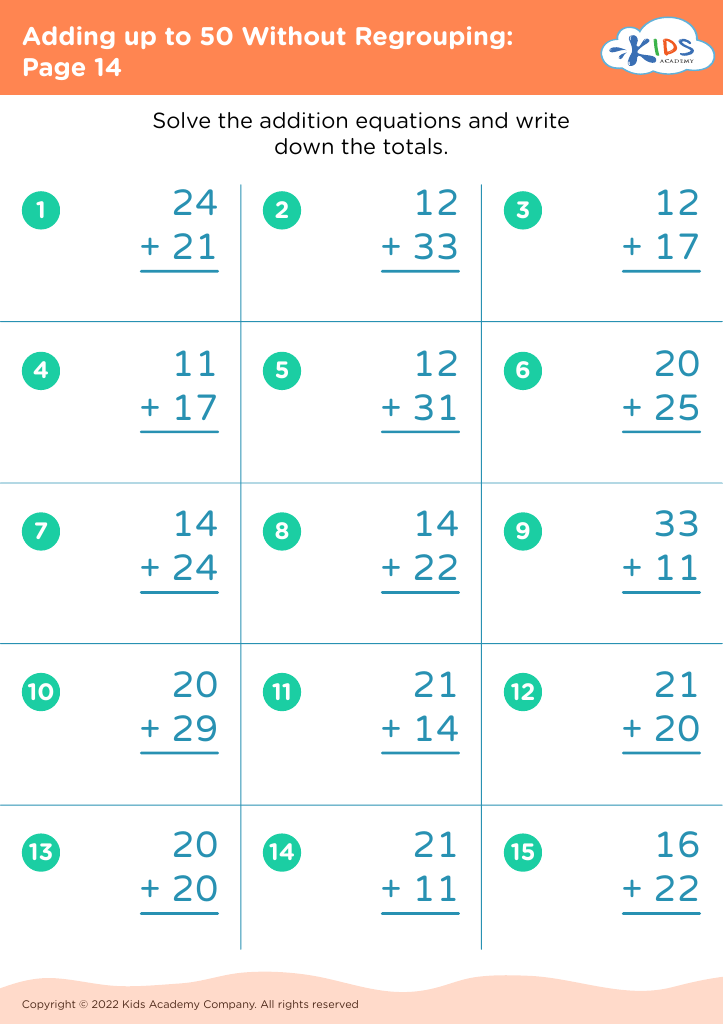
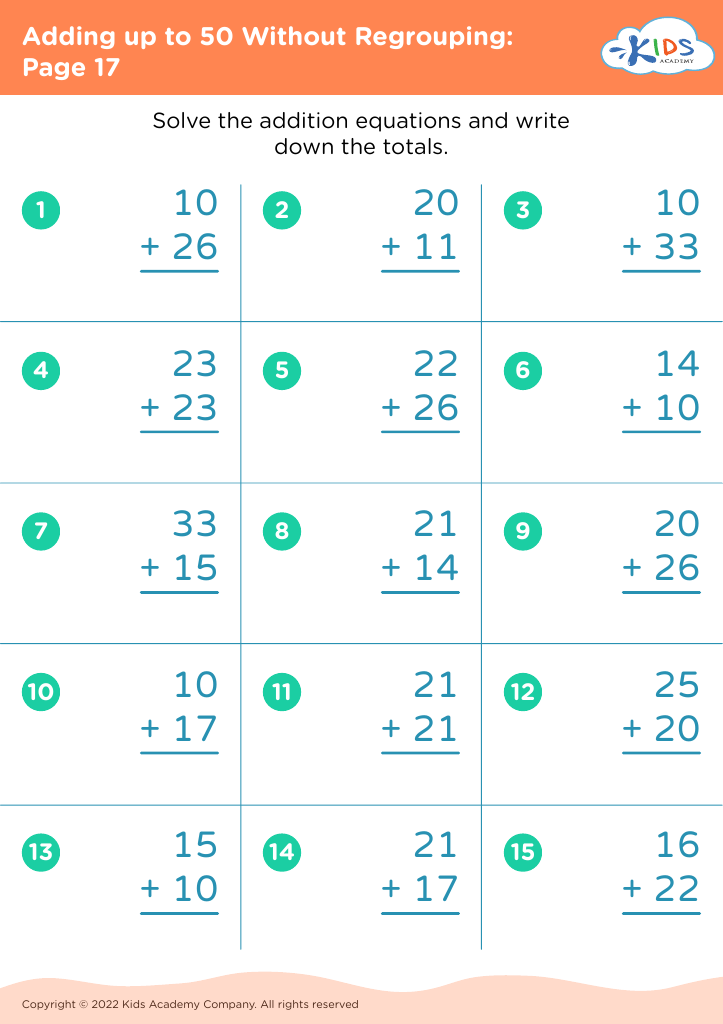


Improving counting skills and mastering addition up to 50 without regrouping is crucial for children aged 7-8 because these foundational abilities set the stage for their future math competence. At this age, children are transitioning from basic arithmetic to more complex mathematical concepts. Proficiency in counting and adding helps build confidence and instills a sense of accomplishment that motivates them to engage more in learning.
Additionally, strong counting skills assist in daily activities, such as managing money, measuring ingredients in cooking, or organizing items, fostering practical life skills. Furthermore, as mathematics is the language of science and technology, early math skills support a child’s ability to excel in future subjects. Teachers and parents should prioritize these skills to prevent gaps in understanding that could lead to challenges as the child encounters more advanced concepts like subtraction with borrowing or multiplication.
Lastly, children who develop strong numerical fluency are more likely to contribute actively to classroom activities and show a positive attitude toward learning. By reinforcing counting and addition skills, educators and parents can provide a firm foundation that prepares children for lifelong learning and problem-solving.