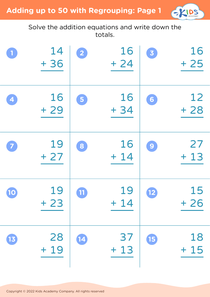
Reading comprehension Adding up to 50 Without Regrouping Worksheets for Ages 7-8
3 filtered results
-
From - To
Enhance your child's reading comprehension skills with our "Reading Comprehension: Adding Up to 50 Without Regrouping Worksheets" designed for ages 7-8. These engaging worksheets seamlessly integrate math and literacy, encouraging young learners to read carefully while practicing addition. Each activity challenges students to interpret word problems and apply their math knowledge, ensuring a comprehensive understanding of both subjects. Perfect for at-home learning or classroom use, our worksheets promote critical thinking and problem-solving skills, making math enjoyable and accessible. Help your child build confidence in reading and math with our expert-curated resources that nurture a love for learning. Start exploring today!
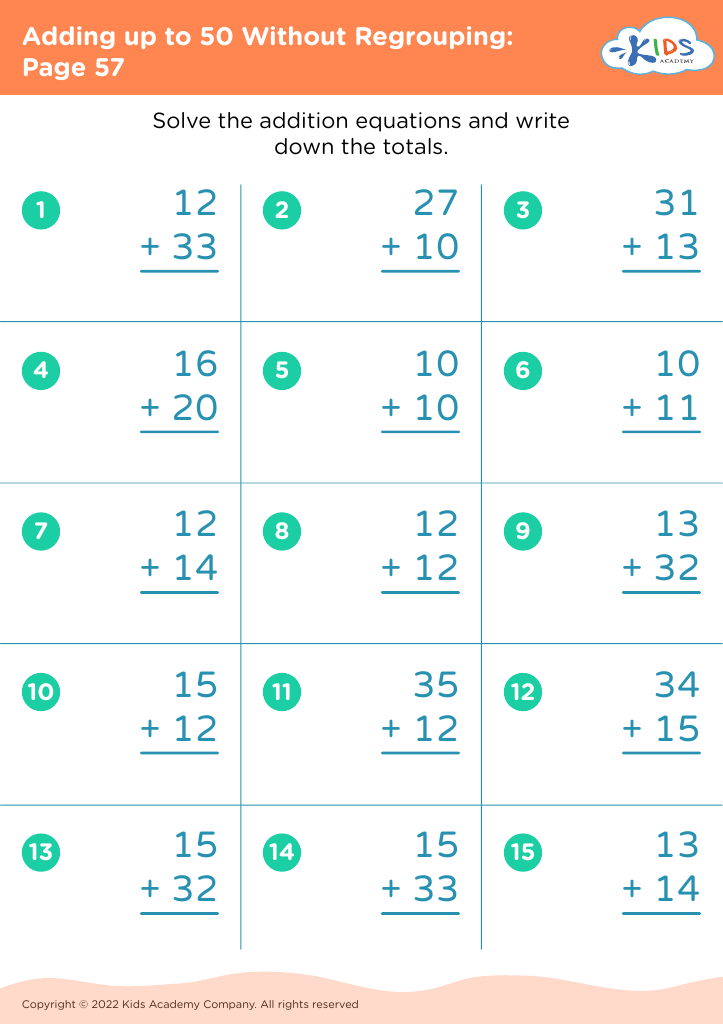
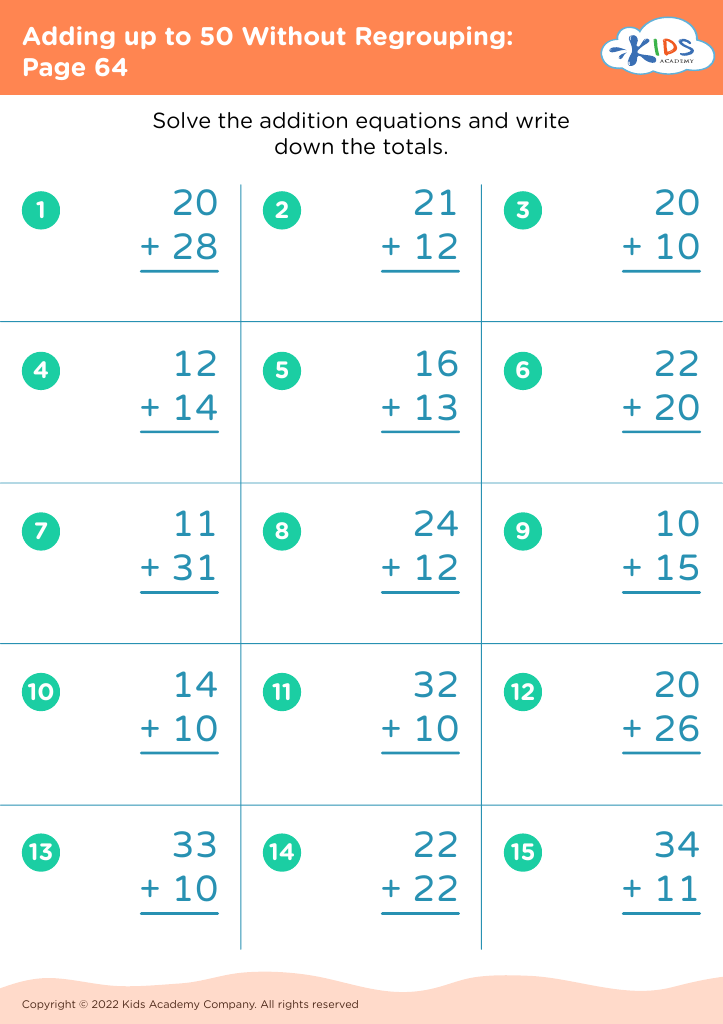
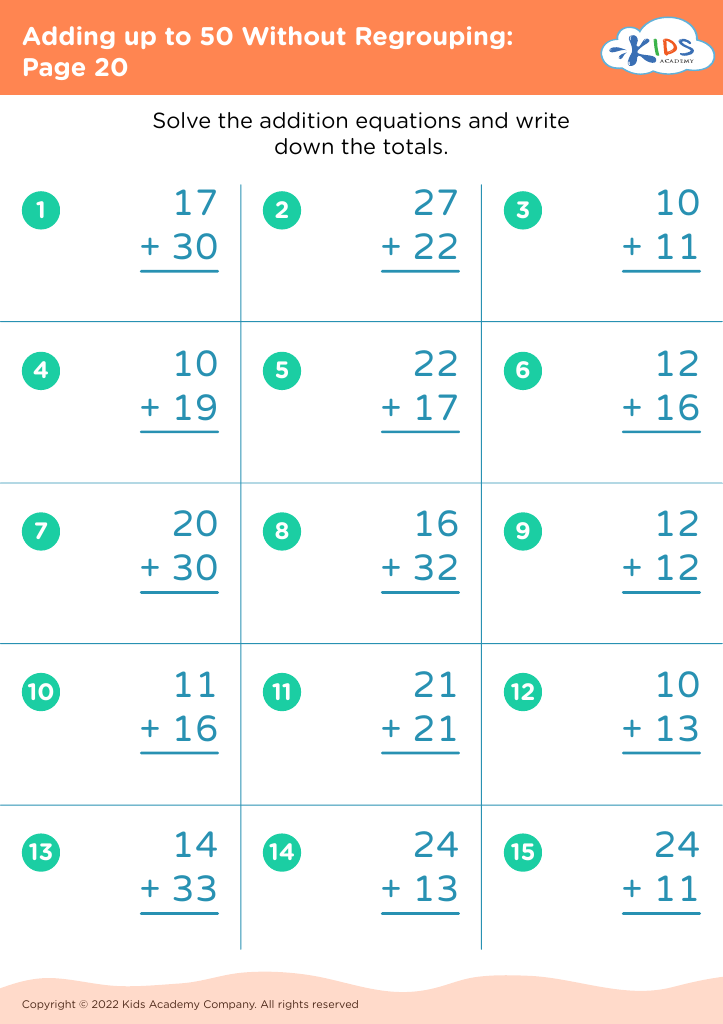


Reading comprehension and mastering addition without regrouping are both essential skills for children aged 7-8, and parents and teachers should prioritize them for several reasons. Firstly, reading comprehension is vital as it enables children to understand and derive meaning from text, fostering critical thinking and analytical skills. As they progress through their education, strong reading abilities enhance learning across all subjects, from science to social studies.
On the other hand, mastering addition without regrouping serves as a foundational math skill. It equips children with the ability to perform calculations efficiently, encouraging confidence in their mathematical abilities. This foundational knowledge subsequently prepares students for more complex arithmetic, including regrouping and subtraction.
Combining these two skill sets nurtures a well-rounded learner, promoting not just fluency in reading and mathematics but also essential problem-solving skills. Additionally, these skills foster cognitive development and encourage curiosity, laying the groundwork for lifelong academic success.
Ultimately, when parents and teachers invest time and resources into improving reading comprehension and math skills, they are empowering children to thrive in school and beyond, ensuring they are equipped for future challenges in a rapidly evolving world.