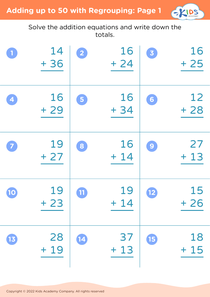
Understanding fractions Adding up to 50 Without Regrouping Worksheets for Ages 7-8
13 filtered results
-
From - To
Our "Understanding Fractions Adding Up to 50 Without Regrouping Worksheets for Ages 7-8" are perfect for young learners. Designed to build foundational math skills, these worksheets help children practice adding fractions in a straightforward way without the need for regrouping. Each exercise focuses on fractions and simple addition problems tailored to meet the learning level of 7-8-year-olds. Engaging and fun, these worksheets make mastering fractions and arithmetic enjoyable and stress-free. Improve your child's confidence in math with these expertly crafted activities that turn complex concepts into manageable lessons. Perfect for classroom or homeschooling use.
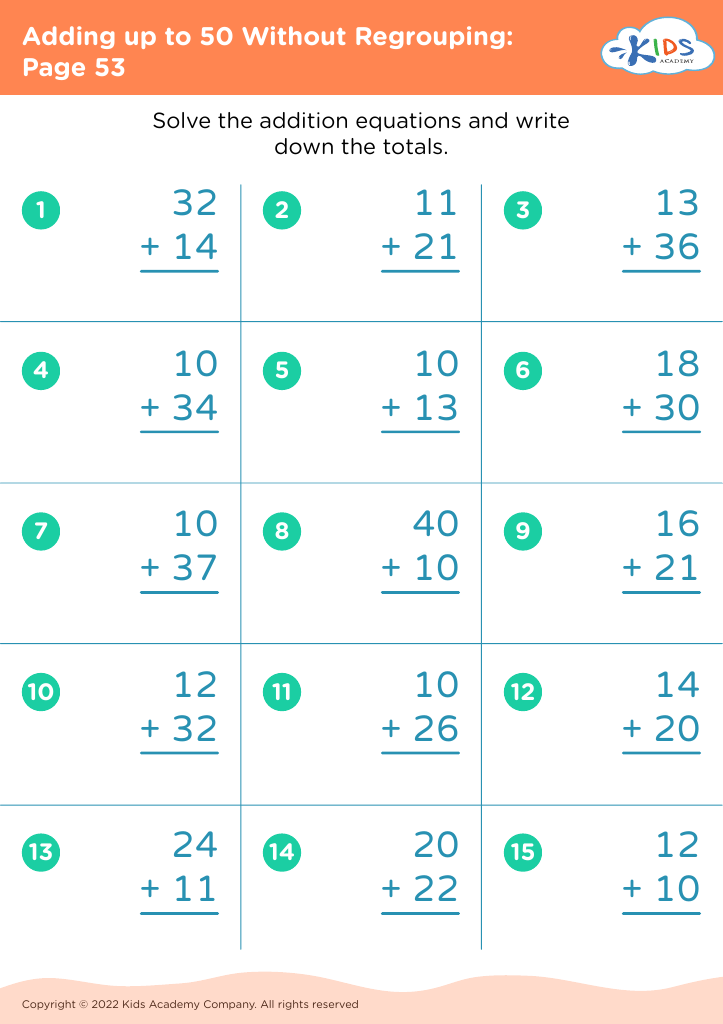
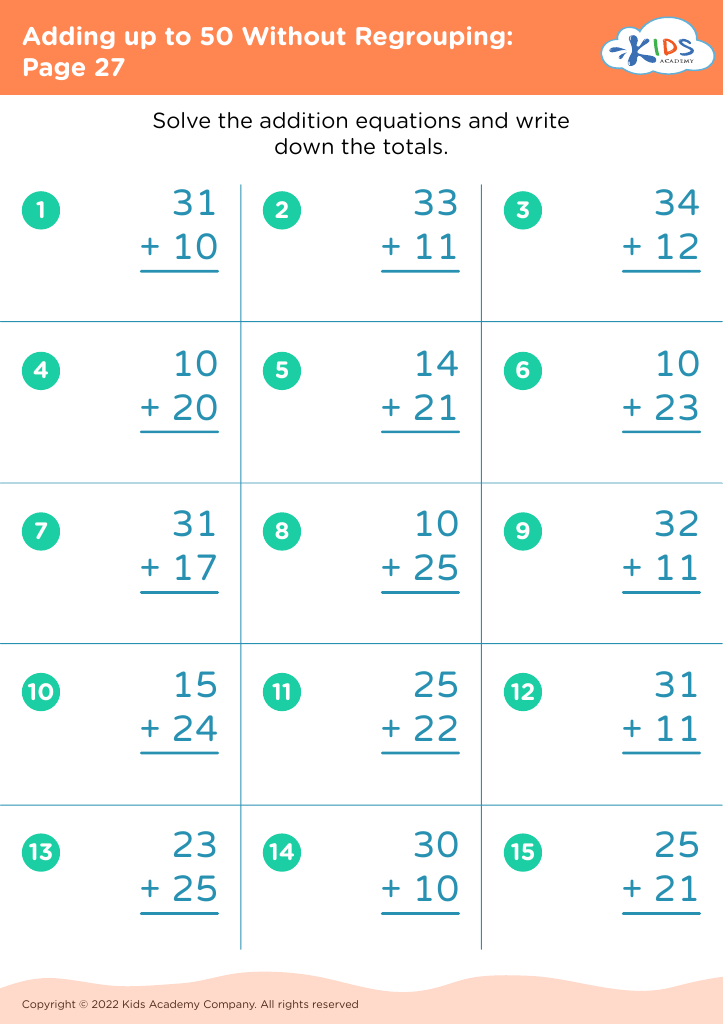
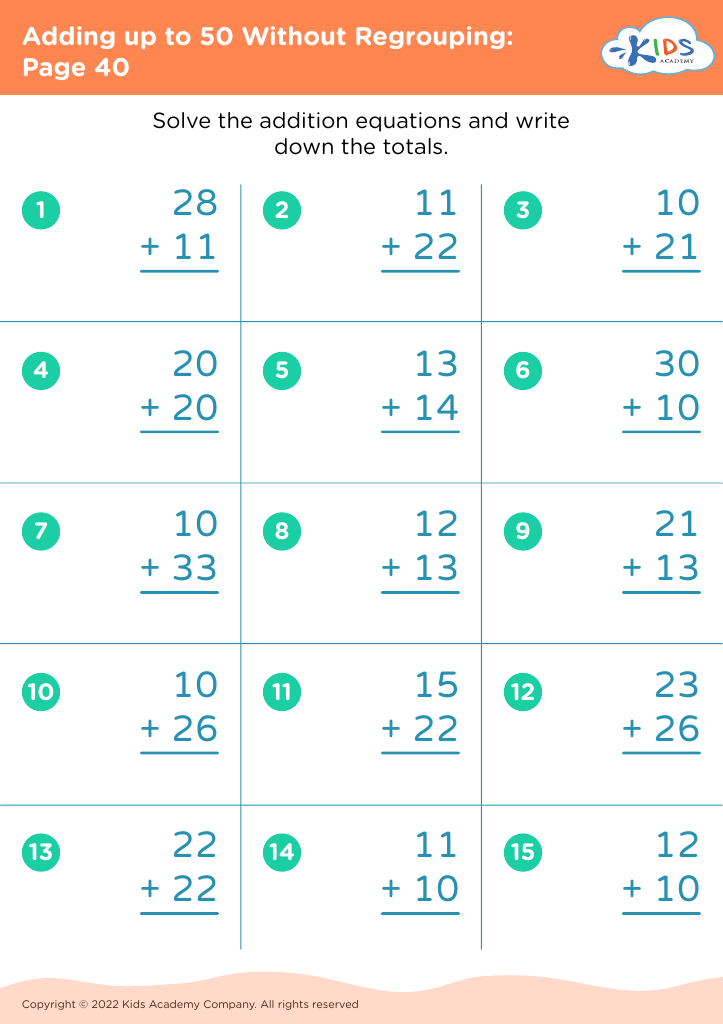
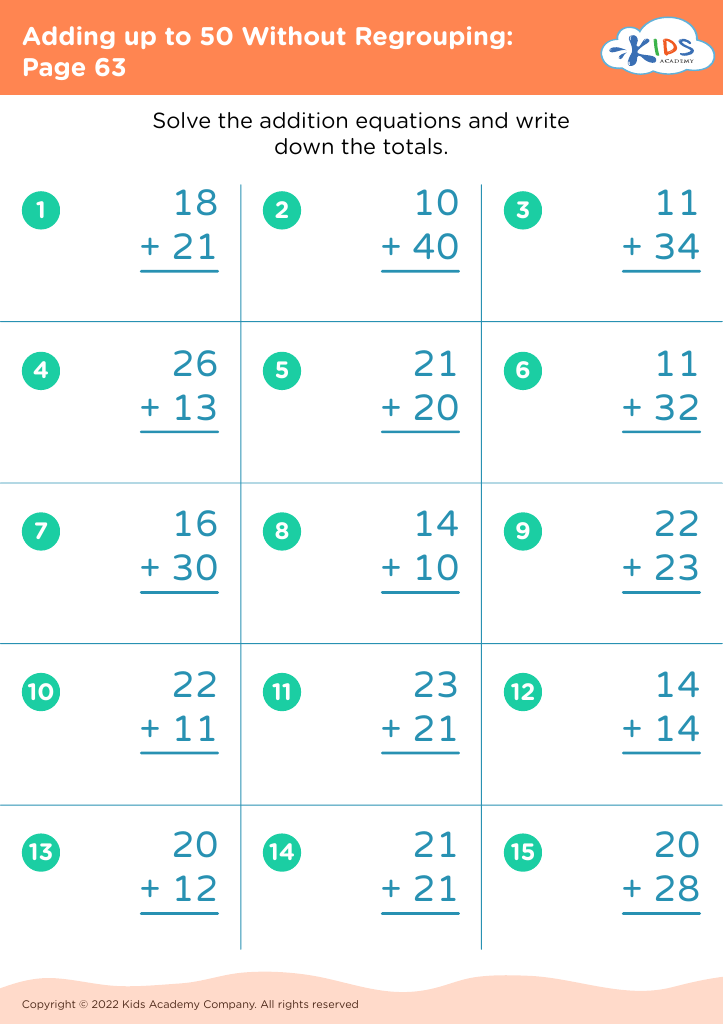
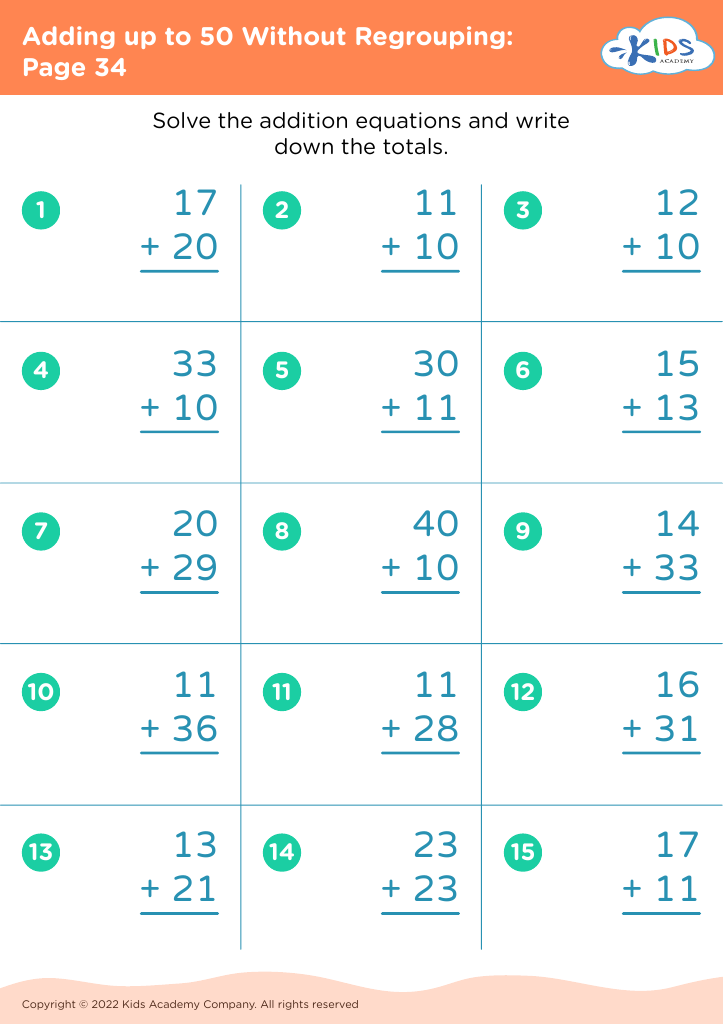
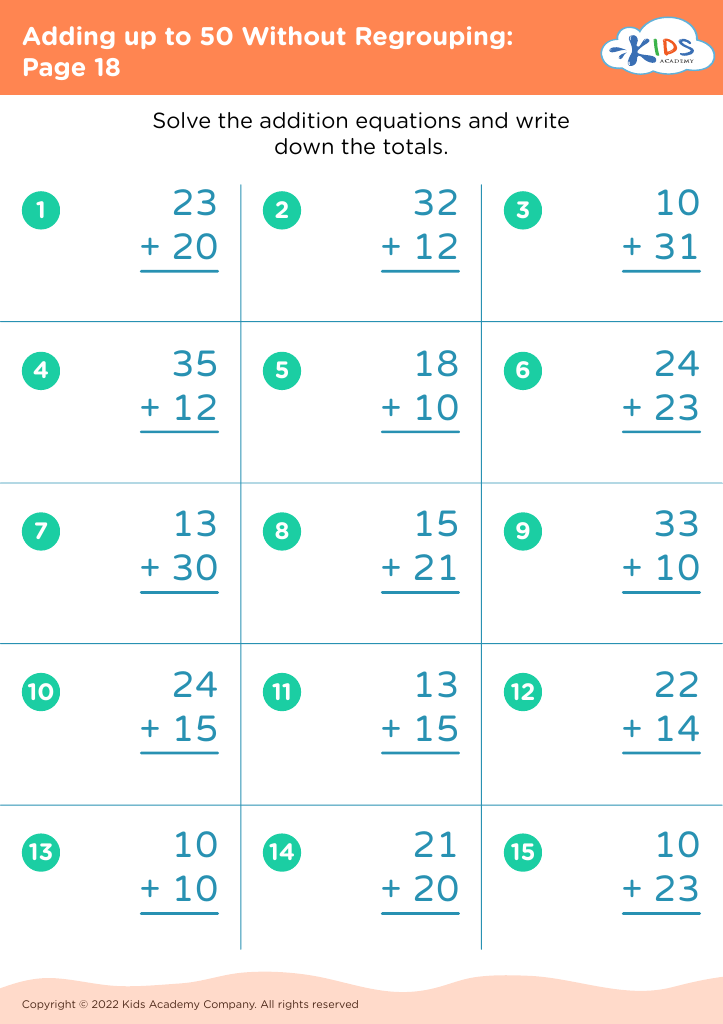
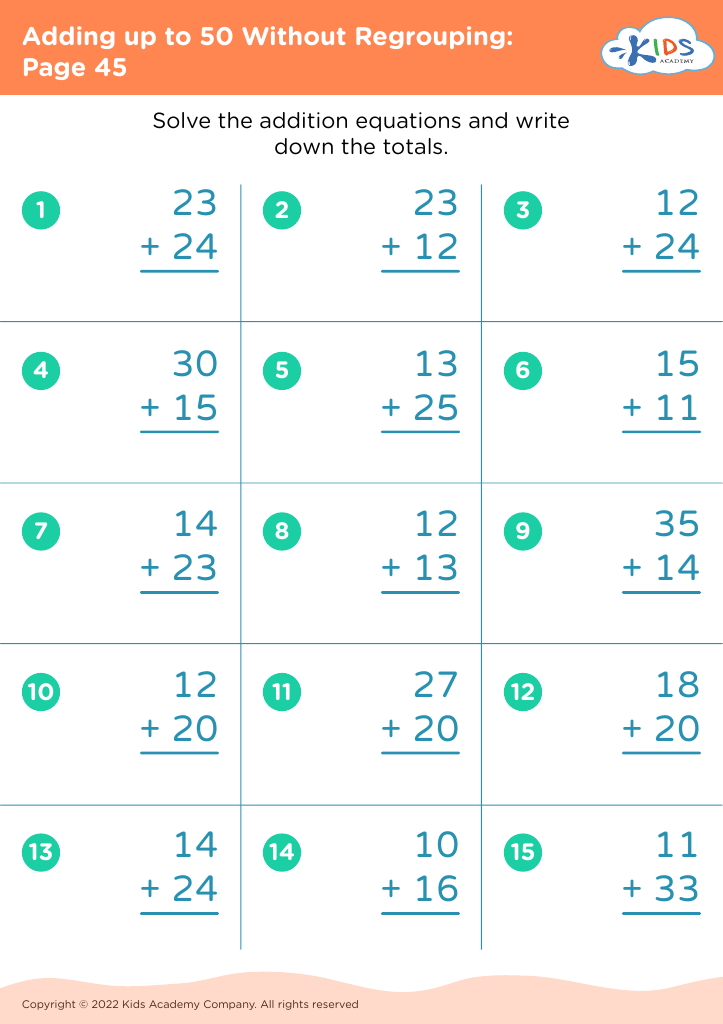
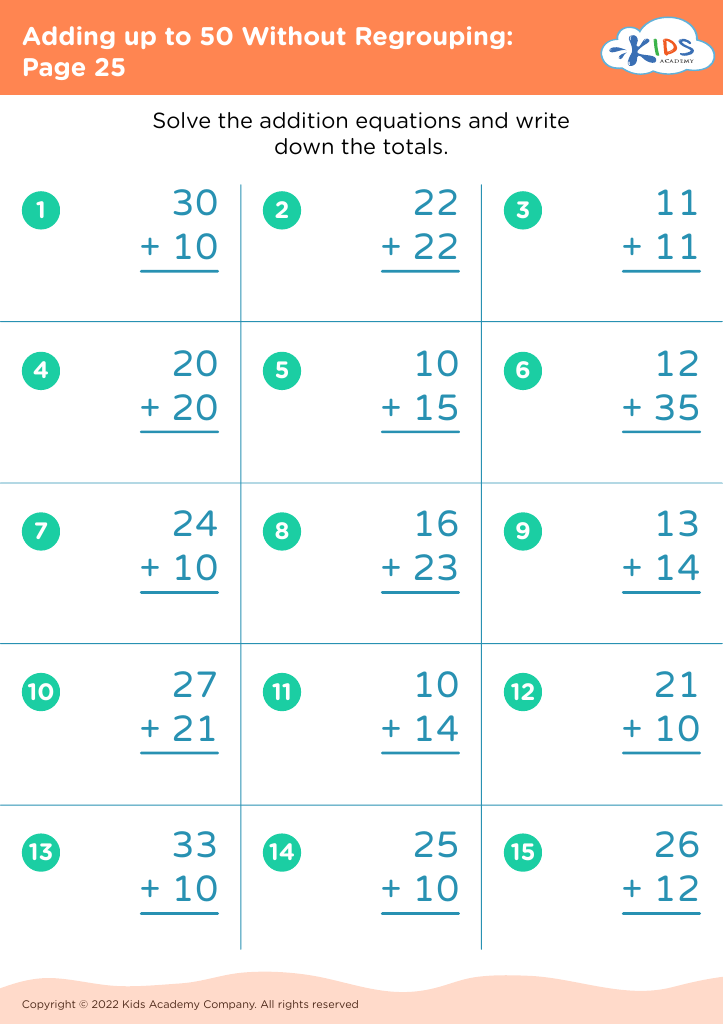
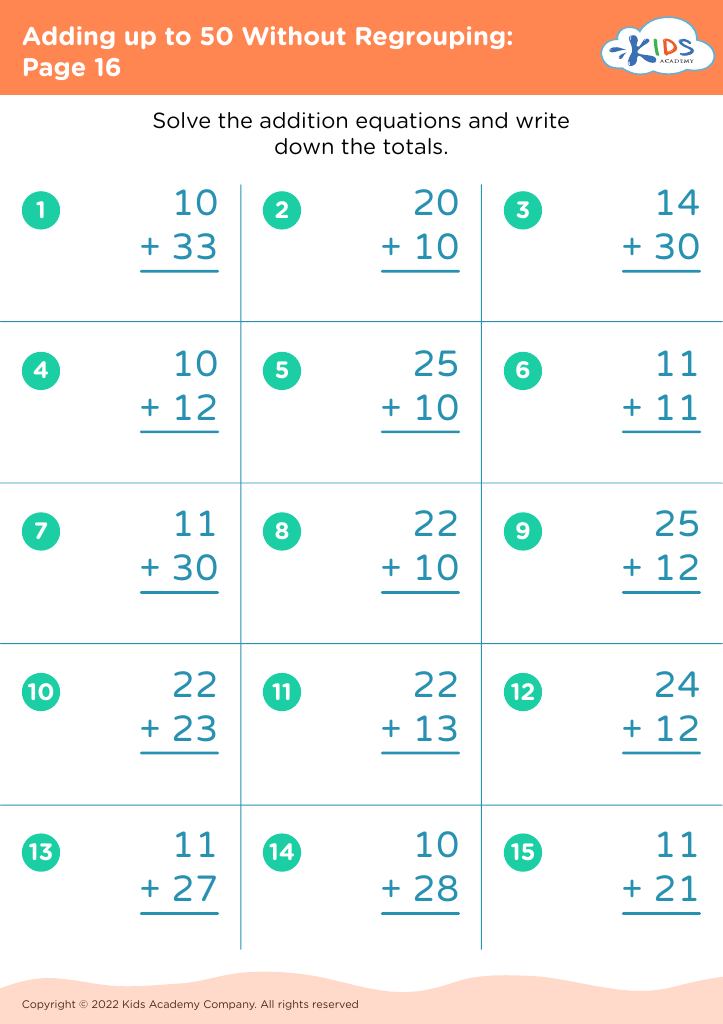
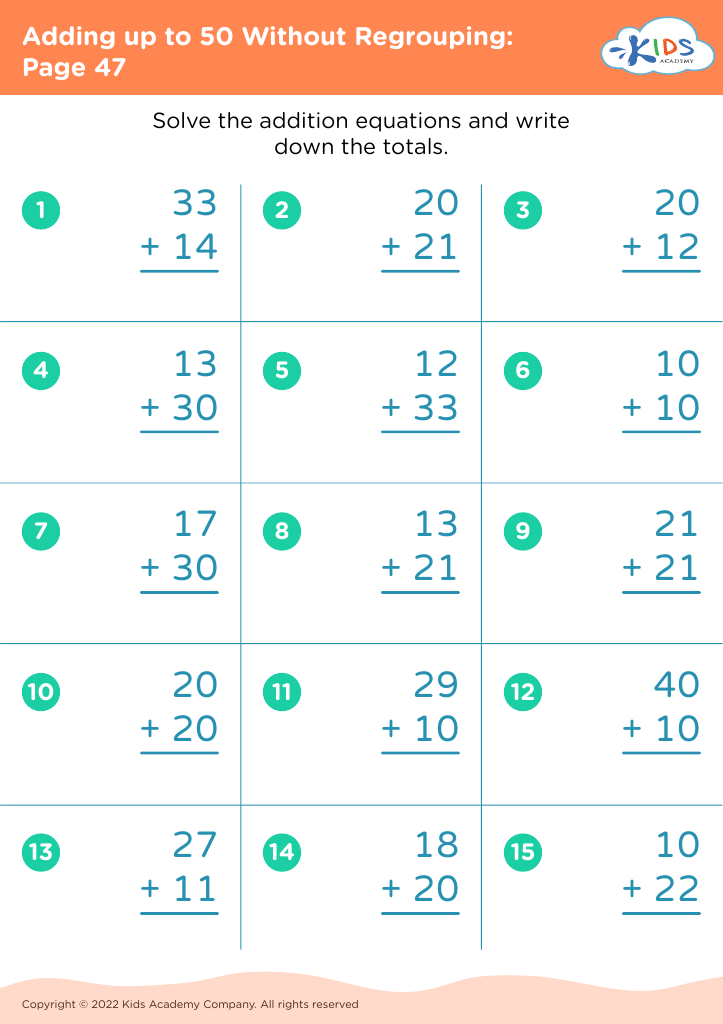
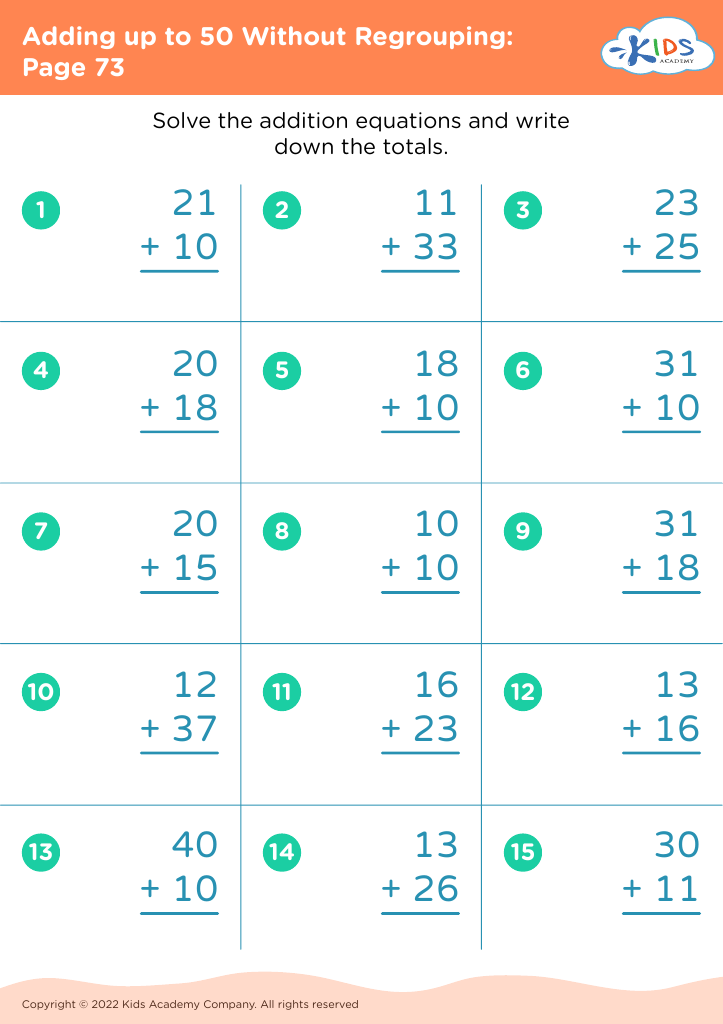
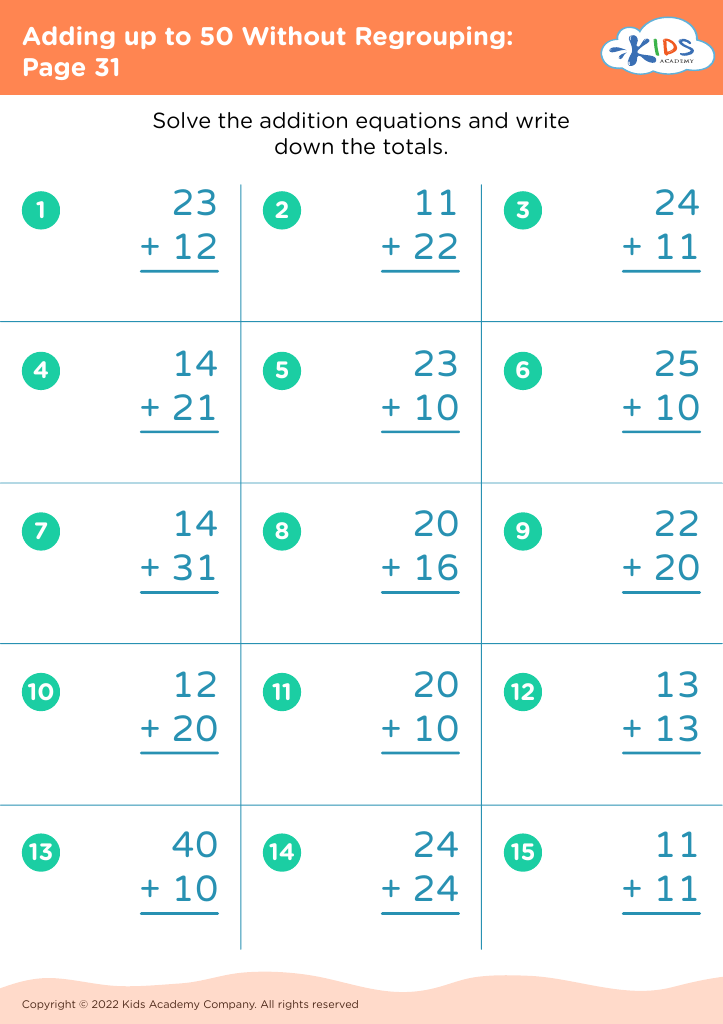
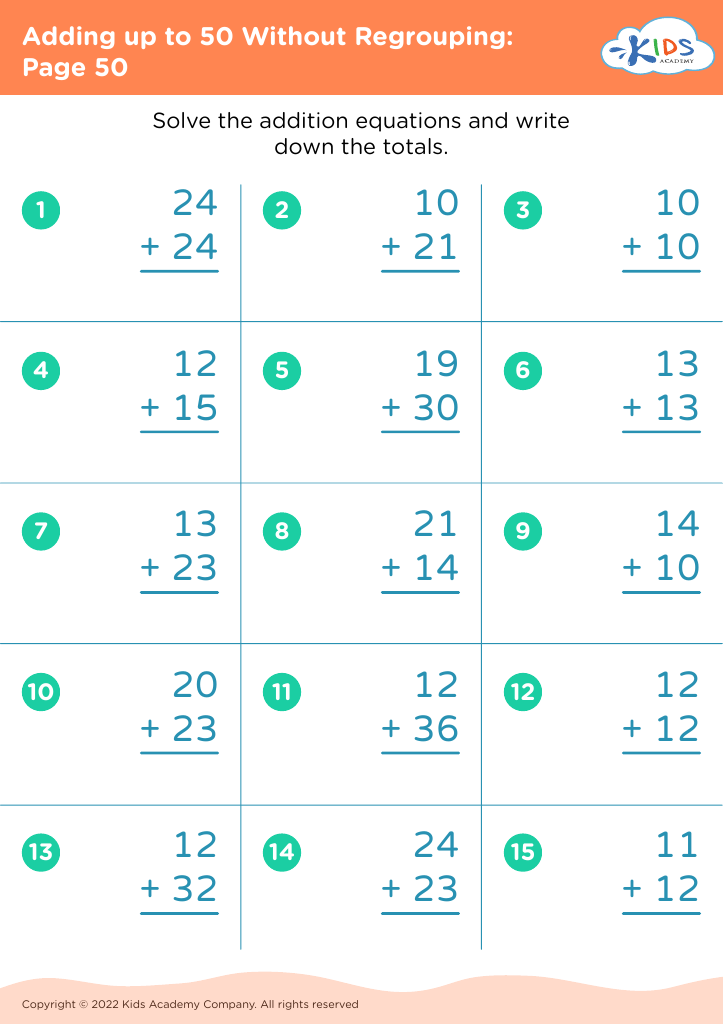


Understanding fractions and addition up to 50 without regrouping is crucial for children aged 7-8 as it builds foundational math skills they will use throughout their education and daily life. At this stage, children are transitioning from basic arithmetic to more complex mathematical concepts. Mastering fractions helps them comprehend parts of a whole, an essential skill for understanding ratios, proportions, and percentages in later grades.
Adding up to 50 without regrouping hones their mental math skills and reinforces number sense, which is the intuition of numbers and their relationships. This skill is critical for developing problem-solving strategies and quick thinking, necessary for higher-level mathematics and daily activities such as making purchases or measuring ingredients in recipes.
Additionally, achieving proficiency in these areas boosts their confidence and sets a positive attitude towards math, reducing math anxiety. Teachers and parents showing interest in these skills can support a child's learning through practical, engaging activities that make math fun and relatable. For example, using visual aids, such as fraction circles, and real-world scenarios for addition problems, strengthens their understanding and retention.
By prioritizing early math skills development, parents and teachers can foster a solid academic foundation, ultimately contributing to the child's long-term success in math and beyond.