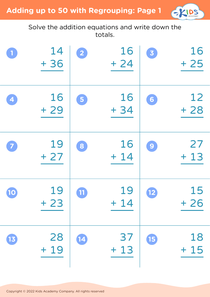
Understanding patterns Adding up to 50 Without Regrouping Worksheets for Ages 7-8
5 filtered results
-
From - To
Introduce your child to masterful math with our "Understanding Patterns Adding up to 50 Without Regrouping Worksheets" designed for ages 7-8. These engaging worksheets help young learners recognize patterns and build strong addition skills by practicing sums up to 50. Without the complexity of regrouping, these exercises are perfect for developing foundational math confidence. Through colorful, fun activities, students enhance their logical thinking while enjoying learning. Perfect for both classroom and at-home practice, these resources aim to make math an enjoyable journey for your child, ensuring a smooth transition to more advanced concepts in the future.
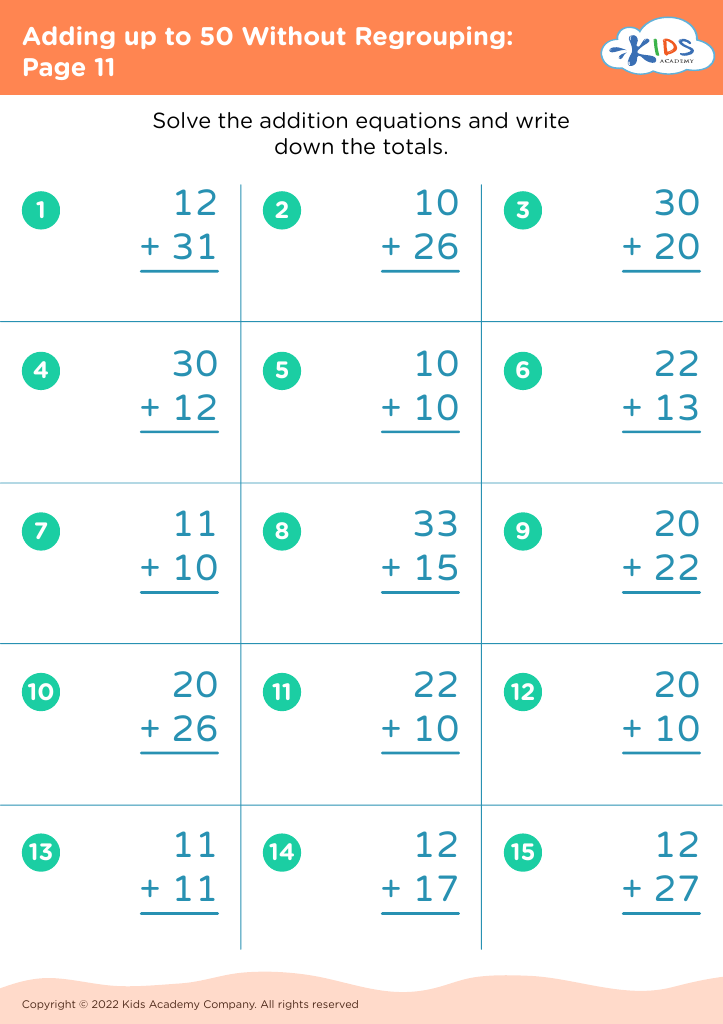
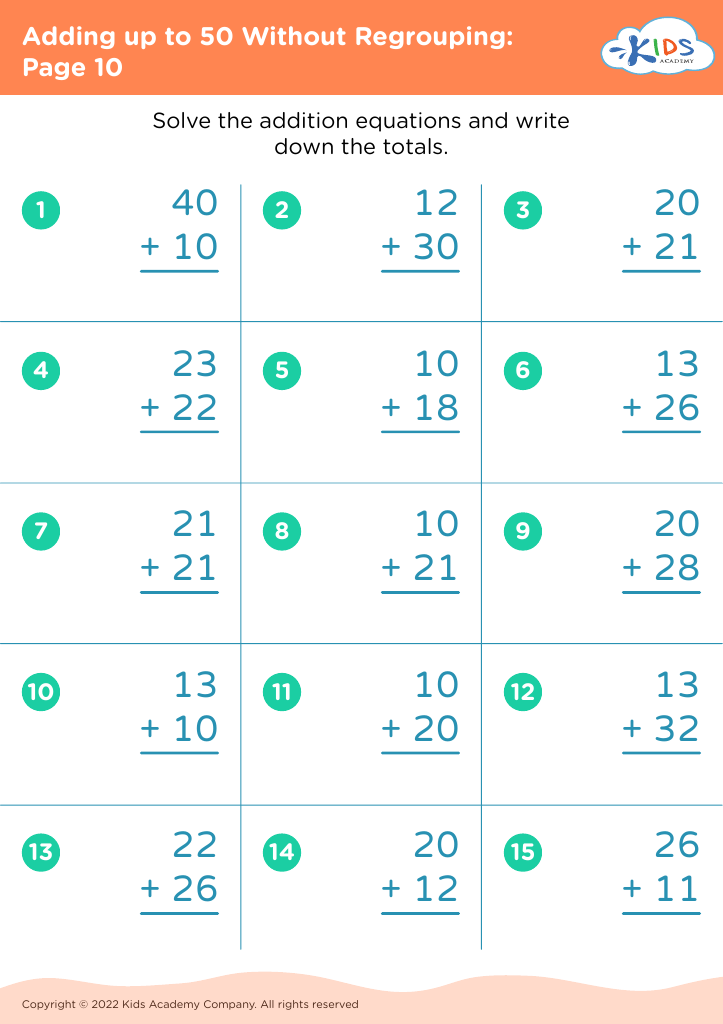
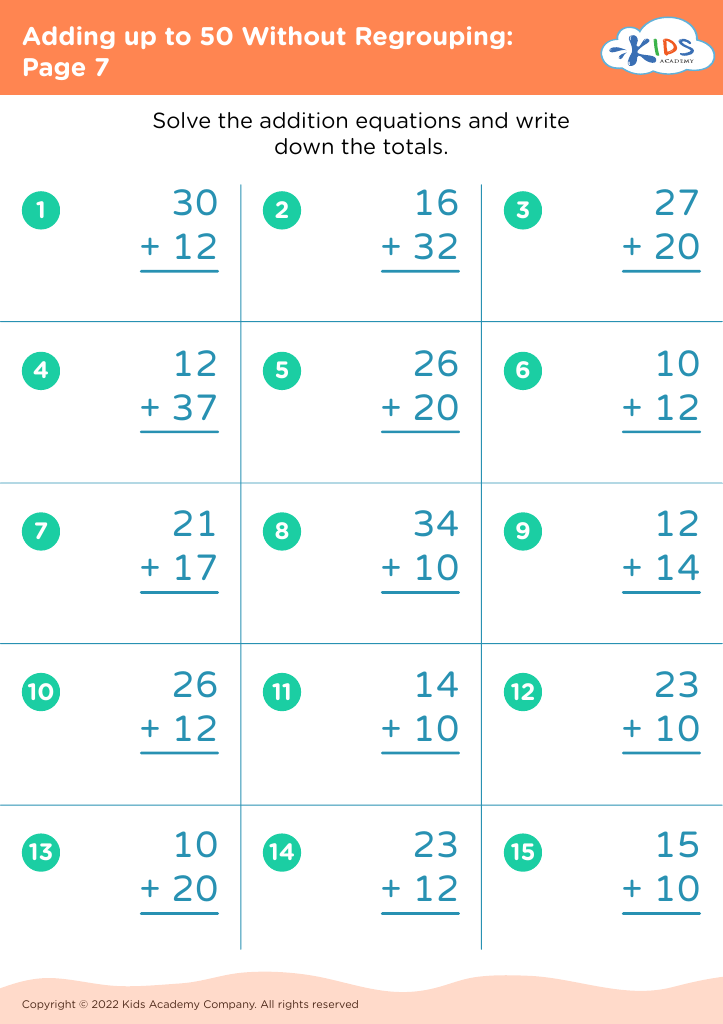
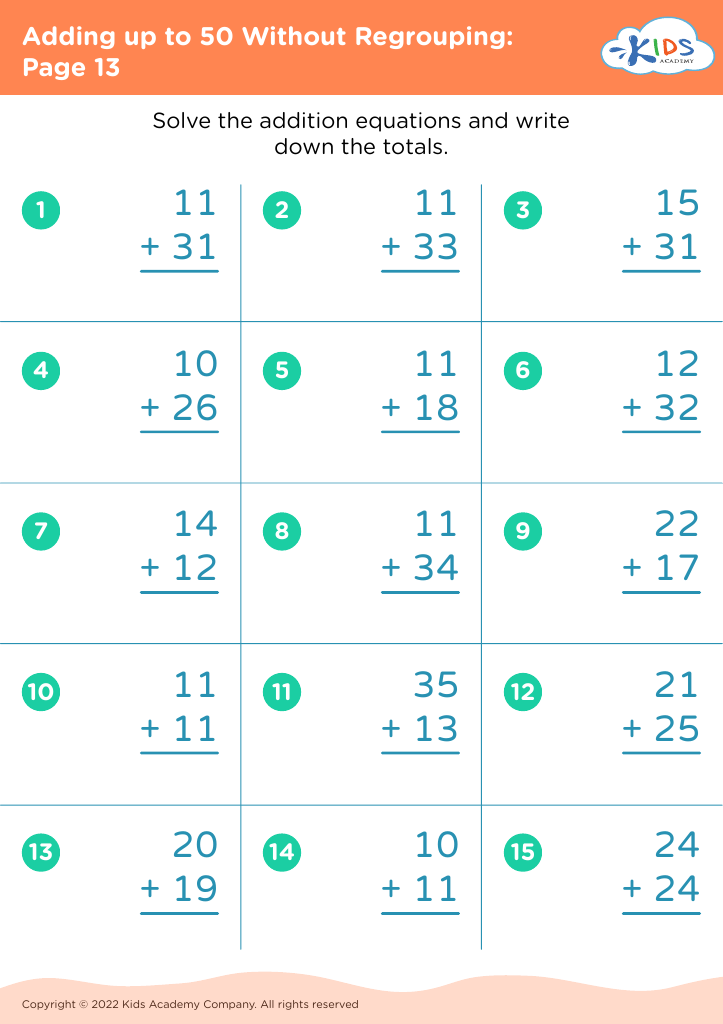
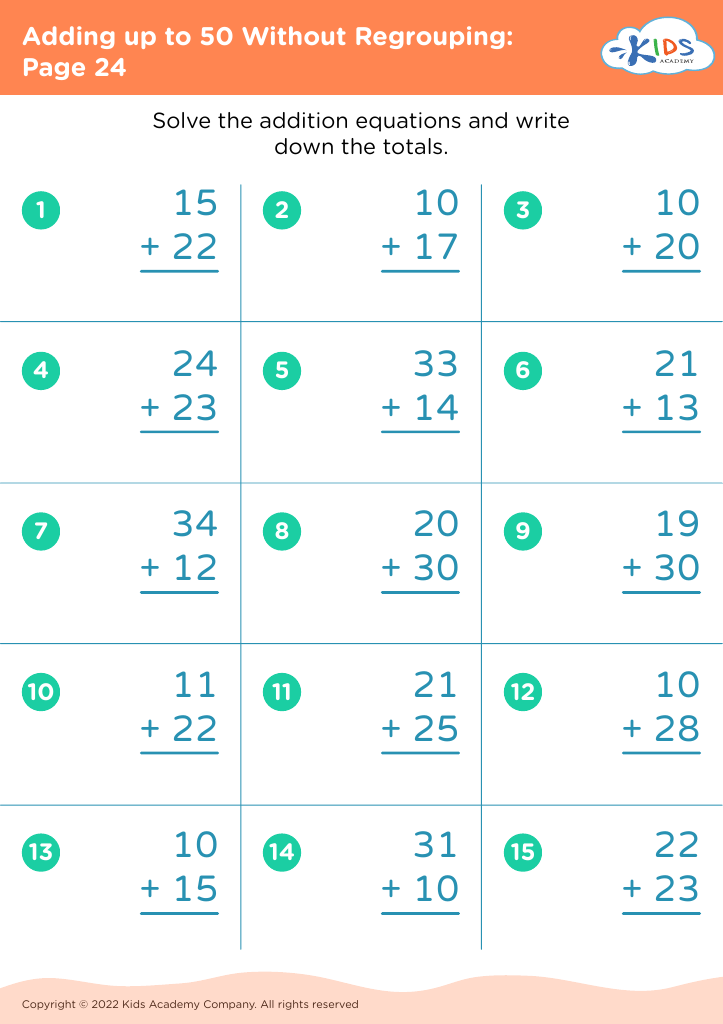


Understanding patterns in addition up to 50 without regrouping is crucial for children aged 7-8 for multiple reasons. First, it lays the foundational skills necessary for arithmetic and higher-level math. Grasping these patterns helps children recognize how numbers interact, facilitating mental math and number fluency, skills essential for efficient problem-solving.
By focusing on addition up to 50, students can practice without the added complexity of regrouping. This means they concentrate on mastering number sense, such as understanding place value and the concept of addition itself. Such practice solidifies their confidence, making it easier to handle more complex math later on.
Patterns in numbers also enhance cognitive skills, including logic and reasoning. For instance, realizing that 25 + 15 is simpler if the child sees it as adding 20 and 10, then adding the 5. These small patterns reinforce their intuitive understanding of math, encouraging analytical thinking.
Lastly, recognizing these patterns nurtures a child’s ability to self-correct and independently find solutions, thus boosting independence in learning. Whether in classrooms or at home, understanding these basic math concepts significantly contributes to the child's academic growth and lifelong numeracy skills. Hence, teachers and parents fostering these skills provide children with critical tools for future learning and success.