
Sequencing Skills Addition & Subtraction Worksheets for Ages 7-8
3 filtered results
Difficulty Level
Grade
Age
-
From - To
Subject
Activity
Standards
Enhance your child's mathematical abilities with our Sequencing Skills Addition & Subtraction Worksheets, designed specifically for ages 7-8! These engaging worksheets help young learners practice crucial sequencing as they solve addition and subtraction problems. By combining fun exercises with essential math concepts, students can improve their problem-solving and critical thinking skills. Each worksheet offers a mix of colorful visuals and interactive elements, keeping kids motivated and excited about learning. Perfect for home or classroom use, these worksheets will ensure your child gains confidence in math while mastering sequences. Download now to embark on an enjoyable math adventure that promotes valuable learning!
Favorites
With answer key
Interactive
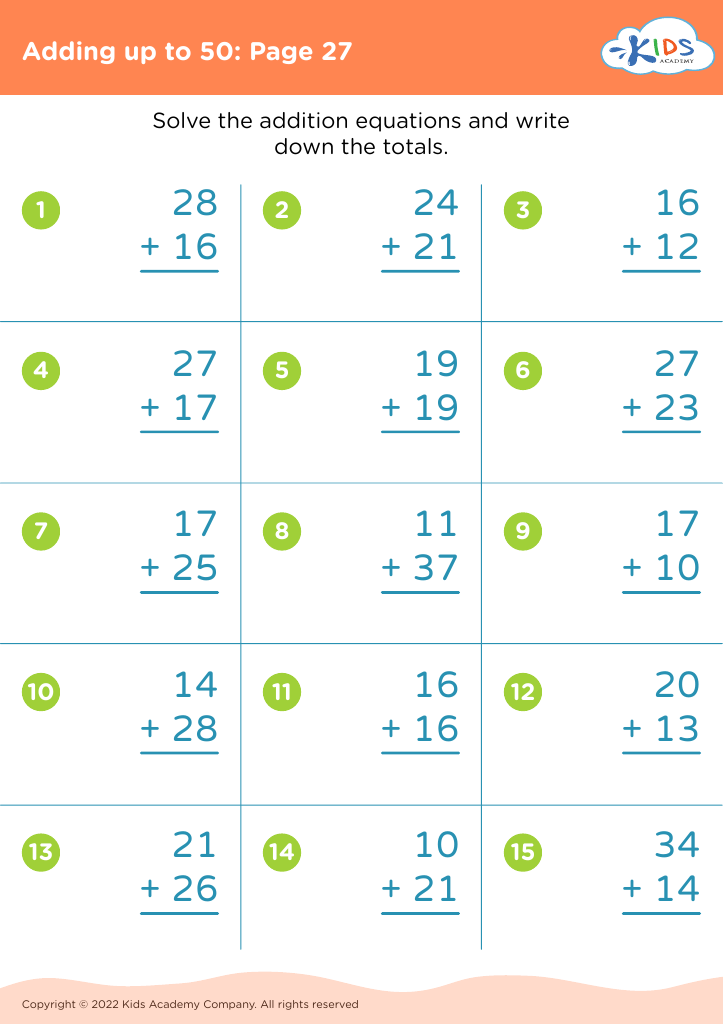
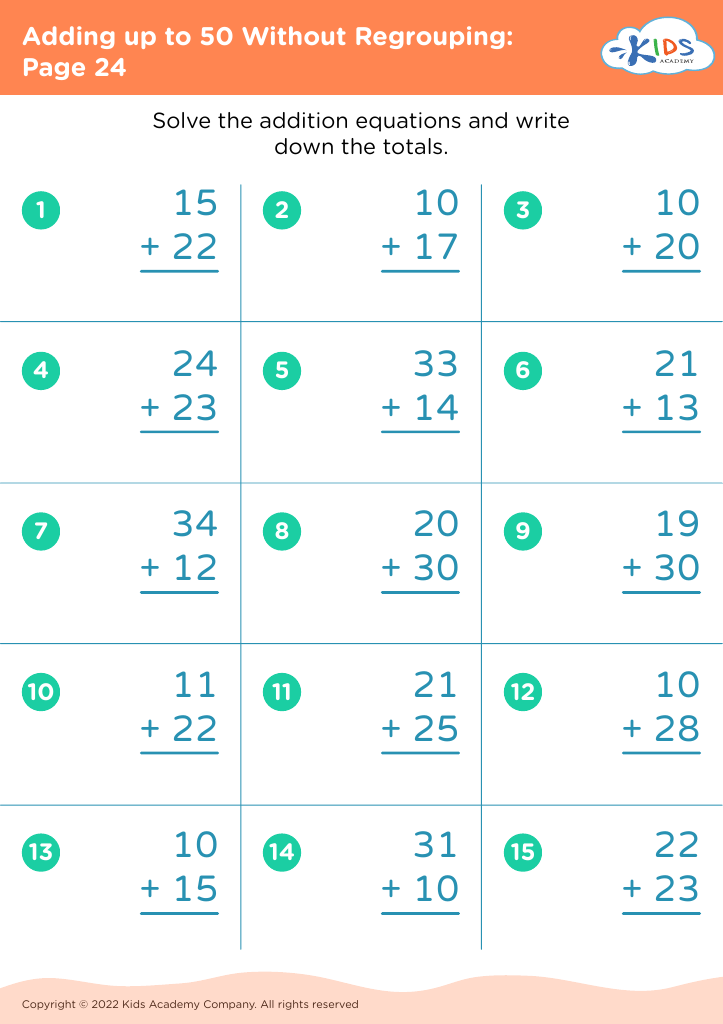
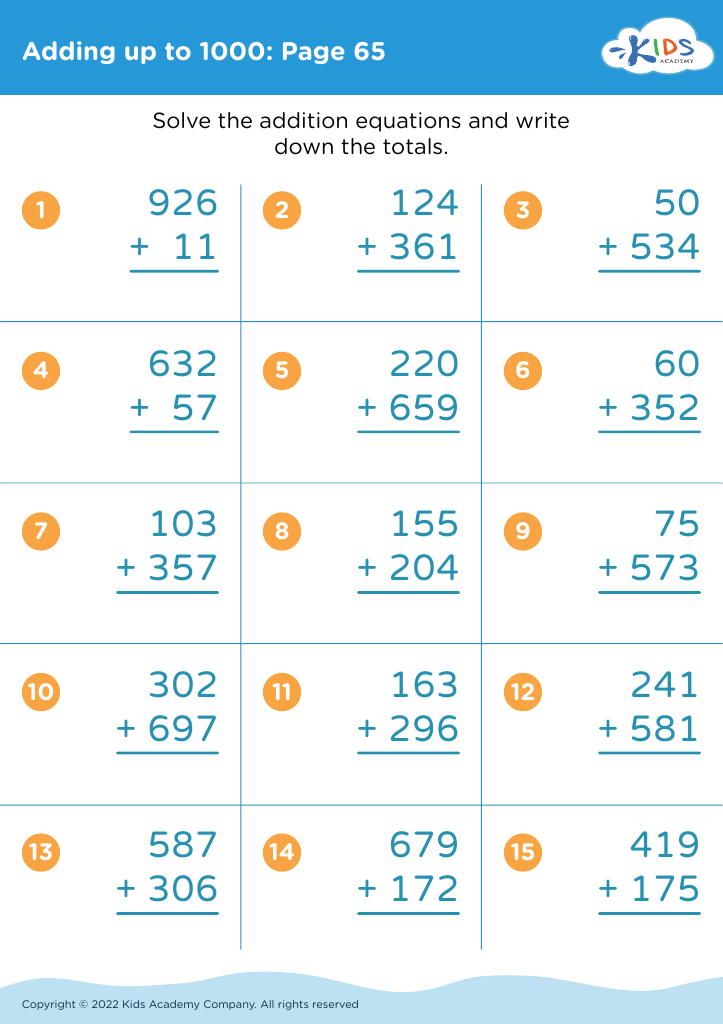
Join Kids Academy for Free
Who is primarily going to use this learning content?








Sequencing skills in addition and subtraction are crucial for children aged 7-8 as they form the foundation for more complex mathematical concepts. During this stage of development, children are transitioning from basic arithmetic to more advanced problem-solving techniques. Mastering sequencing helps them understand the order of operations, which is essential for accurately solving mathematical problems and fostering critical thinking skills.
Furthermore, strong sequencing abilities enhance children's analytical thinking, enabling them to break down multi-step problems into manageable parts. For instance, when faced with word problems, children equipped with sequencing skills can identify what information is needed first before solving. This proficiency not only supports their math learning but also translates to improved performance in other subjects.
Parents and teachers should care about developing these skills as they directly impact a child's confidence and ability to tackle new challenges. Engaging in activities that promote sequencing in addition and subtraction can lead to enhanced learning outcomes and prepare children for higher level math in the future. Ultimately, fostering these skills ensures that children are better equipped for both academic success and real-life problem-solving scenarios. By supporting these fundamental skills, educators and parents can help cultivate a strong mathematical mindset in young learners.








