Understand sequences Addition & Subtraction Worksheets for Ages 7-8
5 filtered results
-
From - To
Unlock your child's mathematical potential with our "Understand Sequences: Addition & Subtraction Worksheets" designed specifically for ages 7-8. These engaging worksheets focus on helping young learners grasp the concept of numerical sequences through addition and subtraction. Interactive exercises promote critical thinking as students learn to identify patterns and solve problems involving sequential numbers. Perfect for classroom use or at-home learning, our worksheets cater to various skill levels, ensuring every child can thrive. Foster a love for math while building a solid foundation in essential arithmetic skills. Start your journey in mastering sequences today, and watch confidence soar!
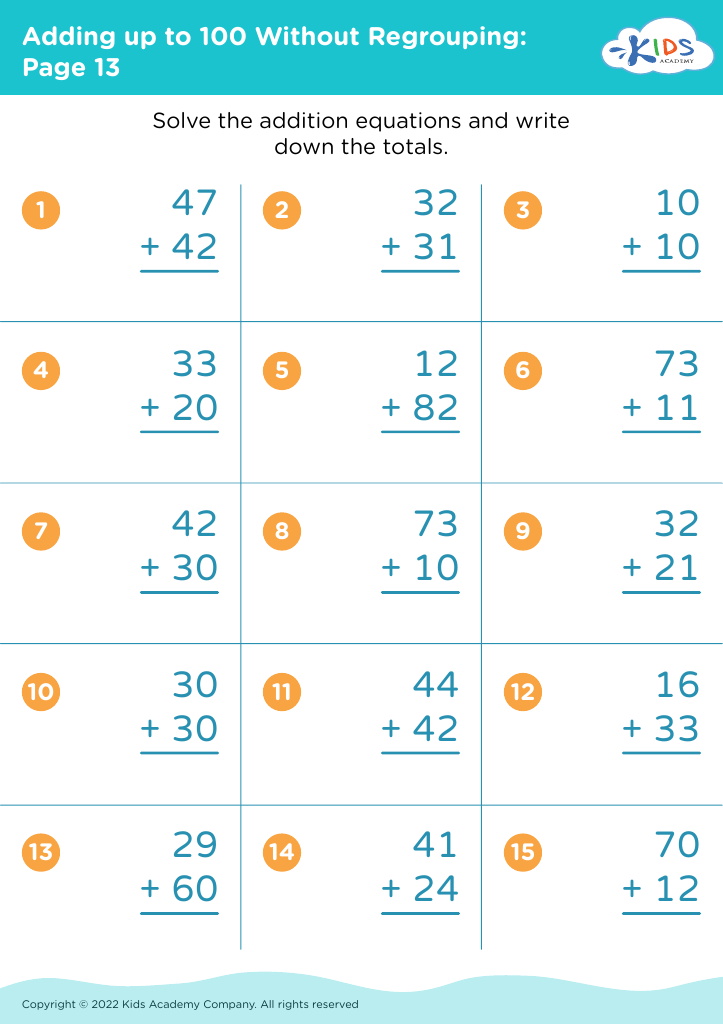
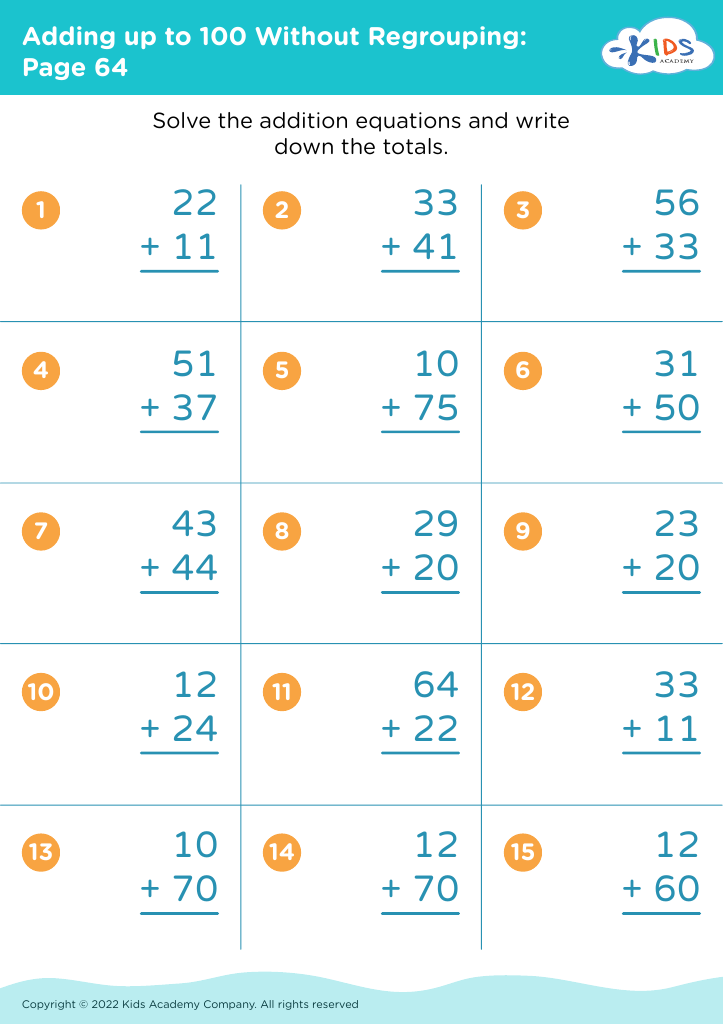
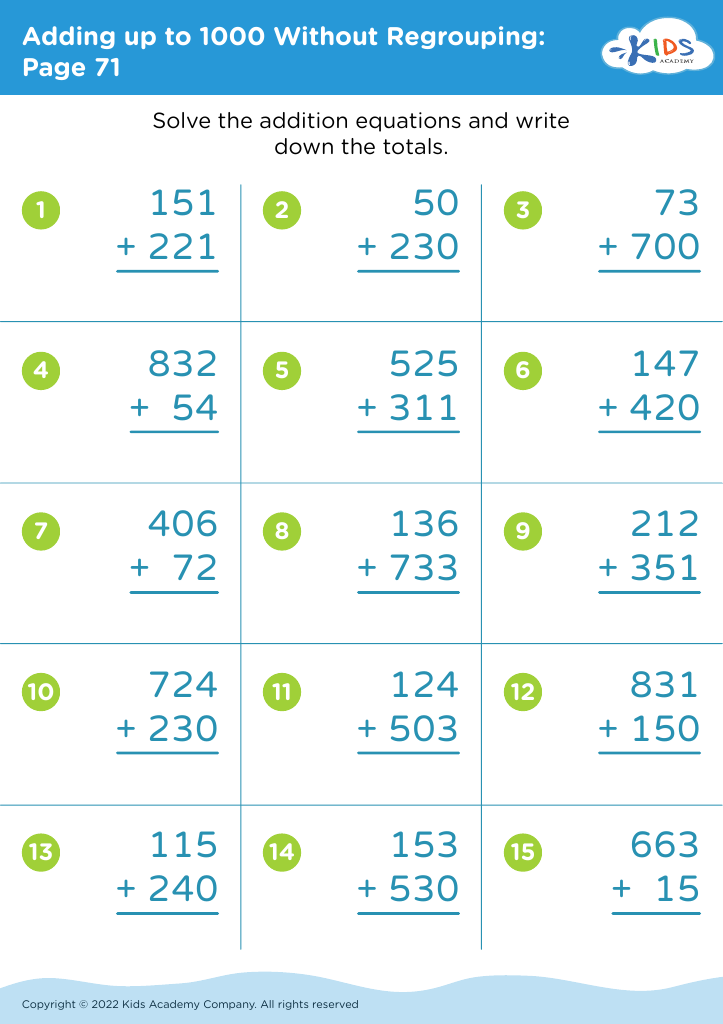
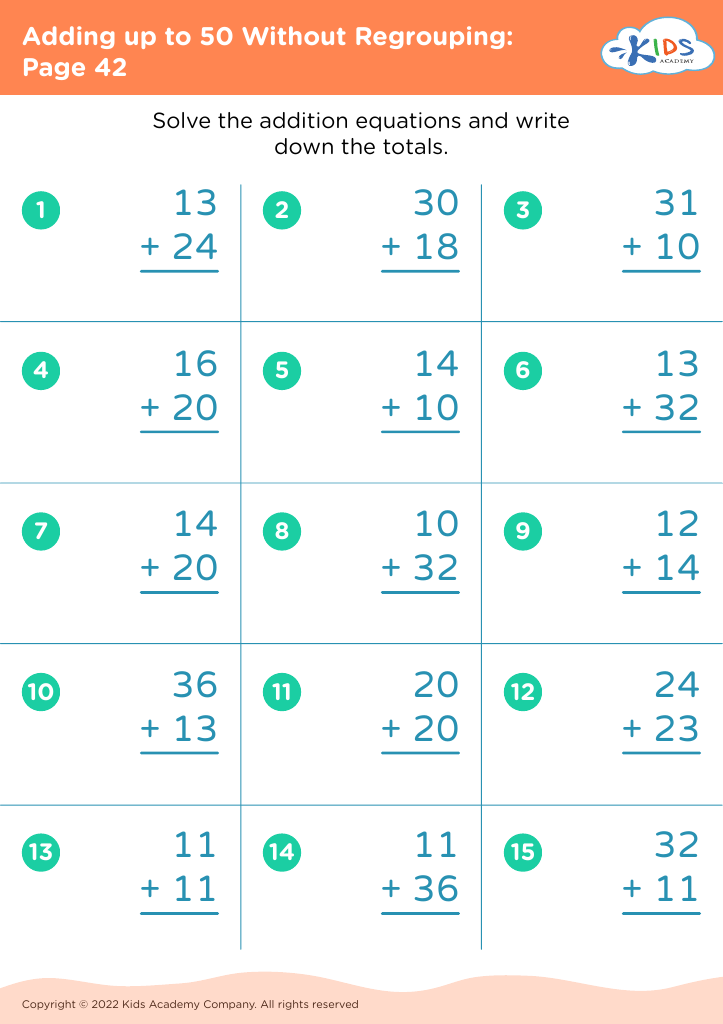
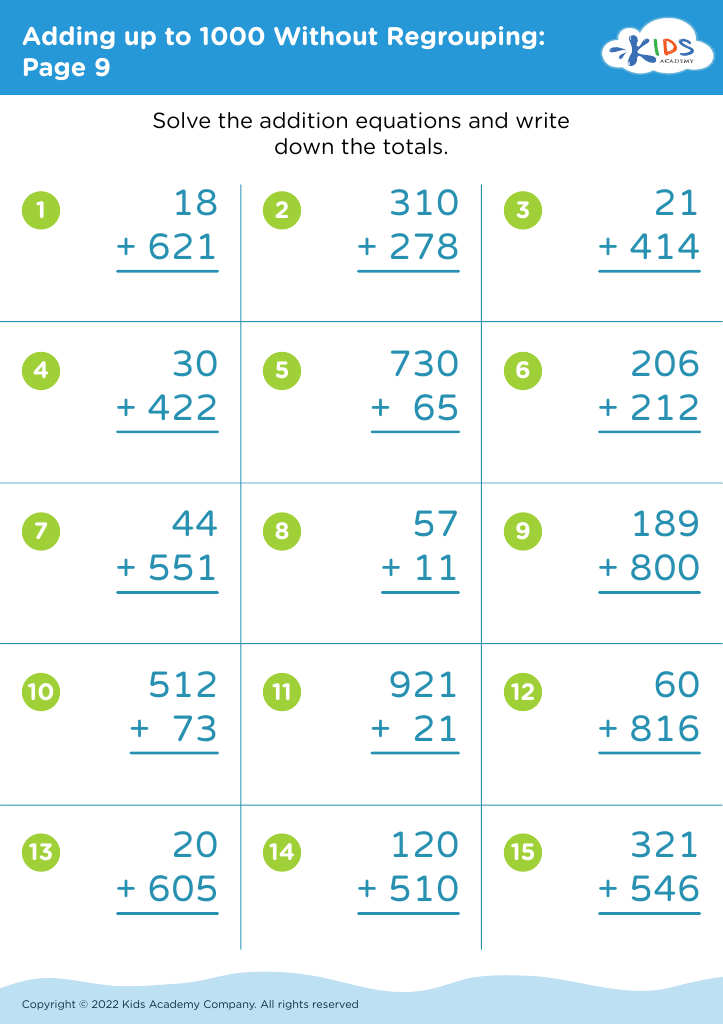








Understanding sequences in addition and subtraction is crucial for children aged 7-8, as it lays the foundation for important mathematical concepts. At this age, students are transitioning from basic arithmetic towards more complex problem-solving strategies. Recognizing patterns in sequences helps in developing their ability to predict outcomes, understand equivalencies, and grasp the relationships between numbers.
Parents and teachers should care about this because sequences encourage critical thinking and logical reasoning. When children understand how numbers relate to one another, they become more adept at mental math and can tackle more challenging problems with confidence. This skill is fundamental not just in mathematics but also in everyday situations, such as budgeting and planning.
Moreover, a solid grasp of addition and subtraction sequences supports a child's learning for advanced concepts like multiplication and division, which often rely on understanding the fundamentals of these operations. The ability to see sequences can also enhance their aptitude for problem-solving and reasoning, essential lifelong skills.
Ultimately, fostering this understanding at an early age equips children with the tools they need for academic success and encourages a positive attitude toward learning, making it imperative for parents and educators to emphasize this aspect of their education.








